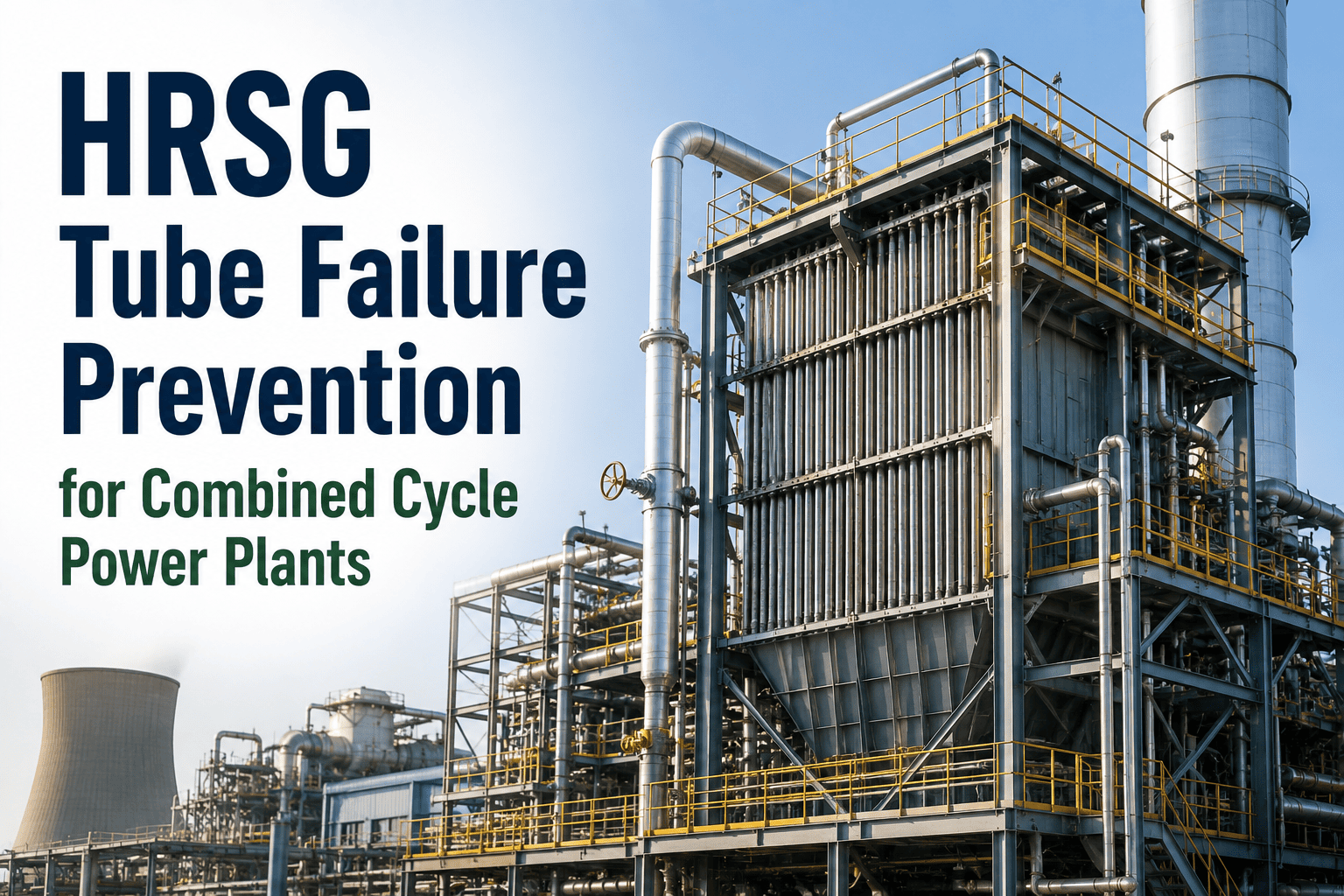
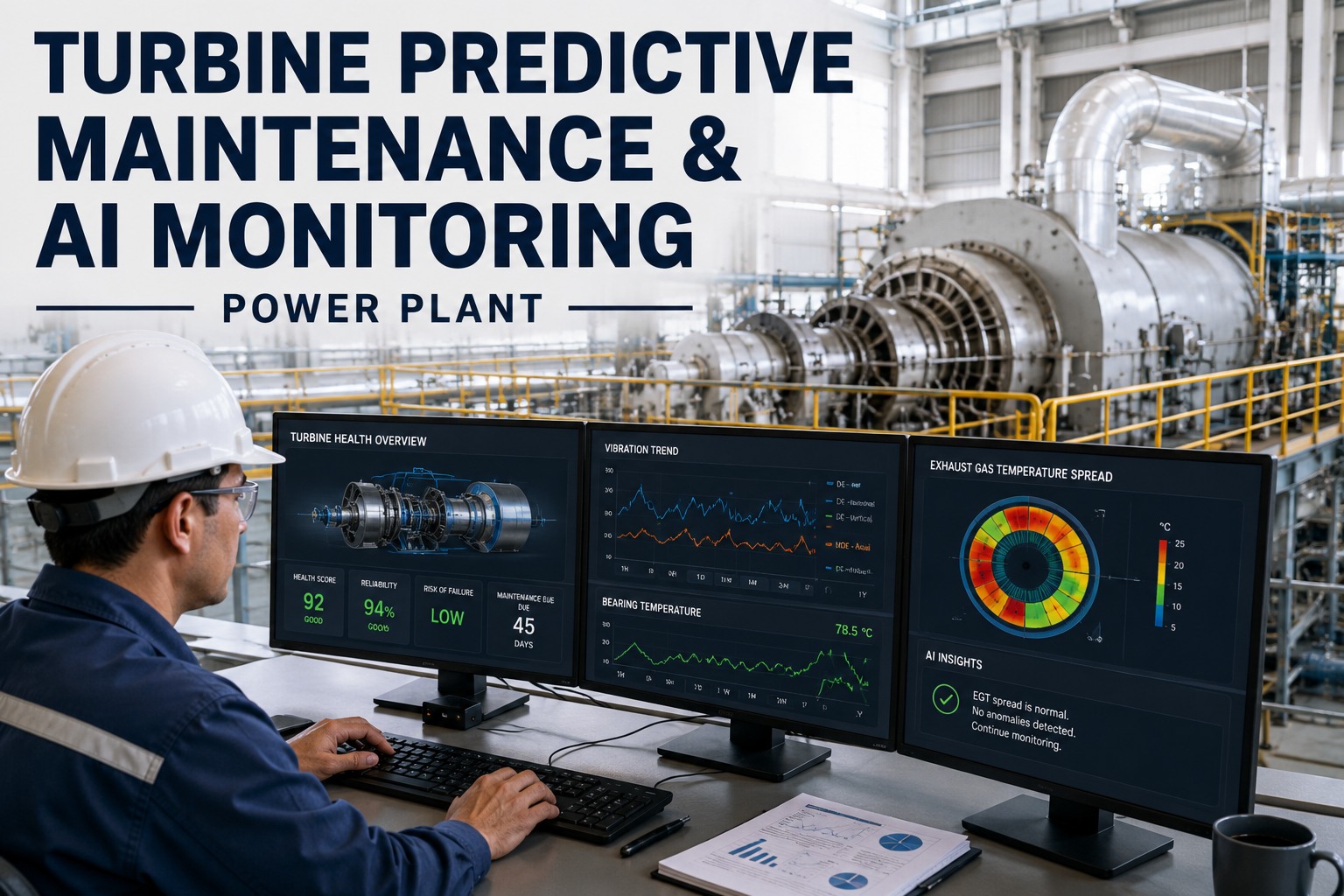
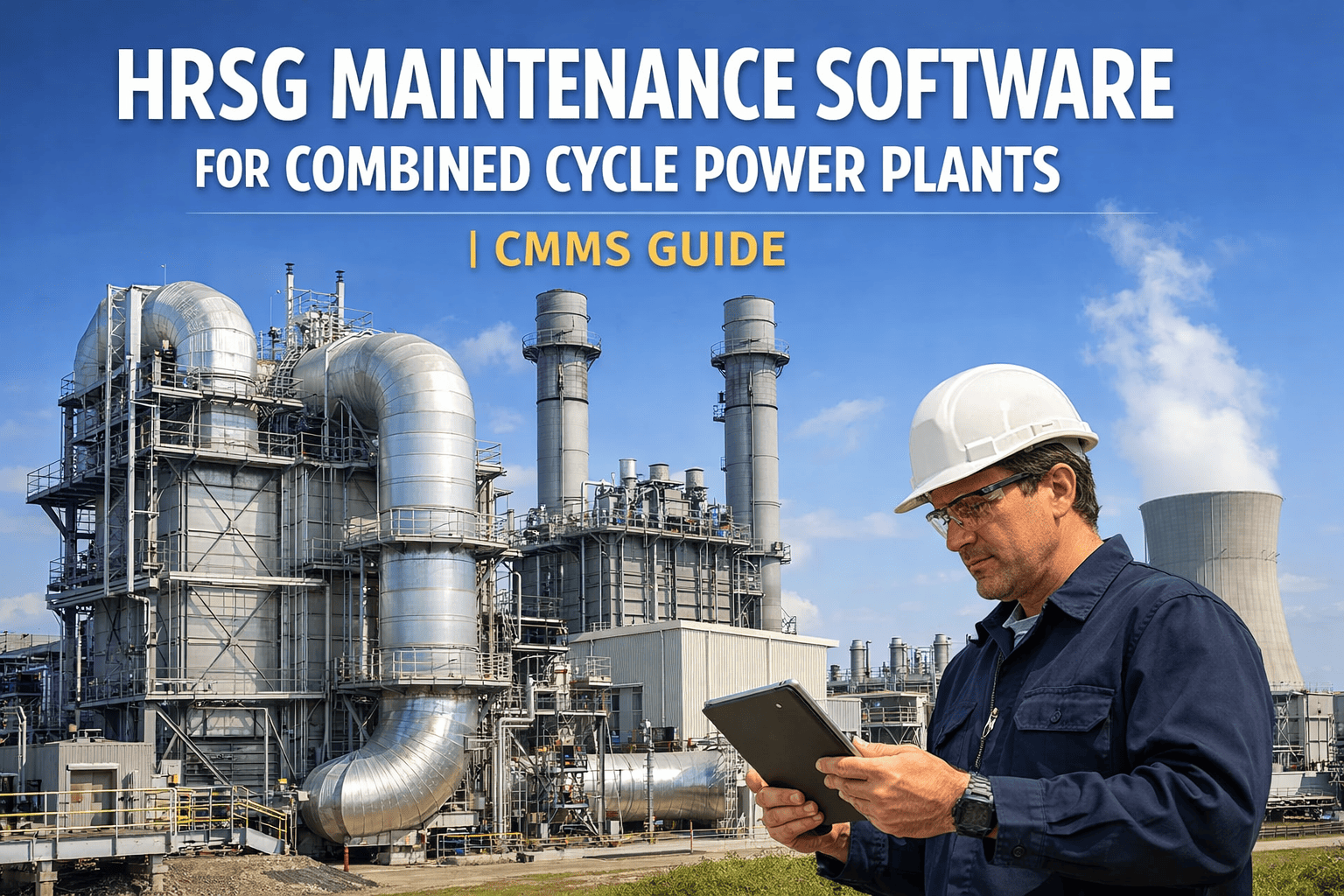
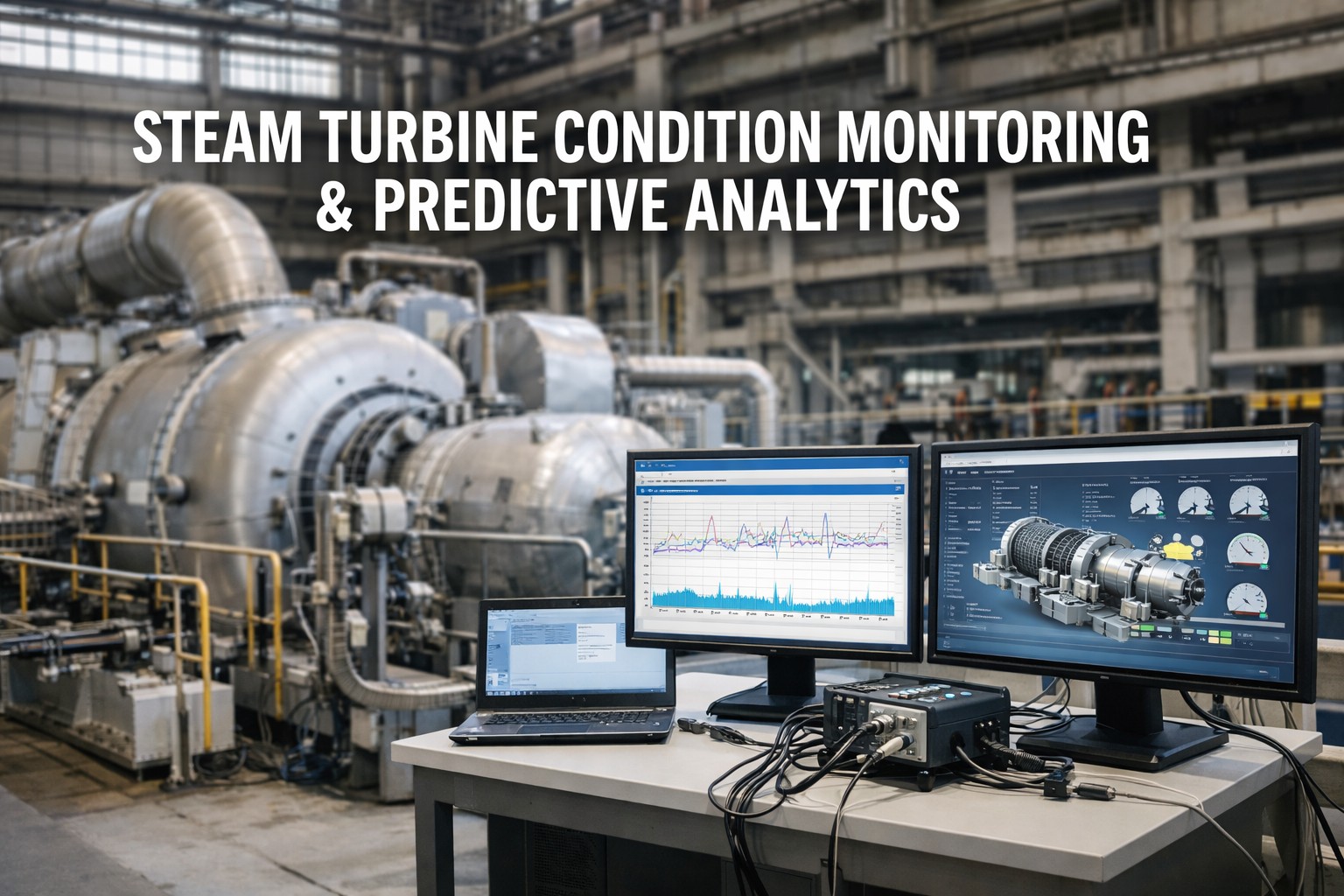
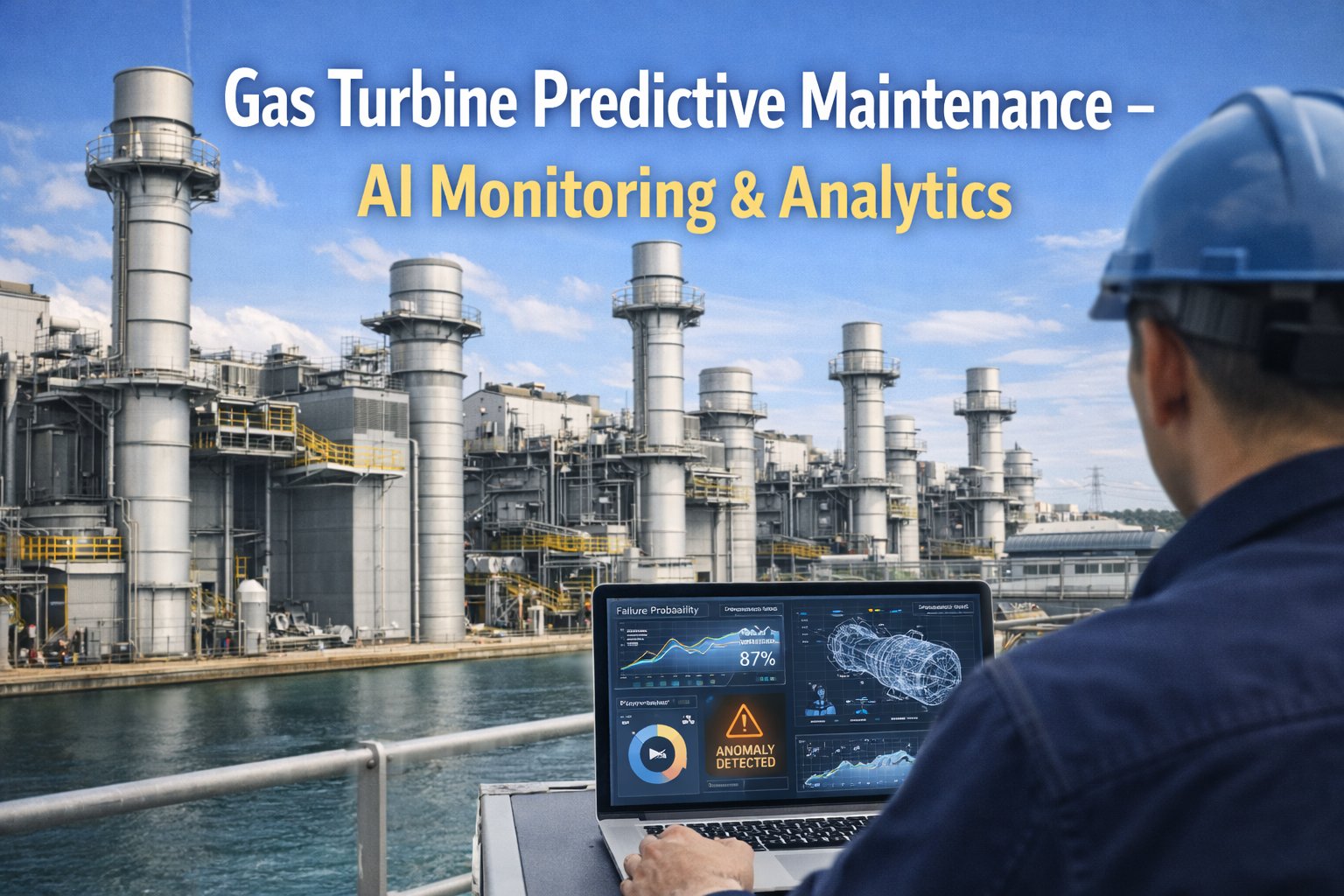
Combined cycle plants run three tightly coupled systems — gas turbine, heat recovery steam generator, and steam turbine — where a degradation event in any one propagates to the others within hours. A compressor fouling on the gas turbine raises exhaust temperature, which accelerates HRSG tube fatigue, which eventually backpressures the steam cycle. Traditional scheduled maintenance cannot see these cascade pathways forming. Predictive maintenance gives your engineers the sensor data, trend analytics, and automated alerts to intercept each failure mode weeks before it reaches the work order queue. Every CCGT plant serious about availability above 94% is moving here — this guide shows exactly how to apply it across gas turbines, HRSGs, steam turbines, generators, and balance-of-plant equipment. Start a free OxMaint trial and connect your SCADA data today, or book a predictive maintenance demo to see live CCGT analytics.
Predictive Maintenance AI · Combined Cycle Plants
Predictive Maintenance for Combined Cycle Power Plants
Gas turbines, HRSGs, steam turbines, generators, and BOP — detect degradation weeks before failure across every system in your CCGT plant, and stop reactive maintenance from consuming your availability margin.
85–92%
AI failure prediction accuracy for gas turbine components
4–8 days
average HRSG tube failure forced outage duration — preventable with PdM
$200K+
annual fuel cost saved per 1% turbine efficiency recovered
Why CCGT Plants Need Predictive — Not Just Preventive — Maintenance
Time-based PMs were designed for single-cycle plants with stable operating profiles. A combined cycle plant cycling daily, responding to grid dispatch, and managing three thermally coupled systems accumulates damage at a rate that fixed intervals cannot track. Predictive maintenance replaces the calendar with condition data — and it changes the economics of every outage decision.
Reactive / Scheduled Only
Forced outages average 4–8 days each
GT hot section inspected on hours regardless of actual degradation
HRSG tube failures discovered after steam loss
Heat rate degradation invisible until efficiency audit
Outage scope defined on day one of shutdown
Predictive Maintenance Program
Failure modes intercepted 3–6 weeks in advance
GT inspection triggered by degradation signature, not hours alone
Tube thinning detected by thickness trending before leak
Heat rate deviation flagged within one shift of onset
Outage scope known two weeks before entry — parts pre-ordered
Predictive Maintenance by System: What to Monitor and Why
Key Parameters to Monitor
Compressor inlet / discharge pressure ratio
Exhaust temperature spread across thermocouples
Vibration on compressor and turbine bearing housings
Lube oil temperature and pressure differentials
Equivalent operating hours vs OEM threshold
Failure Modes Detected Early
Compressor blade fouling (1–3% efficiency degradation)
Combustion liner hot spots (exhaust spread exceedance)
Rotor balance shift (progressive vibration trend)
Bearing wear (lube oil temperature rise over baseline)
Key Parameters to Monitor
Approach, pinch, and superheat temperature profiles
HP drum pressure and level stability during transients
Steam chemistry: pH, dissolved oxygen, silica, conductivity
Thermal fatigue cycle count per header
Tube thickness trending from UT inspections
Failure Modes Detected Early
Tube wall thinning from flow-accelerated corrosion
Attemperator sleeve cracking (temperature oscillation pattern)
Header thermal fatigue onset (cycle count vs material model)
Economizer fouling (approach temperature deviation)
Key Parameters to Monitor
HP/IP/LP steam path efficiency vs design baseline
Thrust bearing axial position and temperature
Blade path pressure stage differentials
Condenser back pressure and heat transfer coefficient
Failure Modes Detected Early
LP blade fouling (backpressure and efficiency correlation)
Thrust bearing wear (axial position creep)
Condenser fouling (rising backpressure at constant load)
Seal degradation (hydrogen consumption rise in generators)
Key Parameters to Monitor
Stator winding temperature by slot
Hydrogen purity, pressure, and dew point
Partial discharge levels from online PD monitoring
Cooling water flow and temperature differentials
Failure Modes Detected Early
Stator insulation degradation (PD trend escalation)
Hydrogen seal leakage (purity and consumption drift)
Winding hot spot formation (temperature outlier per slot)
Cooling circuit fouling (rising temperature differential)
Key Parameters to Monitor
Cooling tower fan vibration and fan blade pitch
Circulating water pump flow and bearing temperature
Air compressor pressure drop and discharge temperature
Transformer dissolved gas analysis (DGA) trend
Failure Modes Detected Early
Cooling tower fan imbalance before catastrophic failure
CW pump cavitation onset (vibration frequency signature)
Transformer winding fault (DGA hydrogen or acetylene rise)
Air compressor valve failure (discharge temperature trend)
Connect your CCGT plant's sensor data to OxMaint and start detecting failures weeks early.
OxMaint integrates with your SCADA historian, maps sensor data to asset-level work orders, and alerts engineers when trends exceed thresholds — without custom development.
Implementing PdM in OxMaint: The Four-Step Approach
1
Connect sensor and SCADA data
OxMaint reads live data from PI Historian, OSIsoft, Aveva, and DCS exports. Each parameter maps to a specific asset tag in your hierarchy — so a bearing temperature reading belongs to a specific pump on a specific unit, not a flat data stream.
2
Establish operating baselines
OxMaint builds statistical baselines from 30–90 days of normal operation for each asset. These baselines account for load variation — so a temperature alert at 90% load does not trigger at 50% load, eliminating the false alarms that kill PdM adoption.
3
Set alert thresholds and work order triggers
Define advisory, warning, and alarm thresholds per parameter. When a threshold is crossed, OxMaint automatically generates a condition-based work order with the asset, sensor reading, and trend chart attached — routed to the right crew before the shift changes.
4
Close the feedback loop with failure codes
When the work order closes, technicians record what was found and what was done. OxMaint correlates the alert with the confirmed finding — and over time the AI model learns which alert patterns precede actual failures, progressively reducing false positives.
PdM Performance Benchmarks for CCGT Plants
Frequently Asked Questions
Does predictive maintenance require replacing our existing SCADA system?
No. OxMaint reads from your existing SCADA historian via standard APIs — PI, OSIsoft, Aveva, or OPC-UA feeds — without replacing any control system infrastructure. The integration is read-only and has no impact on plant control.
Book a demo to discuss your current SCADA configuration.
How long before a PdM program produces measurable results?
Most CCGT plants see their first confirmed early-detection catch within 60–90 days of connection. Measurable availability improvement typically appears in the 6–12 month range as condition-based work orders replace reactive breakdowns. AI accuracy improves progressively as failure-code feedback closes the learning loop.
Which CCGT systems generate the highest ROI from predictive maintenance?
Gas turbine hot section monitoring and HRSG tube condition tracking consistently deliver the highest ROI — because the forced outage consequences are largest. HRSG tube failure alone averages $2–5M in lost generation per event.
Start your free trial to model the ROI for your specific fleet.
Can OxMaint handle multi-unit CCGT plants with shared BOP?
Yes. OxMaint's asset hierarchy supports shared BOP equipment — cooling towers, circulating water systems, transformers — mapped to multiple parent units simultaneously. Alerts and work orders correctly attribute the affected unit while shared asset history remains consolidated.
Your next forced outage is already visible in your sensor data. The question is whether you are reading it.
OxMaint connects your CCGT plant's operational data to the maintenance team that can act on it — turning trend lines into work orders before they become failures. Start free or see it live.