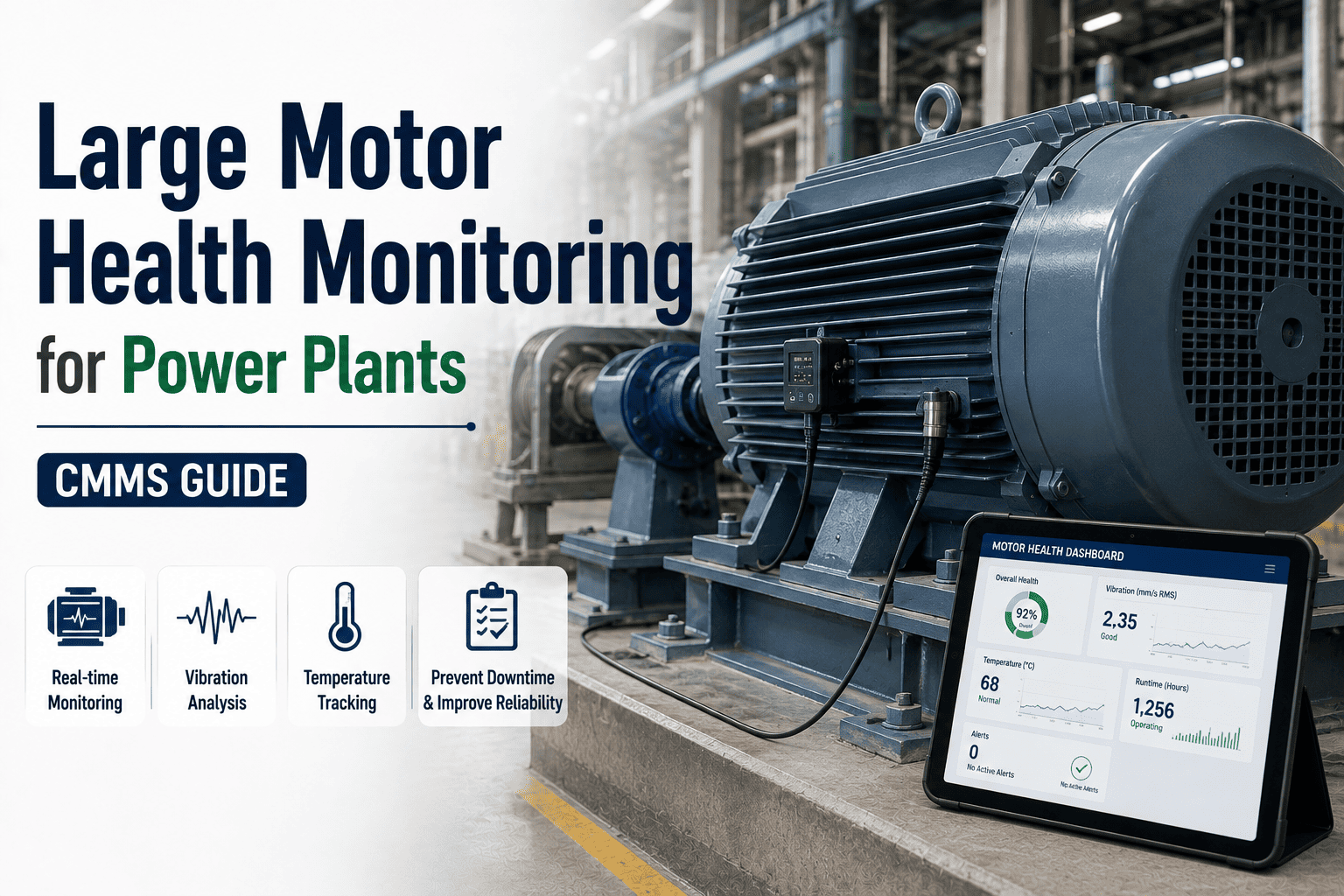
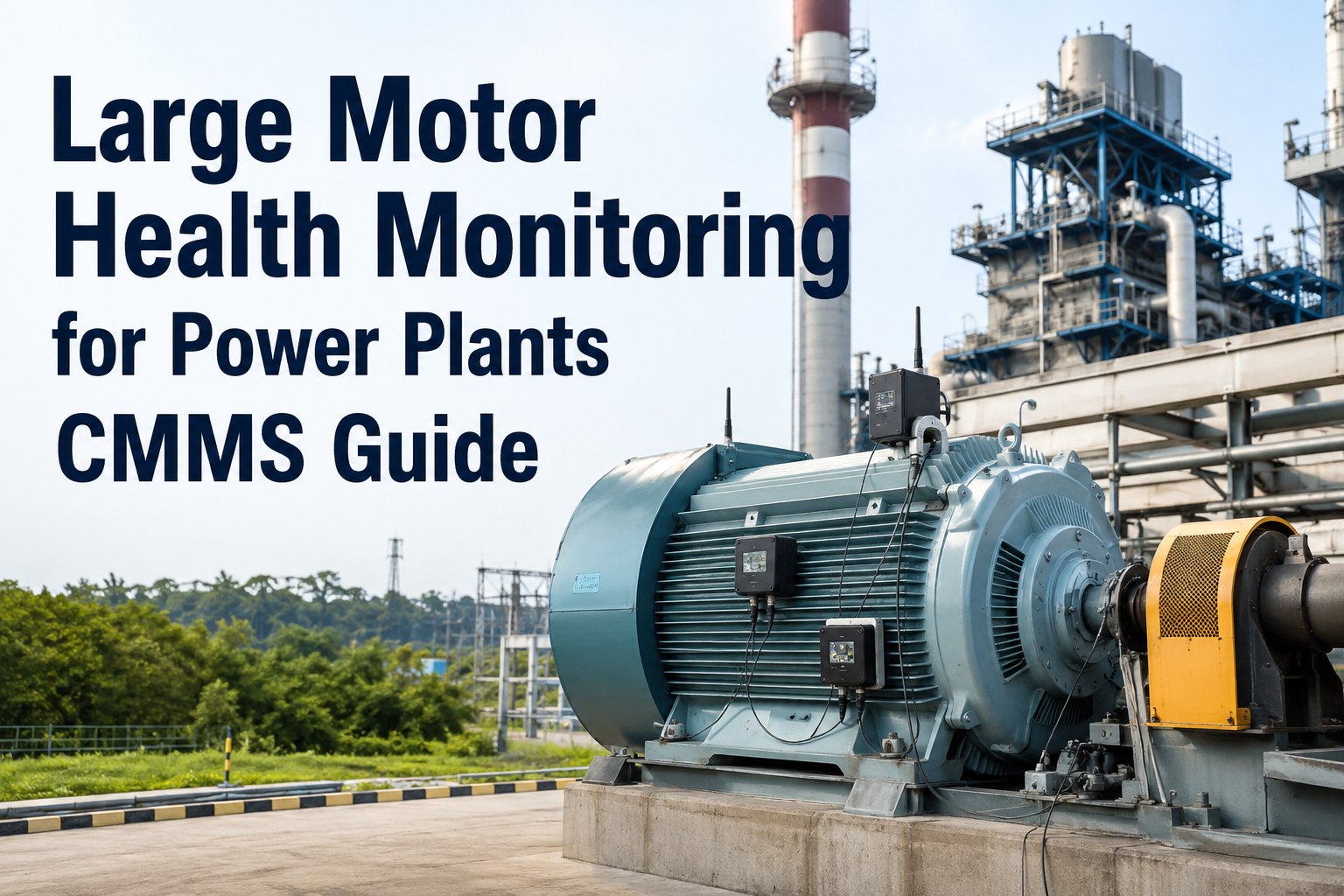
OxMaint's condition-based monitoring platform gives power plant reliability engineers a unified CMMS to capture real-time sensor data, trigger automated work orders at threshold breaches, and build a complete asset health record — replacing the disconnected spreadsheet logs and delayed manual inspections that allow turbine vibration anomalies, bearing temperature spikes, and cooling system degradation to accumulate invisibly until an unplanned outage forces the issue.
Your Sensors Are Collecting Data. Is Anyone Actually Acting On It?
88% of power plants still run calendar-based maintenance as their primary strategy — even when sensors installed on critical assets are already signaling drift, heat buildup, and wear. CBM integrated with CMMS closes the gap between what your sensors know and what your maintenance team does about it.
What Condition-Based Monitoring Actually Means for a Power Plant
Calendar maintenance asks: "Is it time?" CBM asks: "What is the actual condition right now?" Instead of shutting down a turbine at a fixed interval regardless of its health, CBM monitors real parameters — vibration amplitude, bearing temperature, lube oil viscosity, partial discharge activity — and triggers maintenance only when a measured value crosses a defined threshold. For a power plant, where every forced outage can erase over $100,000 per hour in lost generation, that shift from time-based to condition-based decisions is the difference between planned and unplanned.
The 5 Parameters Power Plants Monitor With CBM — And What Each One Catches
Vibration Analysis
Triaxial sensors on turbines, generators, and rotating equipment detect imbalance, misalignment, bearing wear, and looseness weeks before audible symptoms appear. Vibration monitoring is the most widely deployed CBM technique in power generation — and the one that catches the highest percentage of rotating equipment failures early.
Thermal Monitoring
Bearing temperature probes and infrared thermal cameras track heat buildup in electrical panels, switchgear, transformer connections, and mechanical bearings. A temperature rise of 10°C above baseline on a boiler feed pump bearing is a specific, actionable signal — not a vague warning that something might be wrong.
Oil and Fluid Analysis
Particle count sensors and viscosity monitors on turbine lube oil systems detect contamination, oxidation, and metallic wear debris that signal internal component degradation. Catching this condition early allows plants to schedule oil changes and component inspections during planned windows, not emergency shutdowns.
Partial Discharge Detection
Partial discharge sensors on high-voltage generators and transformers detect insulation degradation at the earliest stage — before insulation resistance values drop to alarm levels. PD monitoring bridges the gap between scheduled insulation resistance tests, providing continuous health data between outage windows.
Process Parameter Deviation
Cooling water differential temperature, hydrogen purity in generator cooling systems, condenser vacuum, and steam pressure deviation are process-level CBM parameters. When cooling performance degrades, the first signal is often a slowly widening temperature differential — visible to CBM systems months before it becomes a capacity limitation.
Connect Your Sensors to Maintenance Actions — Not Just a Dashboard
OxMaint turns threshold breaches into structured work orders automatically — so your sensor investment produces maintenance outcomes, not just data nobody acts on.
Why CBM Without CMMS Integration Delivers Only Half the Value
A condition monitoring sensor that fires an alert to a dashboard — with no structured workflow behind it — creates awareness without action. The full maintenance value of CBM is only realized when an alert automatically generates a work order, assigns a technician, attaches the sensor data as context, and tracks the repair through to verified closure. Without CMMS integration, your sensor investment returns a fraction of its potential.
Sensor Threshold Breach
Vibration on GT-01 bearing exceeds 12 mm/s RMS — above the alert threshold configured in OxMaint
Automatic Work Order
OxMaint creates a structured work order with sensor readings attached, asset history linked, and priority set
Technician Assignment
The right technician is notified with full context — asset location, sensor trend, last maintenance record
Repair and Closure
Work order is completed, findings logged, and the closed record contributes to the asset's condition history
CBM vs. Predictive Maintenance — Understanding the Difference and Why You Need Both
| Capability | Condition-Based Monitoring (CBM) | Predictive Maintenance (PdM) | OxMaint — Integrated Approach |
|---|---|---|---|
| Trigger mechanism | Threshold breach on live sensor data | AI forecast of future failure probability | Both — threshold + forecasted RUL |
| Data required to deploy | Sensor hardware + threshold config only | Historical failure data + ML training | Start with CBM, graduate to PdM |
| Advance warning time | Hours to days before threshold breach | Weeks to months before predicted failure | Layered — PdM leads, CBM backstops |
| Failure coverage | Catches what sensors measure directly | 85–95% accuracy — 5–15% of failures missed | CBM catches what PdM misses |
| Work order automation | Threshold alert → auto work order | Forecast → planned maintenance window | Both alert types generate tracked WOs |
| Compliance documentation | Condition records only | Forecast logs + RUL history | Complete audit trail — ISO 55001 ready |
Assets in Your Power Plant That Benefit Most From CBM
CBM delivers the greatest return on assets where failure creates the most operational impact — single-point-of-failure equipment that takes the entire unit offline when it fails. NERC GADS data shows boiler tube failures account for 52% of conventional plant forced outages, making boiler and steam path condition monitoring especially high-value. Start with these asset classes.
Blade vibration, bearing temperature, differential expansion, and steam admission valve response time — all measurable CBM parameters that predict forced outage 30–90 days in advance.
Compressor vibration, exhaust temperature spread, inlet filter differential pressure, and fuel flow anomalies are the primary CBM parameters tracked on gas turbine assets.
Partial discharge activity, hydrogen cooling purity, stator winding temperature differentials, and bearing vibration compose the generator CBM parameter set tracked in OxMaint.
Vibration, discharge pressure deviation, and bearing temperature are the three parameters that give the earliest warning of boiler feed pump degradation before it becomes a unit limitation.
Dissolved gas analysis trends, winding temperature rise above ambient, and load tap changer operation count monitoring are core CBM indicators for transmission and unit transformers.
Fan motor vibration, basin temperature differential, and drift eliminator condition assessments integrate into the plant-wide CBM record, ensuring auxiliary system health is tracked alongside primary assets.
How OxMaint Structures CBM for Power Plants
OPC-UA, Modbus TCP, and REST API Connectivity
OxMaint connects to your existing plant historian, DCS, and SCADA systems through standard industrial protocols. Sensor data flows directly into asset condition records — no manual data entry between your monitoring hardware and your maintenance management workflow. Integration is typically completed in under four weeks.
Per-Asset, Per-Parameter Alert Configuration
Each monitored parameter on each asset carries its own configurable alert threshold and escalation path. A vibration alert on your GT-01 main bearing routes differently than a cooling water temperature alert on your condenser — with separate priority levels, technician assignments, and response time requirements. OxMaint's threshold engine handles this at scale across your full asset register.
Threshold Breach to Structured Work Order in Seconds
When a monitored parameter exceeds its defined threshold, OxMaint generates a structured work order automatically — with the sensor reading, asset history, maintenance procedure, and technician assignment attached. No alert goes untracked. No threshold breach waits for someone to notice it on a dashboard and manually create a task.
Parameter Trend Visualization Across Asset Lifetime
Every sensor reading is stored in the asset's condition history, building a trend record that spans the full operational lifetime of each piece of equipment. Reliability engineers can view vibration trend progression across years of operation, compare readings against previous inspection windows, and identify gradual drift that point-in-time readings cannot reveal.
Works With SAP PM, Maximo, and Your Existing Workflow
Work orders created by OxMaint CBM alerts flow into your existing SAP PM, Maximo, Oracle EAM, or Fiix workflow — so your maintenance teams work in the systems they already use. CBM data enriches existing work management processes rather than creating a parallel system that your team has to maintain separately.
ISO 55001 and OSHA-Compliant Audit Trail
Every CBM alert, every generated work order, every completed repair, and every technician sign-off is recorded in a tamper-evident, timestamped audit trail. When regulators or internal auditors ask for the maintenance record on your GT-01 bearing replacement from eight months ago, OxMaint retrieves the complete chain — sensor data, work order, findings, corrective action, and closure — in under two minutes.
Ready to Move Beyond Spreadsheets and Disconnected Sensor Dashboards?
OxMaint integrates with your existing plant systems in under four weeks — so you can start converting sensor data into structured maintenance actions on your most critical assets without a multi-year implementation project.
Frequently Asked Questions
Your Plant's Sensors Already Know What Your Maintenance Schedule Doesn't
OxMaint connects your CBM sensor data to structured maintenance actions, full asset condition histories, and compliance-ready documentation — so your team acts on what the plant is actually telling you, not what the calendar says is due.