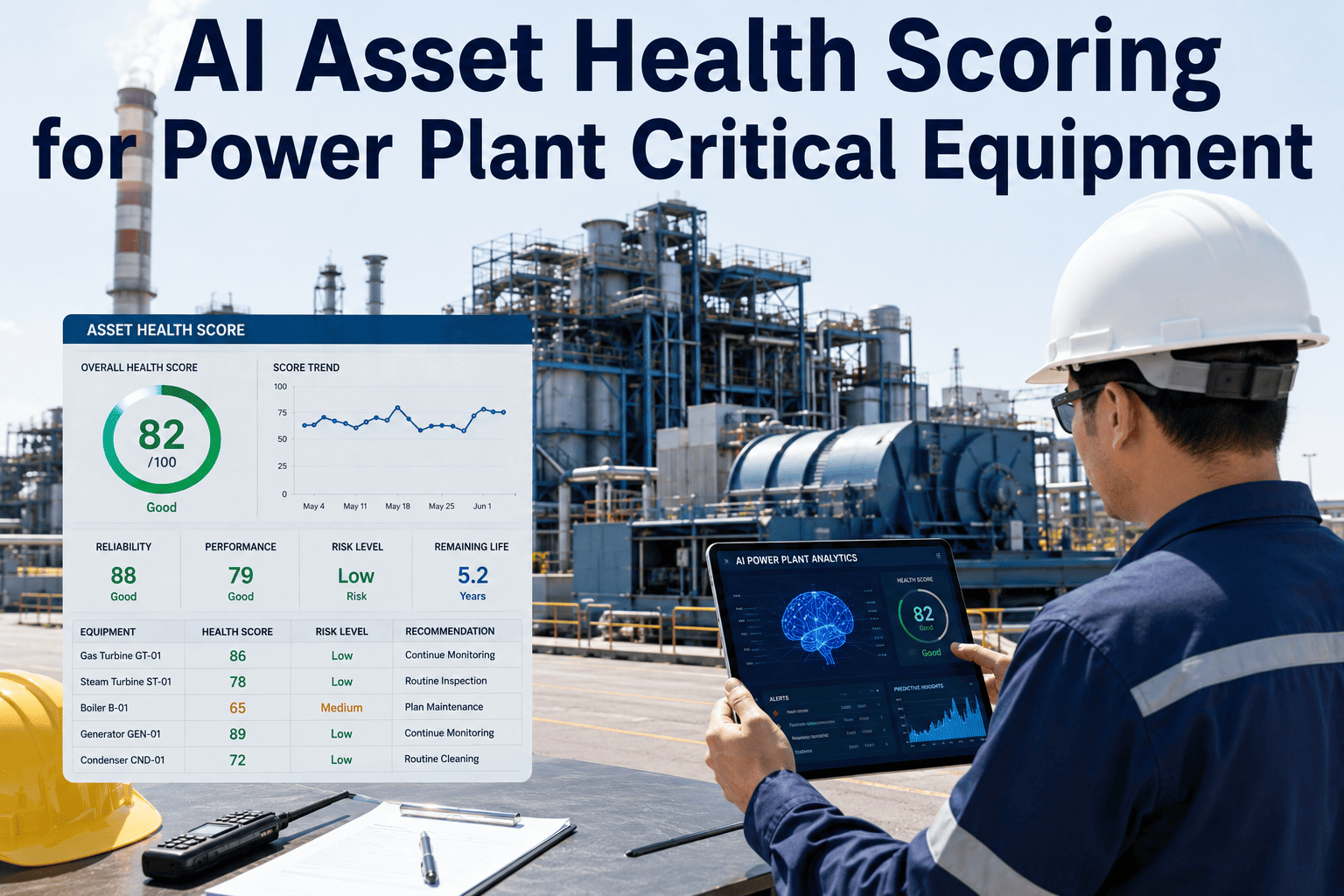
More than half the thermal generation fleet in most grids today is operating well past the midpoint of its original design life, and the maintenance teams running those plants are inheriting decades of undocumented repairs, retired OEM support, and paper-based inspection histories that make it nearly impossible to know which asset is genuinely at risk of failure next. Extending an aging plant's life safely does not come from working harder on the same paper process — it comes from replacing guesswork with a digital reliability program that actually knows the condition of every asset in real time. Sign in to OxMaint to see how a digital reliability layer maps onto your existing aging asset register.
60%
of global thermal generation capacity is now past the midpoint of original design life
3–5×
higher forced outage risk on plants without a structured condition-based reliability program
15–20yrs
of additional service life achievable through disciplined digital reliability management
OxMaint · Asset Lifecycle · Aging Fleet Reliability
Your plant is older than the maintenance records you're using to run it.
A digital reliability program rebuilds a complete, current picture of every critical asset — so life-extension decisions are based on actual condition, not on how long ago the last major overhaul happened.
The Four Pillars of a Digital Reliability Program
Aging plants that successfully extend service life without escalating failure risk build their reliability program on four connected pillars, each closing a gap that paper-based maintenance leaves open.
Pillar 01
Digital Asset History Reconstruction
Every repair record, inspection note, and OEM bulletin scattered across paper logs, spreadsheets, and retired engineers' memory is consolidated into a single digital asset record — closing the knowledge gap that forms as experienced staff retire.
Pillar 02
Condition-Based Inspection Digitization
Manual walkdowns move from paper checklists to structured digital inspections with photo evidence, trend tracking, and automatic flagging when a reading falls outside the acceptable range for that specific aging asset.
Pillar 03
AI-Based Failure Risk Scoring
Instead of relying on generic time-based intervals, each asset receives a dynamic risk score built from its actual repair history, current condition data, and comparable failure patterns across similar aging equipment fleets.
Pillar 04
Life Extension Investment Prioritization
Capital and major maintenance budgets are directed toward the assets with the highest failure risk and the highest consequence of failure, instead of being spread evenly across the fleet by default.
Paper-Based Aging Plant vs Digital Reliability Program
The operational difference between a plant still running on paper records and one running a digital reliability program shows up across every reliability metric that matters.
Asset history completeness
Time to diagnose recurring failures
Capital budget allocation accuracy
Paper-Based Plant
Digital Reliability Program
Every year a digital reliability program is delayed, the knowledge gap widens as more experienced staff retire and more undocumented repairs accumulate on the asset register.
The 120-Day Digital Reliability Rollout Roadmap
Aging plants do not need a full digital transformation before seeing reliability gains. This roadmap starts with the highest-risk assets and expands from there.
Days 1–30
Asset Register Consolidation
Every critical asset is catalogued with available history, and gaps in documentation are flagged rather than assumed to be minor — the first honest picture of what the plant actually knows about its own equipment.
Days 30–60
Digital Inspection Rollout on Critical Assets
Field teams begin recording inspections digitally on the top-risk equipment identified in the consolidation phase, replacing paper checklists with structured, trend-tracked digital records.
Days 60–90
Risk Scoring Activation
With enough digital history accumulated, OxMaint begins generating failure risk scores for the critical asset population, giving the reliability team its first data-driven prioritization view.
Days 90–120
Capital Planning Integration
Risk scores and life-consumption data feed directly into the next capital and major maintenance budget cycle, aligning spend with actual asset risk rather than historical precedent.
Common Failure Patterns Digital Reliability Programs Catch First
Once digital inspection and risk scoring go live on an aging fleet, the same categories of hidden degradation tend to surface first — patterns that paper-based maintenance had been missing for years.
Repeat Repairs on the Same Asset
Digitized history often reveals that the same pump, valve, or bearing has been repaired repeatedly over several years without anyone flagging it as a candidate for full replacement rather than continued patching.
Undocumented Design Modifications
Field modifications made during past repairs are frequently missing from official drawings, creating a mismatch between what the maintenance team assumes exists and what is actually installed.
Instrumentation Drift Left Uncorrected
Aging sensors and transmitters commonly drift out of calibration over years, quietly feeding inaccurate readings into control systems long before anyone notices the discrepancy.
Spare Parts Obsolescence Risk
Critical spares for legacy equipment often carry lead times of many months once the OEM has exited support, a risk that only becomes visible once the parts register is digitized and cross-checked against supplier availability.
Frequently Asked Questions — Digital Reliability for Aging Power Plants
OxMaint · Asset Lifecycle · Digital Reliability
Your aging plant doesn't need to be rebuilt. It needs to be known.
Asset history reconstruction. Digital inspections. AI failure risk scoring. Capital prioritization — the four pillars that let aging plants extend service life without extending risk.