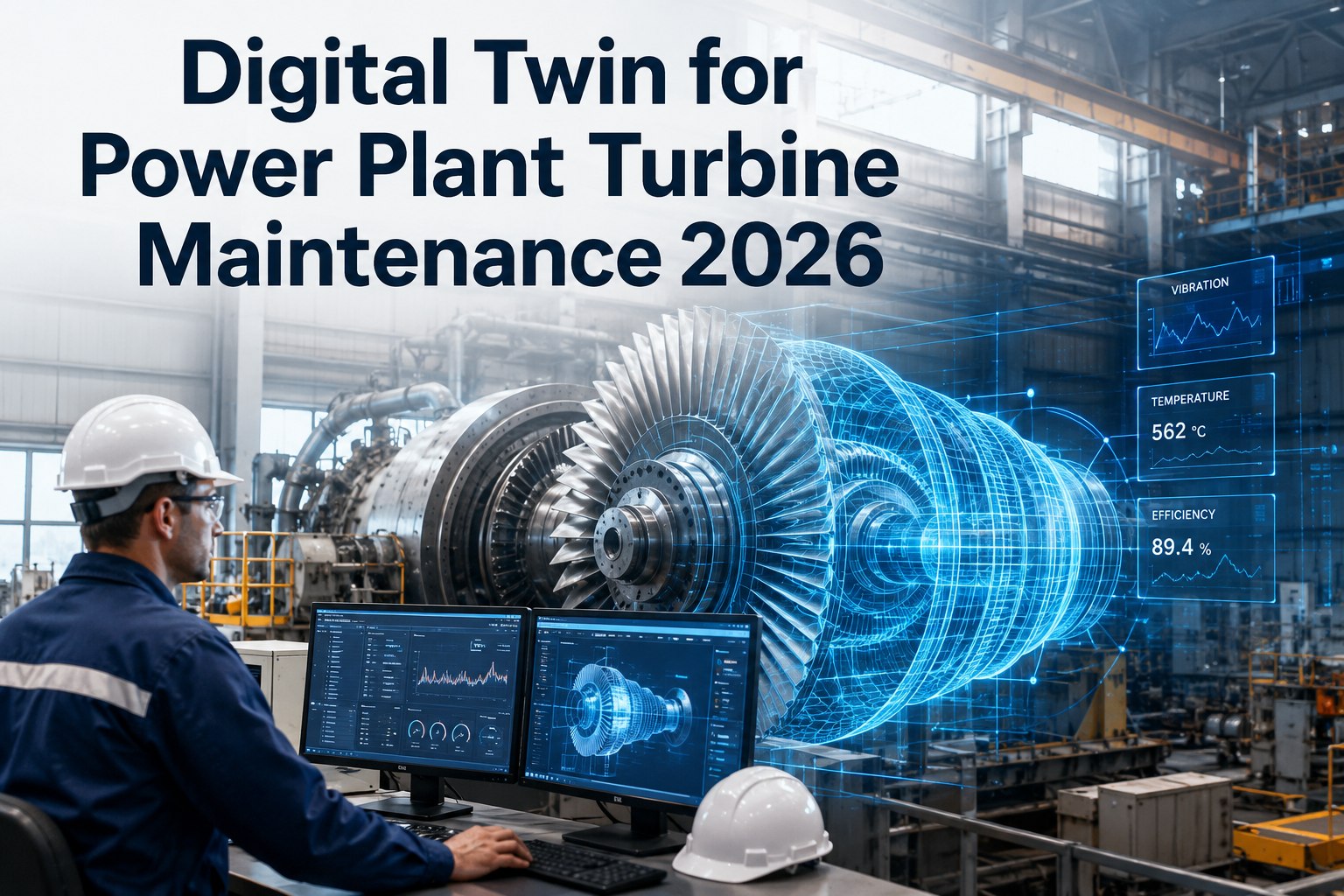
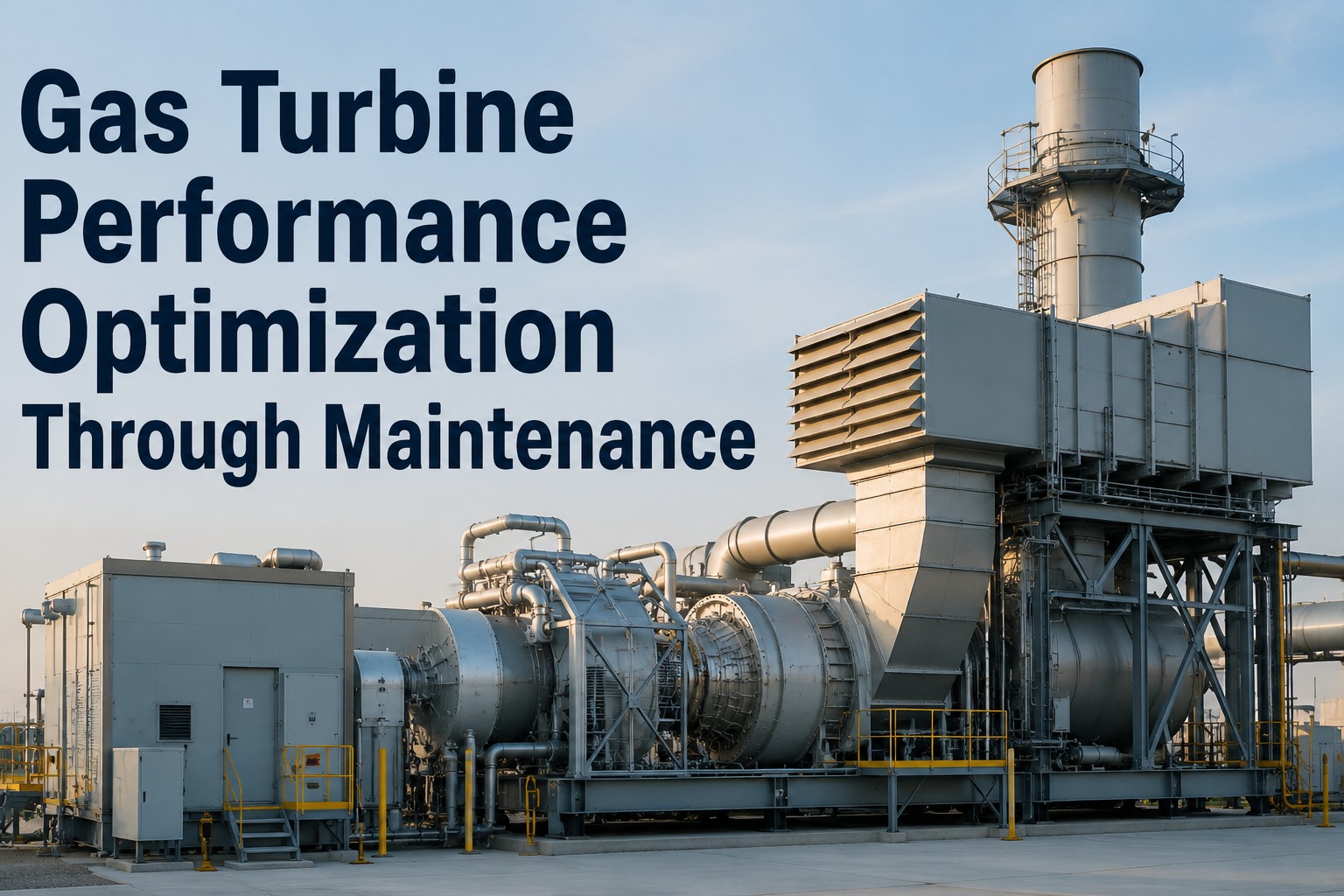
Every gas turbine running today is slowly degrading — compressor blades accumulating fouling deposits, hot gas path components absorbing thermal stress cycle after cycle, combustion dynamics shifting in ways no single sensor captures. Traditional monitoring tells you what happened. OxMaint's digital twin tells you what is happening inside your turbine right now, what will fail next, and exactly when to intervene before it costs you millions. Book a Demo to see a live gas turbine twin in action.
Your Gas Turbine Is Degrading Right Now. The Question Is — Do You Know Where?
OxMaint builds a physics-based digital replica of your gas turbine — compressor, combustor, hot gas path, rotor — running in real time alongside your physical machine. It sees what sensors cannot: blade stress, thermal gradients, efficiency loss in dollars per hour.
The Silent Drain: How Gas Turbine Degradation Actually Works
Compressor fouling is not a sudden event. It is a slow accumulation — pollen, salt spray, dust particles below 5 microns — coating blade profiles stage by stage, shifting the pressure ratio curve, raising exhaust gas temperature, silently forcing your combustion system to burn more fuel to hold the same output. OxMaint's gas turbine digital twin tracks this degradation continuously through physics-based simulation, not after-the-fact sensor alarms.
What the Digital Twin Simulates Inside Your Gas Turbine
Physics-based digital twin technology goes beyond data collection. It applies thermodynamic, fluid mechanical, and materials science models to calculate internal states that no sensor can directly measure — blade surface temperatures, stress distributions, combustion stability margins. This is what separates OxMaint from condition monitoring: the ability to simulate what is happening, not just record what instruments report. Sign up for OxMaint to connect your gas turbine data to a live simulation model.
Combustion Optimization: The Hidden Efficiency Lever
Most plant operators focus on compressor washing as the primary efficiency recovery lever. But the digital twin reveals a second, often larger opportunity: combustion parameter optimization. Real-world gas turbine operation drifts away from design-point combustion efficiency due to fuel composition variation, ambient condition changes, and gradual degradation of fuel nozzles and combustor liners. OxMaint's combustion simulation model continuously calculates the gap between current and optimal combustion performance, translating that gap into daily fuel cost. Book a demo to see combustion efficiency analysis applied to your turbine's operating data.
Hot Gas Path Failure: The Most Expensive Prediction OxMaint Makes
Hot section component failures — first-stage turbine blades, combustor liners, transition pieces — are the highest-consequence failures in any gas turbine. Repair costs alone run $800K to $2.4M per event, and unplanned forced outages for hot section inspections carry capacity penalties and replacement power costs that can double that figure. The physics behind hot gas path degradation is well-understood: thermal barrier coating spallation, oxidation, and creep all follow predictable progression curves that a digital twin can track from the first detectable signal. OxMaint detects hot gas path degradation 8 to 16 weeks ahead of failure through continuous simulation of blade thermal stress state and cooling effectiveness.
See OxMaint Detect Degradation on Your Turbine's Data
OxMaint connects to your existing DCS, SCADA, and OSIsoft PI historian in weeks — no control system modification required. Your gas turbine twin is live and producing failure predictions within 6 weeks of kickoff.
Digital Twin ROI for Gas Turbine Operators
The financial case for gas turbine digital twins compounds across three value streams simultaneously: failure prevention, fuel efficiency recovery, and capital life extension. For a combined cycle plant running two 200 MW gas turbines, OxMaint delivers measurable returns within the first operating quarter — before the annual maintenance budget even adjusts. Plants using OxMaint's digital twin and CMMS integration track every dollar of value through live ROI dashboards updated daily.
How OxMaint Builds Your Gas Turbine Twin
Most digital twin projects stall in custom software development for months before producing any intelligence. OxMaint eliminates that barrier with pre-built gas turbine physics models for all major frame types — GE Frame 7 and 9, Siemens SGT series, Mitsubishi M501/M701, and aero-derivative units. Deployment is a configuration and data connection exercise. Your turbine twin is predicting failures within six weeks of kickoff. Schedule a demo to see OxMaint's deployment mapped to your specific turbine fleet.
Frequently Asked Questions
How does OxMaint's digital twin detect compressor fouling earlier than my existing monitoring?
Your existing monitoring reports individual sensor readings — inlet pressure, outlet temperature, fuel flow. These values reflect the combined effect of all operating conditions simultaneously, making it impossible to isolate fouling from ambient effects or load changes. OxMaint's compressor twin runs a continuous thermodynamic simulation of your specific machine at its current load and ambient conditions, then compares the predicted clean-compressor performance against actual measurements. The divergence between simulation and reality is the fouling signal — detectable weeks before any individual sensor reading crosses an alarm threshold. By the time a traditional alarm triggers, you have typically already lost 2–4% compressor efficiency.
Can the digital twin optimize compressor wash scheduling to minimize fuel cost?
Yes — this is one of the highest-return optimization applications OxMaint enables. The twin calculates your current compressor fouling rate and projects the daily fuel cost of operating with current fouling levels versus the cost of an offline wash and associated production loss. It then recommends the optimal wash date that minimizes total operating cost, updated daily as fuel prices and fouling rates change. Plants typically discover they have been washing either too frequently (wasting production time on washes that recover minimal efficiency) or too infrequently (allowing significant fuel waste to accumulate). The optimal scheduling window identified by simulation typically differs from fixed-interval maintenance by 2–6 weeks in either direction.
What turbine makes and models does OxMaint's digital twin support?
OxMaint's pre-built gas turbine physics models cover all major industrial frame types including GE Frame 6, 7, and 9 series, Siemens SGT-600 through SGT-8000H, Mitsubishi M501 and M701 series, and aero-derivative units including GE LM2500, LM6000, and Rolls-Royce RB211. For less common or older frame types, OxMaint configures custom models from your turbine's OEM design data during the deployment phase. The physics engine is turbine-agnostic — model accuracy depends on design parameter availability, not the frame type. Book a demo to confirm your specific turbine fleet is covered.
How does the digital twin integrate with our existing CMMS and work order system?
OxMaint's digital twin platform includes native CMMS integration that converts simulation-generated failure predictions into scheduled work orders automatically. When the twin identifies a bearing degradation event projected to reach critical threshold in 6 weeks, it creates a work order in your CMMS with the predicted failure date, recommended parts list, and optimal maintenance window based on your production schedule. Integration supports SAP PM, IBM Maximo, Oracle EAM, and other major CMMS platforms via standard APIs. The result is a maintenance schedule that is driven by your equipment's actual simulated condition state rather than fixed intervals or reactive alarms.
Your Gas Turbine Is Running a Simulation Right Now. You Just Cannot See It Yet.
OxMaint makes the invisible visible — building a physics-based digital twin of your gas turbine that continuously predicts compressor fouling, hot gas path degradation, and rotor failures weeks before they reach critical thresholds. Start with your highest-risk turbine. Prove ROI in the first quarter. Expand with data your finance team cannot argue with.