A power plant that runs without a digital twin is running blind — reacting to failures it could have seen coming, scheduling maintenance on calendars instead of condition, and leaving millions in efficiency gains untouched. The global digital twin power plant market is growing at 13.1% CAGR through 2030 because plant operators who adopt it report an average 19% cost reduction and 22% annual ROI within the first year of full deployment. Connect your assets to Oxmaint's digital twin platform free and start your first virtual simulation today — or book a 30-minute demo to see a live plant digital twin in action.
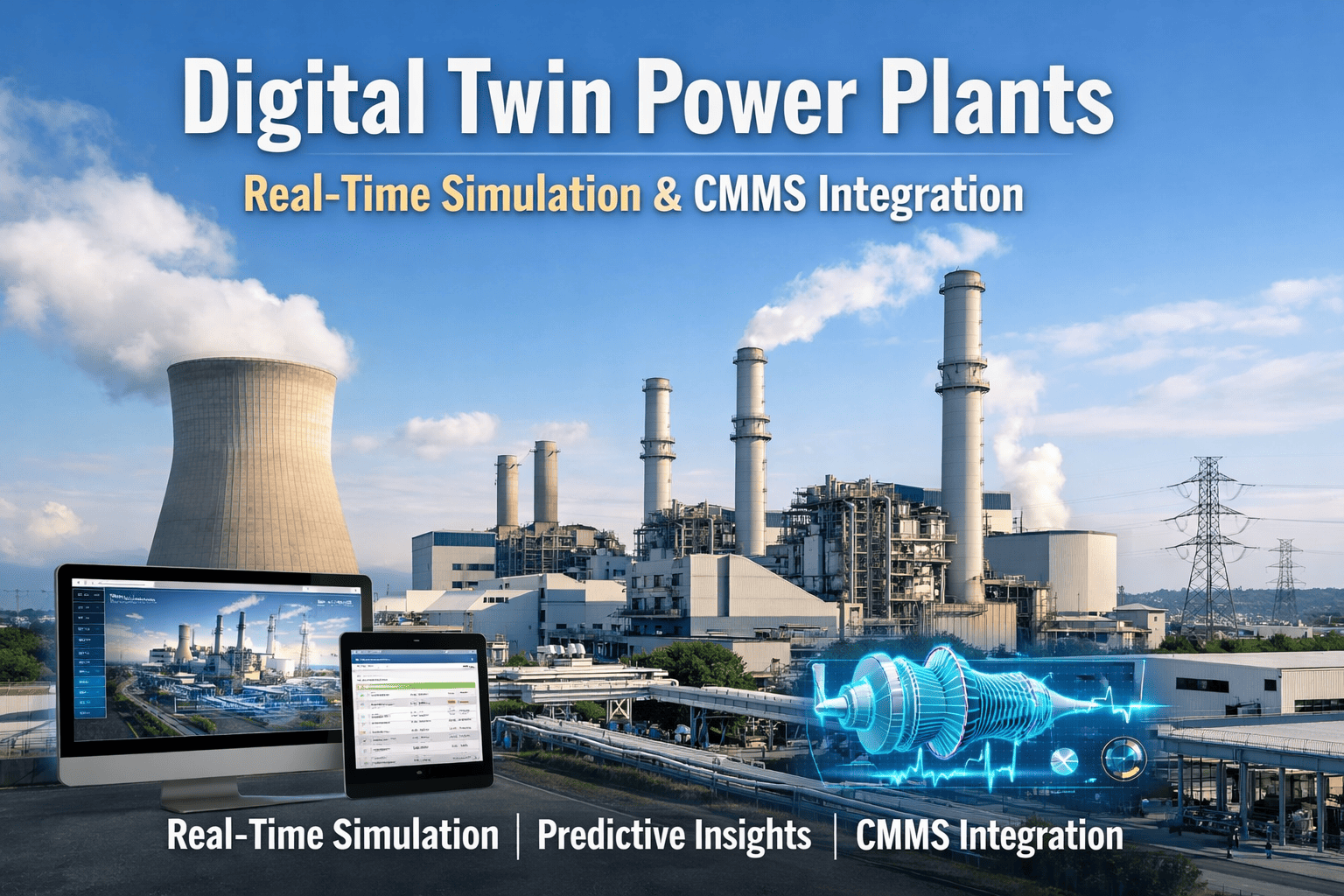
Digital Twin for Power Plant Predictive Maintenance
Build a real-time virtual replica of your plant. Predict failures weeks ahead. Cut unplanned downtime by 30–40% and document every dollar saved — automatically.
What a Power Plant Digital Twin Actually Does
A digital twin is a continuously updated virtual model of your physical plant — not a static 3D drawing or a spreadsheet report. Every sensor reading from your DCS, SCADA, and IoT instruments flows into the twin in real time, keeping the virtual model synchronized with the actual plant state at every moment. The twin then runs simulations against that live data: detecting deviations from normal behavior, forecasting when components will reach failure thresholds, and testing maintenance scenarios before anyone touches physical equipment.
For a power plant, this means your turbine's virtual model knows its current bearing temperature trend, shaft vibration signature, and compressor efficiency curve simultaneously — and flags when that combination pattern matches a historical degradation sequence, weeks before any individual sensor would breach a threshold alarm.
Real-Time Synchronization
The virtual model updates continuously from live sensor streams — not snapshots. When physical state changes, the twin changes with it.
Failure Forecasting
Pattern recognition across multi-sensor data detects early degradation signatures and projects time-to-failure with confidence intervals.
Scenario Simulation
Test maintenance decisions, load changes, and operating parameters on the virtual plant before executing on the physical one. Zero-risk planning.
CMMS Auto-Integration
When the twin identifies a fault condition, a prioritized work order is created automatically in the CMMS — with fault context, parts needed, and safety steps.
Without a Digital Twin: What Your Plant Is Paying For Right Now
Every plant operating on traditional scheduled maintenance or threshold-based alarming is carrying a hidden cost structure. The numbers below reflect averages from power generation facilities that completed digital twin ROI analyses — and then implemented. The gap between what they were spending and what they now spend is the business case for every plant still evaluating.
How Power Plants Build and Deploy a Digital Twin in 4 Phases
The most common reason digital twin programs fail is attempting full-plant deployment before proving value on 2–5 high-priority assets. The phased approach below is how plants with the best ROI timelines — breakeven within 8–18 months — structure their programs. Each phase builds on the last, and value appears at every stage rather than only at the end.
See a live digital twin demo on actual power generation assets
In 30 minutes, we walk through real-time anomaly scoring, automated work order creation, scenario simulation, and the cost-avoidance dashboard that quantifies every prevented failure — no mock data, no slides-only presentation.
Digital Twin vs. Traditional Maintenance: Asset-Level Performance Comparison
The table below compares documented maintenance outcomes for power plant asset classes before and after digital twin deployment, based on published utility case studies and the Oxmaint platform's cost-avoidance data from active power generation clients.
| Asset Class | Failure Detection Lead Time (Traditional) | Failure Detection Lead Time (Digital Twin) | Downtime Reduction | Maintenance Cost Impact | ROI Breakeven |
|---|---|---|---|---|---|
| Gas Turbine | Hours (post-alarm) | 2–6 weeks ahead | 35–45% | 28% cost reduction | 8–14 months |
| Steam Boiler / HRSG | None (leak occurs first) | 3–8 weeks ahead | 40–55% | 22% cost reduction | 10–16 months |
| Generator / Transformer | Threshold alarm (too late) | 6–18 months ahead | 30–40% | $5–15M failure avoided | 12–18 months |
| Feedwater / BFP Pumps | 1–2 days (audible signs) | 1–4 weeks ahead | 25–35% | 15% parts cost reduction | 6–10 months |
| Cooling Tower Systems | Manual inspection cycle | 1–3 weeks ahead | 20–30% | 12% energy cost reduction | 8–12 months |
| Auxiliary Motors / Drives | Vibration audit (quarterly) | 2–5 weeks ahead | 20–40% | 18% labor reduction | 6–10 months |
Swipe to view all columns on mobile
How Oxmaint Delivers Digital Twin Predictive Maintenance for Power Plants
Real-Time Anomaly Scoring Per Asset
Every turbine, boiler, generator, and pump has a continuously updated anomaly score reflecting its current deviation from its own learned baseline — not a generic equipment average. When the score trends upward across multiple readings, the system flags it for review before any alarm would fire. Sign up free to connect your first asset and see live anomaly scoring within hours.
CMMS Integration With Full Fault Context
When the digital twin identifies a fault pattern, a prioritized work order is generated automatically — pre-loaded with asset ID, failure mode, recommended actions, required parts, and safety procedures. No manual touchpoints between detection and work execution. Book a demo to see automated work order generation live.
Virtual Simulation Before Physical Action
Test outage scheduling, load profile changes, and overhaul timing on the virtual plant before committing maintenance crew and plant capacity. Simulation results show projected heat rate impact, failure risk change, and estimated cost outcome — giving plant managers decision confidence before the work order is approved.
Cost-Avoidance Dashboard for Finance and Leadership
Every prevented failure is logged with fault type, detection lead time, and calculated avoided cost based on your plant's actual revenue and repair cost data. The dashboard produces board-ready ROI summaries automatically — without requiring maintenance managers to prepare reports manually. Start free to see the cost-avoidance dashboard.
Frequently Asked Questions
How is a digital twin different from our existing SCADA monitoring system?
SCADA monitors current values and fires threshold alarms when a single sensor exceeds a preset limit. A digital twin builds a behavioral model of each asset and detects deviations from that model across multiple signals simultaneously — catching compound degradation patterns weeks before any individual threshold would trigger. Sign up for Oxmaint to see how the twin layer works alongside your existing SCADA infrastructure without replacing it.
How long does it take to see the first value from a digital twin deployment?
Rules-based fault detection for known failure signatures is active within the first week of sensor integration, delivering immediate detection value. AI-driven predictive forecasting — which learns each asset's individual baseline — begins producing reliable alerts within 4–8 weeks. Most plants document their first prevented failure within the first 60–90 days. Book a demo to see the typical activation timeline for your asset types.
What sensors and data infrastructure are required to build a power plant digital twin?
Most modern plants already have sufficient instrumentation — vibration sensors on rotating equipment, thermocouple arrays on boiler and generator windings, and process sensors on pumps and drives. Oxmaint integrates directly with SCADA, DCS, OSIsoft PI, and OPC-UA data historians, so no new sensor hardware is required for initial deployment in most facilities. Start free to begin your data integration assessment.
What is the typical ROI timeline for a power plant digital twin program?
Plants that prioritize 2–5 high-value assets first achieve breakeven in 8–18 months. Two to three prevented unplanned outages — each valued at $850K to $1.5M in replacement power and emergency repair costs — typically cover the full program cost. Full annual savings of $895K to $2.73M are documented against implementation cost at established programs. Book a demo to walk through the ROI model for your specific plant capacity.
Build your plant's digital twin — and start preventing the failures that cost you most
Oxmaint connects to your existing sensor infrastructure, builds individual asset behavior models, generates automated work orders, and documents every dollar of avoided downtime. Start free with your first assets, or see a live plant digital twin in a 30-minute demo.