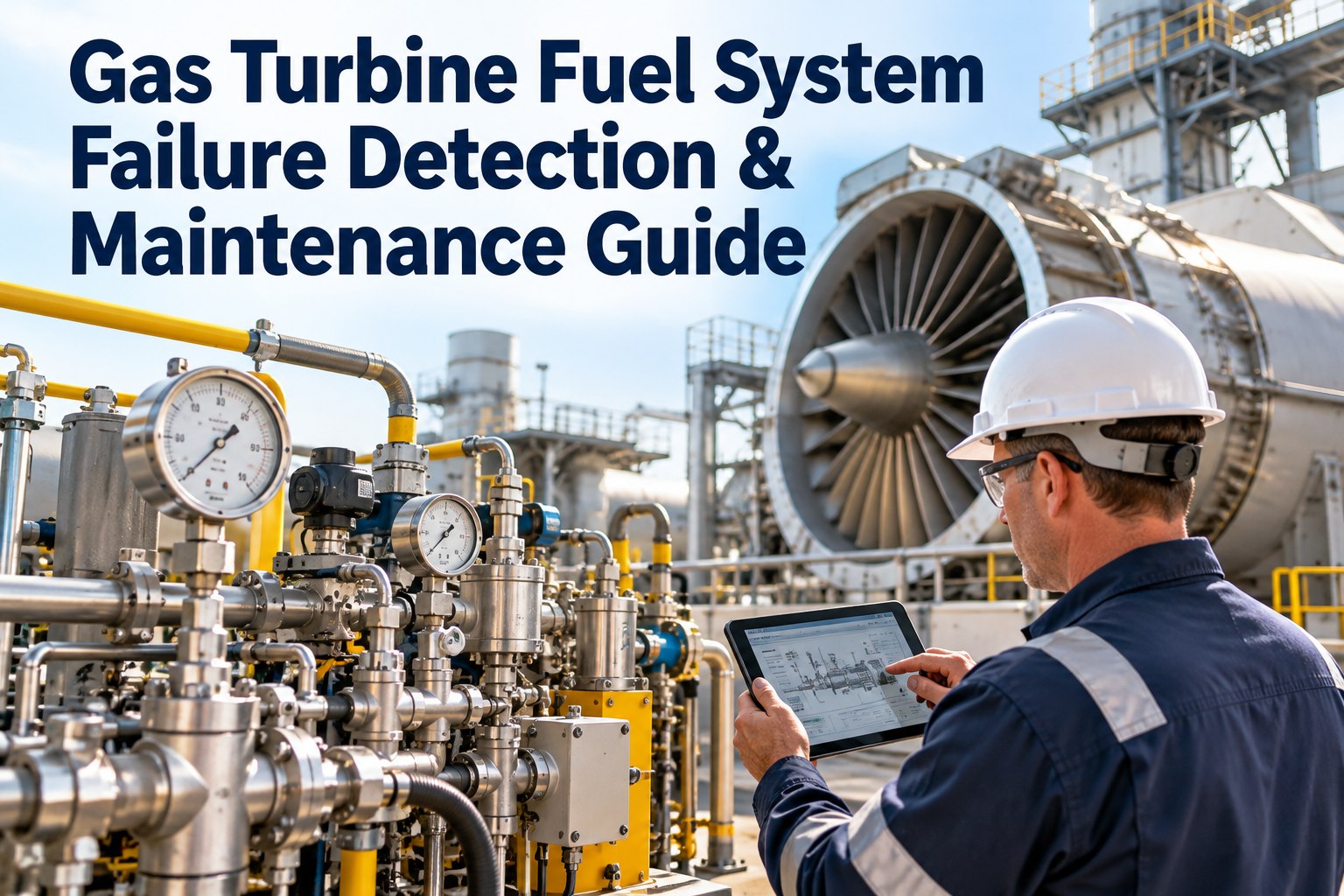
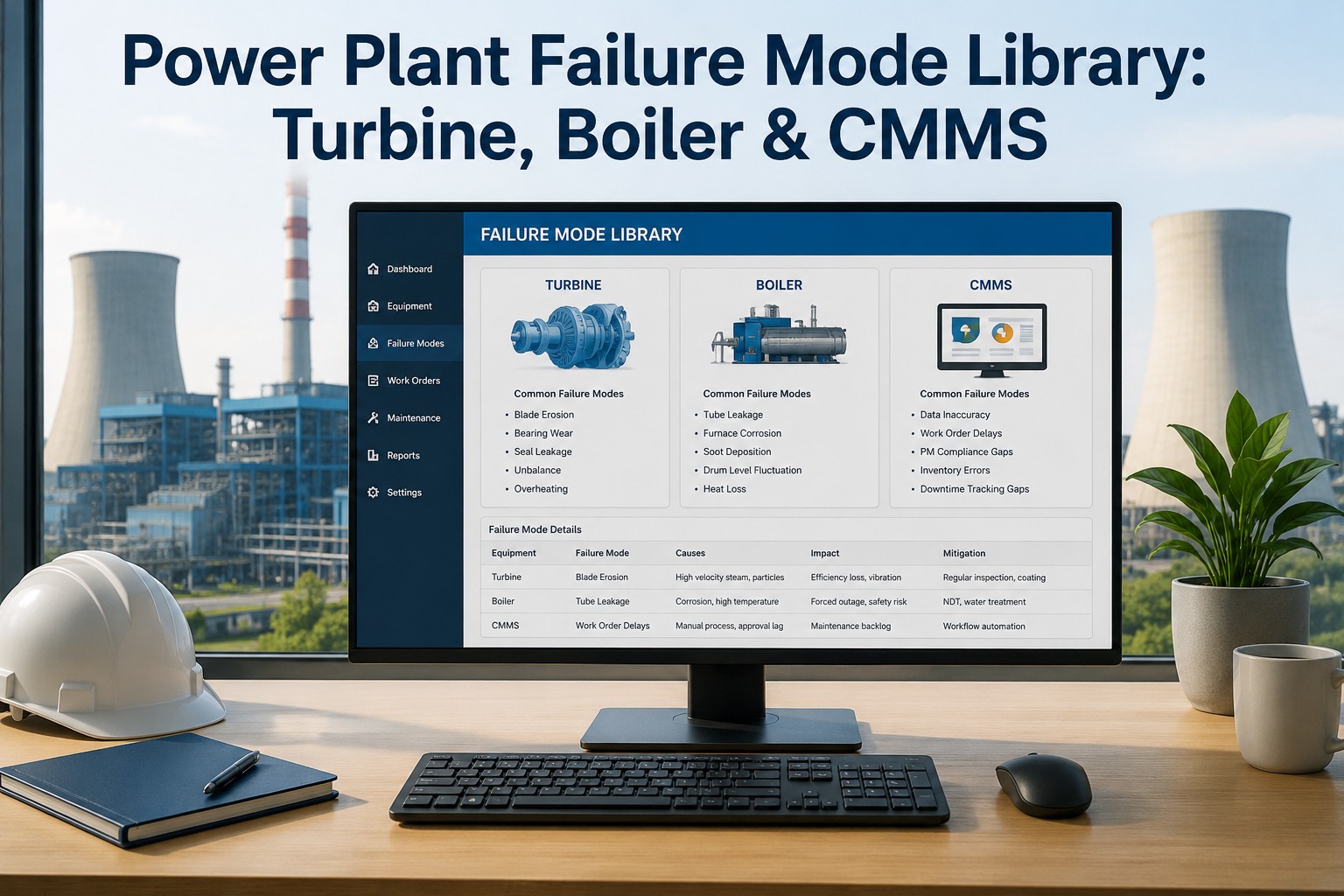
A gas turbine burns millions of cubic feet of fuel a day through nozzles the size of a thumb. One fouled nozzle, one sticky control valve, one degraded fuel filter — and the exhaust temperature spread opens, combustion dynamics climb, and the unit trips at the worst possible hour. These failures almost never arrive without warning; they arrive as a pattern across five signals that nobody is reading together. OXMAINT AI is the AI-powered CMMS and maintenance management software that watches those signals, decodes the abnormality, and opens a ranked work order before the trip — so a $200k nozzle change doesn't become a forced outage.
GAS TURBINE · FUEL SYSTEM FAILURE DETECTION · MAINTENANCE GUIDE 2026
Gas Turbine Fuel System Failure Detection & Maintenance
Fuel-system faults rarely appear as one dramatic alarm. They appear as a drifting pressure, a lazy valve, a widening EGT spread — signals that look fine alone but tell a clear story together. The OXMAINT AI maintenance management software reads pressure, flow, valve position, temperature and combustion trends on one shared view, decodes the abnormality against known failure patterns, and routes the fix to the right crew before the unit trips.
PPressure
FFlow
VValve
TTemp
CCombustion
5
signal families together decode almost every fuel-system fault — alone, each one lies
7-14
days of early warning typical before a nozzle, filter or valve failure forces a trip
#1
cause of unplanned gas-turbine outages across every OEM: fuel-system and combustion issues
1
drifting EGT spread or combustion-dynamics channel is enough to warrant a work order
Where Fuel Faults Show Up: The System, End to End
Fuel moves through a short, hostile chain between the supply skid and the combustor — and every link in that chain fails in its own way. Monitoring is not about watching the whole system; it is about watching the right signal at each stage. OXMAINT AI holds a tagged register of every component in the fuel path and the signals that watch it, so an anomaly points straight to its source — schedule a walkthrough of the fuel-path monitoring in OXMAINT AI.
01
Fuel Supply
Watch: inlet pressure, temperature, gas composition (Wobbe)
→
02
Filter / Coalescer
Watch: differential pressure across element
→
03
Stop Valve
Watch: position vs demand, stroke time
→
04
Control Valve
Watch: tracking error, hysteresis, flow linearity
→
05
Fuel Manifold
Watch: downstream pressure, flow split across cans
→
06
Nozzles
Watch: flow number, discharge pattern, coking
→
07
Combustor
Watch: EGT spread, dynamics, flame-detector counts
The Five Signal Families — What Each Tells You Alone
Every fuel-system condition sends its signature across five signal families. On their own, each has a comfortable operating band and each one is easy to dismiss when it drifts. Read together on one view, they diagnose the system. OXMAINT AI pulls all five from control-system tags into one asset-grounded trend, so a shift supervisor sees the pattern, not the dots.
PPRESSURE
Supply, manifold, differential
A slow fall in supply pressure, a widening differential across the filter, a sagging manifold pressure — each points at a different link in the fuel path. OXMAINT AI watches all three against a baseline per load point.
FFLOW
Metered flow vs demand
Delivered flow lagging behind the controller's demand at a stable load is the signature of valve stiction, filter restriction or supply constraint. The software ratios the two live and alerts on persistent divergence.
VVALVE
Position, tracking, stroke
Valve position lagging demand, hysteresis widening, stroke time climbing — the three fingerprints of a stop/control valve on its way to failure. OXMAINT AI benchmarks every stroke against the valve's own history.
TTEMPERATURE
Fuel, exhaust, EGT spread
Rising fuel inlet temp changes density and heating value. A widening EGT (exhaust gas temperature) spread across thermocouples is the single clearest sign of uneven combustion — and almost always a fuel distribution issue.
CCOMBUSTION
Dynamics, flame scanners
Combustion pressure fluctuation monitoring (CPFM) channels climbing, flame-detector pulse counts falling, lean blow-out margin narrowing — the system telling you the flame is becoming unstable before it trips.
+COMPOSITION
Wobbe Index, LHV
Fuel gas quality drift (Wobbe Index outside OEM band, LHV change) upsets combustion before any mechanical sign appears — a supply-side early warning OXMAINT AI logs from the gas chromatograph.
A Fuel Fault Is Rarely a Single Alarm — It's a Pattern Across Five Signals.
Reading one gauge at a time is how fuel-system failures become forced outages. The OXMAINT AI maintenance management software reads all five signal families on one asset-grounded view, matches the pattern against known failure signatures, and drafts the work order the moment the signature is clear.
The Pattern Decoder: Abnormality → Interpretation → Action
The same pressure fall means three different things depending on which other signals move with it. This decoder matches the pattern seen on the trend view to the maintenance action it demands. OXMAINT AI holds this logic against each asset — a matching pattern opens a prioritized work order with the suspect component already attached — start free and set up the pattern decoder on your fleet in OXMAINT AI.
Pattern you see
What it means
Maintenance action
Filter ΔP rising, supply pressure stable
Fuel filter/coalescer loading with contaminants
Schedule filter element change-out; sample liquid-side drain
Valve position lags demand, flow falls short
Control valve stiction, actuator wear, or signal fault
Stroke test offline; inspect actuator/positioner; verify I/P signal
EGT spread widens at steady load
Uneven fuel distribution — nozzle fouling, coking, or cracked part
Thermocouple cross-check; borescope hot section; plan nozzle swap
Dynamics channel climbs, flame counts fall
Lean blow-out margin eroded — combustion becoming unstable
Check Wobbe/LHV; verify DLN tuning; schedule tuning window
Wobbe out of band, EGT spread growing
Gas quality shift — combustion drifting with supply composition
Confirm with GC; retune control if persistent; raise with gas supplier
Dual-fuel transfer stalls or exceeds limit
Liquid-fuel skid primed badly, check valve stuck, atomizing air fault
Inspect transfer sequence; test atomizing air; verify liquid stop valve
Six Failure Modes and the Fingerprint Each Leaves
Every fuel-system failure has a signature across the five signal families — the specific combination of which signals move, and in which direction. OXMAINT AI holds the fingerprint for each known mode and matches live data against the library, so the diagnosis comes with the alert, not after the trip.
Fuel Filter Plugging
PFVTC
Differential pressure across the filter element climbs; delivered flow starts lagging; control valve opens further to compensate.
Control Valve Stiction
PFVTC
Position hunts around demand, flow lags, combustion dynamics channels rise as fuel delivery becomes jerky.
Fuel Nozzle Fouling / Coking
PFVTC
EGT spread widens progressively; combustion dynamics channel climbs on affected can; no primary flow or pressure shift.
Combustion Dynamics Excursion
PFVTC
Dynamics channels (low, intermediate, high frequency) rise sharply; EGT spread may widen; often tracks Wobbe swing.
Gas Quality Shift (Wobbe Drift)
PFVTC
Gas chromatograph reports composition outside OEM band; flow adjusts for lower heating value; combustion stability shrinks.
Dual-Fuel Transfer Fault
PFVTC
During gas-to-liquid or liquid-to-gas transfer, pressure sags, flow is interrupted, dynamics spike — often ends in trip if not caught.
Rising Falling No change · P=Pressure · F=Flow · V=Valve · T=Temp · C=Combustion
From Detected Pattern to Closed Work Order
A detected pattern is only useful if it reaches the right crew with the right context. OXMAINT AI runs the loop from signal pattern to closeout record on one chain, so an EGT spread caught at 02:00 becomes a nozzle borescope on the next planned window, not a surprise trip on the one after that — get a walkthrough of the detection-to-action loop in OXMAINT AI.
1
Pattern Detected
Signals across the five families cross their asset baseline and match a known fingerprint. The software opens a prioritized defect record.
2
Work Order Drafted
OXMAINT AI drafts the work order with the suspect component, prior history, drawings, spares list and recommended inspection method pre-attached.
3
Routed by Criticality
Gas-turbine fuel-system faults carry high criticality — the order jumps to the top of the maintenance queue and alerts the ops shift lead.
4
Executed & Evidenced
The crew closes the work order from the deck — borescope images, swapped-part serials, torque values, retest readings all attached in the field.
5
Signal Returns & Recorded
The trends settle back inside baseline. OXMAINT AI logs the full chain — pattern, action, result — and feeds it back into the pattern library for the next run.
How the OXMAINT AI Software Runs Fuel-System Detection
The anatomy map, the five-signal view, the pattern decoder, the failure-mode fingerprints and the detection-to-action loop are all features the OXMAINT AI maintenance management software was built to run on gas turbines. No separate dashboarding tool. No manual trend hunting — spin up a free account and put your turbine fuel system on OXMAINT AI.
Asset-Grounded Trends
The five signal families pulled from DCS/control tags into one trend view, bound to the turbine's component register.
Baseline per Load Point
OXMAINT AI learns normal pressure, flow, valve and EGT behaviour at each load band — deviations are measured against the right reference, not a fixed limit.
Pattern Fingerprint Library
Known failure-mode fingerprints held against each turbine model — a matching live pattern opens a diagnosed, prioritized work order.
EGT Spread & Dynamics Watch
Thermocouple spread, dynamics channels and flame-detector counts tracked continuously, with alerts tuned to progressive drift rather than one-shot spikes.
Mobile Closeout in the Field
Borescope images, serial numbers, torque values and retest readings attached from a phone against the asset — no clipboard-to-system transcription.
Fuel-System History Record
Every pattern, action and outcome retained in OXMAINT AI — the library grows with your fleet and tunes itself to the specific turbines you run.
Frequently Asked Questions
What is the single clearest early sign of a gas turbine fuel-system problem?
A widening EGT (exhaust gas temperature) spread across the thermocouple ring at steady load. It almost always points at uneven fuel distribution — nozzle fouling, coking, or a cracked part. OXMAINT AI tracks spread continuously and raises a work order on progressive drift.
Start free and watch EGT spread on your turbines in OXMAINT AI.
Does this replace our combustion dynamics monitoring (CPFM) system?
No — it reads from it. OXMAINT AI ingests dynamics channels alongside pressure, flow, valve and temperature, so a dynamics excursion is seen in the context of the whole fuel path, not as an isolated alarm.
How does the software know what "normal" is for our specific turbine?
OXMAINT AI learns baselines per load point from your own operating data. A deviation is measured against how your unit behaved at the same load last week — not against a one-size limit from a generic OEM spec.
We run dual fuel. Does the pattern library cover transfer sequences?
Yes. Dual-fuel transfer faults (atomizing-air issues, liquid-side priming, stuck check valves) have their own fingerprint in the library — pressure sag, flow interruption and dynamics spike during the transfer window.
How fast can we have fuel-system detection running?
Most plants have signal tags mapped and baselines learned within two to three weeks per unit once control-system access is in place. The OXMAINT AI team will scope the integration with you.
See the Fuel-System Trip Before It Happens.
Run the five signal families on the OXMAINT AI maintenance management software, let the pattern decoder diagnose the fault, and route the fix to the right crew before the EGT spread becomes a forced outage. One view. One pattern library. One record from signal to closeout.