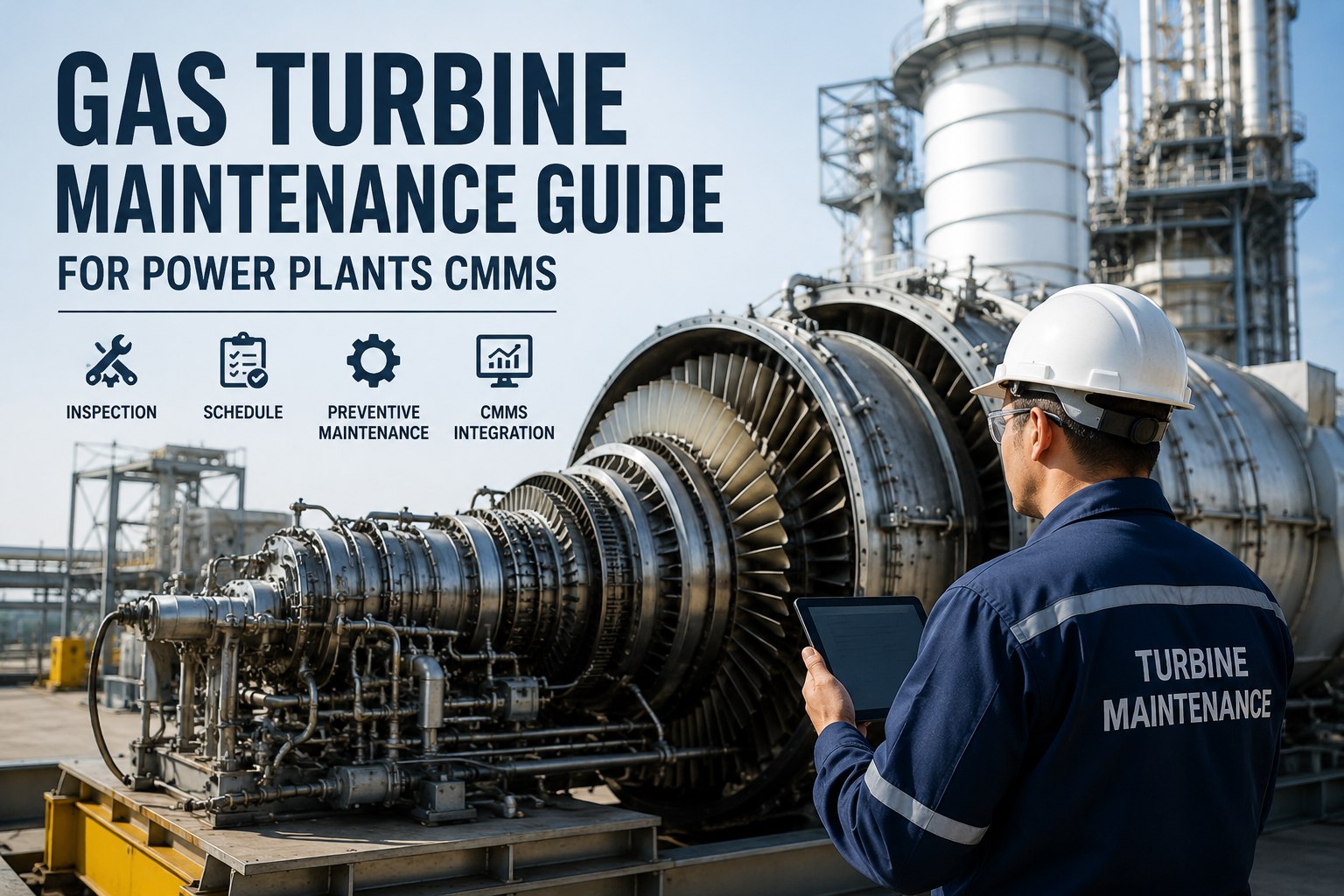
A gas turbine does not measure its life in years — it measures its life in fired hours. Every hour of operation, every start-stop cycle, every load excursion consumes a defined portion of the inspection budget the OEM engineered into that specific unit. When the meter reads 8,000 fired hours, a Combustion Inspection is due. At 24,000 fired hours, the Hot Gas Path Inspection scope opens. At 40,000-48,000 fired hours, a Major Inspection takes the entire machine apart. Miss the tracking, and the cascade begins: combustion liner degrades, transition piece cracks, first-stage nozzle warps, hot gas path damage compounds, and a $2M-8M repair replaces what should have been a scheduled event. Modern gas turbine maintenance is not calendar-driven — it is fired-hour-driven, running against inspection intervals defined by standards like GER-3620 and tracked continuously by a CMMS that consumes DCS data in real time. This guide walks through the three-tier inspection hierarchy, factored fired-hour mathematics, and section-by-section PM discipline that keeps a $50M-$150M capital asset producing revenue for its full engineered life. Book a free demo to see gas turbine tracking running inside OxMaint.
The Fired Hours Progression Meter
Where a typical baseload GT unit sits on the inspection budget
A GT running baseload 7,000 hours per year reaches Hot Gas Path Inspection in under four years — and the countdown starts the moment the last inspection reset the clock
$50K-250K
per-hour cost of unplanned gas turbine downtime — lost generation, penalty payments, cascade failures
$50M-150M
capital value of a frame-class gas turbine — the most expensive rotating asset in most power plants
1,100°C+
peak combustion temperature under 30+ atmospheres — the operating environment that drives every PM interval
Gas Turbine Anatomy — Five Sections, Five Maintenance Disciplines
A gas turbine is not one asset but five distinct maintenance zones connected by a common rotor. Air enters through the inlet, gets compressed by 15-30 stages of compressor blades, ignites in the combustion cans, expands through the hot gas path turbine section, and exits through the exhaust. Each of these sections operates under fundamentally different physics, wears at different rates, and requires its own PM discipline. The failure mode in one section can silently damage the next, which is why a comprehensive turbine PM program covers every zone every inspection cycle.
Gas Turbine · Section-by-Section PM Zones
01
Air Inlet
Filter house, silencer, evaporative cooler, IGV assembly
Filter loading, corrosion, foreign object
02
Compressor
15-30 axial stages, rotor blades, stator vanes, casing
Fouling, erosion, blade rub, water wash
03
Combustion
Combustor cans, fuel nozzles, liners, crossfire tubes, transitions
Cracking, hot spots, fuel distribution
04
Hot Gas Path
Stage 1/2/3 nozzles & buckets, shrouds, cooling circuits
Blade erosion, cooling hole plugging, coating loss
05
Exhaust
Diffuser, exhaust plenum, thermocouple grid, HRSG interface
Thermal gradients, corrosion, structural fatigue
The Three-Tier Inspection Hierarchy
Every major gas turbine OEM — GE, Siemens, Mitsubishi — organizes maintenance around the same three-tier inspection hierarchy: Combustion Inspection, Hot Gas Path Inspection, and Major Inspection. Each tier has a defined fired-hour interval, an inherited scope from the previous tier, and an escalating cost and duration profile. Modern maintenance strategies increasingly consolidate CIs into HGPIs and HGPIs into MIs to minimize the number of forced-outage windows. OxMaint enforces this hierarchy so scope inheritance happens automatically.
Tier 1
Combustion Inspection
CI
Every 8,000-12,000 FFH
Duration7-14 days
Downtime cost$8M-40M lost generation
Scope depthCombustion hardware only
RepeatsTwice before HGPI
Focus: fuel nozzles, liners, crossfire tubes, transition pieces
Tier 2
Hot Gas Path Inspection
HGPI
Every 24,000 FFH
Duration21-35 days
Downtime cost$25M-175M lost generation
Scope depthCombustion + HGP components
RepeatsOnce before MI
Adds: turbine blades, vanes, nozzles, stator shrouds, cooling verification
Tier 3
Major Inspection
MI
Every 40,000-48,000 FFH
Duration45-90 days
Downtime cost$50M-450M lost generation
Scope depthFull teardown & rebuild
RepeatsLife extension cycle
Adds: compressor, rotor, bearings, casing, controls — everything
Factored Fired Hours — The Real Maintenance Clock
Calendar time is the wrong measure for gas turbine inspections. Two identical turbines can operate for the same 8,000 calendar hours and consume dramatically different portions of their inspection budget depending on how they were operated. A baseload unit running at steady state consumes fired hours 1:1. A cycling peaker starting and stopping daily consumes fired hours 3-5×. A unit running distillate fuel burns through combustion hardware faster than gas-fired operation. Factored Fired Hours (FFH) is the industry's answer to this reality — a weighted count that reflects actual operating severity. OxMaint calculates FFH continuously from live operating data so the next inspection date reflects reality, not a calendar estimate entered three years ago.
Operating Severity · How Each Event Consumes the FFH Budget
Baseload steady-state operation (gas fuel)
1.0×
1 fired hour = 1 FFH · reference case
Load excursion / rapid ramp
1.2-1.5×
Thermal cycling accelerates blade fatigue
Cold start from ambient
5× hours
Peak thermal stress on liners and blades
Distillate / liquid fuel operation
2-3×
Higher combustion severity than natural gas
Unplanned trip from full load
8-10× hours
Most severe single event — thermal shock damage
Peaking / cycling operation
2-4×
Repeated start-stop cycles compound fatigue
A peaker unit with 200 starts per year can reach HGPI in half the calendar time of a baseload unit running the same rated hours
Track FFH, FFS & EOH in Real Time
OxMaint calculates Factored Fired Hours, Factored Fired Starts, and Equivalent Operating Hours continuously from your DCS — automatically triggering CI, HGPI, and MI work orders per unit at the correct interval. See it live against your GT fleet.
Combustion Inspection — Scope & Deliverables
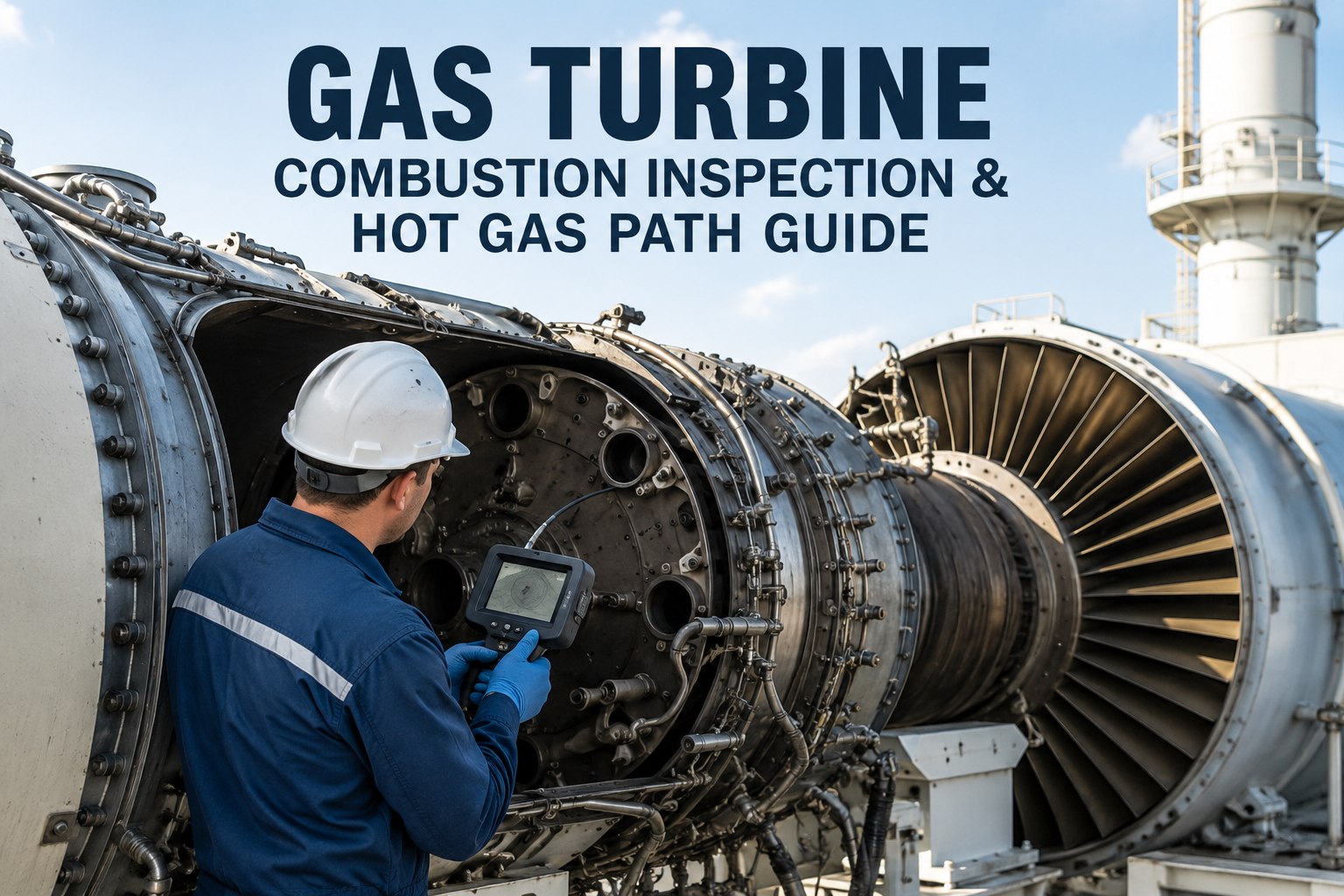
The Combustion Inspection is the first major service event in the gas turbine maintenance cycle and the most frequently repeated. It focuses on the combustion hardware where the most severe temperature and pressure conditions exist — the section of the machine that ages fastest under normal operation. A well-executed CI catches early cracking in liners, wear in transition pieces, and fuel nozzle degradation before those failures propagate downstream into the hot gas path.
CI Scope · Combustion Hardware Focus
Fuel Nozzles
Wear pattern, orifice condition, flow calibration verification
Combustor Liners
Crack inspection, coating condition, thermal barrier integrity
Crossfire Tubes
Alignment, wear at contact surfaces, coating loss
Transition Pieces
Aft end erosion, cracking at HGP interface, cooling holes
Combustor Casing
Bolt hardware, gasket condition, casing hot-spot mapping
Fuel Manifold System
Pressure tests, purge system verification, control valve stroke
Hot Gas Path Inspection — The Deep Dive at 24,000 Hours
The Hot Gas Path Inspection is the most critical mid-life maintenance event on a gas turbine. Everything in the CI scope is repeated, plus the turbine section itself is opened for detailed inspection of the components that see the hottest and fastest-moving gas in the entire machine. A missed HGPI cascades into a catastrophic hot gas path failure — the exact scenario that turns a scheduled 21-35 day outage into an unscheduled 12-week rebuild.
HGPI Scope · Turbine Section Added to CI Scope
Stage 1 Nozzles
Trailing edge cracking, cooling hole plugging, coating erosion
Stage 1 Buckets
Blade root inspection, tip clearance, cooling passages, dovetail
Stage 2 & 3 Nozzles / Buckets
Erosion, coating condition, cooling circuit verification
Stator Shrouds
Rub marks, sealing surfaces, cooling flow verification
Cooling Air Circuits
Pressure verification, flow testing, orifice cleanliness
Wheel Space Thermocouples
Calibration, wiring integrity, protection logic verification
Major Inspection — The Full Rebuild at 40,000-48,000 Hours
The Major Inspection is the largest scheduled event in a gas turbine's operating life — a full teardown that opens every section of the machine, replaces or refurbishes components approaching end-of-life, and effectively resets the unit's aging clock. It is expensive, it takes weeks, and it defines the operating economics of the next inspection interval that follows. Plants that execute MIs with disciplined pre-planning and scope management deliver units back to service on schedule; plants that do not, extend outages by weeks and burn through cash faster than any other single maintenance decision.
MI Scope · Complete Turbine Overhaul
Compressor Section
All stages inspected, rotor blades measured, IGV overhaul, casing NDE
Rotor Assembly
Removed, cleaned, NDE inspected, dynamic balance, thermal barrier refresh
Bearings & Journals
Babbitt inspection, clearance measurement, replacement per condition
All Combustion Hardware
Full replacement of consumables, liner refurbishment or replacement
All HGP Components
Full nozzle/bucket replacement or refurbishment across all stages
Controls & Instrumentation
Full calibration, protection logic verification, software updates
Continuous Monitoring — What Happens Between Inspections
The three-tier inspection cycle defines when major work happens. Between those events, continuous monitoring is what actually keeps the turbine safe. The reading panel below reflects the parameter set that OxMaint captures from the DCS and trends against baselines — with automatic alerts when any parameter drifts outside the envelope that separates normal operation from imminent damage.
Continuous Monitoring Panel · Trended Per Unit in OxMaint
Bearing vibration (X/Y axis)
Baseline < 4 mils · alarm at 7 mils
Bearing metal temperature
Baseline < 200°F · alarm at 240°F
Wheel space temperature spread
Baseline within OEM band · trends flag drift
Exhaust temperature spread
Symmetric distribution · deviation flags combustor issue
Compressor efficiency
Trend downward = fouling · wash cycle triggers
Lube oil pressure & temperature
Header pressure stable · bearing feed within spec
Fuel gas pressure & temperature
Manifold pressure stable · gas heater output verified
Combustion dynamics (pressure oscillation)
Amplitude below alarm threshold per can
Expert Perspective · The Discipline That Protects the Asset
Every gas turbine I have worked on has one number that matters more than every other number in the plant — the Factored Fired Hours counter. Get that number right, and the entire inspection program falls into place: CI, HGPI, MI, at the correct intervals, with the correct scope, at the correct cost. Get it wrong — track it on a spreadsheet, estimate it from calendar time, forget to reset it after the last outage — and the entire program is running on a fiction. The plants that consistently deliver availability numbers above 95% are the ones whose CMMS pulls FFH from the DCS in real time and updates the maintenance clock on every unit continuously. There is no shortcut around this. The turbine keeps its own time, and the plant either respects that or pays for it.
FFH Is the Real Clock
OxMaint calculates Factored Fired Hours from live DCS data — calendar estimates and manual counters have no place in modern GT operations.
Scope Inheritance Matters
CI scope rolls into HGPI, HGPI rolls into MI. OxMaint enforces the hierarchy so consolidated outages capture every required task.
Between-Inspection Vigilance
Bearing vibration and exhaust spread signal damage weeks before failure. Continuous OxMaint trending catches those signals early.
Protect Every Fired Hour of Your Gas Turbine
If your GT inspection intervals are still tracked on a spreadsheet, you are running against a fiction of the maintenance clock. See what OxMaint — a maintenance management platform built for power generation reliability — looks like against your gas turbine fleet.
Frequently Asked Questions
How often does a gas turbine need a Combustion Inspection?
Combustion Inspection intervals fall between 8,000 and 12,000 Factored Fired Hours depending on fuel type, unit model, and operating profile. Baseload gas-fired units typically hit CI at 12,000 FFH; distillate or cycling units come due earlier at 8,000 FFH. Modern maintenance strategies increasingly consolidate CI scope into the next scheduled outage to minimize forced downtime. OxMaint calculates FFH continuously and fires the CI work order at the correct interval per unit.
What is included in a Hot Gas Path Inspection?
HGPI covers everything in the Combustion Inspection scope plus the turbine section itself. Key added items: Stage 1, 2, and 3 nozzles and buckets, stator shrouds, cooling air circuits, wheel space thermocouples, and full borescope evaluation of blade condition. HGPI typically runs 21-35 days on a scheduled outage. It occurs every 24,000 Factored Fired Hours and is the most critical mid-life event on the machine.
What are Factored Fired Hours and why do they matter?
Factored Fired Hours (FFH) is a weighted count of operating hours that reflects actual severity. A cold start consumes 5 fired hours of budget. A trip from full load can consume 8-10× hours. Liquid fuel operation runs 2-3× the severity of gas. Calendar time and even raw fired hours are misleading because two identical units can consume dramatically different portions of their inspection budget in the same period. OxMaint calculates FFH from live DCS data continuously.
How long does a gas turbine Major Inspection take?
A Major Inspection typically runs 45-90 days depending on unit model, condition, and scope of component replacement discovered during teardown. It occurs every 40,000-48,000 Factored Fired Hours and involves complete disassembly of the machine — rotor removal, all compressor and turbine stages inspected, bearings evaluated, all HGP components replaced or refurbished, and controls fully calibrated. Pre-planning discipline determines whether a plant hits the schedule or extends it by weeks.
What is the cost of unplanned gas turbine downtime?
Between $50,000 and $250,000 per hour depending on unit size, generation market conditions, penalty structures, and cascade impacts on the balance of plant. A single missed CI that cascades into hot gas path damage can result in $2M-8M in unplanned repair costs plus weeks of lost generation revenue. This is why disciplined FFH tracking is non-negotiable on frame-class units — the cost of the software is a rounding error against the cost of one prevented event.
Can OxMaint integrate with GE, Siemens, and Mitsubishi turbines?
Yes. OxMaint's gas turbine module aligns to GER-3620 and equivalent OEM standards across GE Frame 7F, Siemens SGT, and Mitsubishi M501 platforms. Each unit is set up with its correct interval mathematics, inspection scope templates, and OEM component references. FFH and FFS calculations pull from the DCS continuously, and the inspection hierarchy enforces CI → HGPI → MI scope inheritance automatically per unit.