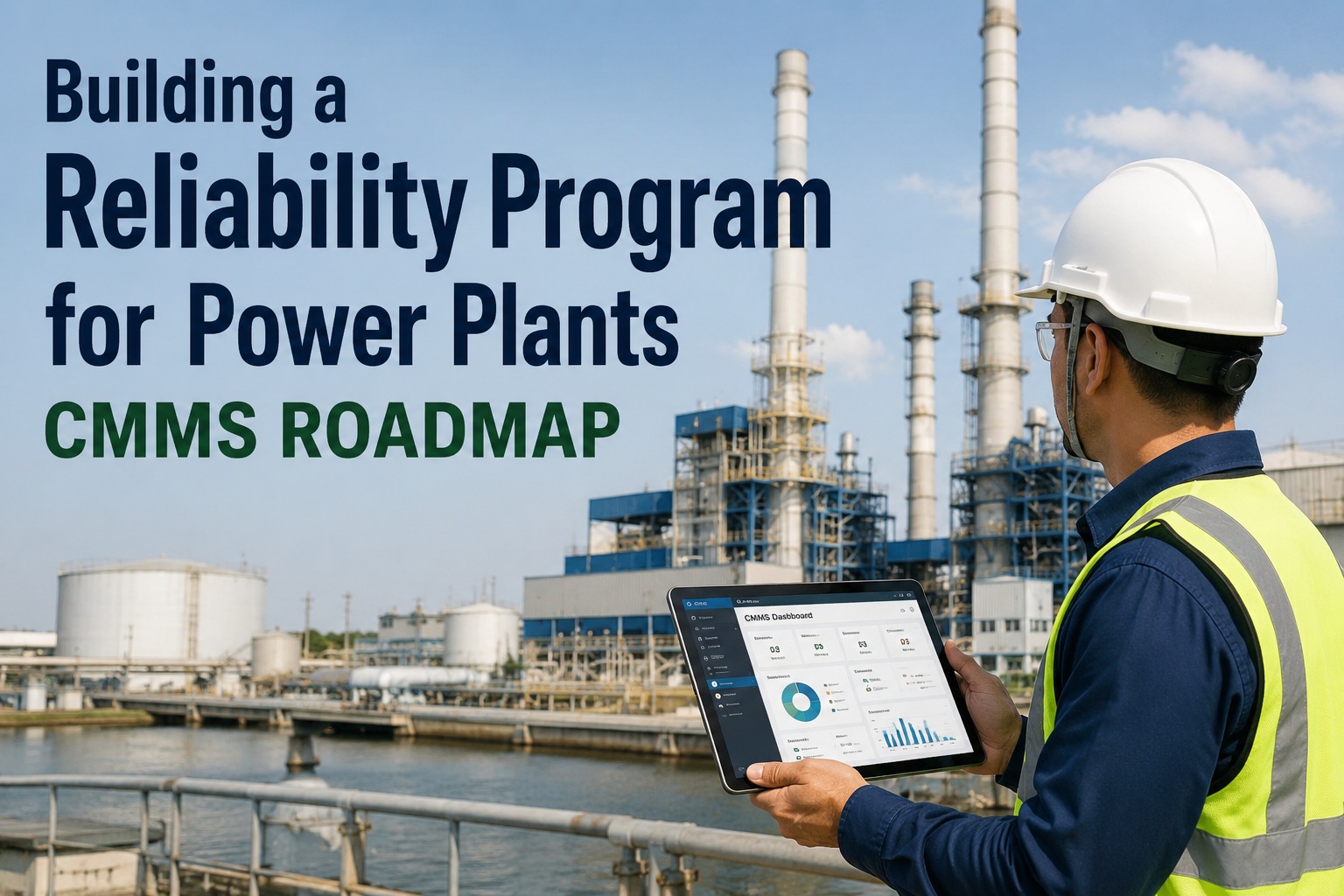
Hybrid power plants combining gas, solar, wind, and battery storage are redefining grid stability requirements — and the maintenance programs supporting them haven't kept pace. Grid-forming inverters, which actively synthesize grid voltage and frequency rather than simply following it, introduce failure modes that traditional preventive maintenance schedules weren't designed to address. Maintaining inverter firmware currency, capacitor health, cooling performance, and control board integrity requires a maintenance program built around condition-specific intervals, not calendar dates. OxMaint's CMMS gives hybrid plant operators the structured work order management, asset tracking, and inspection workflows needed to keep grid-forming inverter fleets performing reliably at scale — Sign Up Free to start building your program, or Book a Demo to see OxMaint's renewable asset management capabilities.
Why Grid-Forming Inverters Demand a Different Maintenance Approach
Grid-following inverters and grid-forming inverters share hardware — but not failure modes. Understanding the distinction is the first step to designing a maintenance program that actually protects availability.
Grid-Following Inverters
- Synchronize to existing grid voltage/frequency reference
- Fail gracefully when grid frequency drifts beyond tolerance
- Well-understood PM intervals (5–10 year capacitor replacement, annual inspection)
- Widely deployed — large maintenance knowledge base available
VS
Grid-Forming Inverters
- Synthesize voltage and frequency — must remain stable under islanding and fault conditions
- Control firmware is mission-critical — outdated firmware causes instability events
- Higher thermal loads due to continuous grid-support functions
- Fewer field deployments = less established maintenance history to draw from
The 6 Critical Maintenance Domains for Grid-Forming Inverters
A complete maintenance program addresses all six domains. Missing any one creates a reliability gap that won't show up until a grid disturbance or seasonal peak demand event exposes it.
Firmware and Control Software
Scheduled firmware review cycle. Validation testing before production deployment. Version tracking per unit in OxMaint asset records.
Quarterly review cycle
DC Link Capacitor Health
Capacitor ESR trending, visual inspection for bulging or electrolyte seepage, and replacement life tracking based on thermal history and operating hours.
Semi-annual inspection
Cooling System Performance
Fan speed verification, heatsink thermal resistance trending, coolant quality and flow rate (liquid-cooled units), and inlet filter replacement based on pressure drop readings.
Monthly check in field
IGBT / Power Module Health
Thermal imaging during full-load operation to detect junction temperature hotspots. Gate drive voltage verification. Saturation voltage trending to identify bond wire fatigue.
Annual thermography
Grid Interface and Protection Relay
Anti-islanding protection functional test, over/undervoltage trip verification, frequency ride-through capability confirmation, and protection relay setting review against current grid code.
Annual functional test
Communications and Monitoring
SCADA data point verification, alarm configuration review, latency testing on grid-support command response, and remote monitoring connectivity validation.
Quarterly validation
PM Schedule: Annual Maintenance Calendar for Grid-Forming Inverters
A structured annual PM calendar prevents the drift that occurs when hybrid plants scale inverter count faster than maintenance planning keeps up. OxMaint enforces this schedule automatically — no manual tracking required.
| Maintenance Task |
Jan–Mar |
Apr–Jun |
Jul–Sep |
Oct–Dec |
| Firmware version audit and update review |
Q1 |
Q2 |
Q3 |
Q4 |
| Capacitor visual inspection and ESR test |
H1 |
— |
H2 |
— |
| Cooling system performance check |
Monthly |
Monthly |
Monthly |
Monthly |
| IGBT thermography (full-load) |
— |
— |
Annual |
— |
| Grid protection relay functional test |
Annual |
— |
— |
— |
| SCADA / comms verification |
Q1 |
Q2 |
Q3 |
Q4 |
| Torque check: AC/DC bus connections |
— |
H1 |
— |
H2 |
OxMaint Manages Your Inverter PM Schedule So Your Team Can Focus on the Work
Auto-scheduled work orders, mobile inspection checklists, and asset history tracking — OxMaint gives hybrid plant maintenance teams the structure to keep grid-forming inverters reliable at any fleet size.
Common Grid-Forming Inverter Failure Modes and How to Prevent Them
These five failure modes account for the majority of unplanned grid-forming inverter outages in hybrid plant deployments. Each is preventable with the right maintenance program and maintenance data infrastructure.
38%
Thermal / Cooling Failure
Overheated power modules from blocked air inlets, degraded fans, or elevated ambient temperature in enclosures. Preventable with monthly cooling checks and inlet filter replacement on OxMaint PM schedule.
24%
Capacitor Degradation
DC link capacitors operating beyond design life or in high-ripple conditions degrade without visible symptoms. Semi-annual ESR testing and operating-hour-based replacement cycles catch degradation before it causes tripout.
18%
Firmware / Control Instability
Outdated firmware missing grid-code compliance updates or containing unpatched bugs causes instability during transient events. Quarterly firmware audit cycles tracked in OxMaint prevent outdated software from reaching grid disturbances untested.
12%
Connection and Torque Loss
Thermal cycling loosens AC/DC bus connections over time, increasing resistance and creating hotspots that accelerate IGBT wear. Semi-annual torque checks and thermography during full-load operation identify loose connections before arcing occurs.
8%
Protection Relay Misconfiguration
Grid code changes or site configuration modifications that aren't reflected in protection relay settings create tripping events or, worse, failure to trip when required. Annual functional tests and relay setting reviews catch configuration drift before it causes incidents.
Frequently Asked Questions
How is the maintenance program for grid-forming inverters different from standard solar or wind inverter PM?
Grid-forming inverters require firmware management, grid-support function testing, and protection relay validation in addition to standard hardware PM — because control software and protection settings are operationally critical in ways that grid-following inverter maintenance programs don't address.
OxMaint supports custom PM templates for each inverter type.
Can OxMaint manage maintenance programs for hybrid plants with multiple asset types — inverters, BESS, gas turbines?
Yes — OxMaint's asset hierarchy supports multi-technology plants with distinct PM templates, maintenance intervals, and inspection checklists per asset class. A single platform manages work orders across inverters, battery systems, and rotating equipment without requiring separate CMMS instances.
Book a Demo to see a hybrid plant configuration.
How frequently should grid-forming inverter firmware be reviewed and updated?
Quarterly firmware review cycles are the industry standard — checking manufacturer release notes for grid-code compliance updates, security patches, and performance improvements. Each update should be validated in a non-production configuration before fleet deployment and the update record should be logged in OxMaint asset history for audit purposes.
What inspection data should be captured in a mobile CMMS for inverter maintenance?
Cooling system status (fan operation, inlet obstruction, enclosure temperature), capacitor visual condition, connection integrity, indicator light status, and any active fault codes should be captured per unit. OxMaint's mobile app supports structured checklist capture with photo documentation and GPS timestamp on each inspection record.
How does OxMaint help track spare parts for grid-forming inverter fleets?
OxMaint's parts management module tracks spare inventory by asset type, triggers low-stock alerts for critical spares like DC link capacitors and fan assemblies, and links parts consumption to work orders — giving procurement teams the usage data needed to optimize stocking levels across large inverter fleets.
Start tracking your inverter spares in OxMaint.
Hybrid Plants Demand Smarter Maintenance Programs — OxMaint Delivers Them
Structured PM scheduling, mobile inspection checklists, firmware version tracking, and parts management — OxMaint gives hybrid power plant operators the maintenance infrastructure that grid-forming inverter reliability requires.