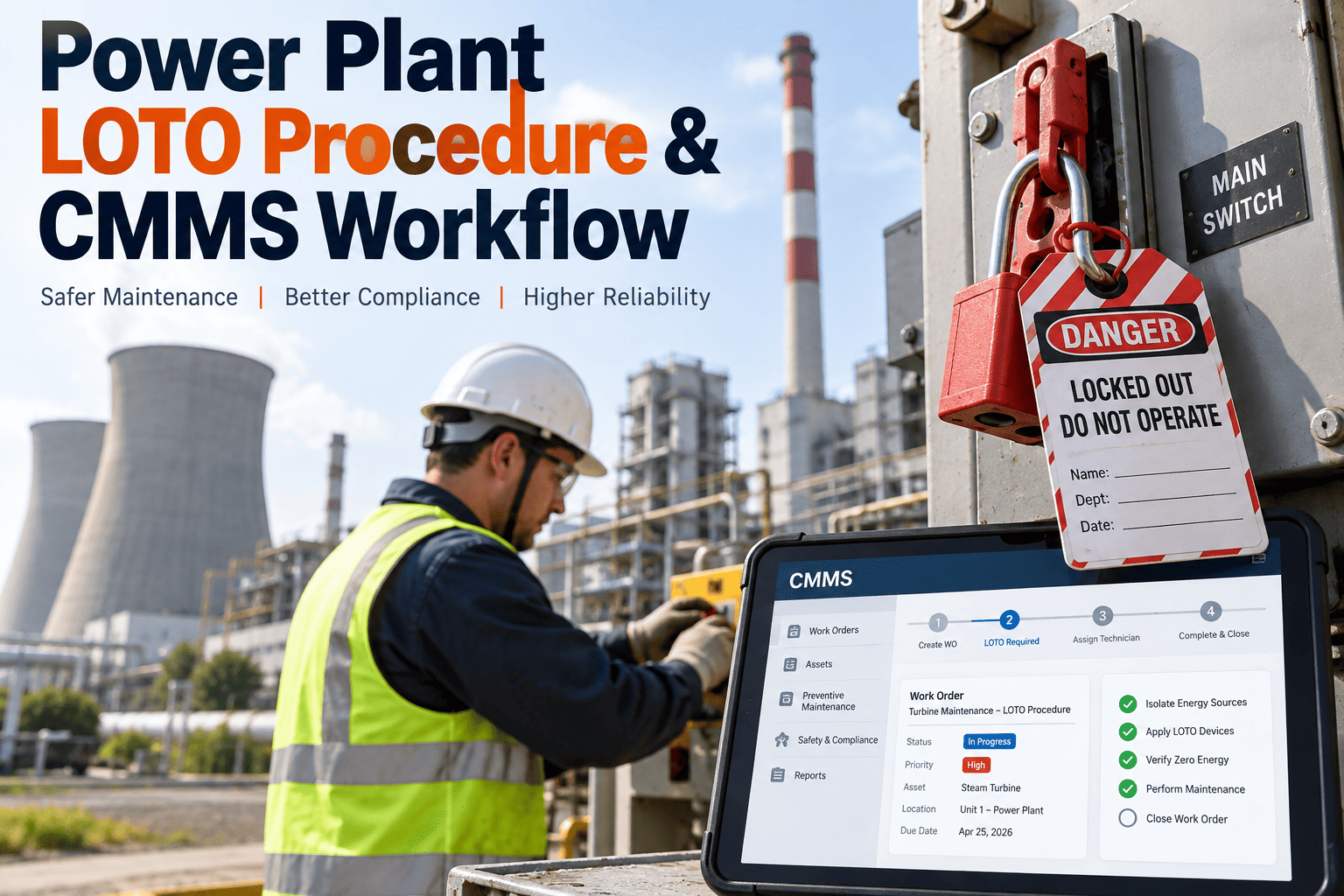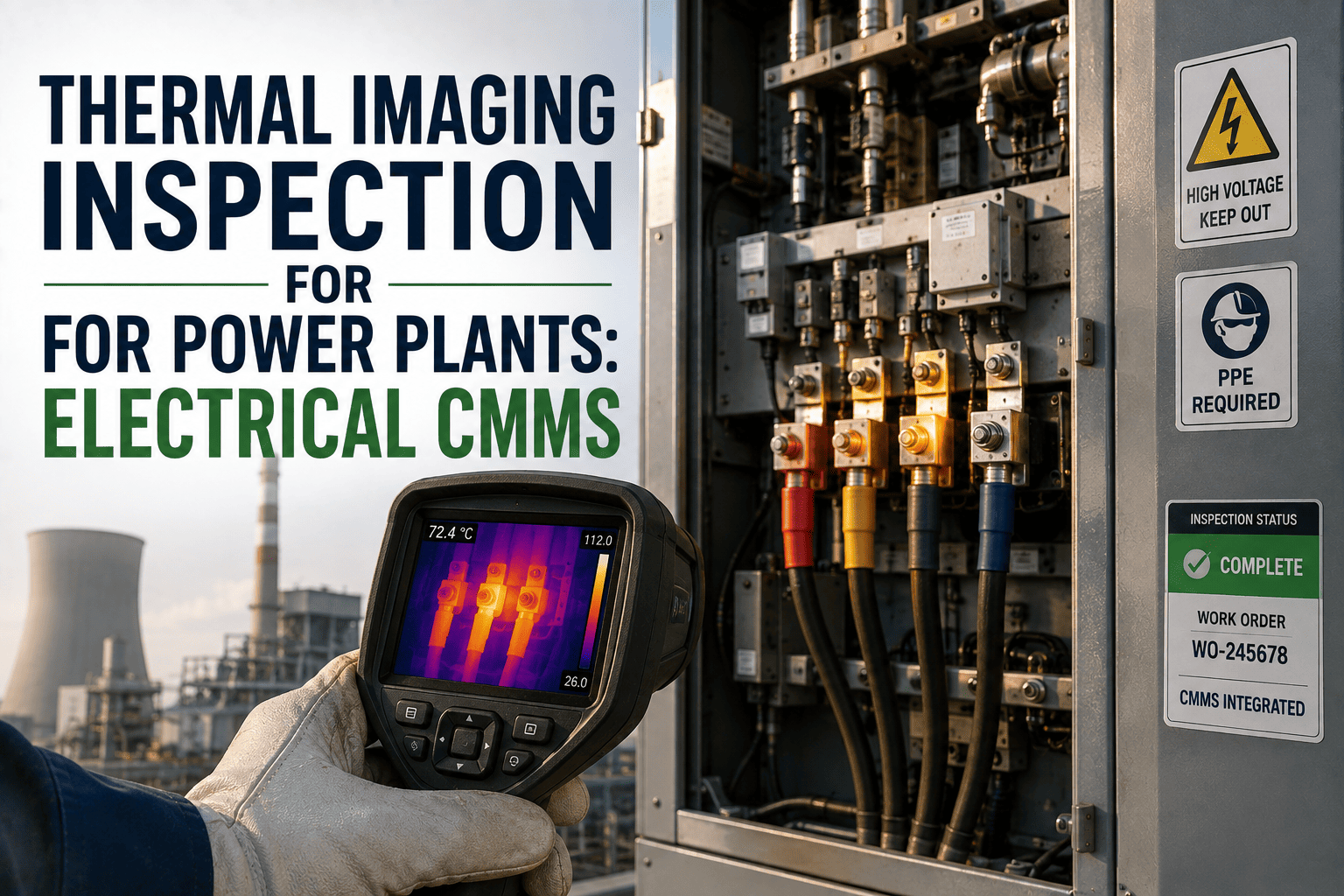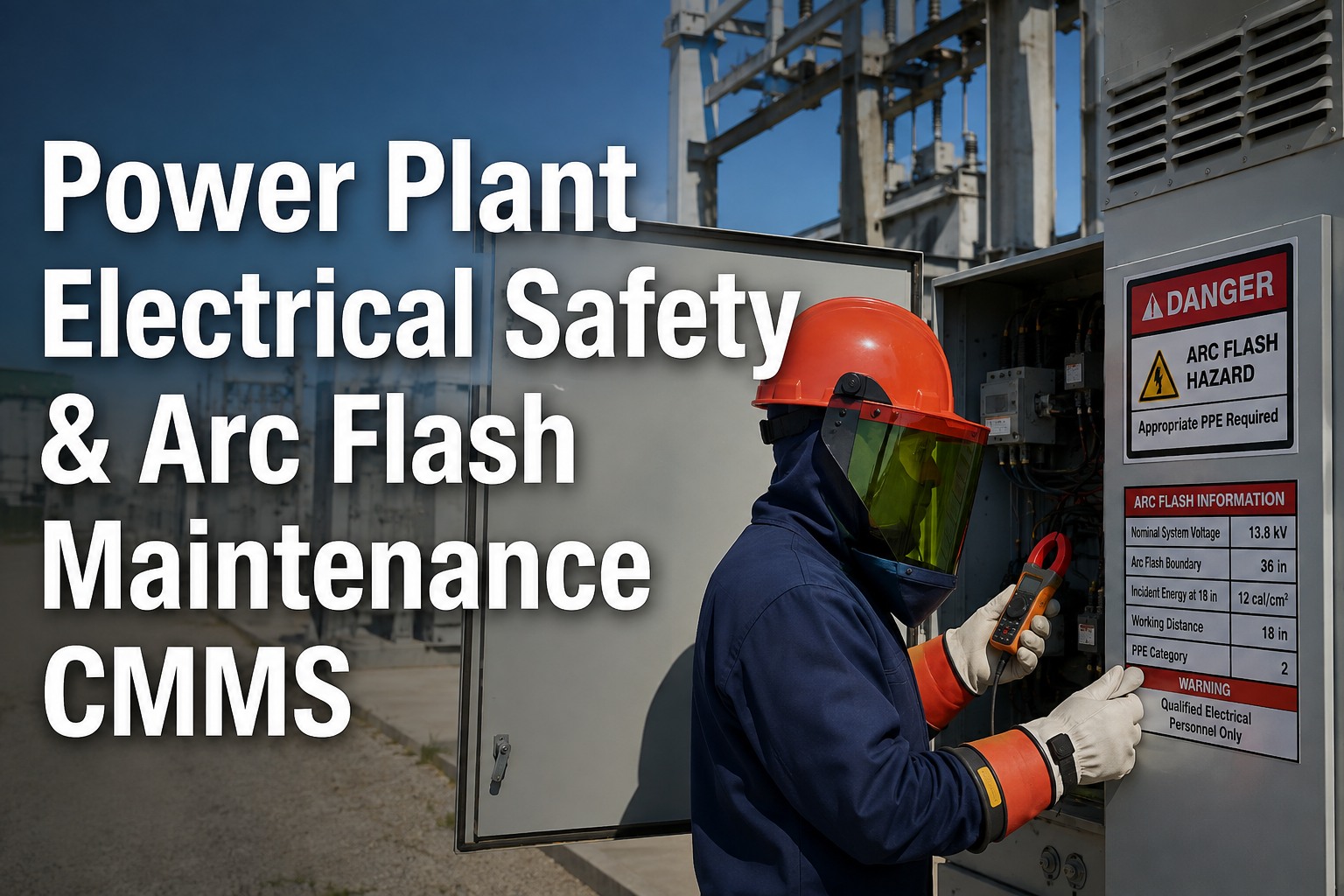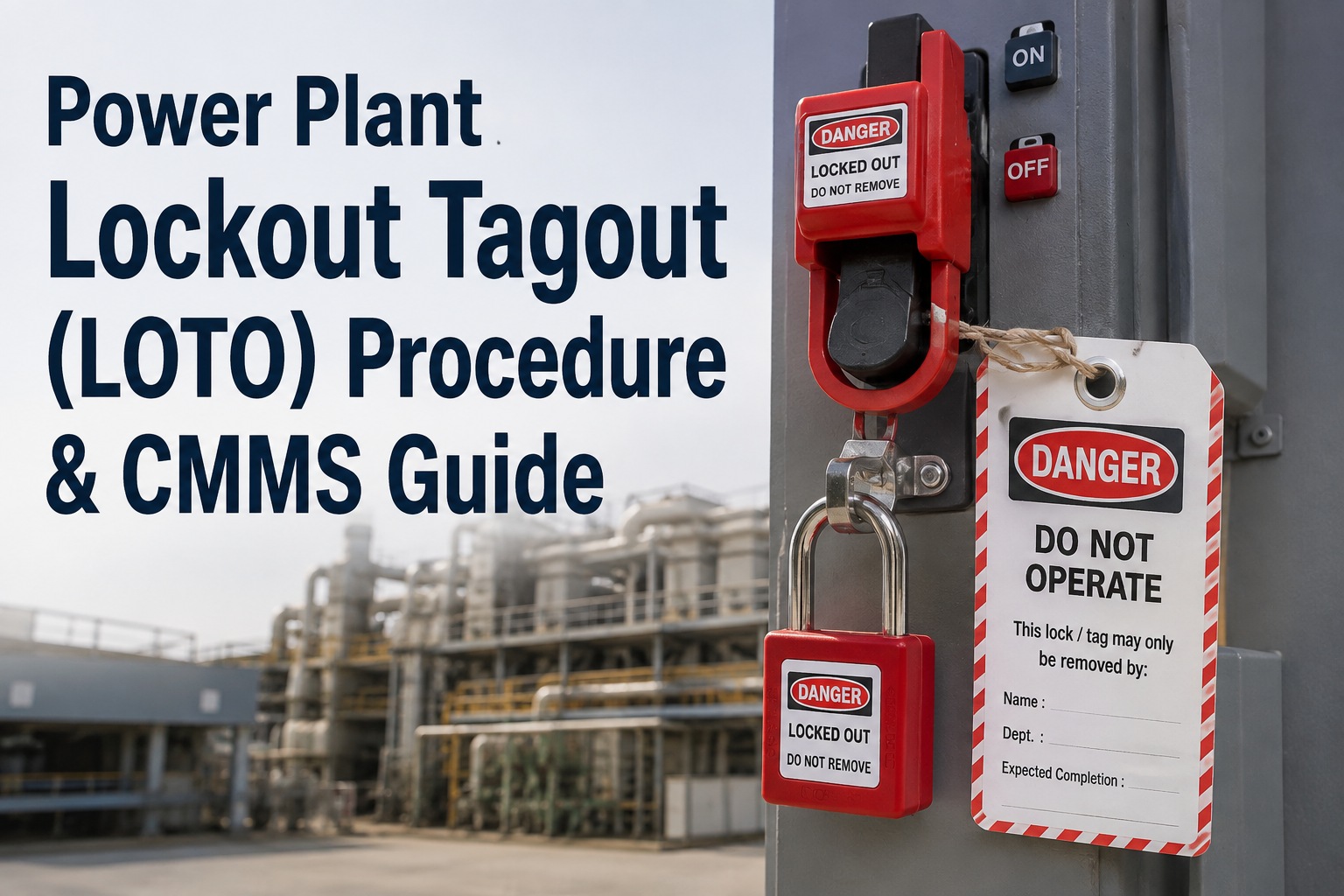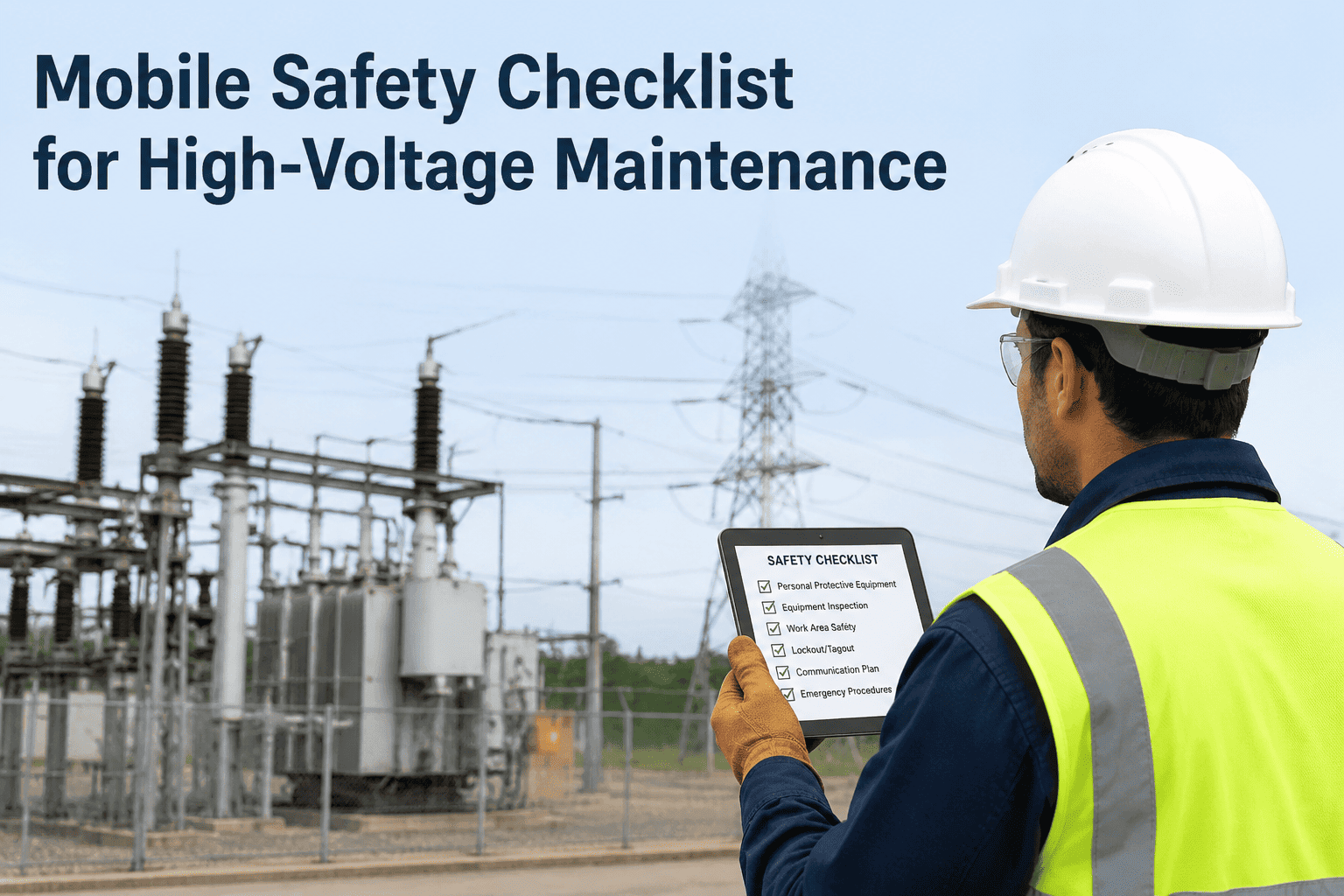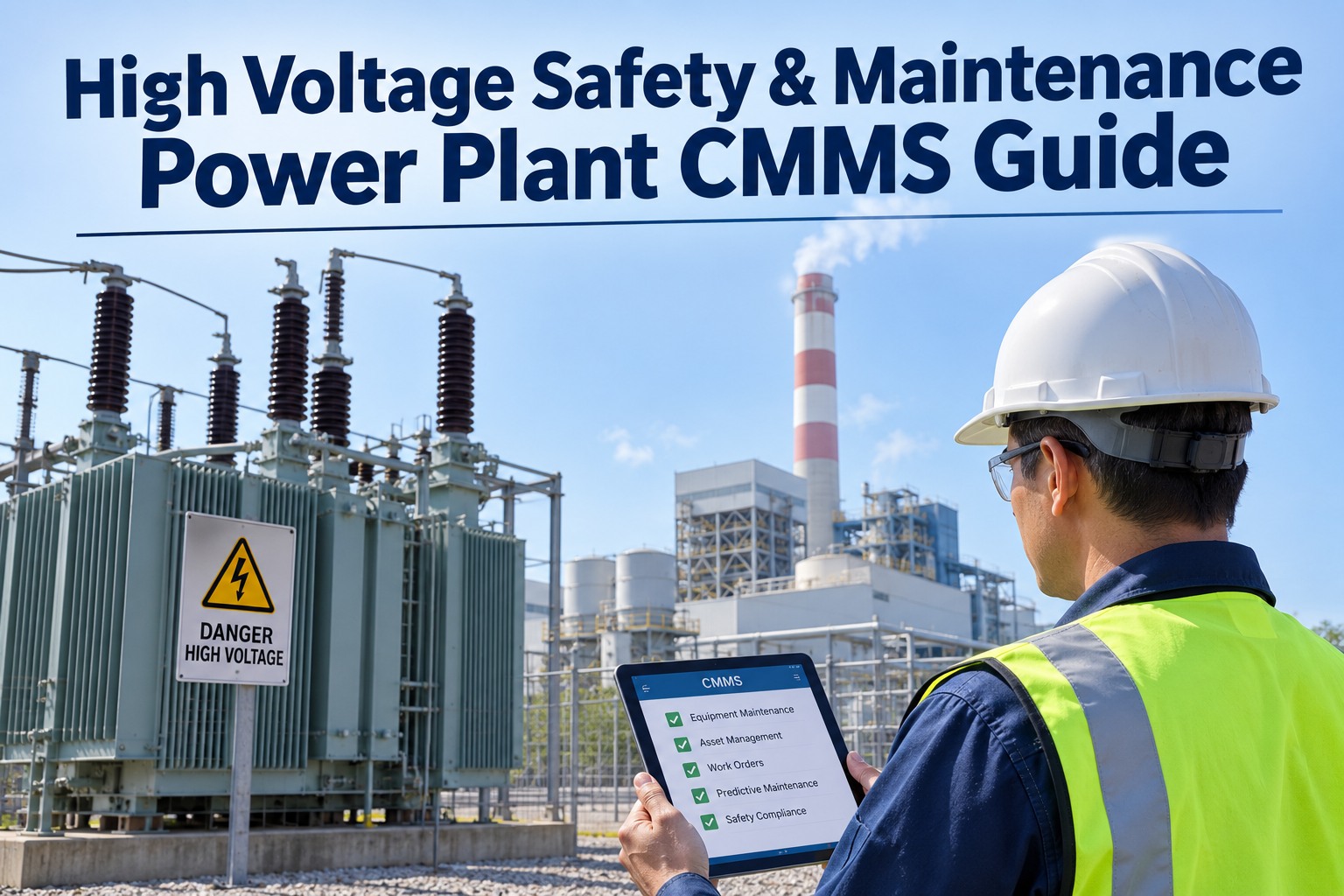
High voltage maintenance in power plants demands rigorous isolation procedures, precise safe working distances, and auditable electrical certification — a single missed step can mean catastrophic failure, regulatory penalties, or fatalities. This high voltage safety guide breaks down the HV electrical maintenance procedures every power plant reliability team must follow, from lockout/tagout (LOTO) protocols to dielectric testing intervals and arc-flash boundary compliance. Whether you manage a 50 MW peaking facility or a 1 GW baseload station, standardizing HV maintenance with a CMMS built for high-voltage assets is the fastest way to cut unplanned outages, pass audits, and protect your crew. Ready to digitize your HV safety program? Start Free Trial and see how OxMaint enforces every isolation step automatically.
Is Your HV Maintenance Program Protecting Your Crew — or One Missed Isolation Away from Disaster?
Arc-flash incidents cost utilities an average of $15M per event in equipment damage, lost generation, and liability. OxMaint digitizes every high voltage procedure — from safe working distance verification to isolation certificates — so your team executes flawlessly and passes every audit.
Essential High Voltage Safety Procedures for Power Plant Teams
NFPA 70E, OSHA 1910.269, and IEEE C2 (NESC) mandate strict procedures for any work on equipment above 600V — yet 40% of power plants still rely on paper-based isolation logs that are impossible to audit. Below are the five procedure pillars every HV maintenance program must enforce.
Hazardous Energy Isolation (LOTO)
Verify zero energy state with a calibrated voltage detector before any HV work begins. Every isolation point must be locked, tagged, and logged with a unique isolation certificate number traceable to the work order.
Safe Working Distance Compliance
Maintain minimum approach distances based on system voltage and arc-flash boundary calculations. For 15kV systems, the limited approach boundary is 3 ft 6 in — unqualified personnel must be excluded beyond this line.
Dielectric & Insulation Testing
Schedule insulation resistance (Megger), power factor (Doble), and partial discharge tests at intervals matched to asset criticality. Medium-voltage switchgear typically requires testing every 3–6 years; transformers annually.
Arc-Flash Hazard Analysis
Update incident energy calculations whenever breaker settings, fault contributions, or system topology change. Label every HV panel with its arc-flash boundary and required PPE category before work commences.
Electrical Certification &
Permits
Only certified HV technicians may perform energized or near-energized work. Track qualifications, expiry dates, and site-specific authorizations per individual — expired certifications are the #1 audit finding in power plant HV programs.
Permit-to-Work Audit Trail
Every HV job requires a permit-to-work with risk assessment, isolations list, sign-on/sign-off timestamps, and return-to-service verification. Paper permits get lost — digital permits with OxMaint are permanent and instantly retrievable.
HV Safe Working Distance & Approach Boundary Reference Table
These distances are non-negotiable. A technician who breaches the restricted approach boundary without appropriate PPE and energized-work authorization is in immediate danger of flashover. OxMaint can auto-validate approach distances against the asset's voltage class before a work order is released.
| System Voltage (Phase-to-Ground) | Limited Approach Boundary | Restricted Approach Boundary | Prohibited Approach Boundary | Typical Power Plant Asset |
|---|---|---|---|---|
| 1,000V – 5kV | 3 ft 6 in (1.07 m) | 1 ft 5 in (0.43 m) | 0 ft 8 in (0.20 m) | 4.16kV switchgear, unit aux transformers |
| 5kV – 15kV | 3 ft 6 in (1.07 m) | 2 ft 2 in (0.66 m) | 0 ft 9 in (0.23 m) | 13.8kV generators, MV feeders |
| 15kV – 36kV | 3 ft 6 in (1.07 m) | 2 ft 7 in (0.78 m) | 1 ft 0 in (0.30 m) | 25kV station service, GIS equipment |
| 36kV – 46kV | 5 ft 0 in (1.52 m) | 2 ft 9 in (0.84 m) | 1 ft 5 in (0.43 m) | 46kV transmission interconnection |
| 46kV – 72.5kV | 5 ft 0 in (1.52 m) | 3 ft 0 in (0.91 m) | 1 ft 7 in (0.48 m) | 69kV substation bus, main power transformer |
| 72.5kV – 121kV | 5 ft 0 in (1.52 m) | 3 ft 4 in (1.02 m) | 1 ft 10 in (0.56 m) | 115kV transmission breakers, bus work |
Source: NFPA 70E Table 130.4(E)(a). Always confirm with your facility's engineering analysis and local regulatory requirements.
Step-by-Step HV Isolation Procedure for Power Plant Maintenance
A single skipped isolation step caused the 2019 Salem Generating Station arc-flash event that injured three workers and cost $4.2M in damages. This seven-step workflow — enforced digitally by OxMaint — ensures zero-energy verification every time.
Identify All Energy Sources
Map every primary, backup, and stored energy source feeding the asset — including backfeed paths through transformers, UPS ties, and capacitor banks. A 13.8kV switchgear lineup can have 4–8 isolation points.
Issue Permit-to-Work
Generate a numbered HV permit with risk assessment, required PPE category, and assigned competent person. OxMaint auto-populates the permit from the work order, eliminating handwritten errors.
Open & Lock Isolation Devices
Operate disconnect switches, rack out breakers, and apply individual padlocks. Each lock carries the technician's name and contact info. No two keys are interchangeable.
Verify Zero Energy
Test the calibrated voltage detector on a known live source, verify dead on all phases at the work point, then re-test on the known live source. This "test-test-test" protocol is mandatory.
Apply Grounds & Tags
Install portable protective grounds on all phases and neutral. Apply danger tags at each isolation point with the permit number, date, and technician signature.
Perform HV Work
Execute the maintenance task — breaker overhaul, transformer oil sampling, bus inspection. OxMaint's mobile checklist ensures every step is photo-documented and timestamped.
Return to Service
Remove grounds and tags in reverse order, confirm all personnel are clear, remove locks, close isolations, and verify energization. OxMaint requires electronic sign-off from the permit holder before the work order closes.
What Does Poor HV Maintenance Cost Your Power Plant?
Consider a 500 MW combined-cycle plant with 180 HV assets (switchgear, transformers, generators, bus ducts) currently running a reactive maintenance model on spreadsheets. Here's the financial reality of doing nothing versus digitizing HV maintenance with OxMaint.
Worked Example: 180-Asset Power Plant Switches to OxMaint
A regional power producer managing three peaking plants with 180 HV assets was spending $42K/year on a paper-based HV maintenance program — and still suffering 2–3 unplanned breaker failures annually causing 22 outage hours. After implementing OxMaint's CMMS for HV maintenance, they achieved 100% PM compliance within 4 months, cut unplanned HV downtime by 63%, and reduced their annual HV maintenance cost to $28K — a payback period of under 5 months on their OxMaint subscription. The shift from reactive to predictive HV maintenance, powered by OxMaint's AI failure prediction on transformer DGA trends, eliminated one catastrophic failure that would have cost an estimated $2.1M.
How OxMaint Transforms High Voltage Maintenance Operations
OxMaint is an AI-powered CMMS and EAM platform engineered for the realities of power plant maintenance. Here's how four core capabilities map directly to your HV safety and compliance challenges — with measurable outcomes.
Digital Permit-to-Work & LOTO
Replace paper isolation certificates with digital permits that enforce sequential LOTO steps, require photo verification of zero-energy state, and auto-expire if not returned to service within the authorized window.
Predictive HV Analytics
OxMaint's AI engine analyzes transformer DGA trends, insulation resistance degradation curves, and partial discharge patterns to predict failures 30–90 days before they happen — shifting you from reactive to predictive HV maintenance.
Certification & Compliance Tracking
Every technician's HV authorization, arc-flash training, and medical fitness expiry is tracked automatically. OxMaint blocks work order assignment to uncertified personnel and sends renewal alerts 60 days before expiry.
HV Asset Registry & PM Scheduling
Maintain a complete digital twin of every HV asset — voltage class, manufacturer, test history, spare parts — with automated PM triggers based on runtime, calendar intervals, or condition monitoring data.
See OxMaint Enforce HV Safety on Your Assets
Book a 30-minute demo and we'll show you how OxMaint digitizes your isolation procedures, tracks certifications, and predicts HV failures — all in one platform built for power plant reliability teams.
High Voltage Maintenance & Safety — Frequently Asked Questions
What is the minimum safe working distance for high voltage equipment in a power plant?
The minimum safe working distance depends on the system voltage. Per NFPA 70E, the limited approach boundary for 1,000V–15kV equipment is 3 ft 6 in (1.07 m), while the restricted approach boundary — which only qualified workers with appropriate PPE may cross — ranges from 1 ft 5 in at 5kV to 2 ft 2 in at 15kV. Always verify distances against your facility's arc-flash hazard analysis and confirm approach boundaries are enforced on every work order. OxMaint can auto-check the assigned technician's qualifications against the asset's voltage class before permitting work to begin.
How often should high voltage equipment be tested in a power plant?
HV testing intervals vary by asset type and criticality. Power transformers typically require annual dissolved gas analysis (DGA) and insulation resistance tests, while medium-voltage switchgear should undergo comprehensive inspection and dielectric testing every 3–6 years. Circuit breakers need contact resistance and timing tests every 3–5 years or after major fault operations. OxMaint's CMMS automatically schedules these tests based on IEEE/IEE standards, runtime hours, or condition-monitoring triggers — and maintains a complete digital test history for every asset.
What is a permit-to-work system for high voltage maintenance?
A permit-to-work (PTW) system is a formal, documented procedure that authorizes specific HV work only after all safety controls — isolation, zero-energy verification, grounding, PPE, and competent-person assignment — are confirmed in place. The permit records the exact isolation points, authorized personnel, time validity, and return-to-service steps. OxMaint digitizes the entire PTW process, ensuring no HV work order can proceed without a valid permit and every step is electronically timestamped and auditable. You can Start Free Trial to see digital PTW in action.
How does a CMMS improve high voltage safety compliance?
A CMMS improves HV safety compliance by enforcing standardized isolation procedures, tracking technician certifications and their expiry dates, scheduling preventive maintenance before failures occur, and creating a permanent digital audit trail of every work order, test result, and permit. Studies show plants using a CMMS achieve 95%+ PM compliance versus 60–70% with paper systems. OxMaint goes further with AI-powered predictive analytics that flag HV assets trending toward failure, giving you weeks of advance notice to schedule safe, planned interventions.
What certifications are required for HV electrical maintenance technicians?
HV maintenance technicians must hold qualifications appropriate to their work scope — typically including NFPA 70E arc-flash safety training, OSHA 1910.269 qualification for high-voltage work, and manufacturer-specific certifications for the equipment they service. Most certifications require renewal every 1–3 years. OxMaint tracks every technician's certification matrix, blocks work assignments when qualifications are missing or expired, and sends automated renewal alerts — ensuring no unqualified person ever touches your HV assets. To see how this works for your team, Book a Demo with our power plant specialists.
Stop Gambling with Paper-Based HV Maintenance
Every day without a digital CMMS is another day your crew relies on handwritten isolation logs and missed PMs. Join the power plants using OxMaint to achieve 100% HV compliance, predict failures before they happen, and cut unplanned downtime by up to 50%.
Free 14-day trial · No credit card