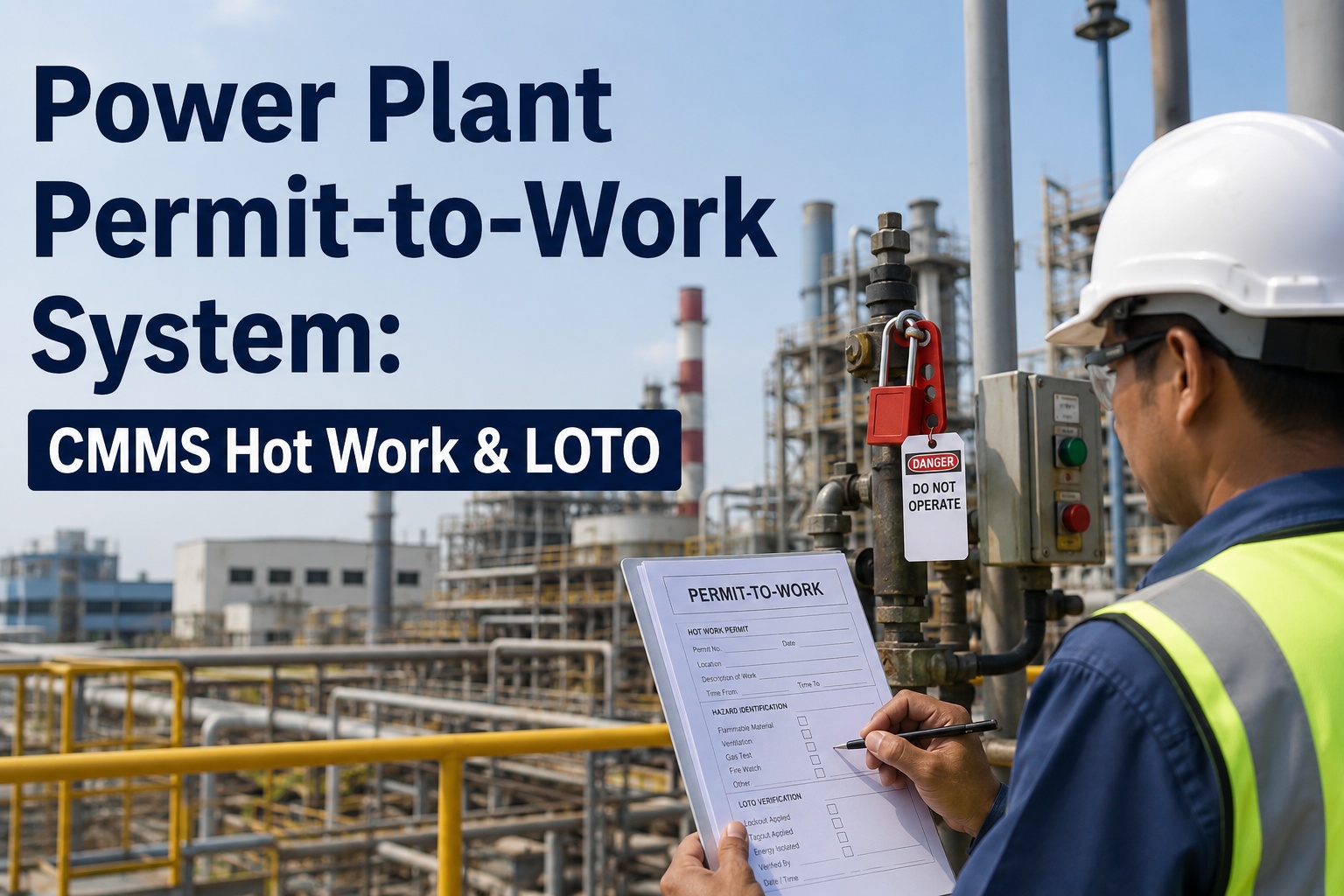
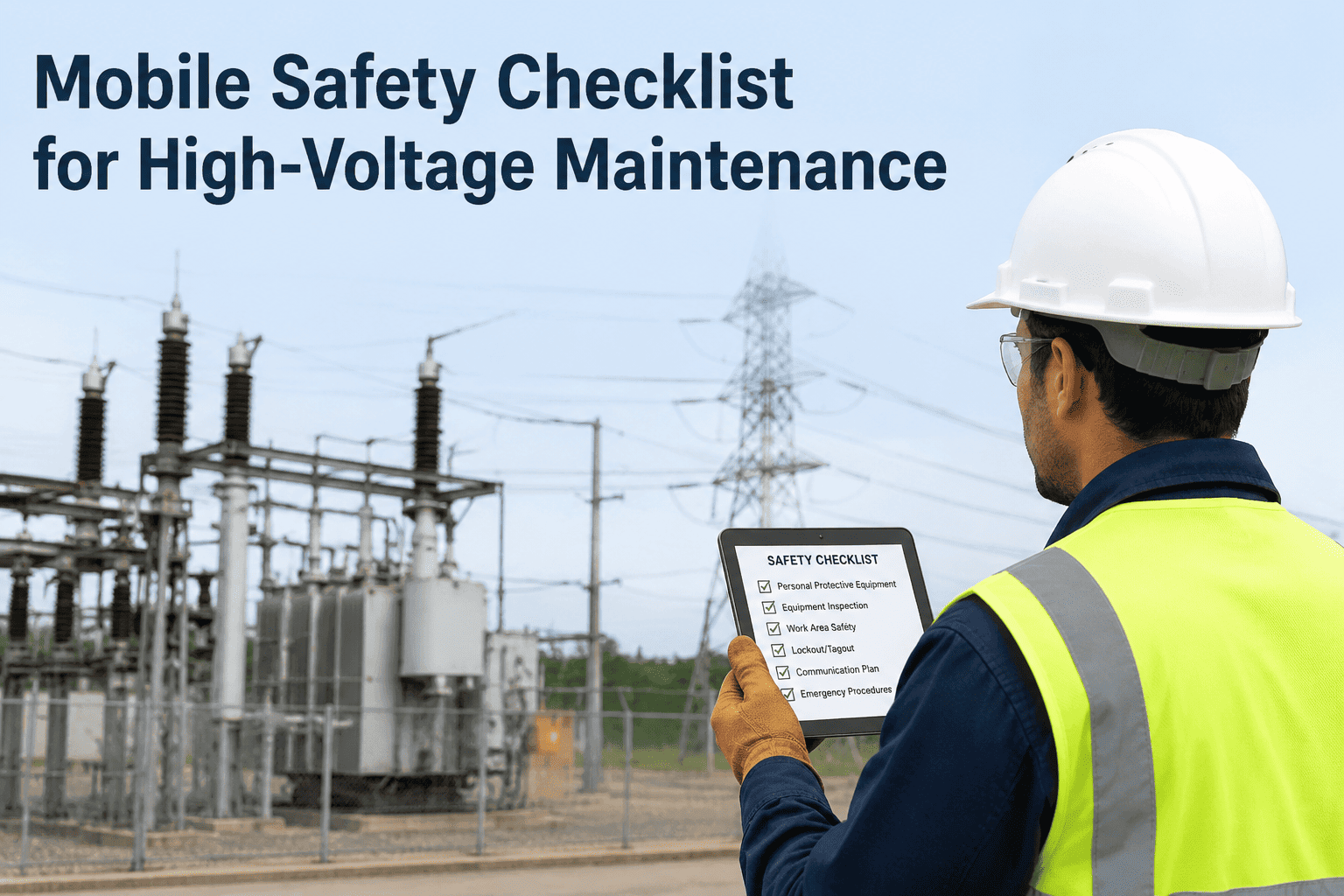
Lockout/tagout failures account for more than 10% of all serious workplace injuries in the United States, and power generation is among the sectors where OSHA cites LOTO violations at the highest rates — with average penalties of $156,000 per serious violation and criminal referral risk on repeat citations above $500,000. The cause of nearly every LOTO incident in a power plant is not a missing policy or an untrained crew. It is a gap in the execution chain: a step skipped under time pressure, an isolation point missed because the permit was written for a different asset configuration than what was found in the field, or a second shift arriving without clear visibility into which equipment is actively isolated by the first shift's locks. OxMaint's digital LOTO module enforces sequential, photo-verified isolation steps within the work order — so no technician can advance to energized work until every isolation point is documented as confirmed, regardless of shift pressure. Start a free trial and configure your first digital LOTO workflow today.
85%
Of LOTO incidents involve procedural failures — skipped steps, incomplete isolation, or missing verification — not equipment failure
$156K
Average OSHA penalty per serious LOTO violation. Repeat violations exceed $500K with criminal referral risk
3,200+
OSHA LOTO citations issued annually — power generation among the highest-cited sectors
92%
Reduction in LOTO procedural non-conformances reported by plants using CMMS-digitized permit workflows
Where paper LOTO fails
Five failure points in the paper permit workflow — and what happens at each one
A paper LOTO permit procedure written in compliance with OSHA 29 CFR 1910.147 looks correct in the binder. The failure points are not in the written procedure — they are in the execution gap between what the form requires and what a technician under time pressure actually does when they pull it off the wall at 2 AM for an emergency turbine bearing replacement. Understanding exactly where paper permits fail is the starting point for designing a digital workflow that prevents each failure mode structurally rather than relying on individual compliance.
F1
Permit retrieved for wrong asset revision — field conditions differ from paper procedure
Paper procedures are written once and updated infrequently. When a breaker panel was reconfigured or a valve was relocated, the paper procedure for that equipment was not always updated. Technicians arrive at an isolation point that does not match the permit and make improvised field decisions under schedule pressure.
Digital fix: Asset-linked LOTO procedures auto-populate from the current asset configuration record. A changed isolation point triggers a procedure update flag before the permit is issued.
F2
Steps skipped in sequence — no system prevents a technician from jumping ahead
A paper checklist cannot enforce sequence. A technician who initiates work before confirming energy isolation on all points creates a latent exposure that may not become an incident until the second or third day of the job when a different crew member works near the hazardous point.
Digital fix: Sequential gate enforcement in OxMaint requires each step to be confirmed before the next is accessible. No manual bypass option is available at the field interface.
F3
Shift handover leaves unclear lock ownership — no real-time visibility across crews
Paper group LOTO logs do not provide real-time visibility across shifts. An incoming shift supervisor cannot easily determine which locks are applied by whom, whether all workers from the prior shift have cleared, or which equipment is still actively isolated versus completed and awaiting removal.
Digital fix: OxMaint tracks every lock by employee name, ID, and isolation point in real time. Shift handover dashboard shows active LOTO status across all jobs without physical binder retrieval.
F4
No verification that energy was actually confirmed absent before work began
OSHA 1910.147 requires verification that energy has been effectively controlled before work begins — typically a voltage test or physical position confirmation. Paper permits record this step as a checkbox. There is no way to confirm verification actually occurred versus being checked off without being performed.
Digital fix: Verification steps require a photo upload or digital confirmation with user ID timestamp before the permit advances. A signed checkbox without evidence does not satisfy the gate.
F5
Contractor workers cannot be verified as logged out before equipment is re-energized
Multi-trade shutdowns involving contractors create group LOTO tracking gaps. Paper-based group lock logs may not have complete contractor entries, and verifying that all contractors have cleared before restoring energy requires manual physical check that is easily missed in complex turnover situations.
Digital fix: All contractors are registered in OxMaint under their company and assigned individual lock records. The permit close-out gate requires every registered worker's lock to be confirmed removed before re-energization is authorized.
No step skipped. No lock unaccounted for.
OxMaint enforces every LOTO step before work begins — and every lock before equipment is re-energized
The permit lives inside the work order, the steps are gated, the verifications require evidence, and every contractor lock is tracked individually. OSHA compliance is built into the execution path — not checked after the fact.
The eight-step digital workflow
How a LOTO permit flows from authorization to close-out in OxMaint
OxMaint's LOTO workflow is aligned to the eight-step procedure required under OSHA 1910.269(d) for power generation facilities. Each step is gated, meaning it cannot be completed until the previous step is documented as confirmed. The permit, the work order, and the maintenance record are unified in a single asset-linked entry that requires no separate filing to satisfy OSHA 1910.269, 1910.147, and NFPA 70E audit requirements.
1
Authorized employee creates digital LOTO permit
Asset record auto-populates all known energy sources — electrical, mechanical, pneumatic, hydraulic, thermal — from the current asset configuration.
2
Affected employees notified via mobile alert
Equipment shutdown notification sent to all workers in the affected area. Confirmation receipts logged with user ID and timestamp before shutdown proceeds.
3
Equipment shutdown confirmed and logged
Shutdown completion confirmed with timestamp and user ID. System blocks progression to isolation steps until this confirmation is recorded.
4
Energy isolation — sequential, gated, no skipping
Each isolation point is checked off in sequence. System blocks progression if any energy source in the procedure is skipped. No manual overrides permitted on critical steps.
5
Lock and tag application — individual digital log per worker
Every lock logged with employee name, ID, time, and isolation point. Group LOTO managed with individual entries for each technician and contractor.
6
Energy verification with photo evidence
Voltage test or physical position confirmation photographed and uploaded before work authorization is granted. The gate cannot be passed with a checkbox alone.
7
Work performed under authorized active LOTO permit
Work order is active only after all six prior gates pass. Any additional energy sources discovered in the field trigger a permit modification workflow before work continues.
8
Close-out — all locks confirmed removed before re-energization
Close-out gate requires every registered worker's lock to be confirmed removed. Equipment cannot be re-energized until all entries are cleared. Complete permit record archived to asset history.
Common questions
What power plant safety and maintenance teams ask about digital LOTO
Does OxMaint's digital LOTO satisfy the OSHA 29 CFR 1910.147 written procedure requirement?
Yes. OxMaint's LOTO module enforces the procedural elements required under OSHA 1910.147 — written procedures, sequence-based isolation, authorized employee verification, and documentation of each energy control step. The photo verification record exceeds the documentation standard required by the regulation.
Book a demo to review the compliance record format with your safety team.
How does the system handle complex multi-trade shutdowns with contractors from multiple companies?
Contractors are registered in OxMaint under their company and assigned individual lock records within the group LOTO permit. The close-out gate requires every registered individual — internal staff and contractors — to confirm lock removal before re-energization is authorized. The complete record shows every participant by name and company.
Start a free trial to configure a group LOTO workflow for your typical multi-trade outage structure.
What happens when a technician encounters energy sources in the field that were not in the original permit procedure?
OxMaint requires a permit modification workflow before work can continue when additional energy sources are identified in the field. The modification is authorized by the permit holder, the new isolation step is added to the sequential checklist, and the complete modified permit record is preserved in the asset history. Work cannot resume on the existing permit without the modification being approved and documented.
Can supervisors authorize and review LOTO permits remotely without being physically at the isolation point?
Yes. Supervisors review and authorize LOTO permits from any device. The authorization requires the supervisor's digital confirmation, which is timestamped and attached to the permit record. The photo verification evidence from the field is visible to the authorizing supervisor at the time of approval, providing visibility without requiring physical presence at the isolation point.
How is the periodic LOTO procedure inspection requirement under OSHA 1910.147(c)(6) managed in OxMaint?
Annual LOTO procedure inspections for each authorized employee are scheduled as recurring work order tasks in OxMaint, linked to the specific procedures and assets each employee is authorized for. The inspection record — procedure reviewed, employee certified, supervisor confirmation — is stored in the compliance record and triggers renewal 60 days before expiry.
Every lock tracked. Every step documented. Every audit ready.
Digital LOTO turns your highest-risk maintenance workflow into your strongest compliance record
Paper permits create an execution gap between what the procedure requires and what happens in the field under time pressure. OxMaint closes that gap structurally — sequential gates, photo verification, individual lock tracking, and complete permit records that are linked to the asset, the work order, and the employee — so your LOTO compliance is continuous and your OSHA audit readiness requires no preparation.