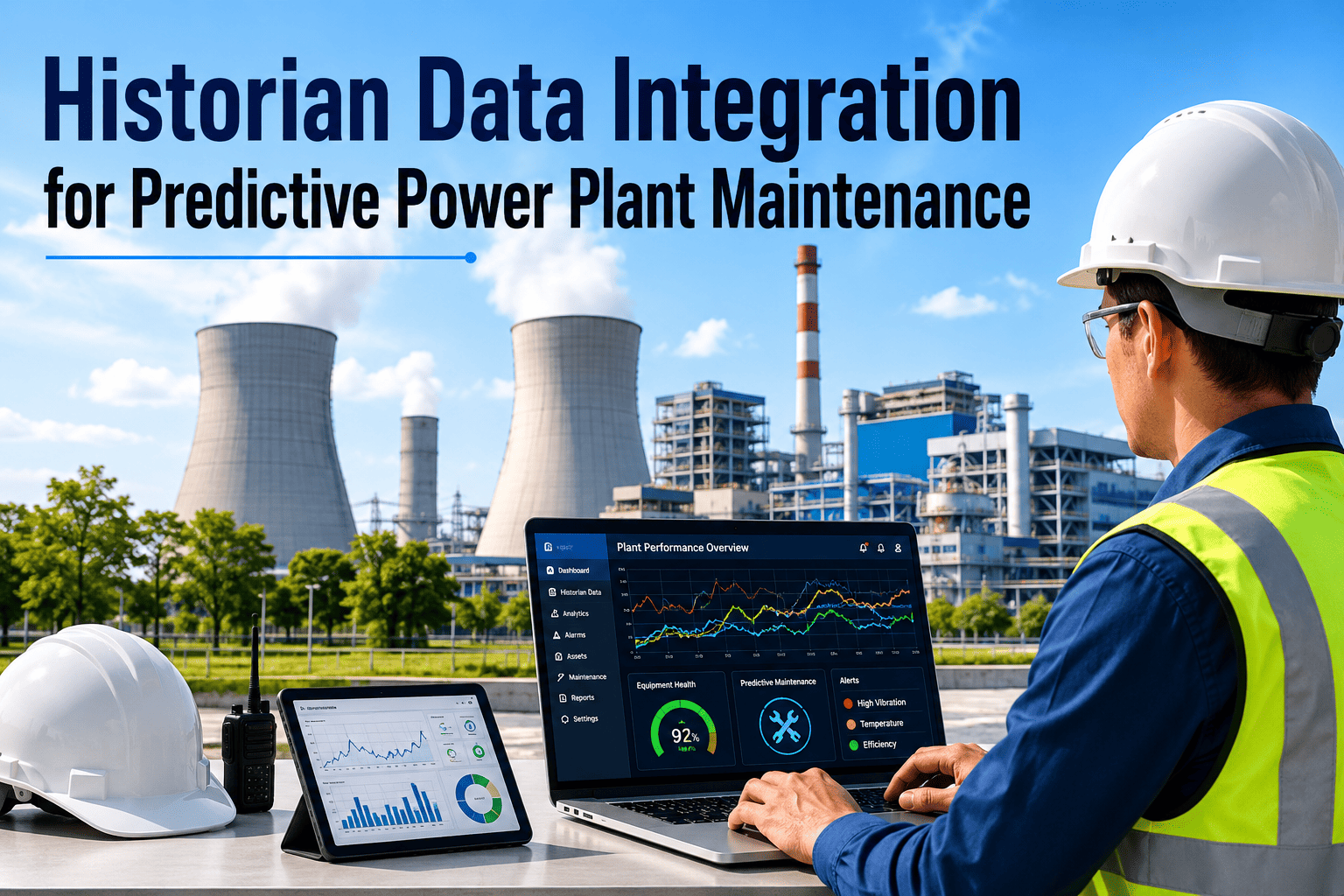
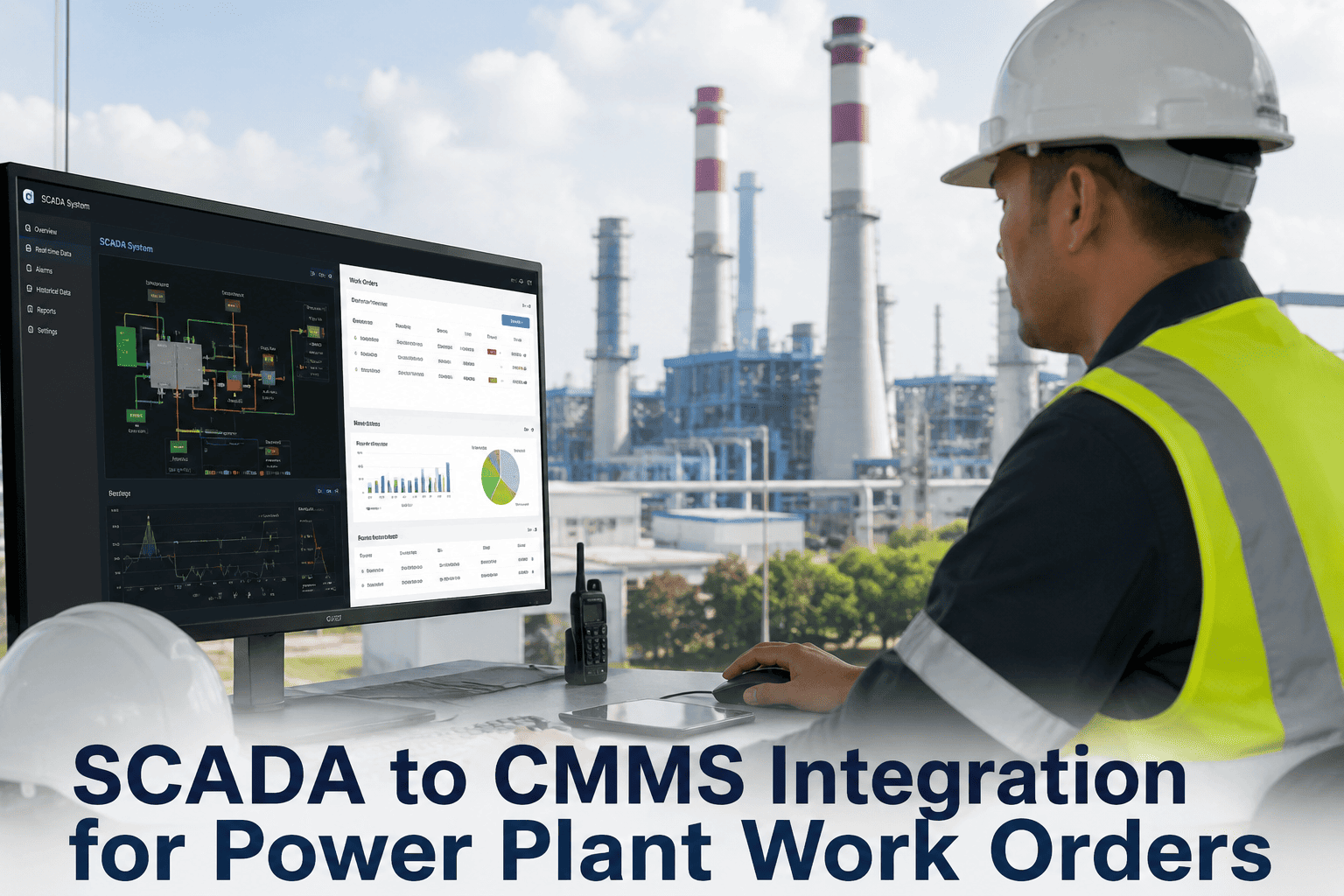
Most power plants already have years — sometimes decades — of process data sitting inside a historian like AVEVA PI, Honeywell PHD, or AspenTech IP.21, yet almost none of it is used for maintenance decisions. A single large facility can run well over 100,000 active tags, capturing temperature, pressure, vibration, and flow readings every few seconds, while maintenance teams still plan work from calendar-based intervals. OxMaint's historian data integration reads that existing tag data continuously and converts meaningful trend deviations into predictive work orders, without adding a single new sensor. Book a demo to map your historian tags to predictive triggers.
Article · Data Integration
Historian Data Integration for Predictive Power Plant Maintenance
90%
storage reduction from historian compression, enabling years of high-resolution data
100K+
active process tags in a typical large power plant historian
30-50%
potential reduction in unplanned downtime when trend data drives work orders
Data Architecture
From Raw Process Tags to a Predictive Work Order
01
Field Sensors and PLCs
Temperature, pressure, vibration, flow, and current signals are captured continuously at the source equipment.
▼
02
Process Historian (PI / PHD / IP.21)
Every tag is stored as a compressed time series, organized into an asset hierarchy for fast retrieval.
▼
03
OxMaint Predictive Engine
OxMaint reads historian tags via API or OPC-UA and applies trend, threshold, and rate-of-change models per asset class.
▼
04
Work Order and Asset Record
A prioritized work order is created automatically with the trend chart, asset history, and recommended action attached.
Maintenance Maturity
Where Historian Data Moves You on the Maintenance Curve
Stage 1
Reactive
Equipment is repaired only after it fails. Downtime is unplanned, costs are highest, and historian data is unused.
Stage 2
Preventive
Tasks are scheduled on fixed time or usage intervals, often replacing parts that still have remaining life left.
Stage 3
Predictive
Historian trend data triggers work orders based on actual asset condition, before a failure occurs.
Stage 4
Prescriptive
Models recommend the specific corrective action and the best timing, factoring in spares and crew availability.
Your Historian Already Has the Answers — OxMaint Reads Them
Connect your existing PI, PHD, or IP.21 historian and let OxMaint turn years of stored tag data into condition-based work orders.
Supported Platforms
Historian Platforms OxMaint Connects To
| Historian Platform |
Vendor |
Connection Method |
Typical Data Captured |
| AVEVA PI System |
AVEVA (OSIsoft) |
PI Web API / OPC-UA |
Turbine, boiler, and BOP tags via Asset Framework |
| Honeywell PHD |
Honeywell |
PHD API / OPC-UA |
DCS process variables and alarm history |
| AspenTech IP.21 |
AspenTech |
SQLplus / OPC-UA |
Continuous process data and batch records |
| GE Proficy Historian |
GE Vernova |
iFIX / OPC-UA |
Turbine control system and balance-of-plant tags |
Predictive Triggers
Common Patterns in Historian Data That Should Trigger a Work Order
Bearing Temperature Trend
A gradual rise over several days, even within normal limits, often signals lubrication breakdown or early wear.
Vibration RMS Increase
A steady upward trend in vibration amplitude is one of the earliest indicators of misalignment or imbalance.
Efficiency Ratio Drift
A drop in the output-to-input ratio, such as MW per unit of flow, can point to fouling or partial blockage.
Pump Differential Pressure
A declining differential pressure across a pump at constant flow often indicates impeller wear.
Motor Current Creep
Rising motor current at the same load level can indicate mechanical drag or bearing friction.
Valve Stroke Time
An increasing stroke time on a control valve usually signals actuator or linkage degradation.
Industry Insight
Why Existing Historian Data Is an Underused Asset
Historians like AVEVA PI use compression techniques that reduce storage needs by roughly 90% compared to raw logging, which is why many plants already retain years of high-resolution tag data without realizing its maintenance value sits largely untapped.
Based on PI System data architecture documentation
Plants moving from predictive toward prescriptive maintenance increasingly use statistical and machine learning models on historian data to identify likely root causes, not just flag that a problem exists, which shortens diagnosis time once a technician is on site.
Based on data historian maintenance strategy research
FAQs
Frequently Asked Questions
Do we need to install new sensors to use historian data for predictive maintenance?
No. OxMaint reads the tags your historian already collects from existing PLCs and DCS instruments.
Start free to see which of your tags are ready to use.
Which historian platforms does OxMaint integrate with?
OxMaint connects to AVEVA PI System, Honeywell PHD, AspenTech IP.21, and GE Proficy Historian using their native APIs or OPC-UA, without requiring any changes to your existing setup.
How does OxMaint decide when a tag trend should become a work order?
Each asset class has trend, threshold, and rate-of-change models tuned to its failure modes, so a slow bearing temperature rise and a sudden vibration spike are handled differently and routed to the right priority.
How long does historian integration take to go live?
Most implementations connect to the historian and complete baseline model training within 2 to 4 weeks, after which predictive work orders begin generating automatically.
Book a demo to scope your timeline.
Will connecting OxMaint to our historian disrupt existing SCADA or historian operations?
No. OxMaint connects as a read-only client, pulling tag values for analysis without writing back to or interrupting your control system or historian.
Predictive Maintenance
Turn Years of Historian Data Into Tomorrow's Work Orders
OxMaint connects to the historian you already run and starts surfacing predictive maintenance opportunities within weeks, not months.