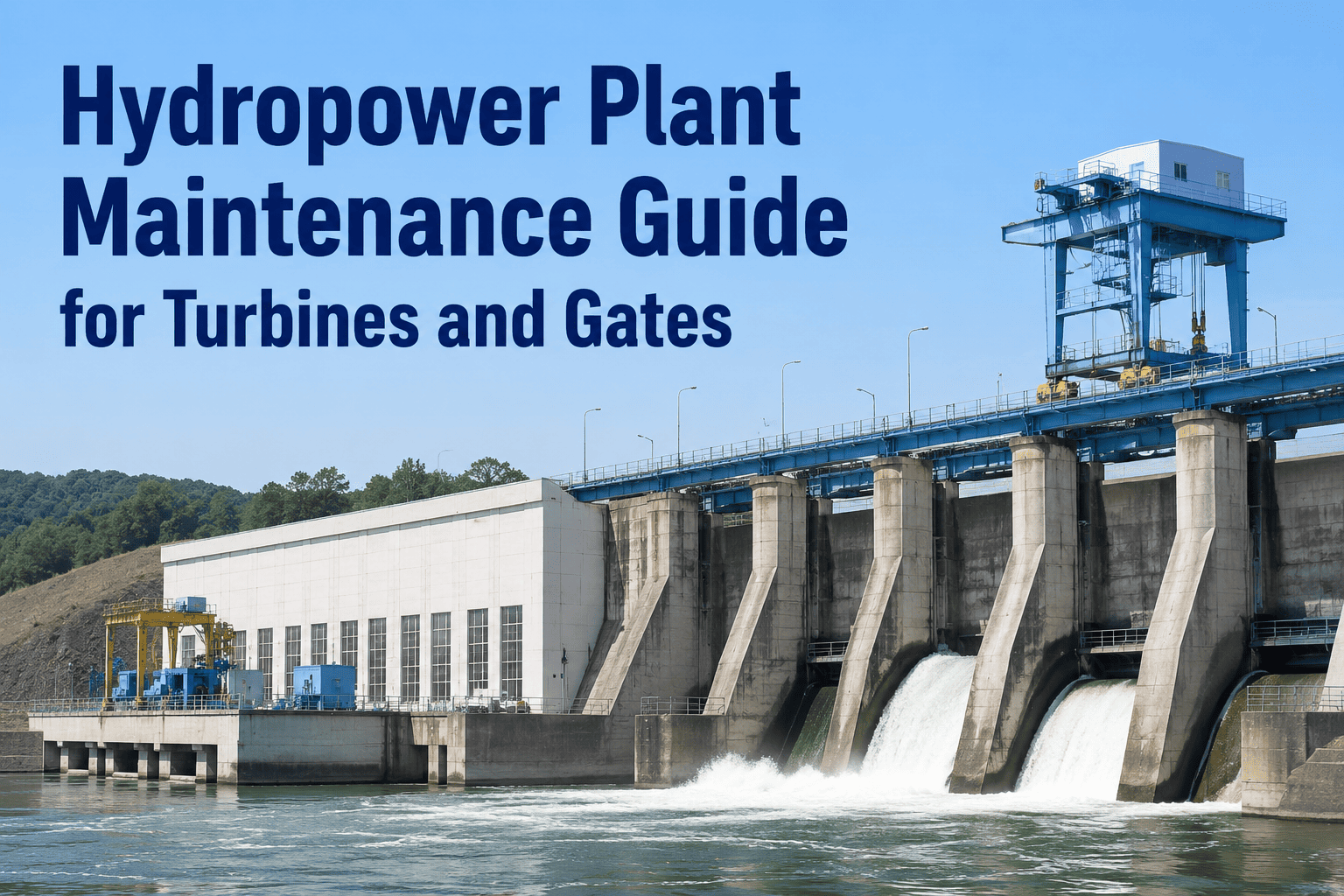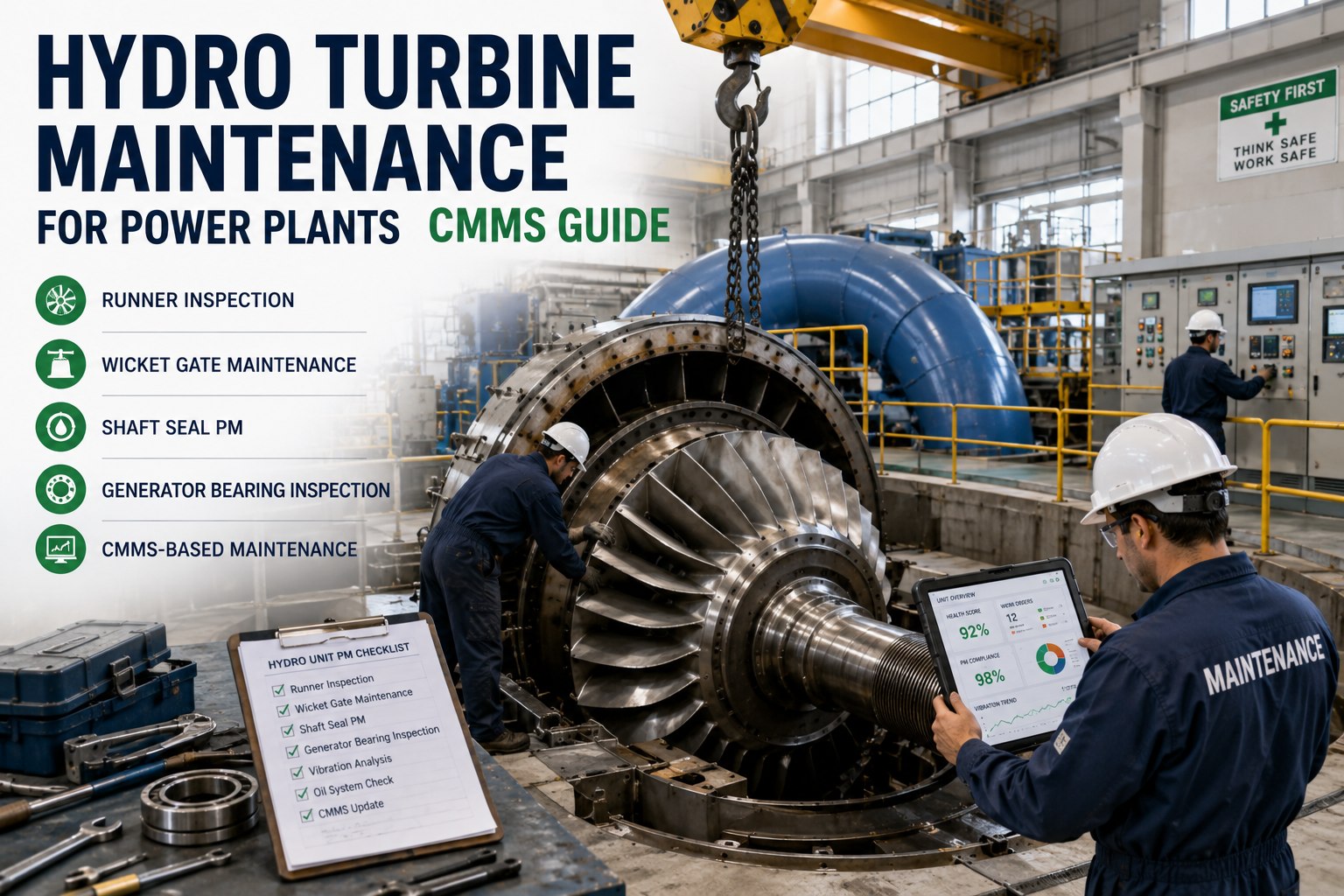
Hydroelectric units routinely run 40–60 years, but only when runner cracks, wicket-gate leakage, and shaft-seal wear are caught before they become forced outages that cost $8,000–$25,000 per MWh lost. This guide walks plant maintenance managers through the preventive tasks that matter most—runner and wicket-gate inspection, shaft-seal PM, generator bearing health, and the CMMS workflow that ties them together. A single missed 6-month bearing inspection on a 120 MW Francis unit can cascade into a $1.4M rewind, which is why digitizing PM schedules in a CMMS like Oxmaint pays back in under 9 months. Start Free Trial to convert this guide into live work orders today.
Are Your Wicket Gates Draining $190K a Year in Lost Head?
Most hydro plants lose 3–7% of gross generation to undetected runner cavitation, gate leakage, and bearing degradation. A CMMS-driven PM program catches all three before the next scheduled outage — typically recovering 4–6% of annual output.
The Four PM Pillars That Drive Hydro Unit Reliability
IEEE Std 1247 and IEC 60609 define the inspection cadence; here is what each pillar costs to ignore — and what a CMMS ensures gets done on time.
Cavitation pitting on Francis runners can advance 1.2 mm/month unchecked. Annual non-destructive dye-penetrant and ultrasonic thickness checks catch erosion before weld-repair windows close during scheduled outages.
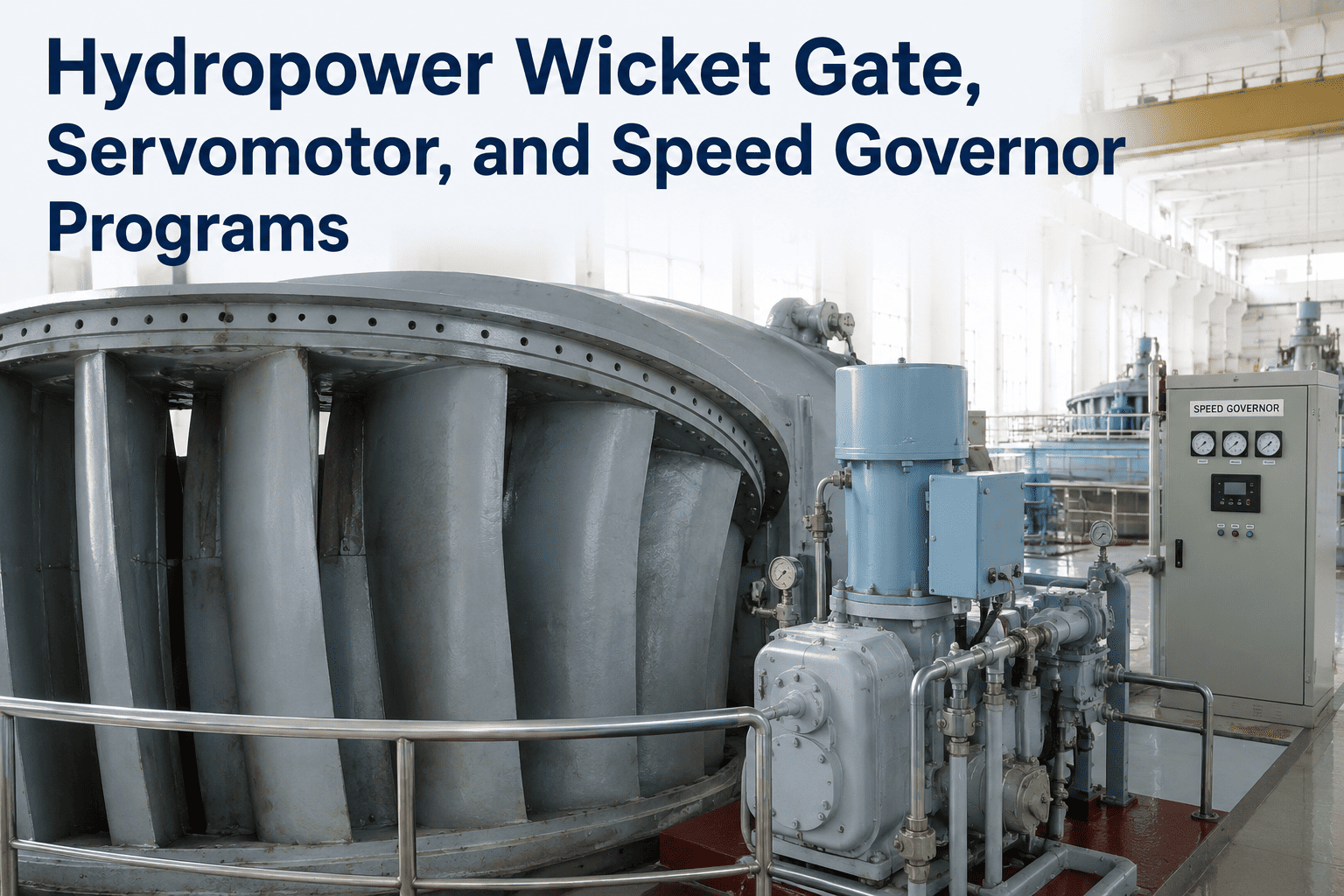
Worn bushings and linkages leak 2–4% of rated flow. A 24-month grease and gap-alignment cycle, logged in CMMS, keeps gate leakage below the 0.8% IEC 60193 acceptance threshold.
Packing-type seals need 6–8 week tightening and sleeve inspection; mechanical seals need quarterly flush and face-wear measurement. CMMS auto-triggers each by runtime hours, not guesswork.
Guide and thrust bearings fail from oil degradation and alignment drift. Quarterly oil sampling (ISO 4406), monthly vibration trending (ISO 10816), and annual journal runout checks catch 89% of failures early.
What a CMMS-Driven Hydro PM Program Actually Returns
A worked example: a 120 MW Francis-turbine plant (4 units, 35% capacity factor) spending $48K/yr on spreadsheets and reactive repair migrates to CMMS-based PM. Here is the 12-month financial outcome.
| PM Program Metric | Spreadsheet-Based | CMMS-Based (Year 1) | Delta |
|---|---|---|---|
| Forced outage hours / yr | 312 | 78 | −75% |
| Mean time between failure (hrs) | 8,400 | 22,500 | +168% |
| Wicket gate leakage (% rated flow) | 3.4% | 0.7% | −79% |
| PM compliance rate | 61% | 97% | +36 pts |
| Annual maintenance cost | $412K | $338K | −18% |
| Net annual savings | — | $1.52M | Payback < 9 mo |
The 12-Month Hydro Turbine PM Calendar
Built on ASME PTC 18, IEEE 1247, and IEC 60041 intervals — the exact cadence Oxmaint auto-schedules for each asset class.
Bearing vibration per ISO 10816 zones; oil level, temperature, and moisture (ISO 4406 cleanliness target 18/16/13). CMMS flags any reading breaching zone B.
Shaft seal leakage rate, packing gland torque, wicket-gate linkage play (≤0.15 mm), and governor oil pressure test. Trigger work order in CMMS with NCR if out of spec.
Oil sample lab analysis (particle count, water, viscosity), thrust-bearing insulation check, journal runout (≤0.05 mm), and bearing-housing alignment verification.
Unit dewatered; dye-penetrant and ultrasonic thickness on runner blades and discharge ring; cavitation mapping; stay-vane weld inspection; wicket-gate full close test.
Runner removal, full NDT and weld-build repair, bearing re-babbitt, governor recalibration, generator air-gap mapping, and stator core loop test per IEEE 62.
What a Hydro-Specific CMMS Must Do — and What Spreadsheets Cannot
The gap between 61% and 97% PM compliance is not about effort; it is about system capability. Here is what Oxmaint provides out of the box.
Work orders auto-generate on operating-hour thresholds — not calendar guesswork — so low-capacity-factor units are not over-maintained and peaking units are not missed.
Vibration, oil-moisture, and seal-leakage thresholds from SCADA feed directly into CMMS, escalating a PM to a corrective work order the moment a limit is breached.
Bundle all annual NDT, runner repair, and bearing work into a single outage window with critical-path scheduling — cutting outage duration by 18–30%.
Every inspection, measurement, and corrective action is timestamped and attributable — satisfying FERC Part 12, IEC 60609, and ISO 55000 audit requirements without manual compilation.
Technicians log NDT results, photos, and measurements on tablets in the draft tube — no clipboard transcription, no lost readings, no 2-week reporting lag.
Each PM work order carries the exact bearing part number, seal kit, and gasket set — with min/max stock alerts so critical spares are always available before the outage window opens.
"We cut our annual Francis-unit outage from 19 days to 12 by routing every inspection, NDT result, and repair task through Oxmaint. The audit trail alone saved our reliability team two full weeks of FERC reporting each year."
Stop Losing 4–6% of Generation to PM You Can Schedule in 20 Minutes
Import your turbine asset list today and Oxmaint builds the full 12-month PM calendar — runner, gates, seals, bearings — by tonight.
Hydro Turbine CMMS & Maintenance — Answered
At minimum annually during the scheduled dewatered outage, with quarterly visual boroscope checks through inspection ports. For units operating above 90% capacity factor or in sand-laden flows, move to a 6-month NDT cycle. CMMS scheduling ensures no inspection slips — Book a Demo to see the auto-cadence setup.
IEC 60193 sets acceptance at ≤0.5–1.0% of rated flow depending on unit size. Measure it during the dewatered close test by timing the draft-tube water-level rise. Anything above 2% indicates worn bushings or linkages and should trigger a corrective work order before the next operating season.
Yes. Oxmaint's asset hierarchy supports mixed turbine types with distinct PM templates per class — Kaplan blade-regulation checks, Francis runner NDT, Pelton bucket erosion mapping — all under one plant dashboard with type-specific compliance reporting.
For plants ≥25 MW, payback typically falls between 6 and 11 months. The dominant driver is recovered generation from reduced forced outages, not labor savings. A 120 MW plant recovering 1,840 MWh/yr at $70/MWh sees $128K from outage avoidance alone, plus head-recovery gains.
Every PM task, measurement reading, corrective action, and parts replacement is logged with timestamp, technician, and digital signature — producing the audit trail FERC Part 12 and EAP reviewers require. Reports export in the exact FERC format, eliminating the 2–3 week manual compilation cycle most plants still run.
Your Next Outage Should Be Shorter, Safer, and Fully Audited
Join hydro operators using Oxmaint to drive 97% PM compliance and cut forced outages by 75%. Set up takes one afternoon.
Free 14-day trial · No credit card