In power generation, the maintenance usually gets done — and the audit still gets failed. Not because the work was wrong, but because the evidence that it was right lives in spreadsheets, shared drives, and a binder someone rebuilds in a panic the week before the auditor arrives. ISO 55001 wants a documented asset management system tied to criticality; SAE JA1011 defines whether your "RCM program" is genuinely RCM or just renamed PM; and on top of both sit the power-sector regimes — NERC, ASME, OSHA PSM, EPA — each demanding retrievable proof. This guide maps those standards, shows what auditors actually check, and explains how to make compliance a by-product of daily work instead of a scramble. Start free or book a demo.
Power Generation RCM Compliance: Prove It, Don't Just Do It
Most plants don't fail audits on the maintenance — they fail on the documentation that's supposed to prove it happened. Audit readiness is the discipline of making every safety-critical task completed, documented, and defensible the moment it's done. Here's the standards map and the system that keeps you ready year-round.
The Real Failure Mode: Evidence, Not Effort
Walk into a compliance finding and the pattern repeats: the inspection was performed, the PM was done, the LOTO was applied — but the record is incomplete, unsigned, or unretrievable. Auditors don't grade intentions; they grade evidence. A single missing signature or skipped inspection point can trigger a violation, a forced outage, or a corrective-action plan that eats years of management bandwidth. The fix isn't more maintenance — it's making the proof a mandatory, automatic part of every task. Sign up free — no credit card and every work order closes with its evidence attached, not chased down later.
The Two Standards That Frame Everything
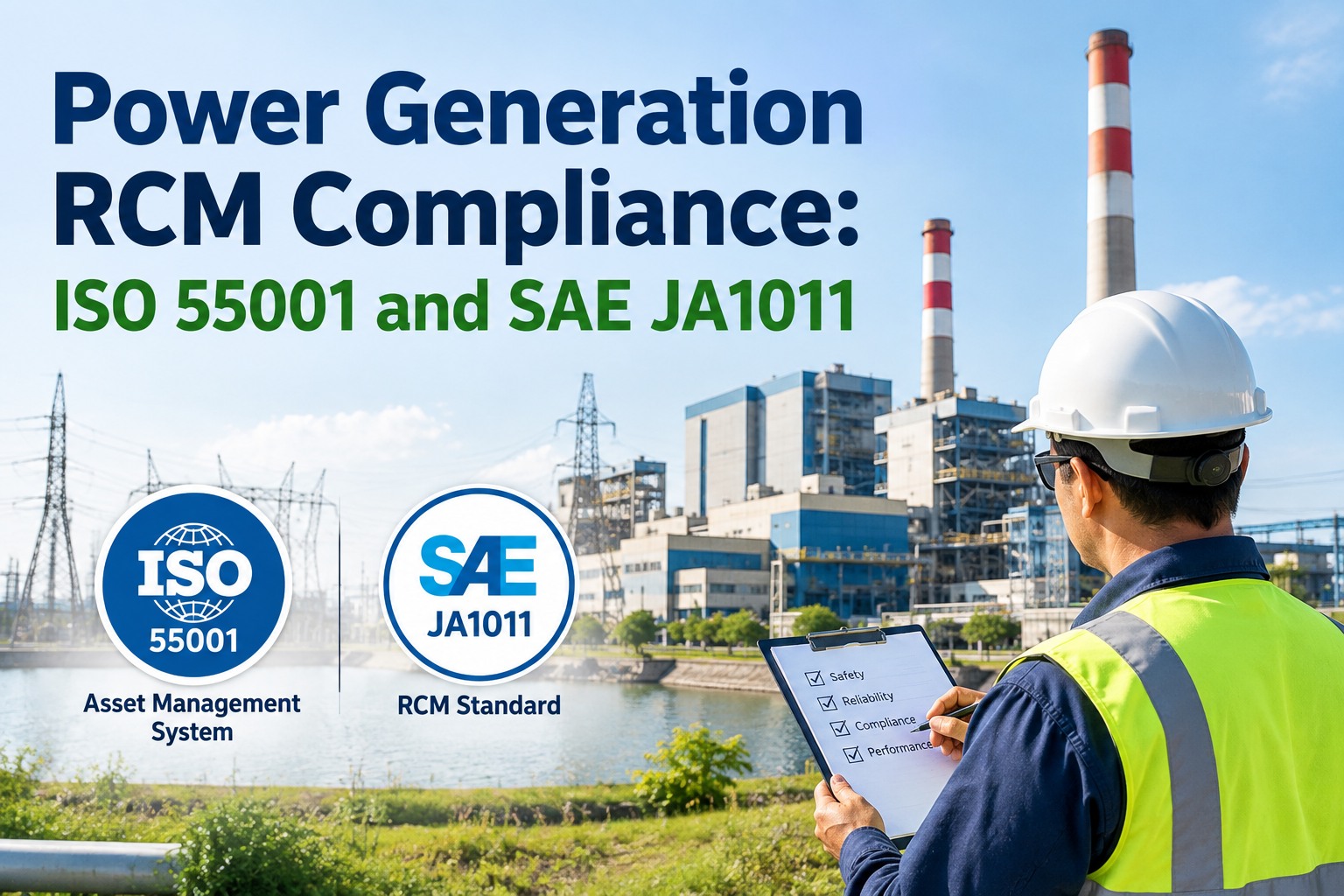
Before the power-sector regimes, two cross-industry standards define what "good" looks like — and auditors increasingly expect both. One governs your asset management system; the other governs whether your reliability logic is real. Schedule a 30-minute demo to see both mapped onto your own asset hierarchy.
The Seven Questions Auditors Expect Answered
SAE JA1011 compliance isn't abstract — it's whether you can show, per critical asset, that these seven questions were answered and documented. A program that skips a question or assigns a task without consequence analysis isn't RCM, and an auditor will say so. Create your free account and capture each answer as a structured record tied to the asset it governs.
The Auditor Asked for Three Years of Relay-Test Records. The Clock Started.
In a paper or spreadsheet world, that request means days of digging through drives, cross-referencing dates, and hoping every sign-off is there. With every PM, inspection, and test logged against the asset, it's a single filtered export — by standard, by asset, by date range — produced in minutes. OxMaint makes technicians capture the required readings, sign-offs, and photos before a work order can close, so the evidence is complete the day it's created, not reconstructed under pressure.
The Power-Sector Regimes Stacked on Top
ISO 55001 and JA1011 set the reliability foundation; the power-generation-specific regimes decide what evidence you must retain and for how long. Each maps to maintenance records an auditor will ask to see — and each is a place a paper system quietly fails at scale. Schedule a live walkthrough to see these mapped to your work orders.
| Regime | What it governs | Maintenance evidence expected |
|---|---|---|
| NERC PRC-005 | Protection-system maintenance intervals | Relay/protection tests auto-scheduled by component type, with completion evidence per asset |
| NERC CIP / MOD / FAC | Cyber-physical security, generator capability, facility ratings | Security inspection logs, MOD-025 capability tests, FAC-008 ratings — timestamped and retrievable |
| ASME / National Board | Boilers, pressure vessels, relief valves | Annual external/internal inspections, safety-valve test intervals, as-found thickness, retained National Board certificates |
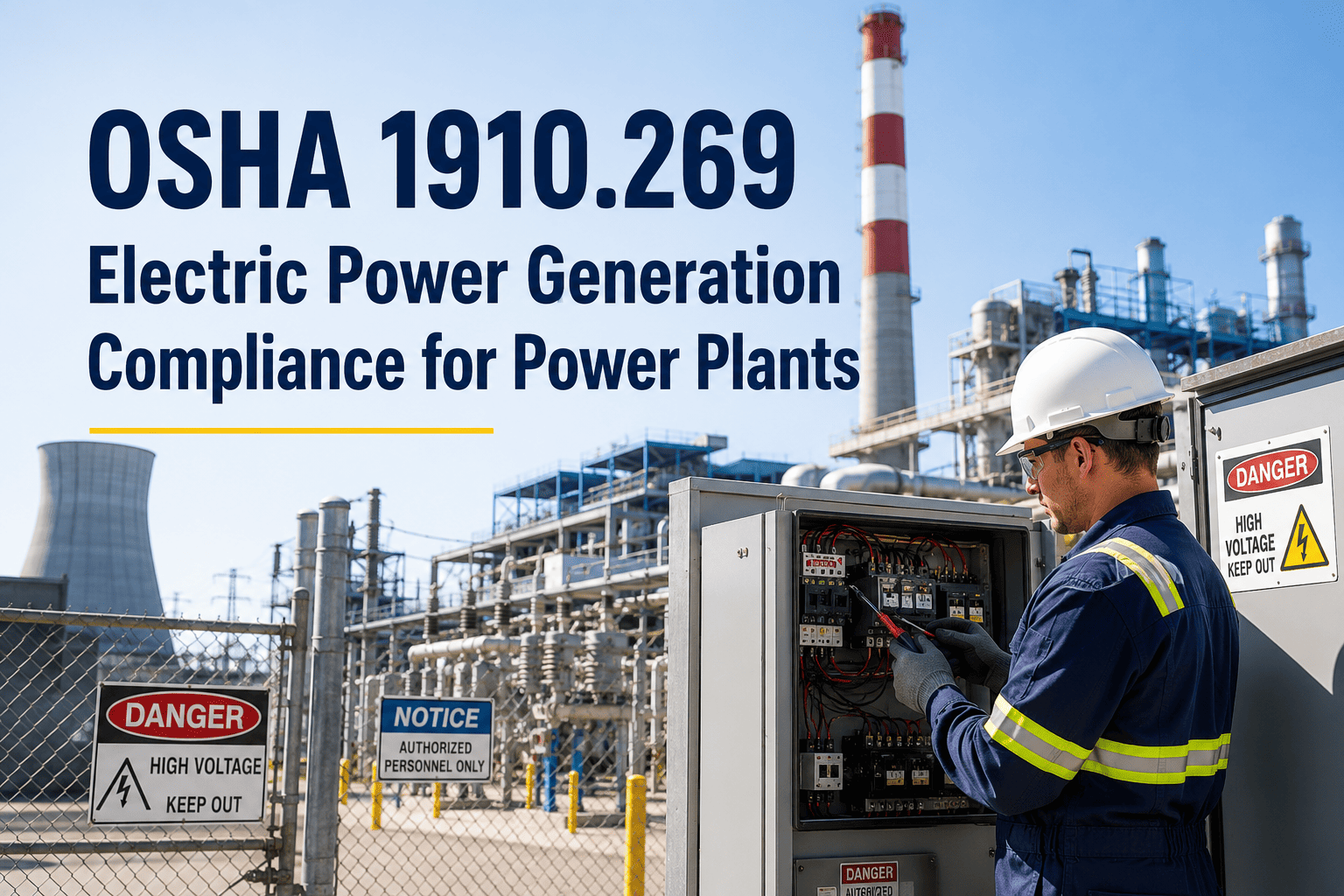
| OSHA PSM & 1910.269 | Mechanical integrity, electrical & hazardous-energy safety | MI inspection schedules, LOTO certificates, arc-flash/PPE specs, energized-work permits on the work order |
| Confined Space | Entry into boilers, tanks, vessels | Pre-entry permit with atmospheric monitoring and technician signature, embedded in the job |
| EPA (Title V / CEMS) | Emissions control equipment | PM completion on ESP, bag filter, SCR, CEMS linked to the permit record |
The through-line: every one of these is satisfied the same way — a scheduled work order that can't close without its required evidence, logged against the asset and exportable on demand. Get that architecture right once, and every regime is covered by the same discipline.
Where OxMaint Makes Compliance Operational
Compliance stops being a project and becomes a property of the system when the safety check, the sign-off, and the record are built into the task itself — impossible to skip, automatic to retain. That's the difference between a program you defend and one you rebuild. Sign up free in minutes and make every safety-critical task self-documenting.
Map your assets to the standards once, make every high-risk work order close with its evidence, and audit readiness becomes continuous instead of seasonal — no binder, no scramble, no missing signature. Sign up free or schedule a demo to see it on your plant.
Our maintenance was solid — our audits were miserable. Every cycle we'd lose a week rebuilding evidence binders and still find a work order missing a sign-off. Once we moved to OxMaint, the work orders wouldn't close without the readings and the LOTO certificate attached, and inspection certs lived on the asset with expiry alerts. Last NERC audit, the reviewer asked for our PRC-005 history and I exported it filtered by standard while he was still talking. We went from dreading audits to treating them as routine.
Frequently Asked Questions
Make Every Safety-Critical Task Completed, Documented, and Defensible.
OxMaint embeds mandatory LOTO and confined-space checks into high-risk work orders, blocks closure until the evidence is captured, links inspection records to assets with expiry alerts, and exports audit-ready packages by standard in one action — so ISO 55001, SAE JA1011, and NERC, ASME, OSHA, and EPA requirements are satisfied by daily work, not a pre-audit scramble. Start free — no credit card, unlimited users, forever. Or book a demo.