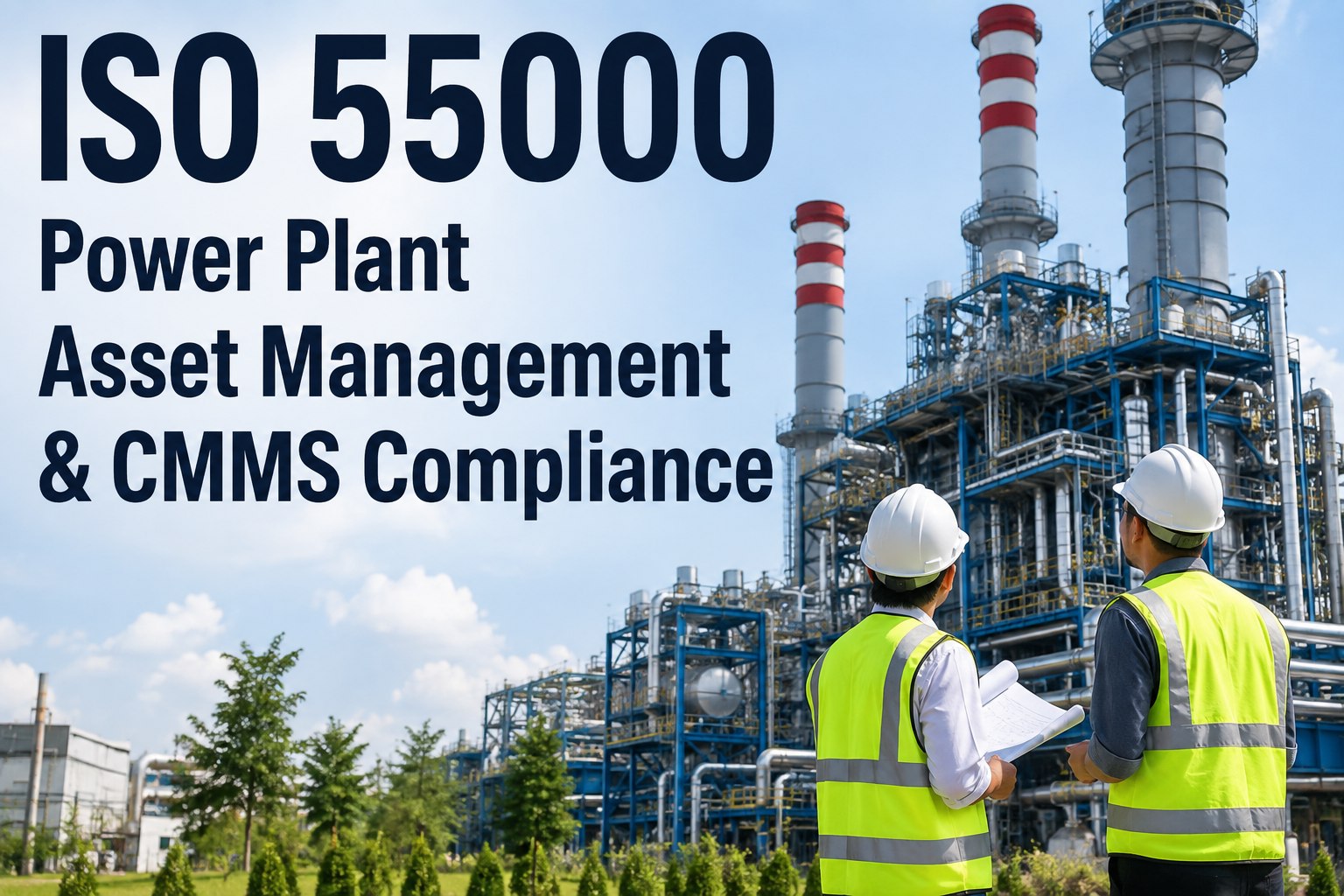
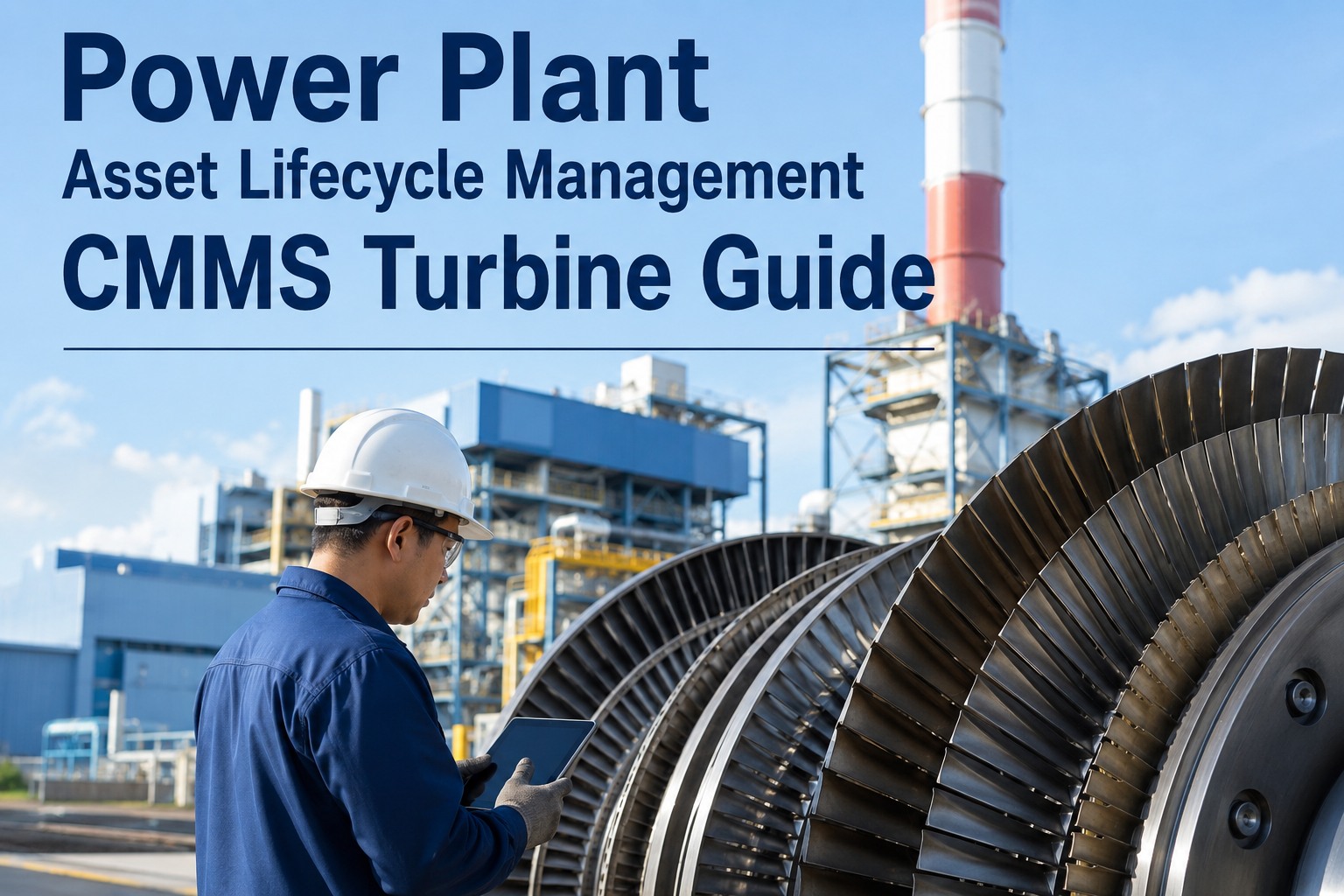
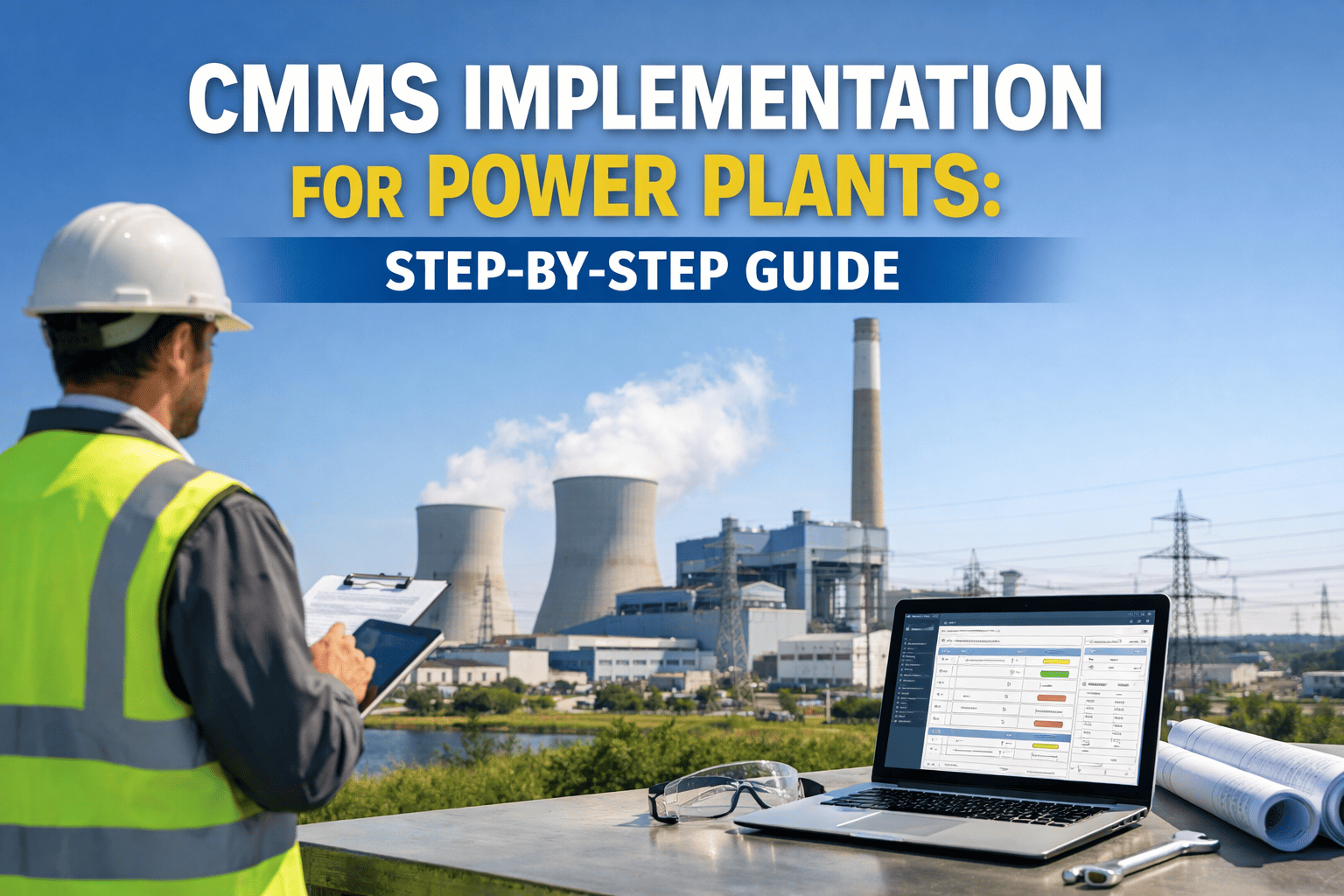
Power plants don't just run machinery — they manage billions of dollars in physical assets that must deliver reliable energy across decades. Yet most plants still manage turbines, boilers, transformers, and auxiliary systems without a unified governance framework. ISO 55000 changes that. Published by the International Organization for Standardization, this global family of standards defines exactly how a power plant should plan, operate, optimize, and retire its assets to extract maximum value across every stage of the lifecycle. When paired with a modern CMMS platform, ISO 55000 stops being paperwork and becomes the operational backbone that turns maintenance data into board-level decisions — reducing risk, stretching asset life, and aligning every work order with strategic plant objectives.
55000
Foundation
Defines vocabulary, principles, and the concept of "value from assets" — the why behind the standard
→
55001
Requirements
Specifies the 7 mandatory clauses an Asset Management System must satisfy — the what to comply with
→
55002
Guidance
Practical application notes for every 55001 clause — the how to implement at site level
Why ISO 55000 Matters Specifically for Power Plants
01
Asset Intensity
A 500 MW plant typically carries USD 400–800M in physical assets. Every unplanned failure cascades through dispatch commitments, penalty clauses, and reliability-based market payments. ISO 55000 enforces the discipline required at this capital scale.
02
Regulatory Scrutiny
Utility regulators, grid operators, and environmental authorities increasingly treat documented asset management as evidence of prudent operation. ISO 55001 certification provides defensible proof during rate cases and license renewals.
03
Aging Fleet Reality
Much of the global generation fleet is operating beyond original design life. ISO 55000 provides the risk-based framework to extend asset life safely rather than defaulting to expensive replacement or premature retirement.
04
Mixed-Portfolio Governance
Generators operating coal, gas, hydro, and renewables simultaneously need one coherent governance model across radically different asset classes. ISO 55000 is asset-agnostic by design — one framework, every technology.
The 7 Clauses of ISO 55001 — What Your Power Plant Must Demonstrate
4
Context of the Organization
Document internal and external factors affecting your plant — regulators, grid operators, fuel suppliers, environmental requirements, workforce capability. Define the scope of your Asset Management System: which units, which auxiliaries, which corporate boundaries it covers.
Key Artifact: Strategic Asset Management Plan (SAMP) scope statement
5
Leadership
Top management — plant GM, asset director, corporate reliability head — must own the Asset Management Policy, allocate resources, and assign RACI responsibility across asset decisions. Leadership gaps are the single largest reason ISO 55001 audits fail.
Key Artifact: Signed Asset Management Policy + RACI matrix
6
Planning
Translate the asset policy into concrete, measurable objectives at plant, unit, and asset class level. Address risks (forced outage exposure, aging equipment) and opportunities (efficiency upgrades, digitalization). The SAMP lives here.
Key Artifact: Strategic Asset Management Plan + asset-class plans
7
Support
Provide the resources, competencies, documented information, and communication channels required to execute the plan. This is where the CMMS becomes non-negotiable — it is the documented information system that carries asset data across the lifecycle.
Key Artifact: CMMS-managed asset register + competency matrix
8
Operation
Execute the plan across the full asset lifecycle — acquire, operate, maintain, renew, dispose. Control outsourced activities (contractor maintenance, specialist inspections) to the same standard as in-house work. All operational records must be traceable.
Key Artifact: Work orders, inspection logs, lifecycle cost records
9
Performance Evaluation
Measure, analyze, and evaluate asset performance against the objectives set in Clause 6. Internal audits must verify conformity. Management review meetings must examine system effectiveness and approve corrections. This closes the loop.
Key Artifact: KPI dashboard, audit reports, management review minutes
10
Improvement
Address non-conformities with corrective action. Apply predictive action based on risk trends and emerging opportunities. Continuously refine the system — ISO 55000 is explicit that a static asset management system is a non-conforming one.
Key Artifact: Corrective action register + continual improvement log
Move from theory to execution
Every ISO 55001 clause needs a system of record. Oxmaint is that system.
From asset register structure to audit-ready documentation, Oxmaint gives power plants one unified CMMS that maps directly to every ISO 55001 clause — without manual document handling.
Asset Register Structure: The Foundation of ISO 55000 Compliance
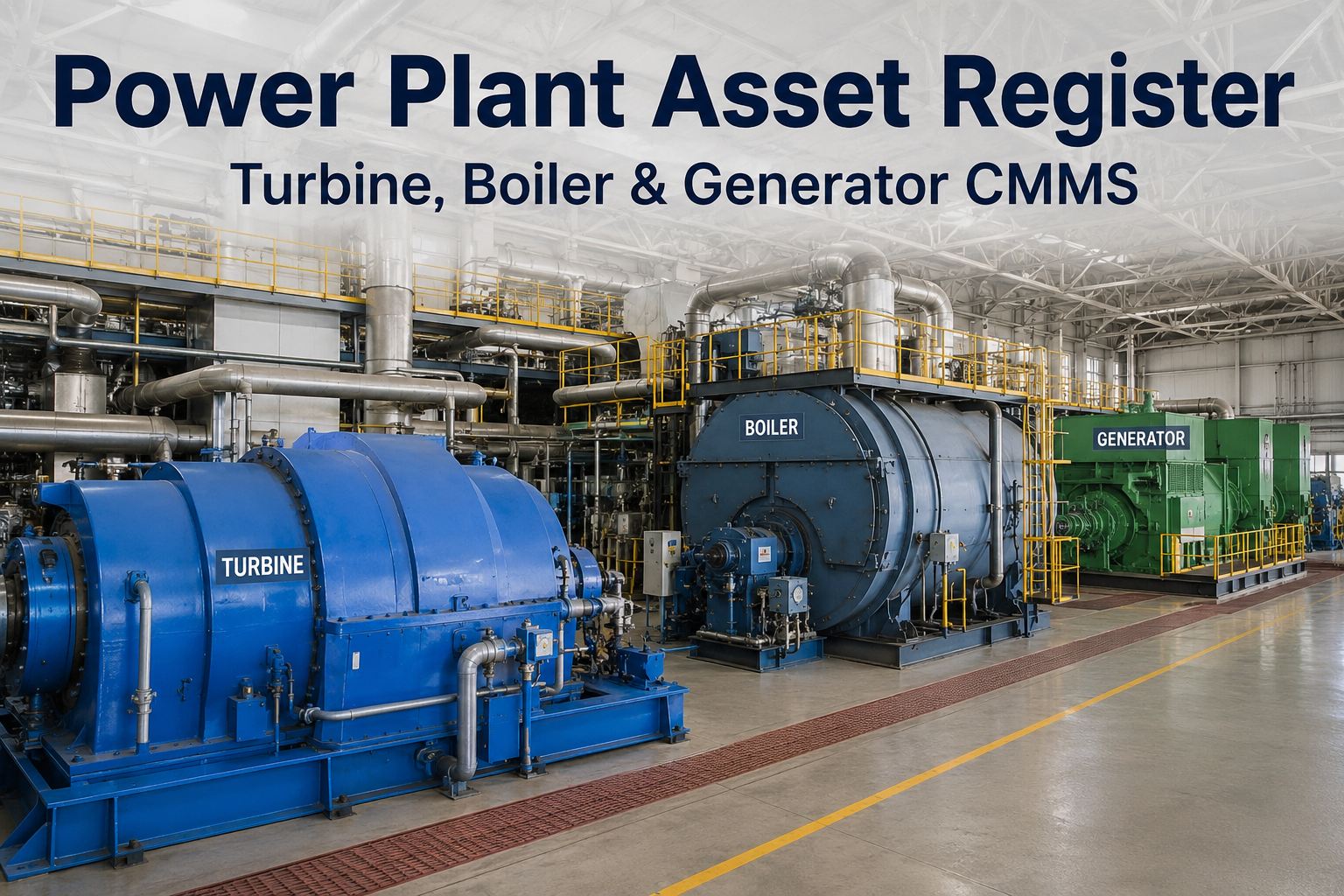
Before a power plant can comply with any ISO 55000 clause, it needs an asset register that goes far beyond a spreadsheet of tag numbers. The register is the backbone that supports lifecycle planning, risk analysis, and audit evidence. Here is how a compliant structure looks for a typical thermal generation site.
Level 1
Site / Plant
Example: Ravenswood Generating Station
Level 2
Generating Unit
Example: Unit 40 — 250 MW Combined Cycle
Level 3
System
Example: HRSG, Gas Turbine, Feedwater, Cooling
Level 4
Equipment
Example: GT compressor, HP drum, BFW pump P-201A
Level 5
Component / Maintainable Item
Example: Thrust bearing, valve V-201, motor winding
Asset Lifecycle Management: The Five Stages ISO 55000 Governs
Stage 1
Acquire
Specification, procurement, and commissioning decisions that lock in 60–70% of lifetime asset cost
Key Metric: Total Cost of Ownership forecast accuracy
Stage 2
Operate
Run the asset within design envelope, capturing operating data to feed condition analysis
Key Metric: Heat rate, capacity factor, forced outage rate
Stage 3
Maintain
Apply planned, predictive, and corrective work to sustain reliability and availability targets
Key Metric: PM compliance, MTBF, maintenance cost per MWh
Stage 4
Renew
Overhauls, major inspections, and capital refurbishment decisions driven by condition data
Key Metric: Remaining useful life, refurb ROI, risk score delta
Stage 5
Dispose
Retire, replace, or repurpose assets based on economic, safety, and regulatory thresholds
Key Metric: Decommissioning cost, salvage recovery, risk exposure closed
Risk-Based Decision Making: The ISO 55000 Criticality Matrix
Clause 6 of ISO 55001 requires plants to address risks and opportunities explicitly. The universal tool for this in power plant asset management is a criticality matrix that scores every asset on likelihood of failure and consequence of failure — driving maintenance strategy selection for each class.
How a CMMS Enables Each ISO 55000 Requirement
Clause 4–5
Scope, Context, Leadership Evidence
Central asset hierarchy, policy documents attached to plant scope, RACI assignments on work order types
Clause 6
Risk Assessment & Planning
Criticality scoring per asset, risk-weighted PM schedules, opportunity tracking against objectives
Clause 7
Documented Information
Asset register, manuals, certifications, competency records linked to each asset and technician
Clause 8
Operational Control
Work orders, contractor permits, job plans, lifecycle cost accumulation, spare parts consumption
Clause 9
Performance Evaluation
KPI dashboards (MTBF, PM compliance, cost per MWh), audit trails, management review reports
Clause 10
Continual Improvement
Non-conformance tracking, corrective action workflows, RCA library, trend analytics
Asset Management Maturity: Where Does Your Plant Stand Today?
Level 1
Innocent
Reactive maintenance dominates. Asset data sits in spreadsheets or paper binders. No documented policy exists.
Level 2
Aware
PM schedules exist but inconsistent. Initial CMMS adoption. Leadership discussing ISO 55000 but no plan.
Level 3
Developing
SAMP drafted. Asset register in CMMS. Criticality analysis started. First audit gap assessment completed.
Level 4
Competent
All 7 clauses operational. Predictive maintenance integrated. KPI dashboards reviewed monthly. Ready for certification audit.
Level 5
Optimizing
Certified. Asset data drives capital planning. Continuous improvement embedded. Benchmark for peer plants.
Implementation Roadmap: 12 Months from Gap Analysis to Audit-Ready
Month 1–2
Gap Assessment
Baseline audit against all 7 clauses. Interview leadership. Document current state of asset register, PM program, KPIs.
Output: Gap register + priority list
Month 3–4
Policy & SAMP
Draft Asset Management Policy. Build Strategic Asset Management Plan. Align to corporate and regulatory objectives.
Output: Signed policy + approved SAMP
Month 5–7
CMMS Deployment
Structure asset register to 5-level hierarchy. Load criticality scores. Configure PM schedules. Train every operator and technician.
Output: Live CMMS with full asset data
Month 8–12
Operate & Audit
Run the system. Capture 6 months of operating evidence. Conduct internal audit. Address non-conformities. Schedule certification audit.
Output: Certification-ready system
Benefits Power Plants Report After ISO 55000 Implementation
20–35%
Reduction in Unplanned Outages
Risk-based maintenance strategy eliminates the highest-consequence failure modes first
15–25%
Lower Total Maintenance Cost
Shift from reactive to predictive removes emergency premiums and secondary damage
10–30%
Extended Asset Life
Condition-based renewal decisions avoid premature replacement and forced retirements
100%
Audit & Regulatory Defensibility
Every asset decision has documented evidence from register through KPI to management review
Frequently Asked Questions About ISO 55000 for Power Plants
Is ISO 55001 certification mandatory for power plants?
Certification itself is voluntary worldwide, but regulators in multiple regions increasingly require documented asset management that mirrors ISO 55001 principles. Many utilities pursue certification to demonstrate due diligence.
Book a consultation to review your regulatory landscape.
What is the difference between ISO 55000 and ISO 55001?
ISO 55000 provides the vocabulary and principles — the conceptual foundation. ISO 55001 contains the certifiable requirements you audit against, across 7 clauses. ISO 55002 gives practical guidance for applying 55001. Start the journey by exploring a
compliant CMMS platform that maps to all three.
How long does ISO 55001 certification take for a power plant?
Most plants reach certification-ready status in 12–18 months depending on starting maturity. Plants with a mature CMMS and PM program can compress this to 9–12 months.
Schedule a readiness review to map your specific timeline.
Can a CMMS alone achieve ISO 55001 compliance?
A CMMS is necessary but not sufficient — the system records data, but you still need the policy, SAMP, leadership commitment, and audit processes. However, without a proper CMMS, compliance is practically impossible at power plant scale. Start with the
right CMMS foundation first.
What did the ISO 55001:2024 revision change?
The 2024 revision added Clause 4.5 on asset management decision-making and value, clarified the SAMP role, introduced "predictive action" alongside corrective action, and strengthened data and knowledge requirements. Existing 2014-based systems need moderate updates, not rebuilds.
Book a gap review against the 2024 version.
Does ISO 55000 apply to renewables and hybrid portfolios?
Yes — ISO 55000 is asset-agnostic. Solar plants, wind farms, BESS installations, and hybrid portfolios use the same 7 clauses with asset-class-specific plans underneath. A unified framework across a mixed fleet is one of the standard's strongest advantages. Set it up correctly from day one with the
right CMMS backbone.
Your ISO 55000 journey starts with the asset register
Build an audit-ready Asset Management System with Oxmaint
Oxmaint is purpose-built for power plant maintenance teams pursuing ISO 55000 alignment — with a 5-level asset hierarchy, criticality scoring, risk-based PM, lifecycle cost tracking, and the audit evidence your certification body will request. Deploy in weeks, not years.