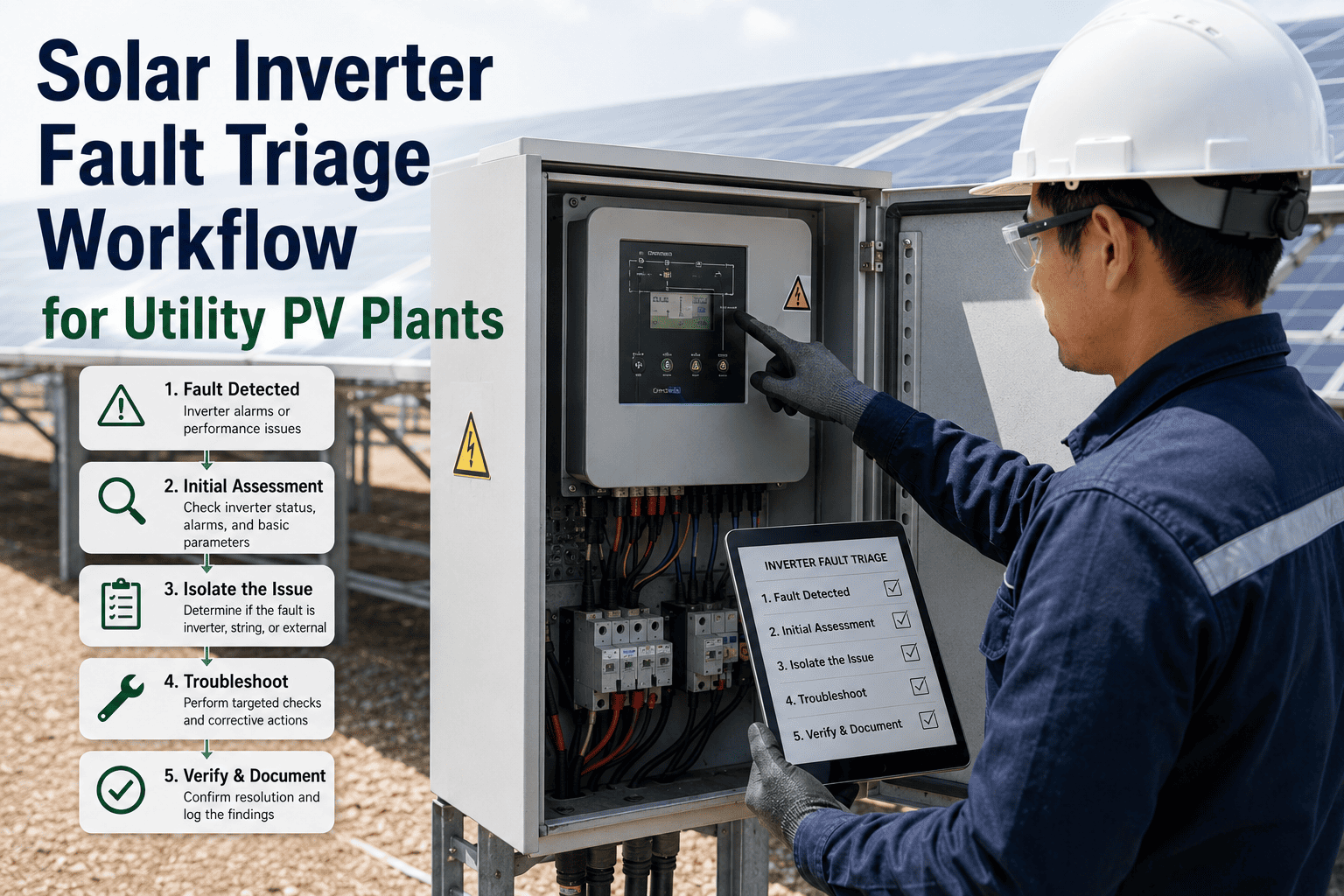
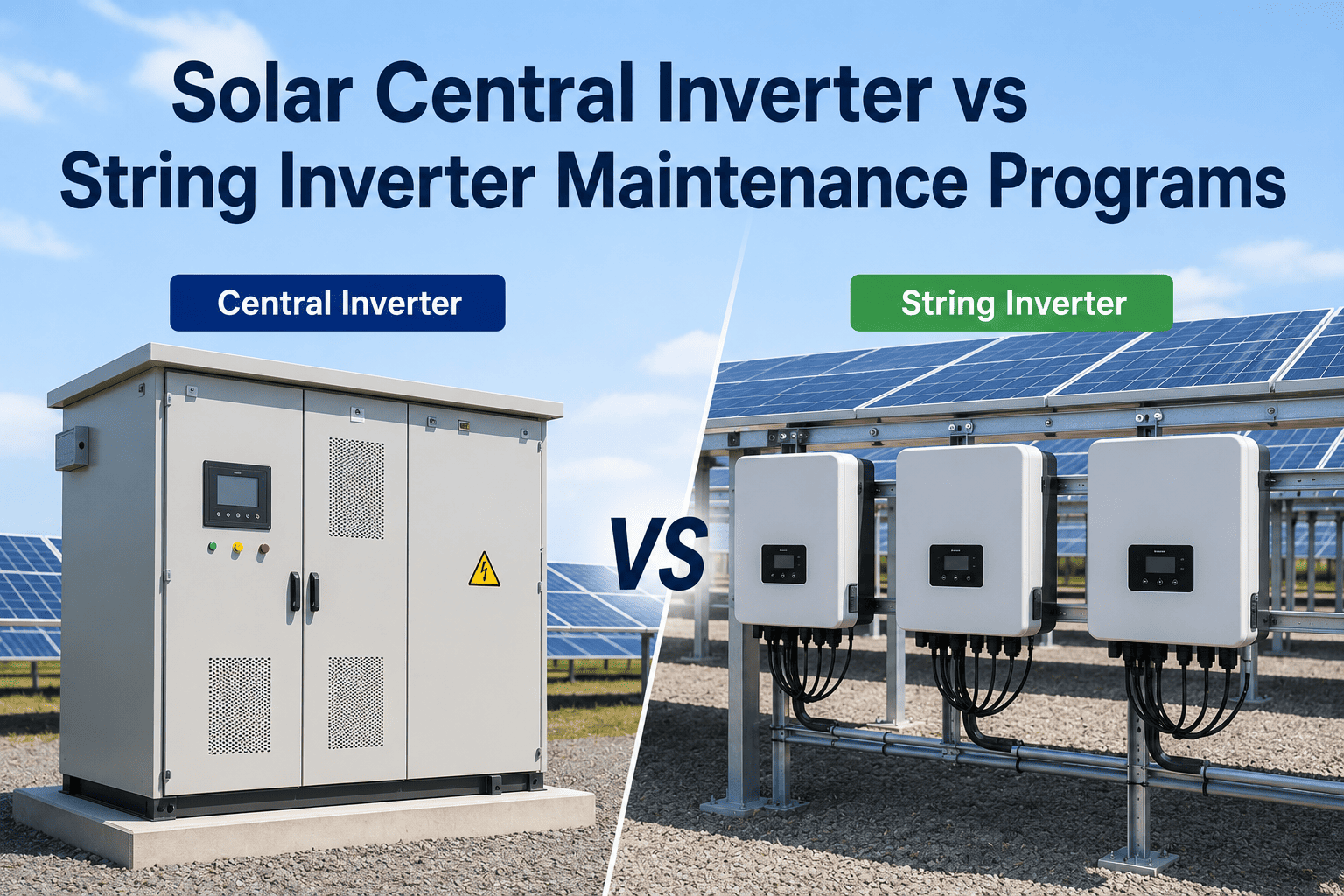
Solar inverter downtime is one of the most solvable availability problems in renewable energy operations — and one of the most persistently mismanaged. The core issue is not that inverters fail unpredictably; modern string and central inverters generate detailed fault codes that precisely identify what failed, when, and under what conditions. The issue is the gap between when a fault is logged and when a technician with the right part in their truck shows up to fix it. For the solar operator in this case study, managing 47MW across three sites with a maintenance team that received fault alerts via email and dispatched based on manual triage, that gap averaged 6.8 hours per event — long enough for shading interactions, thermal cycling, and subsequent faults to turn a single inverter event into a multi-inverter cascade. Using OxMaint's fault-to-work-order webhook automation combined with a pre-staged inverter spares program, that same operator cut inverter downtime by 58% within nine months — not by changing hardware, but by closing the response gap with automated workflows.
The Response Gap: Why Inverter Fault Notifications Are Not Enough
An inverter fault notification is a signal, not a solution. Between the signal and the resolution lies a chain of manual steps — reading the alert, identifying the fault type, checking parts inventory, creating a work order, assigning a technician, generating a dispatch instruction — that in most operations takes 3 to 8 hours per event. During every one of those hours, affected strings or central inverter capacity is offline, generation is lost, and the Revenue at Risk clock is running. OxMaint's automation eliminates every manual step in that chain by connecting the SCADA fault signal directly to a pre-configured work order template and dispatch protocol.
The Pre-Staged Spares Program: What It Looks Like in Practice
The automation removes the triage delay. The pre-staged spares program removes the parts procurement delay. Together they account for 78% of the total response time reduction in this case study. The spares program is built from OxMaint's fault history analysis — which identifies the 8 to 12 fault types that account for 85% of inverter downtime at each site, and positions the corresponding replacement components at the site rather than at a central warehouse 90 minutes away.
| Fault Category | Fault Code Examples | Annual Frequency | Pre-Staged Part | Downtime Reduction |
|---|---|---|---|---|
| IGBT Module Failure | F012, F031, F044 | 14 events/yr | 2x IGBT modules per site | 4.2 hrs per event |
| DC Fuse Failure | F008, F022 | 22 events/yr | Full fuse set staged | 3.8 hrs per event |
| Fan / Cooling Failure | F019, F055 | 18 events/yr | 4x cooling fans staged | 3.1 hrs per event |
| Communication Board | F061, F070 | 9 events/yr | 1x comm board per site | 5.6 hrs per event |
| Capacitor Bank | F033, F041 | 6 events/yr | 1x cap bank assembly | 6.1 hrs per event |
Every Hour of Inverter Downtime Is Revenue You Cannot Recover
OxMaint's fault-to-WO automation and pre-staged spares program cut that loss by 58% for this operator. The system works with your existing SCADA and inverter fault data — no new hardware required.
Downtime Reduction by Month — The 9-Month Program Trajectory
Frequently Asked Questions
Stop Losing Revenue in the Gap Between Fault Alert and Technician Arrival
OxMaint's fault-to-WO automation closes that gap to minutes. Your existing SCADA data is all it needs. Sign up today and see your fault response cycle transform within the first week of operation.