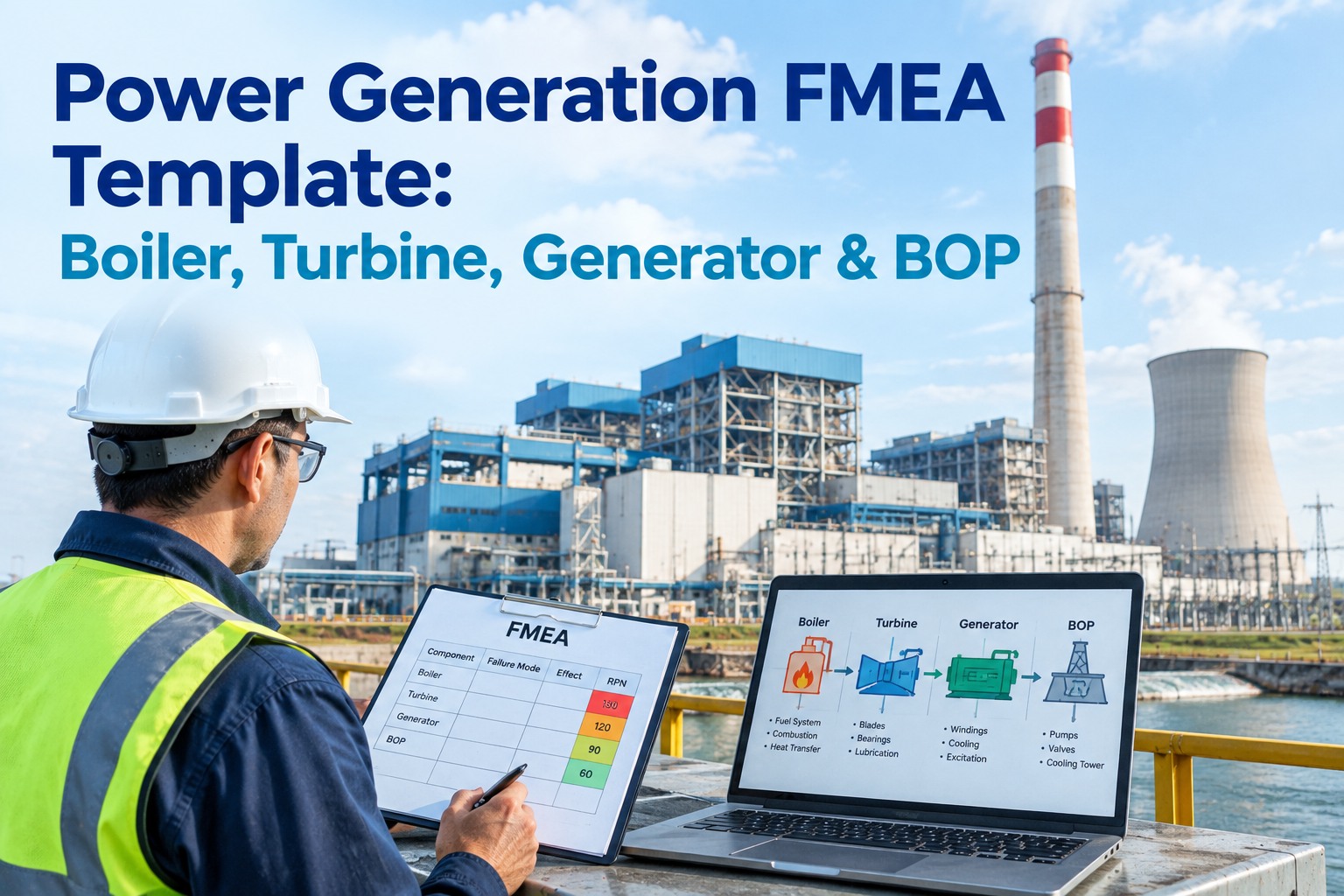
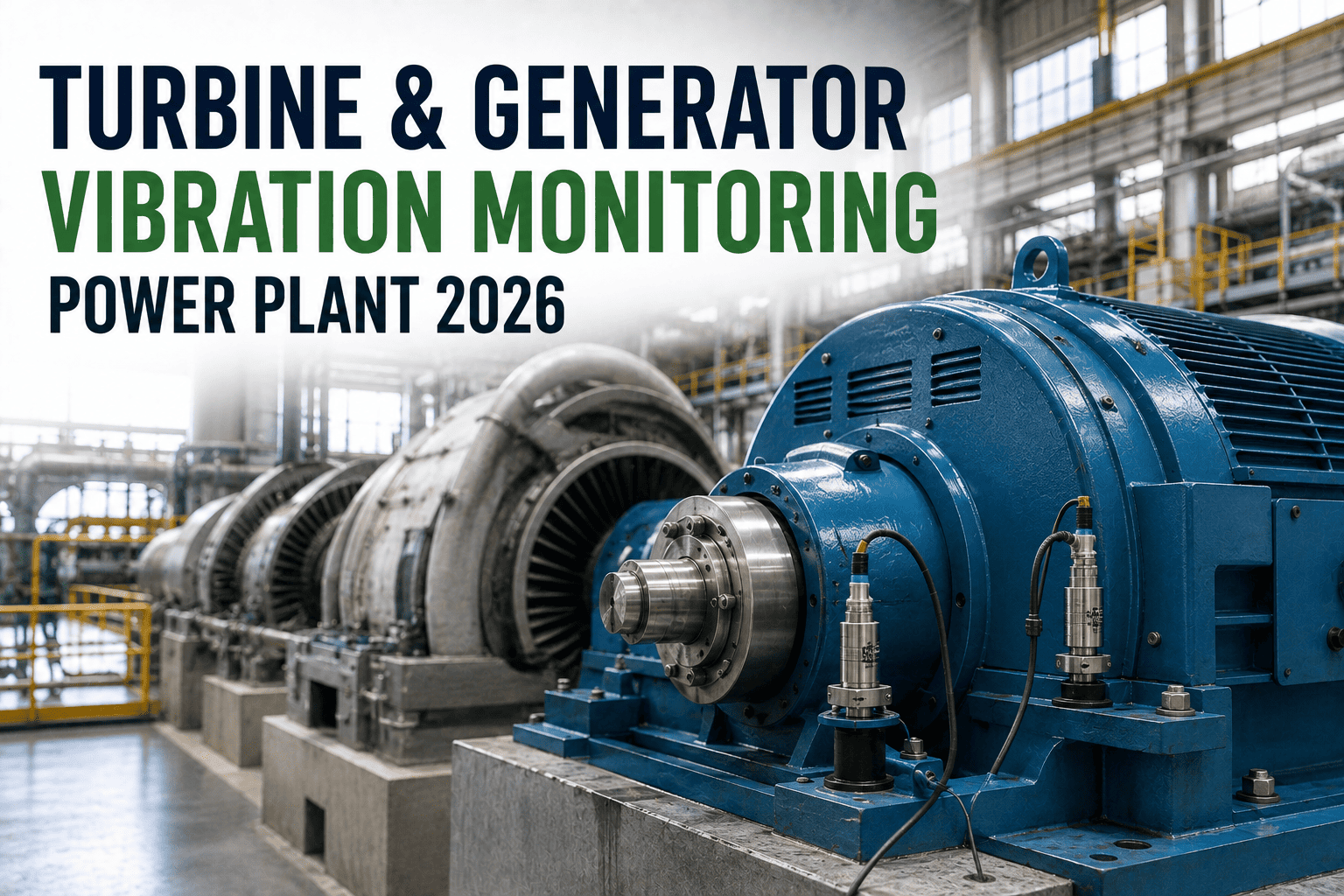
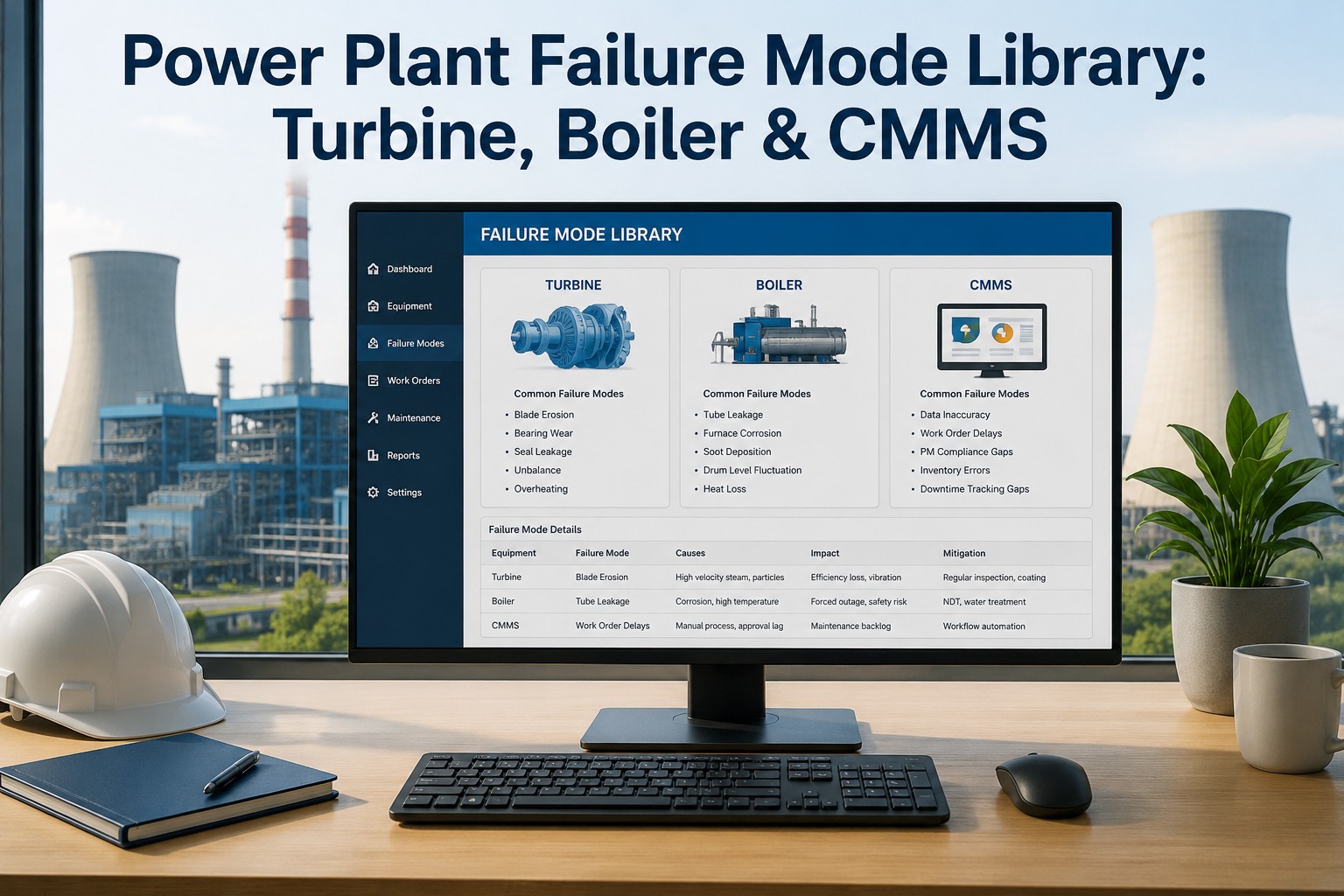
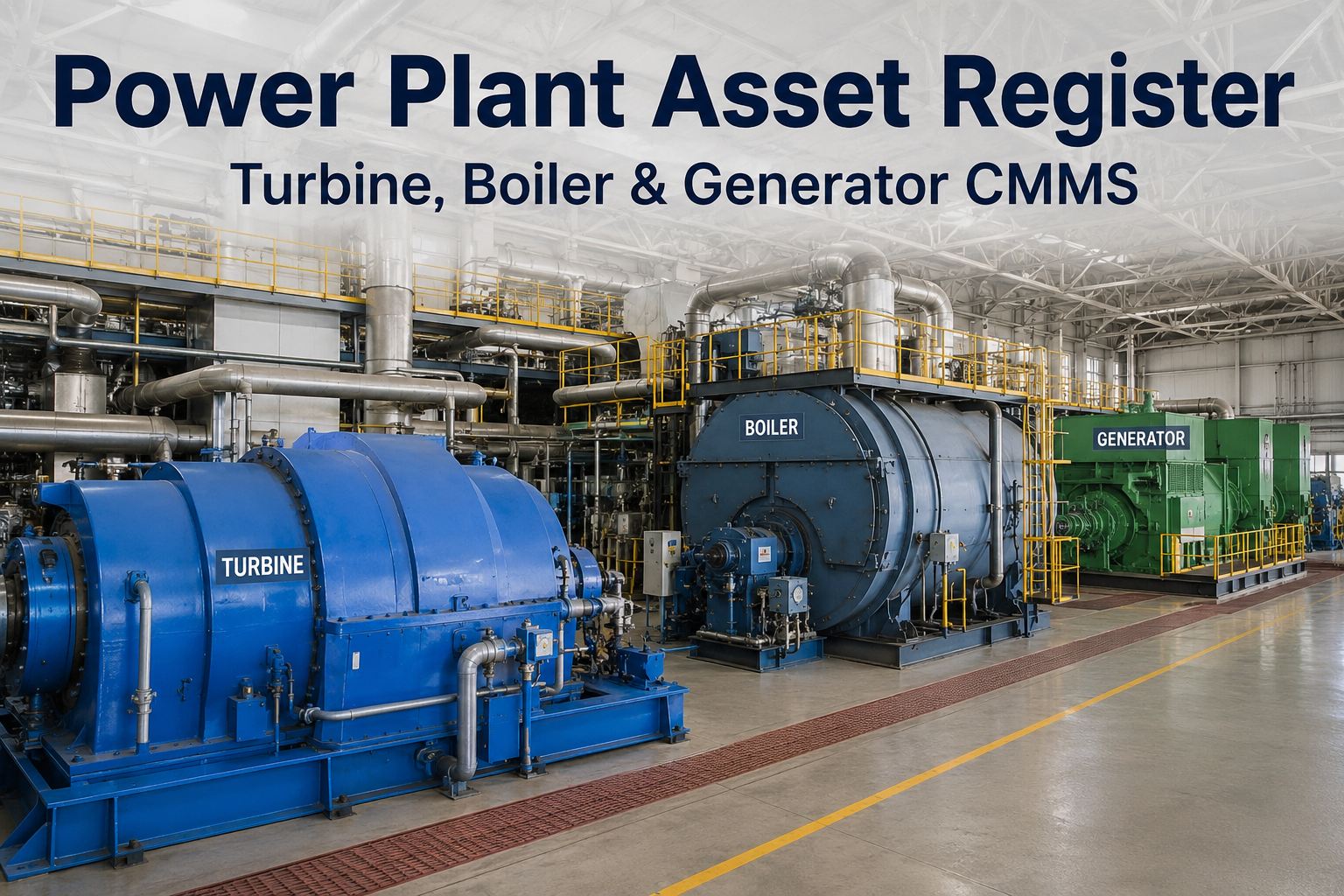
Every power plant maintenance strategy eventually meets the same test — the July afternoon when a critical unit trips off the grid and the phone starts ringing. NERC compliance flags. Capacity payment clawbacks. Emergency dispatch premiums. Executive escalations. Root-cause investigations that surface the same six-word answer every time: "we should have caught this earlier." Strategy exists to prevent exactly that moment. And in 2026, the gap between plants that consistently prevent those moments and plants that live in the aftermath of them is no longer a function of technician skill or budget — it is a function of whether the maintenance program has evolved from calendar-driven, reactive execution into a data-driven, predictive discipline anchored in a CMMS. This guide walks through the strategic roadmap, the asset-level priorities, the compliance architecture, and the operational model that separates modern generation maintenance from the practices of the last decade. Book a free demo to see OxMaint's power plant maintenance platform against your fleet.
Level 1
Reactive
Fix on failure. Emergency labor, parts express-shipped, root cause rarely investigated.
Forced outage rate: high · Cost per MWh: highest
Level 2
Planned / Calendar
Time-based PMs from OEM manuals. Better than reactive, but over- and under-servicing simultaneously.
Forced outages down 15-25% · Compliance documented but manual
Level 3
Condition-Based
Sensor and inspection data trigger work. PMs happen when the asset actually needs attention.
Forced outages down 40-60% · Maintenance cost drops materially
Level 4
Predictive / Prescriptive
AI models continuously score asset health, predict failure windows, and generate prescribed work orders.
Forced outages down 60-75% · Compliance automatic
Most fleets today sit between Levels 1 and 2. The path to Level 4 is a defined roadmap — not a leap.
52%
of forced thermal outages start with a boiler tube leak — the single highest-frequency failure mode
$1M/day
maximum NERC CIP violation penalty per violation — compliance documentation is not optional
38%
average maintenance cost reduction reported by plants that deployed an AI-native CMMS within 18 months
The Real Cost of an Unplanned Power Plant Outage
Executive conversations about maintenance investment routinely stall on the wrong number. The repair bill for a failed component is only the smallest layer of the total cost. Replacement power procurement, capacity payment clawbacks, NERC reliability penalties, secondary damage to connected assets, and reputation impact with the ISO or utility customer stack invisibly behind every visible dollar. The ranking below reflects what maintenance leadership actually protects when they invest in predictive discipline for each asset class.
Generator winding failure
Steam turbine blade / rotor damage
Boiler tube leak / rupture
$500K-1.5M · forced outage
HRSG / condenser tube failure
One prevented failure at any of the top three tiers typically pays for the entire CMMS investment across a multi-year horizon
Asset Criticality Determines Strategy
A common failure mode of maintenance programs is treating every asset with the same discipline. The result is over-servicing minor equipment while under-investing in the assets whose failure actually creates business risk. Asset criticality tiering solves this — assigning the right maintenance strategy to each tier based on failure consequence, cost of downtime, and replacement lead time. OxMaint stores every asset with its criticality classification so PM cadence, sensor investment, and outage prioritization all flow from a single tier decision.
Asset Criticality Tiering · Strategy Per Tier
Tier A · Critical
Steam turbines · Gas turbines · Generators · Main transformers
Full predictive · continuous sensor monitoring · condition-based PM · redundancy planning
Tier B · High
Boilers · HRSGs · Condensers · Cooling towers · Switchgear
Condition-based with quarterly inspection · trend analysis · scheduled outage integration
Tier C · Medium
Feedwater pumps · Fans · Compressors · Motor control centers
Time-based PM with condition monitoring layered where economic · vibration analysis
Tier D · Standard
Auxiliary pumps · Valves · Lighting · Building systems · BOP
Calendar-based PM · run-to-failure acceptable for low-consequence items
The Reactive-to-Predictive Roadmap
Moving a plant from Level 1 or 2 up the maturity ladder is not a technology purchase — it is a phased operational transformation. The five-stage roadmap below is drawn from what actually happens when generation fleets deploy OxMaint and mature their program stage by stage. Each stage has a defined starting point, a primary action, and a measurable outcome that confirms the plant is ready to proceed to the next stage.
Days 1-30
Asset Register & Baseline
Import every turbine, boiler, generator, transformer, and auxiliary into OxMaint with criticality tier and prior 90 days of reactive work assigned
Outcome: reactive work drops 20-35% just from visibility
Days 31-90
PM Schedule Activation
Deploy OEM-based PM templates against every Tier A and B asset · train technicians on mobile execution
Outcome: PM compliance climbs above 85% in the first quarter
Days 91-180
Condition Monitoring Integration
Connect vibration, thermography, oil analysis, and DCS data feeds into OxMaint for Tier A assets first
Outcome: first predicted-failure catches begin appearing
Days 181-270
Compliance Automation
Map every PM and inspection task to NERC, FERC, EPA, OSHA, and ASME standards · automate audit-ready reporting
Outcome: audit prep drops from weeks to minutes
Days 271-365
Predictive & Prescriptive
AI health scoring against Tier A assets · prescribed work orders based on failure prediction models
Outcome: forced outage rate reduction of 60%+ demonstrated
Turbine PM — The Highest-Value Discipline in the Plant
Turbines degrade silently. Blade root erosion, bearing babbitt wear, gland seal deterioration, and thermal expansion drift accumulate over thousands of hours before any parameter breaks an alarm setpoint. A disciplined turbine PM program does not wait for the alarm — it catches the degradation trend during scheduled inspections at the intervals below and prevents the six-figure repair from ever appearing on the maintenance ledger.
Daily
Vibration reading log, bearing temperature check, lube oil level, seal steam pressure, DCS trend review
Weekly
Oil sampling for lab analysis, valve stroke test on non-critical trip valves, thermography of casings and bearings
Monthly
Governor response test, overspeed protection verification, condenser vacuum trend, gland seal condition, filter differentials
Annual
Borescope inspection HP/IP/LP stages, valve overhaul, journal bearing clearance, alignment verification, controls calibration
Major (5-7 yr)
Full teardown, blade replacement / repair as required, rotor inspection, balancing, casing pressure test, generator winding inspection
Boiler Inspection Cycles — 52% of All Forced Outages Start Here
Boiler tube failures are the single most common cause of forced thermal outages worldwide. Chemistry drift, mechanical fatigue, erosion, corrosion, and creep each attack different sections of the boiler at different rates. The inspection cycle below reflects the discipline that catches these failure modes before they surface as a tube rupture during a January cold snap — when replacement power cost is at its highest.
Continuous
Water chemistry monitoring, drum level tracking, superheater temperature trending, safety valve position, flame quality via combustion monitoring
Outage · Annual
Waterwall visual inspection, superheater and reheater tube UT scan, economizer sample tube analysis, refractory condition, burner overhaul
Major · 3-5 yr
Full tube thickness mapping, drum internal inspection, header inspection, pressure part hydro test, ASME Section XI documentation refresh
Life Extension
Creep sample analysis, header replacement study, tube panel replacement plan, remaining life assessment per ASME BPVC
See Turbine & Boiler PM Live Inside OxMaint
Watch how condition-based turbine intervals, boiler inspection cycles, and NERC-ready documentation behave against a real generation fleet in a 30-minute live walkthrough.
The Regulatory Framework — What Every Program Must Document
Power generation maintenance operates inside a dense regulatory environment that materially shapes how the program must be structured, documented, and audited. Every PM task, every inspection, every corrective action must be traceable to the applicable standard. When auditors arrive, the plants that pass in hours instead of weeks are the ones running a CMMS that pre-maps every task to the standard it satisfies.
NERC
North American Electric Reliability Corp
PRC standards, GADS reporting, CIP cybersecurity — up to $1M/day penalty per violation
FERC
Federal Energy Regulatory Commission
Market rules, capacity payment obligations, tariff compliance, transmission interconnection
EPA
Environmental Protection Agency
Emissions permits, CEMS reporting, NESHAP limits, water discharge, hazardous waste
OSHA
Occupational Safety & Health Admin
29 CFR 1910.269 electrical safety, LOTO, confined space, PSM for covered facilities
ASME
American Society of Mechanical Engineers
BPVC boiler code, Section XI in-service inspection, Section VIII pressure vessels
Outage Planning — The Choreography of Scheduled Downtime
A scheduled outage is the largest maintenance event in a plant's operating year. Ten to thirty days of coordinated work involving inspections, overhauls, contractor mobilization, parts logistics, and safety documentation — all executed under critical-path pressure because every additional day of downtime costs replacement power. Modern outage planning coordinates parallel work streams so tasks that can happen simultaneously actually do. The compressed timeline below shows how the four workstreams overlap during a typical thermal outage window.
Scheduled Outage · Parallel Workstreams
Turbine
Boiler
Generator
BOP
D1D3D5D7D10D14
Turbine
Cooldown → Casing open → Borescope → Reassemble
Boiler
Cooldown → Tube UT scan → Repairs → Hydro test → Restart prep
Generator
Bearing check → Winding test → Excitation service
BOP
Pumps · valves · switchgear · controls · condenser tube cleaning
OxMaint models outage critical-path in real time — tracking parts readiness, contractor access, and parallel execution to minimize the D14 becoming D17
Executive Perspective · The Strategic Value of a Mature Program
The financial case for moving from calendar-based to condition-based maintenance is not the labor savings — it is the forced outages that never happen. Every prevented turbine trip, every caught boiler tube leak before rupture, every transformer temperature trend investigated three months before insulation failure — those events do not appear on any budget line, and that is precisely why they are undervalued in most maintenance conversations. The plants generating consistent capacity payments year after year are the ones whose CMMS is doing that quiet work in the background. What we protect on the availability side dwarfs everything we save on the labor side. A mature program is not a cost center. It is the operational moat.
Availability Over Efficiency
The value of a mature program is measured in MW delivered on the days the grid needs them most. OxMaint's health monitoring protects availability directly.
Compliance Is an Output
Audit readiness should be a byproduct of routine work, not a quarterly scramble. Every task in OxMaint pre-maps to the applicable standard.
Predict Before You Prevent
Level-4 maturity means the plant knows what will fail before scheduling the work that prevents it. That is where the industry is heading.
Move Your Plant Up the Maturity Ladder
If your maintenance program is still calendar-driven, you are carrying preventable outage risk into every operating hour. See what OxMaint — a maintenance management platform purpose-built for power generation reliability and compliance — looks like against your generation fleet.
Frequently Asked Questions
What is the best maintenance strategy for a power plant?
The right strategy is tiered by asset criticality, not applied uniformly. Tier A critical assets (turbines, generators, main transformers) warrant full predictive maintenance with continuous sensor monitoring. Tier B high-consequence assets (boilers, HRSGs, condensers) use condition-based intervals. Tier C medium-consequence assets run on time-based PM with condition layers where economic. Tier D standard assets run on calendar PM or run-to-failure. OxMaint stores every asset with its tier classification so strategy applies automatically.
How do I move a power plant from reactive to predictive maintenance?
The transition follows a phased roadmap over roughly 12 months: Days 1-30 import the asset register into OxMaint and assign 90 days of reactive history to named assets; Days 31-90 activate OEM PM templates for Tier A and B assets; Days 91-180 integrate condition monitoring feeds; Days 181-270 automate compliance reporting; Days 271-365 layer in AI-based predictive scoring for Tier A. Each stage delivers measurable value before the next begins.
What are the biggest failure modes in a thermal power plant?
Boiler tube leaks are the single largest cause of forced outages, accounting for over 52% of thermal plant forced outages globally. Generator winding failures represent the highest financial impact per event at $10M+ replacement cost with 4-12 week repair windows. Steam turbine blade damage and main transformer failures round out the top-three financial exposure list. Every category is preventable with disciplined condition-based programs run inside a CMMS.
How does a CMMS help with NERC and regulatory compliance?
Every PM task, inspection, and corrective action in OxMaint pre-maps to the applicable standard — NERC PRC, GADS, CIP, FERC market rules, EPA emissions permits, OSHA 29 CFR 1910.269, and ASME BPVC. Audit-ready reports generate in minutes rather than weeks. NERC CIP violations carry penalties up to $1M per violation per day, so documentation is not optional. OxMaint stores immutable timestamped records against every asset that satisfies every applicable auditor request.
How often should power plant turbines be inspected?
Turbine PM follows layered intervals: daily vibration and bearing checks, weekly oil sampling and thermography, monthly governor and overspeed testing, annual borescope inspection of HP/IP/LP stages with valve overhaul, and major teardown every 5-7 years including blade repair, rotor inspection, and full alignment. OxMaint fires the correct interval per unit and captures every reading against the asset for long-term trending.
Do I need IoT sensors installed to benefit from a modern power plant CMMS?
No. The roadmap delivers value at every stage before sensor integration. The first 30 days of asset register import and work order visibility alone typically reduces reactive work by 20-35%. Sensor and DCS integration is introduced in Stage 3 (Days 91-180) and can be phased in starting with the two or three highest-consequence assets. Plants can reach Level 3 maturity with existing manual condition monitoring — vibration walk-arounds, oil sampling, thermography — before adding continuous sensors.