Power plants sit at the center of every serious ESG agenda — yet OxMaint's sustainability and ESG reporting CMMS shows that fewer than 48% of utilities report being highly capable of gathering the ESG data their investors, regulators, and boards now demand. The emissions figures, energy efficiency metrics, and environmental KPIs that belong in your GRI, SASB, or TCFD disclosures are already being generated by your plant's daily maintenance operations — they're just not being captured, structured, or reported in a way that moves from the asset floor to the boardroom without weeks of manual reconciliation.
Your Plant Already Generates the Data. OxMaint Turns It Into ESG Reports.
Every kilowatt consumed, every emission event, every equipment efficiency loss — it happens in your maintenance system. OxMaint connects those operational records to the sustainability disclosures your stakeholders require, without building a second data infrastructure.
Why Power Plants Struggle to Report ESG Metrics Accurately
The challenge isn't that your plant lacks ESG data — it's that the data lives in the wrong places. Emissions figures sit in DCS exports. Energy consumption is in utility billing. Equipment efficiency losses are buried in work order histories. Safety incidents are tracked in a separate HR system. When your sustainability team needs to compile a GRI disclosure or a TCFD climate risk assessment, they spend three weeks reconciling spreadsheets from six departments — and the resulting numbers are already months out of date by the time they reach the report.
The ESG Metrics Your Plant Must Track — And Where They Come From
Power generators are subject to GRI 302 (Energy), GRI 305 (Emissions), SASB Electric Utilities sector standards, and TCFD climate risk disclosure requirements. Each framework pulls from operational data that your CMMS already touches. The table below maps the key ESG metrics to their maintenance data sources — and shows what breaks when that connection doesn't exist.
Direct GHG Emissions
CO₂e from fuel combustion in boilers, turbines, and auxiliary equipment. Data source: fuel consumption per asset from maintenance work orders and DCS records.
Purchased Energy Emissions
Indirect emissions from grid electricity purchases. Tracked via metered consumption data and regional grid emission factors — varies by hour of use in high-renewable grids.
Heat Rate & Energy Intensity
GJ per MWh generated. Deviations from baseline directly signal equipment degradation — and are the primary leading indicator that a maintenance intervention will reduce emissions.
Auxiliary Power Consumption
Energy consumed by pumps, fans, and balance-of-plant systems as a percentage of gross generation. Tracked per asset; flagged when consumption exceeds design baseline due to degradation.
Water Withdrawal & Discharge
Cooling water intake volume, treatment chemical consumption, and discharge quality. Logged through inspection work orders on cooling towers, heat exchangers, and water treatment systems.
Safety Incident Rate & LTIFR
Lost-time injury frequency rate, near-miss events, and safety observation completion rates. Generated directly from permit-to-work records, safety task completions, and incident logs in the CMMS.
Stop Reconciling Sustainability Data from Six Disconnected Systems
OxMaint pulls emissions, energy efficiency, water, and safety data from your maintenance operations automatically — structured for GRI, SASB, and TCFD reporting without manual compilation.
How OxMaint Bridges Maintenance Operations and ESG Reporting
The core insight behind OxMaint's sustainability module is that maintenance events are emissions events. When a combustion turbine's heat rate degrades by 3% due to compressor fouling, that degradation increases Scope 1 emissions per MWh generated — and that increase shows up in your ESG report whether you track it or not. OxMaint makes the connection visible and actionable before it becomes a reporting liability.
Asset-Level Data Capture
Every work order in OxMaint records fuel consumption, run hours, maintenance-linked energy readings, and equipment condition against the specific asset — creating a timestamped, auditable data trail that feeds directly into emissions calculations.
Automated Emissions Calculation
OxMaint applies GHG Protocol-aligned emission factors to fuel consumption records — calculating Scope 1 CO₂e by asset, unit, and facility. Scope 2 calculations use grid emission factors updated per reporting period. No separate carbon accounting spreadsheet required.
ESG Dashboard & KPI Tracking
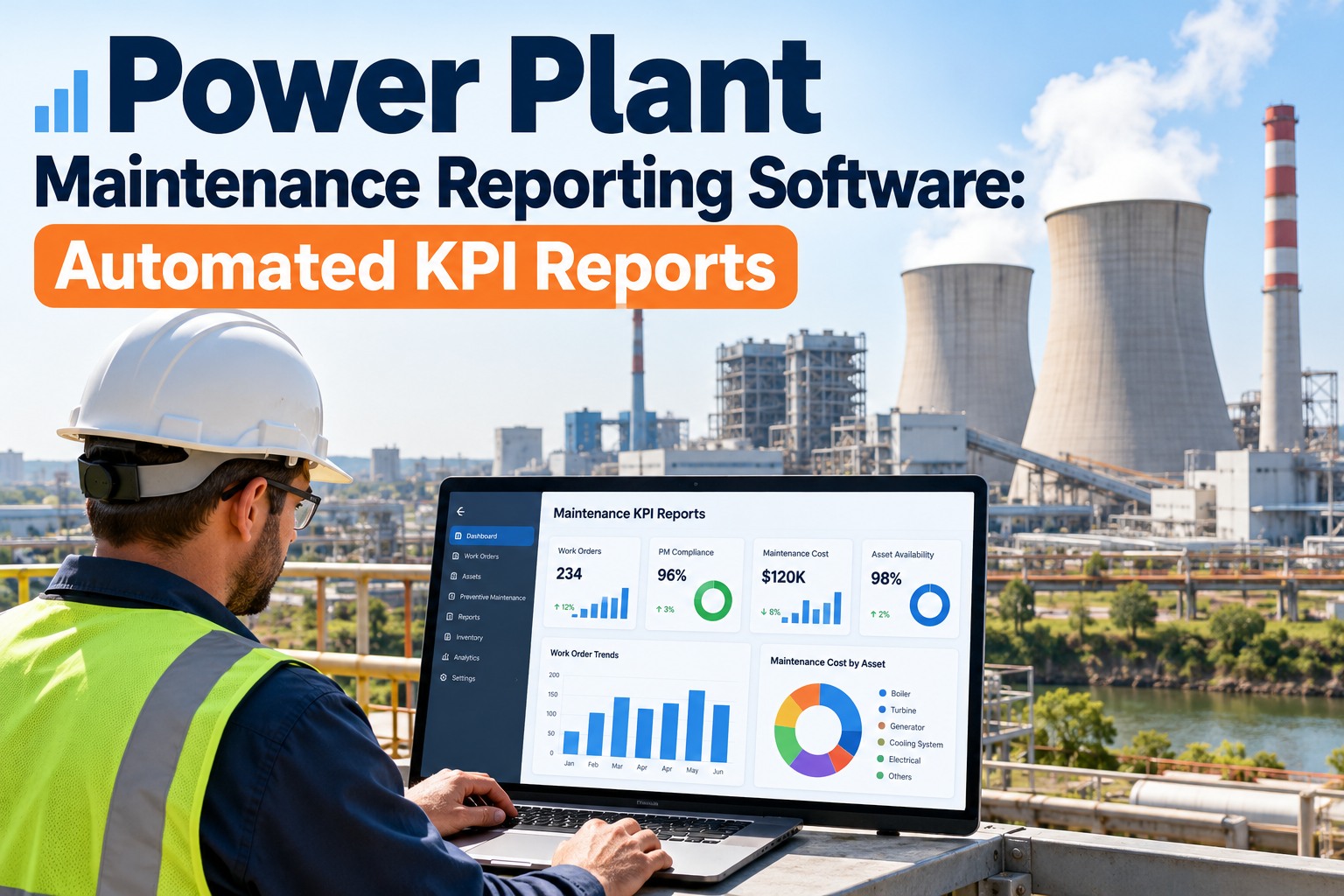
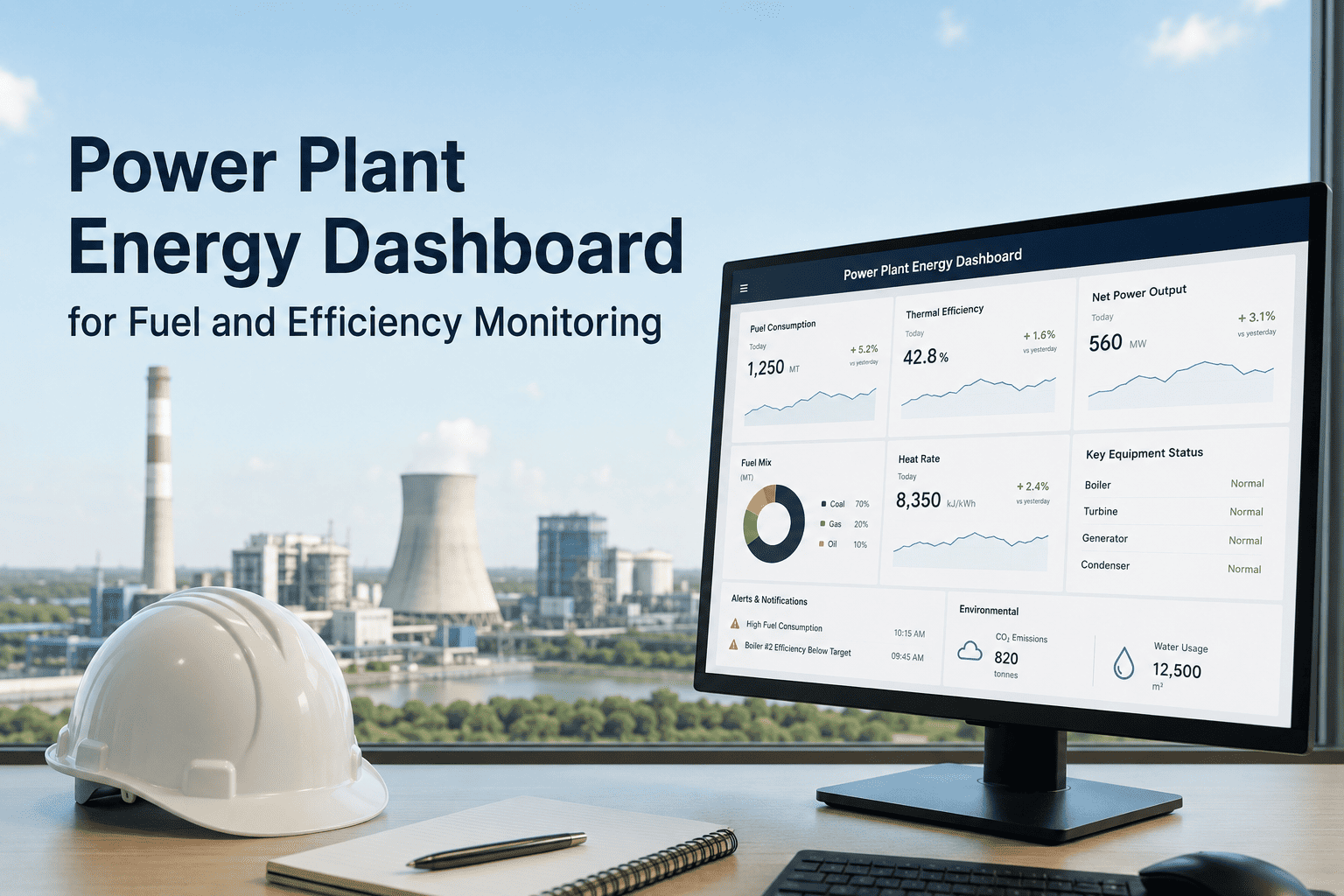
Sustainability managers see live dashboards showing emissions intensity trends, energy efficiency KPIs, water consumption, and safety metrics — with benchmark comparisons against prior periods and targets set in the system.
Framework-Aligned Report Generation
OxMaint generates structured ESG data exports mapped to GRI 302, GRI 303, GRI 305, and SASB Electric Utilities disclosure requirements — with full audit trail documentation so third-party verifiers can trace every figure back to its source work order.
What OxMaint's ESG Module Delivers — Feature by Feature
Scope 1 & Scope 2 Emissions by Asset
Fuel consumption per turbine, boiler, and auxiliary unit is logged against maintenance records and automatically converted to CO₂e using GHG Protocol emission factors. Track emissions intensity per MWh generated — not just facility totals — so you can identify which assets are driving your carbon footprint and prioritize efficiency maintenance accordingly.
GHG Protocol AlignedHeat Rate Tracking & Degradation Alerts
Heat rate deviations from baseline are flagged automatically as both a maintenance signal and an ESG efficiency metric. When a unit's GJ/MWh rises above the target band, OxMaint generates a work order recommendation and logs the efficiency gap in the sustainability dashboard — connecting the maintenance action to its environmental outcome.
Maintenance-to-ESG LinkLTIFR, Near-Miss & Permit Compliance
Safety performance data required for GRI 403 and SASB social disclosures is generated automatically from permit-to-work records, safety task completions, and incident logs within OxMaint's maintenance workflow — no separate safety management system needed for standard sustainability reporting inputs.
GRI 403 ReadyCooling Water & Discharge Tracking
Cooling tower inspections, heat exchanger condition assessments, and water treatment logs are captured as structured maintenance records with associated consumption and quality data — feeding directly into GRI 303 water disclosure calculations without requiring a separate environmental monitoring system.
GRI 303 AlignedGRI, SASB & TCFD Data Exports
OxMaint generates structured ESG data exports with full source documentation — so your sustainability team receives a report-ready data package rather than a reconciliation task. Every KPI traces back to the timestamped maintenance record that produced it, satisfying third-party verification requirements without additional documentation work.
Audit-Trail DocumentationConnect to DCS, SCADA & ERP
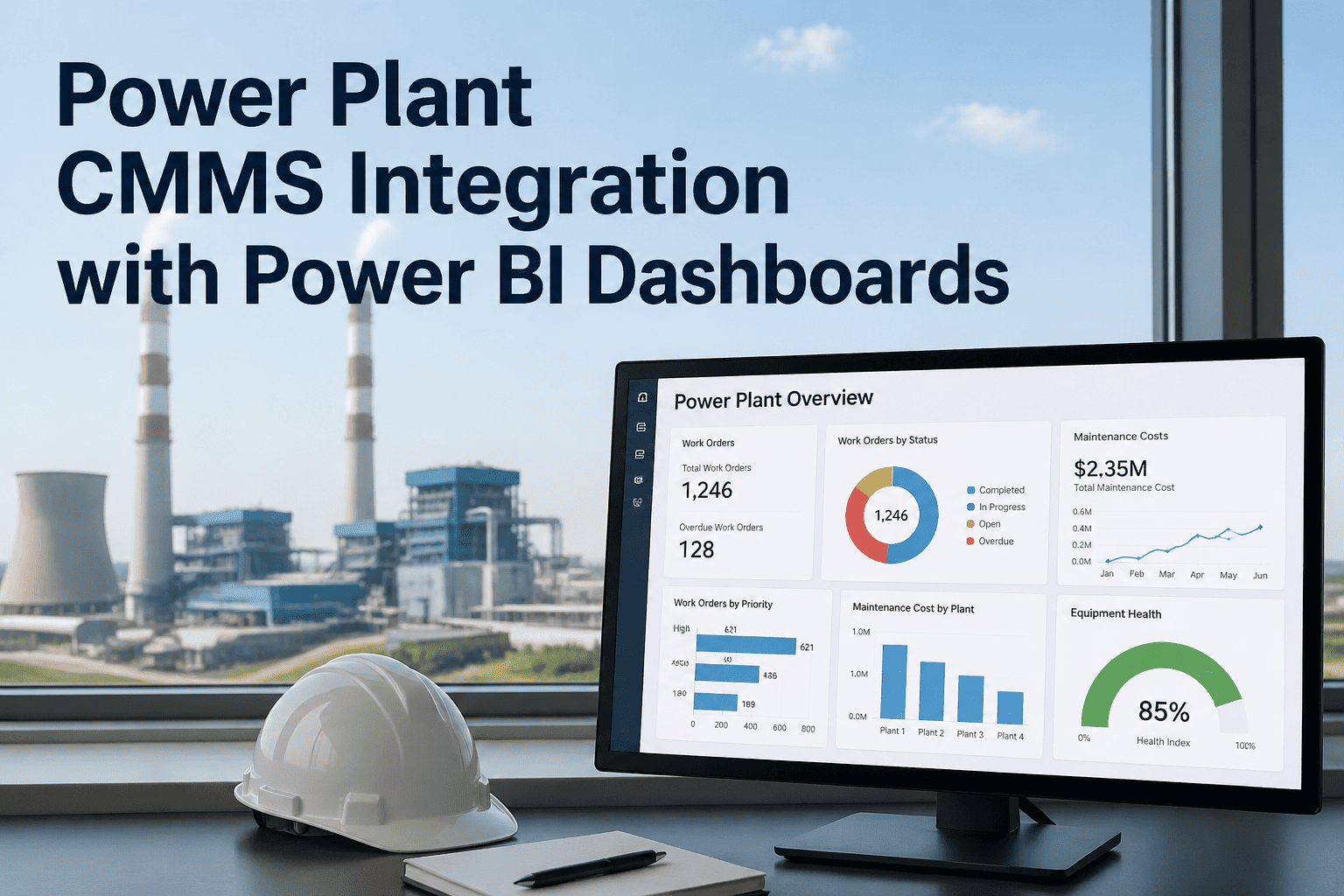
OxMaint pulls operational data from plant historians, DCS, and SCADA via OPC-UA and REST API — and pushes structured ESG data into ERP systems, sustainability platforms, and investor reporting tools. For plants using SAP PM or Maximo, integration is completed within four weeks.
Live in Under 4 WeeksESG Reporting Framework Coverage — Where OxMaint Fits
| ESG Framework | Relevant Disclosures | Data OxMaint Provides | Coverage Level |
|---|---|---|---|
| GRI 302 — Energy | Energy consumption, intensity, reduction | Heat rate, auxiliary consumption, efficiency losses | Full Coverage |
| GRI 305 — Emissions | Scope 1, Scope 2, emissions intensity | Asset-level CO₂e, fuel logs, intensity per MWh | Full Coverage |
| GRI 303 — Water | Withdrawal, consumption, discharge | Cooling water records, treatment logs | Partial — operational data |
| GRI 403 — Safety | LTIFR, near-miss, safety training | Permit records, safety task completions, incidents | Full Coverage |
| SASB EU-EU Sector | GHG emissions, water, safety, grid reliability | Emissions intensity, reliability KPIs, water, safety | Full Coverage |
| TCFD | Climate risk, transition planning, metrics | Emissions trends, efficiency degradation, risk flags | Partial — data inputs |
| EEI-AGA Template | CO₂e per MWh, emissions rate | Unit-level emissions, generation-linked CO₂e | Full Coverage |
Frequently Asked Questions
Your ESG Report Is Only as Good as the Data Behind It — Make It Real
OxMaint connects your power plant's maintenance operations to the sustainability disclosures your investors, regulators, and board require — capturing Scope 1 emissions, energy efficiency KPIs, water records, and safety metrics from the same workflows your team uses every day. No second data infrastructure. No spreadsheet reconciliation. Just structured, verifiable ESG data from real operations.