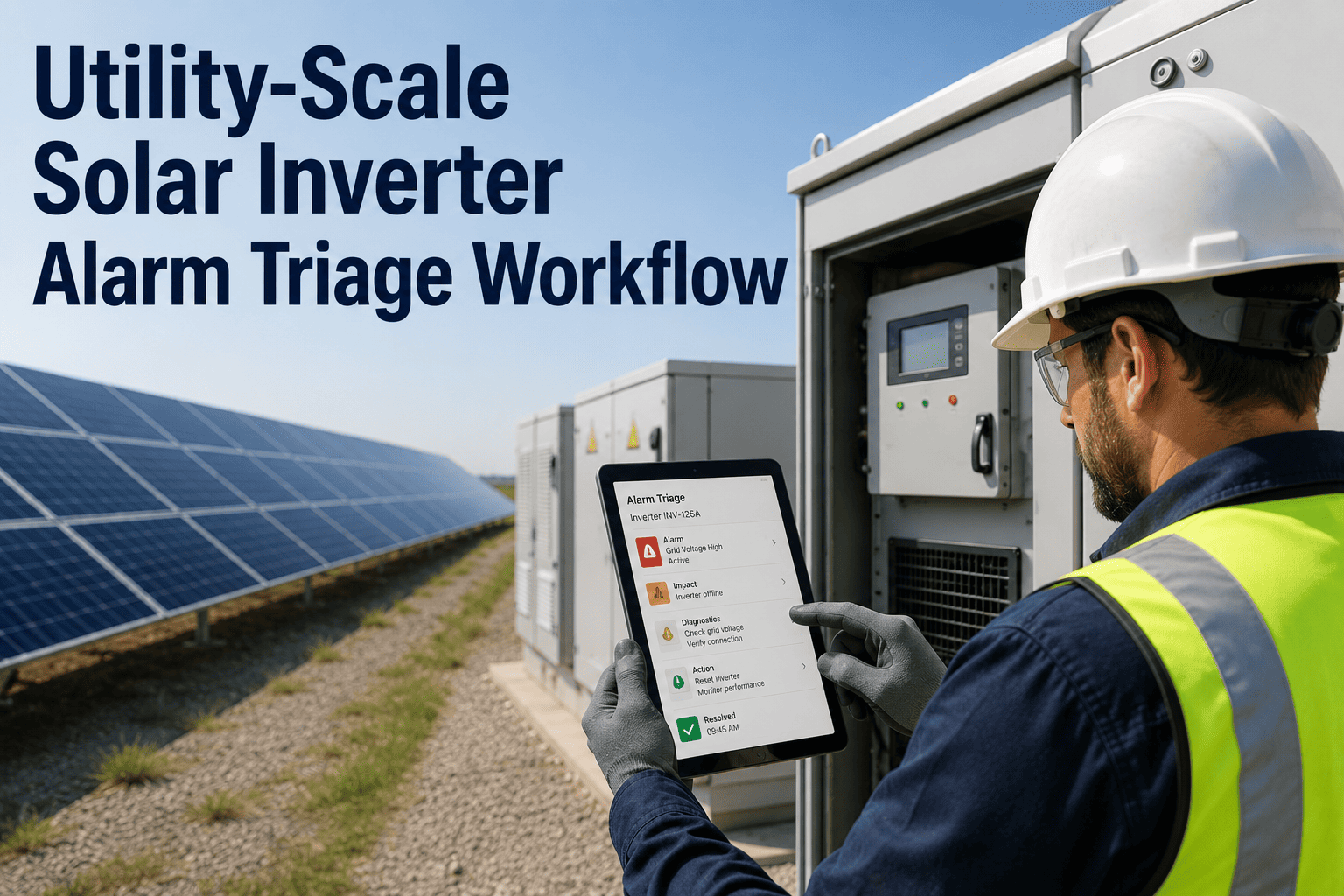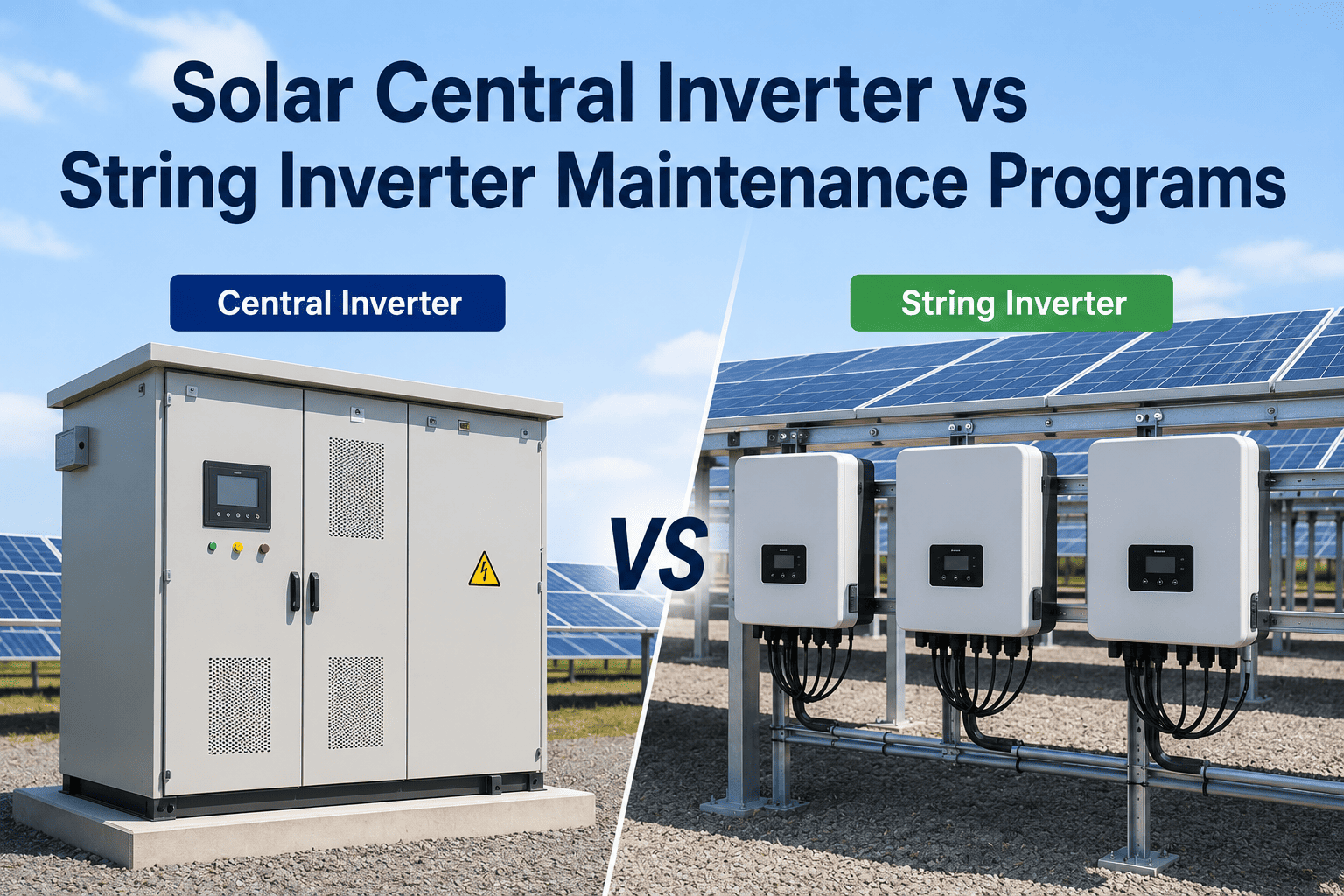
The inverter is the only component in a solar PV plant that converts every watt your panels generate into usable grid power — and it is the component with the shortest expected service life in a 25-year project. Central inverters and string inverters share the same core function but demand entirely different maintenance programmes, spare parts strategies, and failure response protocols. The maintenance approach you choose for each type directly determines whether your plant meets its energy yield projections over its operating life — or quietly loses 10–15% of its potential revenue to degradation and unplanned downtime. OxMaint gives solar O&M teams inverter-specific PM templates, capacitor replacement tracking, cooling system records, and IGBT fault history — all linked to each inverter as a registered asset. To see how inverter maintenance management works in OxMaint, book a 30-minute walkthrough with a solar O&M specialist.
Your Inverter Is the Plant's Financial Heartbeat. Are You Maintaining It Like One?
Central inverters and string inverters fail differently, cost differently to repair, and require fundamentally different PM programmes. Most O&M teams treat them the same — and pay the price.
Central vs String: Two Inverter Architectures, Two Maintenance Philosophies
The Four Components That Determine Inverter Lifespan — And What Maintenance Each Demands
The Revenue Maths of Inverter Downtime — Central vs String
Inverter PM Intervals: What OxMaint Templates Cover for Each Type
| Maintenance Task | Interval | Central Inverter | String Inverter |
|---|---|---|---|
| Cooling fan RPM check (telemetry) | Monthly | All fans — flag if RPM below 80% of rated | Single fan or convection — check outlet airflow |
| Air filter inspection and cleaning | Monthly / Quarterly | Multiple filter panels — clean monthly in dusty sites | Enclosure vent filter — quarterly standard |
| IGBT temperature monitoring | Quarterly | Via inverter telemetry — log vs rated junction temp | Via inverter data port — check against threshold |
| DC terminal torque check | Semi-annual | Buswork and combiner connections — arc flash PPE required | Per-string DC connectors — field technician task |
| Thermal imaging survey | Annual | IGBT modules, capacitors, busbars — specialist IR camera | Connection points — standard IR camera |
| Insulation resistance test | Annual | Full IR sweep — all DC strings per combiner section | Per-inverter IR test — each string independently |
| Capacitance measurement | Annual | DC bus capacitor bank — compare vs rated; plan replacement at Year 5–7 | Per-unit check — replace if below 80% rated capacitance |
| Fan replacement (proactive) | Year 3–5 | All fans replaced regardless of condition — industrial fan spec | Replace on condition or Year 5 — spare kept on site |
| Capacitor bank replacement | Year 5–8 | Full bank replacement — planned outage, specialist engineer | Per-unit replacement — no full-plant outage required |
| Firmware update and parameter check | Annual | OEM engineer — downtime window required | Remote update capability — can be done without shutdown |
Frequently Asked Questions
When should DC bus capacitors in a solar inverter be replaced?
What is the most common cause of solar inverter failure in utility-scale plants?
How does a central inverter failure compare to a string inverter failure in terms of revenue impact?
How does OxMaint track inverter maintenance across a large fleet of string inverters?
What spare parts should a solar O&M team keep on site for inverter maintenance?
Your Inverters Are Converting Revenue Every Daylight Hour. Maintain Them Like It.
OxMaint structures inverter maintenance programmes for central and string architectures — with per-unit asset records, capacitor and fan replacement tracking, thermal inspection logs, and fault code history — so your O&M team never misses the PM that prevents the failure that costs ten times more to fix.