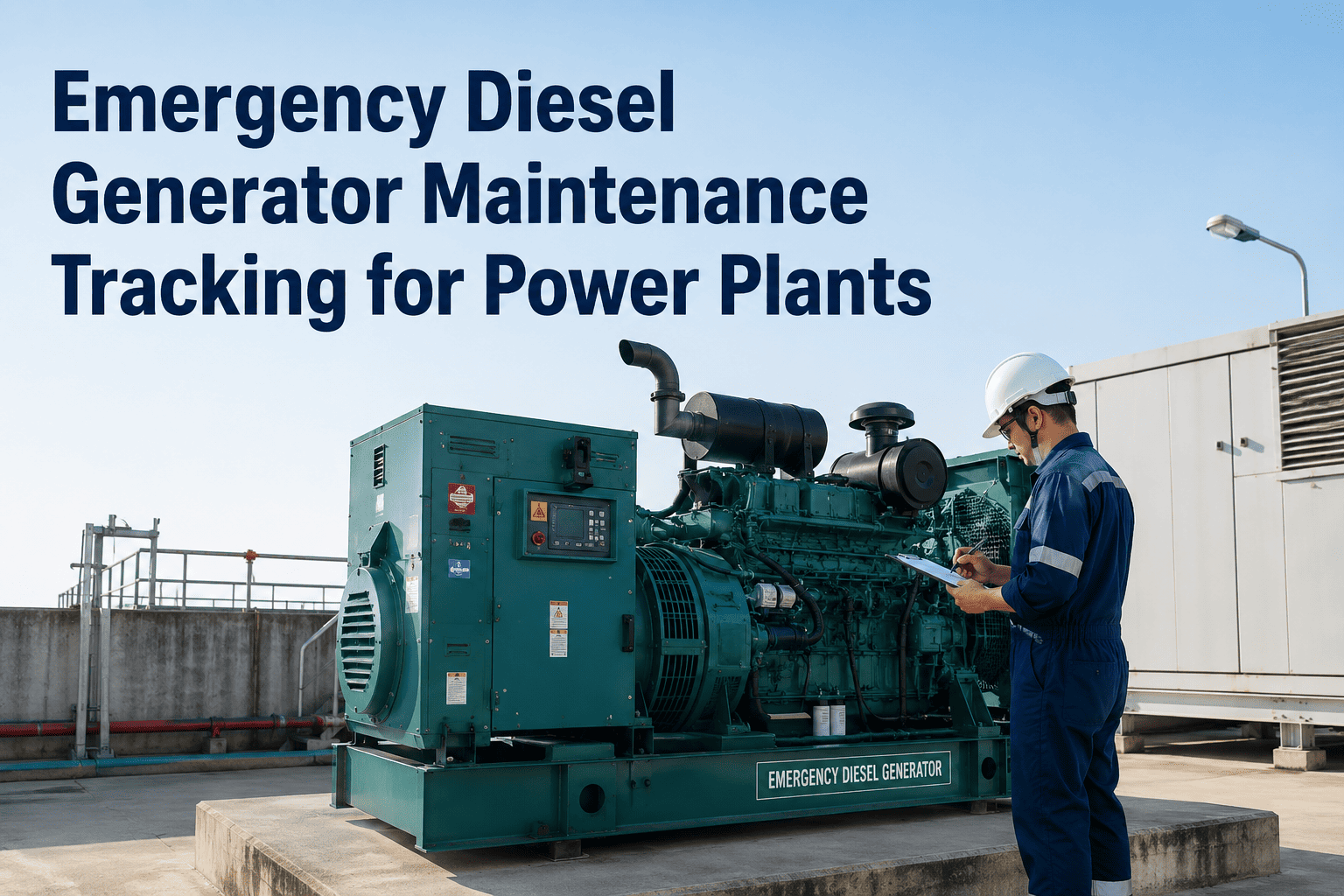
Severe storms — tropical cyclones, ice storms, high-wind events, and flash flooding — account for the majority of unplanned outages at power generation facilities worldwide. Unlike equipment degradation failures that build gradually, storm damage is sudden, simultaneous, and multi-system. A turbine hall roof fails at the same time the switchyard floods and the diesel emergency generator fuel is water-contaminated. Plants that have completed structured pre-storm hardening maintenance recover in hours; those that have not can face weeks of remediation. This maintenance plan covers every system your operations and facilities teams must inspect, reinforce, and pre-position before storm season — from drainage clearance and roof structure to emergency generator readiness and post-event work order workflows. Track every storm-prep task, emergency spare, and post-event corrective action on OxMaint's work order management platform and recover faster when the storm passes.
Emergency Readiness · Storm Prep · Work Order Management
Storm Hardening Maintenance Plan for Power Generation Sites
Drainage to roof structure. Emergency generators to spares inventory. A complete storm readiness maintenance plan covering six critical areas — built for rapid recovery and post-event work order tracking.
Pre-Storm Checklist
Post-Event Workflows
Emergency Spare Tracking
Digital Work Orders
The Cost of Unpreparedness
What a Single Storm Event Costs an Unprepared Plant
Storm preparedness is not an optional maintenance overhead. It is the single best ROI investment in your annual maintenance budget.
$500K
Emergency contractor mobilization cost for unplanned post-storm structural repairs
14 Days
Average outage duration when storm damage affects control and electrical infrastructure
3x
Higher spare parts cost for emergency procurement vs pre-stocked inventory
72%
Of post-storm damage findings trace to deferred pre-storm maintenance items
Digitize your storm prep checklist. Assign pre-storm tasks to specific technicians, track completion status in real time, and convert post-event findings into prioritized work orders automatically.
Maintenance Plan
Six Areas. Every Storm Season.
Execute this plan 4 to 6 weeks before projected storm season peak — early enough to procure materials and complete structural work before the first major weather event.
All site drainage channels cleared — no sediment, vegetation, or debris blockages
A blocked drainage channel during a 100mm/hr rain event floods a turbine hall in under 2 hours. Flush and camera-inspect all buried drainage runs before storm season.
Roof drains, gutters, and downspouts cleared and flow-tested
Flow-test by running water at the inlet and verifying free discharge at the outlet. Note any slow drains for immediate cleaning. A blocked roof drain causes structural roof ponding.
Sump pump stations tested — auto-start confirmed, backup pump operational
Test each sump pump by manually raising the float switch. Confirm backup pump starts automatically on primary failure. Check battery backup for alarms and controls.
Flood berm integrity inspected — no erosion, breaches, or burrowing damage
Earthen berms require annual inspection. Burrowing rodents and root penetration compromise berm integrity silently. Repair before storm season, not during.
Critical equipment elevation verified — no equipment below flood risk elevation line
Map all critical equipment against the site flood risk elevation. Any equipment below the line must be protected by temporary flood barriers or relocated before storm season.
Roof membrane inspected — no blisters, cracks, or open laps at seams
A 5mm roof membrane split can admit hundreds of liters per hour during peak rainfall. Walk the entire roof surface and probe any suspect areas. Seal with compatible membrane material before storm season.
Roof-mounted equipment anchorage inspected — no loose fasteners or corroded base plates
A roof-mounted HVAC unit becoming airborne in high winds is a site safety emergency. Verify every base-mounted item has corrosion-free anchor bolts and structural attachment to the roof deck.
Louvres, vents, and penetrations sealed or rated for wind-driven rain
Wind-driven rain penetrates louvres at angles that static seals don't cover. Verify all penetrations have adequate flash and that louvre blades close fully and seal against their frames.
Overhead crane and lifting equipment storm-secured — hooks parked, brakes locked
An unsecured overhead crane bridge can travel under wind loading. Verify bridge and hoist are parked at the designated storm position and travel brakes are applied and locked.
Emergency diesel generator load test completed under full rated load
A monthly no-load test is insufficient for storm preparedness. Run the generator at 100% rated load for at least 2 hours. Document voltage, frequency, oil pressure, and fuel consumption.
Fuel tank filled to 100% and water-sample test passed
Storm-related supply chain disruptions can last days. Fill the tank to maximum capacity before storm season. Run a water and biological contamination test — contaminated fuel at a critical moment is catastrophic.
Automatic transfer switch tested — ATS operates correctly on simulated power loss
Simulate a mains power failure and verify the ATS transfers to generator power within the required time. Test transfer back to mains after generator is stable. Log both transfer times.
UPS battery condition verified — no degraded cells, runtime tested at current load
Run a UPS discharge test to verify actual runtime at current connected load. A UPS that shows full charge but delivers 50% of rated runtime will fail to bridge a storm-related power interruption.
All outdoor junction boxes and termination enclosures sealed — gaskets intact
Water ingress into switchyard termination boxes causes ground faults and protection misoperation. Replace hardened or cracked gaskets and verify door seals compress correctly on closure.
Surge arresters and lightning protection inspected — no visible damage or corroded connections
A failed surge arrester provides no protection during the lightning event it was installed to handle. Inspect connections, test ground resistance, and replace any arrester that has visible cracks.
Temporary equipment and portable items removed or secured before high-wind warning
Any unsecured item in the switchyard is a projectile during a storm. Remove scaffolding, portable equipment, and any non-fixed material before a high-wind event.
Emergency spare parts inventory reviewed and critical gaps identified
Review the last three storm season damage histories and stock the parts that failed. Prioritize long-lead items — control boards, specialty bearings, transformer bushings — that cannot be sourced quickly.
Temporary flood barrier materials pre-positioned at high-risk locations
Flood barriers that require 4 hours to set up are useless against a fast-moving storm. Pre-position temporary barriers at turbine hall doors, cable duct entries, and switchgear room access points.
Emergency contact list verified — contractor numbers for roofing, electrical, and crane services
Post-storm contractor availability is severely constrained. Pre-arrange emergency response contracts with key service firms before storm season and verify 24/7 contact numbers annually.
Fuel resupply contract active — guaranteed delivery within 48 hours post-storm
Fuel supply chains are disrupted during regional storm events. A pre-arranged priority resupply contract ensures your generator keeps running when road access is limited.
Post-storm site walkdown completed within 2 hours of storm clearance
The first 2-hour walkdown is safety-focused: identify structural hazards, active water ingress, downed lines, and equipment damage that requires immediate isolation before personnel enter.
All damage findings logged with photos and location tags — work orders issued
Every damage finding must become a work order within the first 4 hours. Priority-coded work orders enable the maintenance team to sequence repairs for fastest return to service.
Insurance documentation package initiated — photos, damage log, cost estimates
Digital work orders with timestamped photos from the initial walkdown form the core of any storm damage insurance claim. Paper-based processes lose critical evidence during the recovery scramble.
Lessons learned captured — pre-storm plan updated before next season
Every post-storm recovery reveals gaps in the pre-storm plan. Document what was missed, what worked, and what needs additional resource. Update the plan within 30 days of the event.
Planning Timeline
Storm Readiness Timeline
Storm preparedness is time-boxed. Miss the pre-season window and structural work cannot be completed before the first major event.
| Timeframe |
Activity |
Owner |
Output |
| 8 Weeks Pre-Season |
Drainage and roof inspection, identify structural work |
Facilities Manager |
Repair work orders issued |
| 6 Weeks Pre-Season |
Emergency generator and UPS load tests |
Electrical Maintenance |
Test records, defect log |
| 4 Weeks Pre-Season |
Spare parts review, flood barrier pre-positioning |
Stores and Procurement |
Inventory update, barrier map |
| 2 Weeks Pre-Season |
Fuel fill, water sample, contractor list verification |
Operations Lead |
Fuel record, contact list |
| 48 Hours Before Event |
Remove loose items, close barriers, final system checks |
All Departments |
Storm-ready sign-off |
| Within 2 Hours Post-Storm |
Safety walkdown, damage logging, work order creation |
Operations and Maintenance |
Recovery work order queue |
FAQs
Frequently Asked Questions
What is the most common cause of extended outages after storm events?
Water ingress into electrical infrastructure is the single most common cause of extended post-storm outages. Water in switchgear, control panels, and transformer tanks requires drying, testing, and often component replacement before energization. Pre-storm drainage and sealing maintenance is the best prevention.
OxMaint helps you schedule and track all pre-storm electrical protection tasks.
How should post-storm damage be documented for insurance claims?
Photograph every damage item with timestamps, log the location and affected system, and create individual work orders for each finding. This produces a complete damage registry that insurance adjusters can audit directly. Digital CMMS records are significantly stronger evidence than hand-written notes or generic photo folders.
Book a demo to see OxMaint's post-event documentation workflow.
How often should an emergency generator be tested under full load?
NFPA 110 and most plant standards require a monthly exercise test under at least 30% load, with a full 100% load test annually. For storm preparedness, we recommend an additional full-load test 4–6 weeks before peak storm season to ensure the generator can sustain rated output throughout a multi-day grid outage.
What spares should every generation site carry before storm season?
Based on storm damage patterns, priority pre-positioned spares include: diesel generator control boards, fuel filter elements, sump pump impellers and float switches, temporary flood barrier materials, roof repair membrane rolls, and critical fuses and breakers for main protection panels.
OxMaint manages your spares inventory alongside maintenance schedules.
Can this plan be adapted for ice storm and winter weather events?
Yes. Winter storm hardening adds items such as heat tracing inspection, pipe freeze protection verification, ice clearing procedures for cooling tower basins, and de-icing equipment for outdoor walkways and access routes. All of these can be added as a winter-specific maintenance plan module in OxMaint alongside the core storm hardening checklist.
Prepare Before the Storm. Recover Faster After It.
Digital storm-prep work orders, emergency generator PM scheduling, post-event damage tracking, and insurance documentation — built for power generation sites that must recover in hours, not weeks.