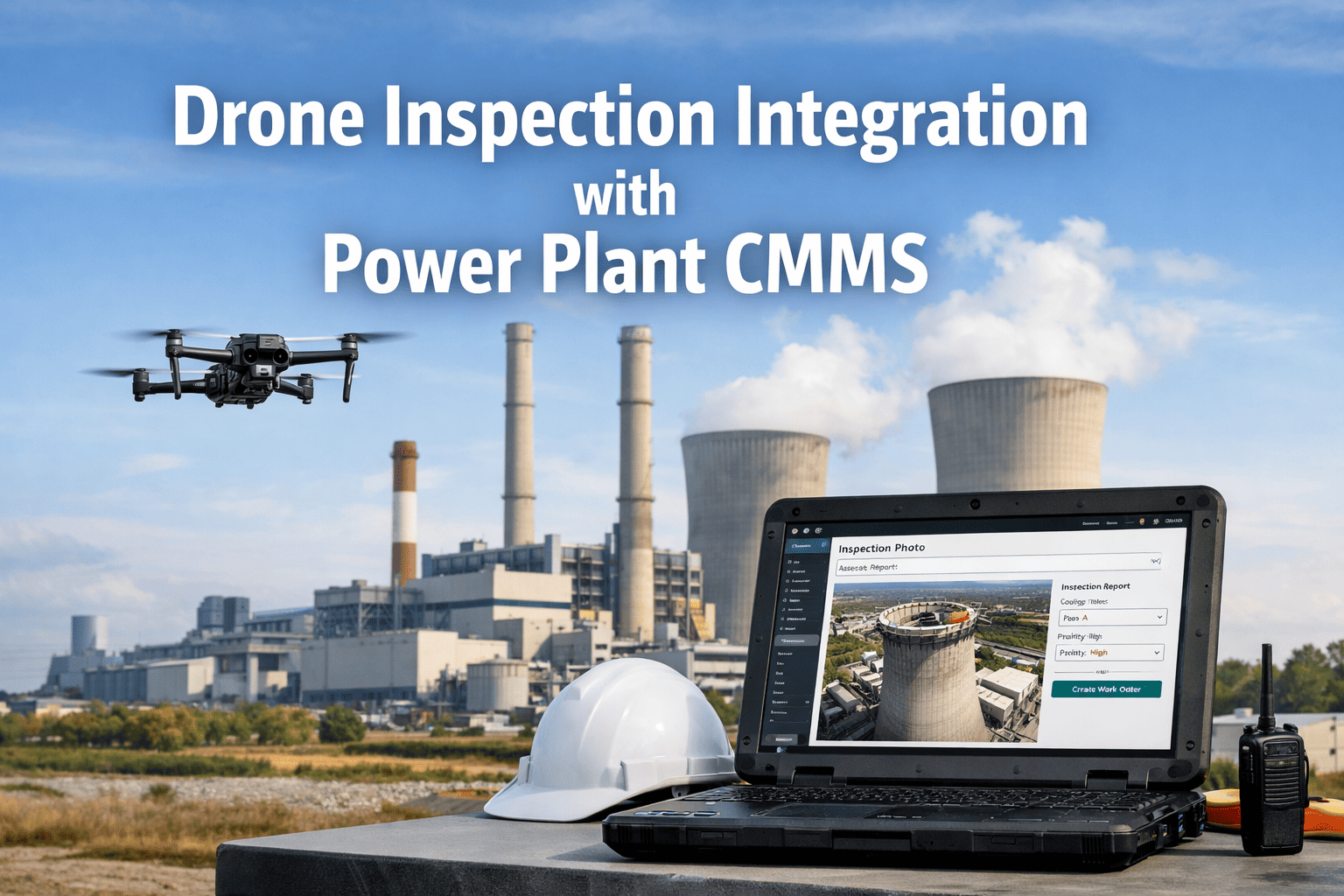
A drone that identifies spalling on a cooling tower shell, cracking on a boiler economizer casing, or delamination on a stack lining has already done half the job. The other half — converting that finding into an assigned work order, attaching the photo evidence, linking it to the asset history, and routing it to the right technician — is where most drone inspection programs break down. Without that second half, drone findings pile up in pilot dashboards and USB drives while the actual maintenance action never gets scheduled. OXmaint automates the complete handoff from drone finding to maintenance execution — so every flight produces work orders, not just imagery. If your drone program produces inspection reports that sit in folders, sign up for OXmaint and close the loop today.
72%
Faster defect identification compared to manual inspection on stacks, boilers, and solar arrays
90%
Reduction in human exposure to height and confined space hazards when drones replace rope access inspections
4 hrs
Average time to complete a full cooling tower exterior survey that previously required a 2-day scaffold crew
$400K+
Average scaffold cost avoided per major stack inspection by switching to tethered drone survey methods
The Problem With Drone Inspections Today
Your Drone Finds Defects. Then What?
Drone inspection programs at power plants generate high volumes of visual and thermal data. The gap is what happens after the flight lands. Pilots export footage. Engineers review frames. A defect gets noted in a PDF report. That report gets emailed. Someone eventually enters a work order — days later, without the photo attached, without the asset correctly identified, and without any connection to what the drone found six months ago at the same location.
OXmaint is the platform that closes this gap — receiving drone findings via API or structured entry, converting each defect to a work order with photo evidence attached, and building the continuous asset inspection record that makes every next flight more valuable than the last.
Power Plant Zones Drones Inspect Best
Cooling Towers
Primary Coverage
Shell delamination
Basin crack mapping
Fill pack degradation
Structural corrosion
Drones eliminate scaffold setup entirely. Thermal imaging identifies hot spots in fill and water distribution systems that visual inspection misses.
Stacks and Chimneys
Primary Coverage
Liner crack detection
Refractory spalling
Flue gas bypass leaks
Lightning rod integrity
Interior drone surveys with tethered platforms replace full rope access campaigns. Internal temperature mapping identifies liner integrity issues before breakthrough.
Solar Fields
Primary Coverage
Hotspot panel identification
Soiling pattern mapping
String failure detection
Mounting structure damage
Thermal drone surveys cover hundreds of acres in a single flight. OXmaint converts each hotspot finding to a panel-level work order with GPS coordinates attached.
Switchyards
Support Coverage
Transformer thermal anomalies
Busbar connection hotspots
Insulator contamination
Perimeter breach detection
Drones provide aerial thermal perspective that ground-level quadrupeds cannot. Used in combination for complete switchyard coverage without energized equipment proximity.
Boiler Exteriors
Support Coverage
Casing crack identification
Insulation damage mapping
Ash deposit buildup
Expansion joint condition
Drone surveys of boiler casing and lagging during operation identify heat loss areas and casing failures that are not safely accessible during live plant conditions.
Every Drone Finding Deserves a Work Order
OXmaint receives drone inspection findings via API, attaches photo and thermal evidence to the asset record, and creates prioritized work orders your team acts on immediately — not after a PDF sits in an inbox for a week.
How Drone-to-Work-Order Automation Works
Step 1
Flight and Finding Capture
Drone completes inspection mission. Findings — defect type, location, severity, photo or thermal frame — are tagged in the pilot interface or AI detection layer and structured for export. OXmaint accepts data from DJI, Flyability, Percepto, and custom platforms via API.
Step 2
Asset Matching and Classification
OXmaint matches the drone finding's GPS or zone coordinates to the correct asset in the plant asset hierarchy. A crack at cooling tower CT-02 north face links directly to CT-02's asset record — not a generic location note that loses context by the time a technician sees it.
Step 3
Prioritized Work Order Creation
Each finding generates a work order with severity classification, recommended action, due date, and photo evidence pre-attached. Critical findings escalate immediately. Advisory findings queue for scheduled resolution. All routing is automatic based on asset type and finding severity.
Step 4
Technician Assignment and Dispatch
Work orders route to the qualified technician for the asset type and finding category. A cooling tower delamination goes to structural maintenance. A switchyard busbar hotspot goes to the electrical team. The drone finding never sits in a general queue waiting for manual triage.
Step 5
Asset History and Trend Building
Completed work orders close back to the asset record. After three drone surveys, OXmaint shows the stack liner crack progression across 18 months — informing the next outage scope without any manual data assembly. The drone program becomes more valuable with every flight.
Step 6
Compliance Documentation
Every drone inspection, finding, and work order closure generates a timestamped audit trail. Inspection frequency records, finding severity history, and repair verification logs satisfy insurance, regulatory, and OEM documentation requirements automatically — no manual report compilation.
Documented Outcomes From Drone Work Order Automation
65%
Faster finding-to-work-order cycle when drone data feeds directly into CMMS versus manual report-to-ticket workflows
Industry benchmark, 2024
3x
More inspection coverage per outage window when drones replace rope access and scaffold-based methods at stacks and cooling towers
Flyability case studies, 2024
Zero
Height-related safety incidents in drone inspection programs where aerial surveys replace all elevated-structure manual access
OSHA program analysis, 2023
$1.8M
Average annual savings from early defect detection and scaffold cost avoidance in utility drone inspection programs over 18 months
ASCE infrastructure studies, 2024
Frequently Asked Questions
Which drone platforms does OXmaint integrate with?
OXmaint integrates with any drone platform that outputs structured inspection data via API — including DJI Industrial, Flyability Elios, Percepto, and custom IIoT platforms. If your current drone system exports findings in a structured format, OXmaint can receive them.
Book a demo to review integration for your specific platform.
Can photo and thermal evidence from the drone be attached to work orders automatically?
Yes. When drone data is received via API, OXmaint attaches the associated imagery — visual frames, thermal captures, annotated screenshots — directly to the work order. Technicians arrive at the asset with the finding evidence already on their device, reducing diagnosis time and preventing incorrect repair decisions.
How does OXmaint handle drone findings from solar fields with thousands of panels?
OXmaint maps solar field panels to the asset hierarchy at string and panel level. When a thermal drone survey flags 47 hotspot panels across a 200-acre field, OXmaint generates 47 individual work orders — each geo-located, severity-classified, and routed to the solar maintenance team. Bulk findings don't collapse into single unactionable reports.
Sign up free to configure your solar asset hierarchy.
Does the system support BVLOS drone operations and regulatory compliance records?
OXmaint stores flight records, inspection dates, operator certifications, and finding documentation in the asset record — supporting the audit trail that BVLOS regulatory programs require. The platform does not manage flight authorization directly, but its inspection documentation integrates with FAA/EASA compliance workflows for facilities managing extended range drone programs.
How quickly can a drone inspection program be connected to OXmaint?
Most drone-to-OXmaint integrations are configured within one to two days when structured data export from the drone platform is available. For manual entry workflows, pilots can log findings directly into OXmaint in the field — generating work orders in real time without waiting for post-flight reporting. First automated work order is typically generated within the first flight session.
Drone Inspection Automation
Turn Every Flight Into Maintenance Action
OXmaint closes the gap between drone findings and repair execution — with photo-linked work orders, asset history, and compliance records built automatically from every inspection mission.