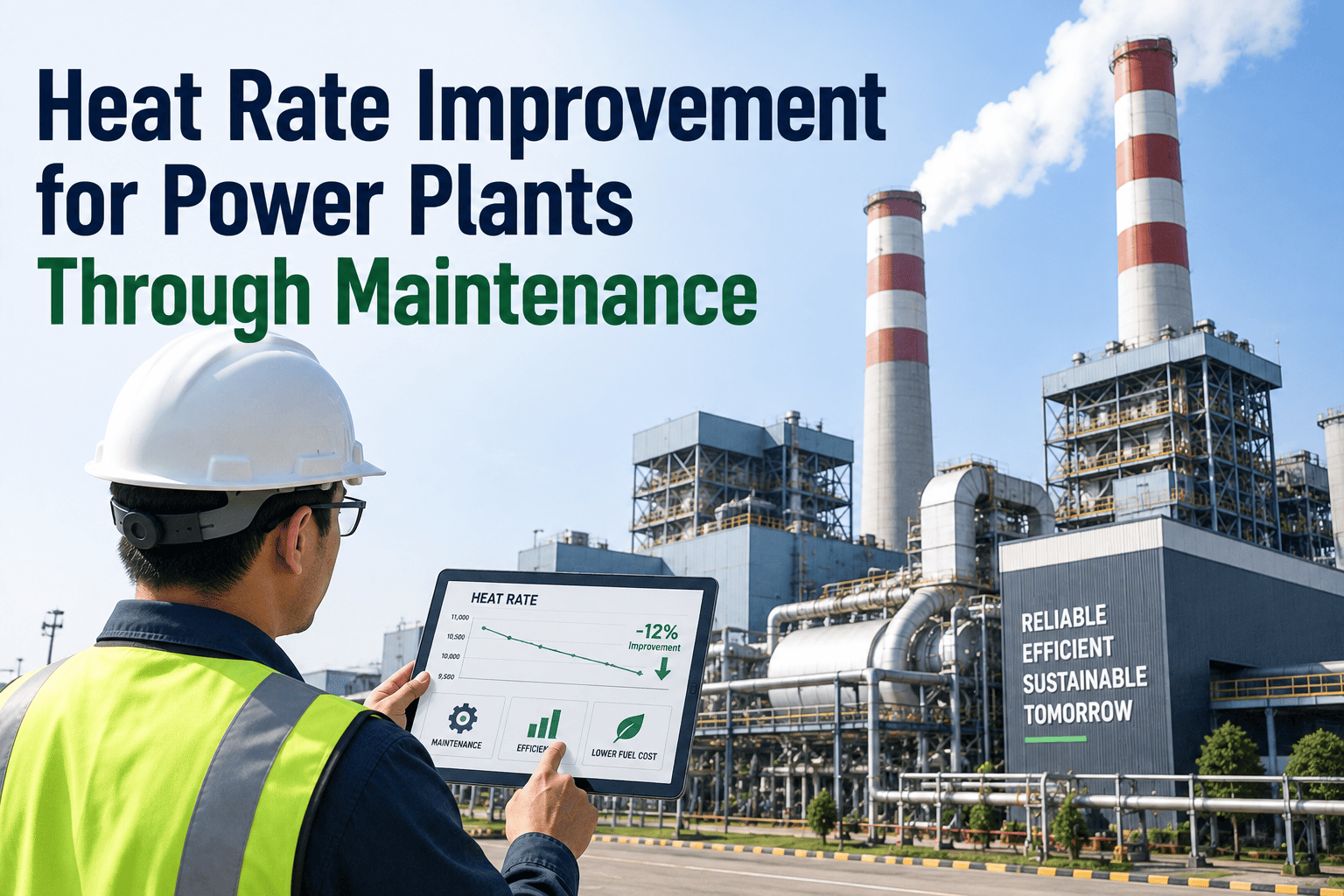
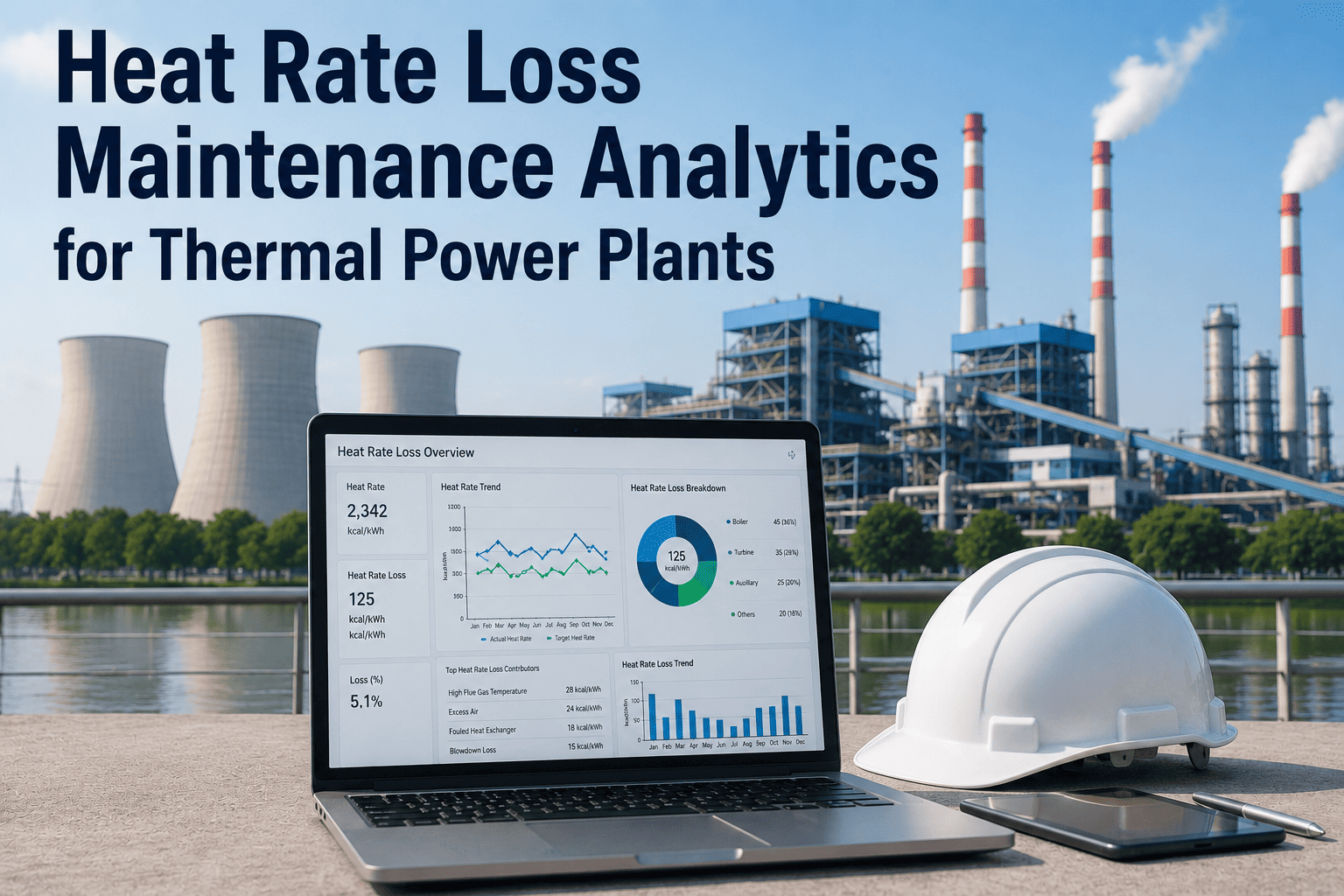
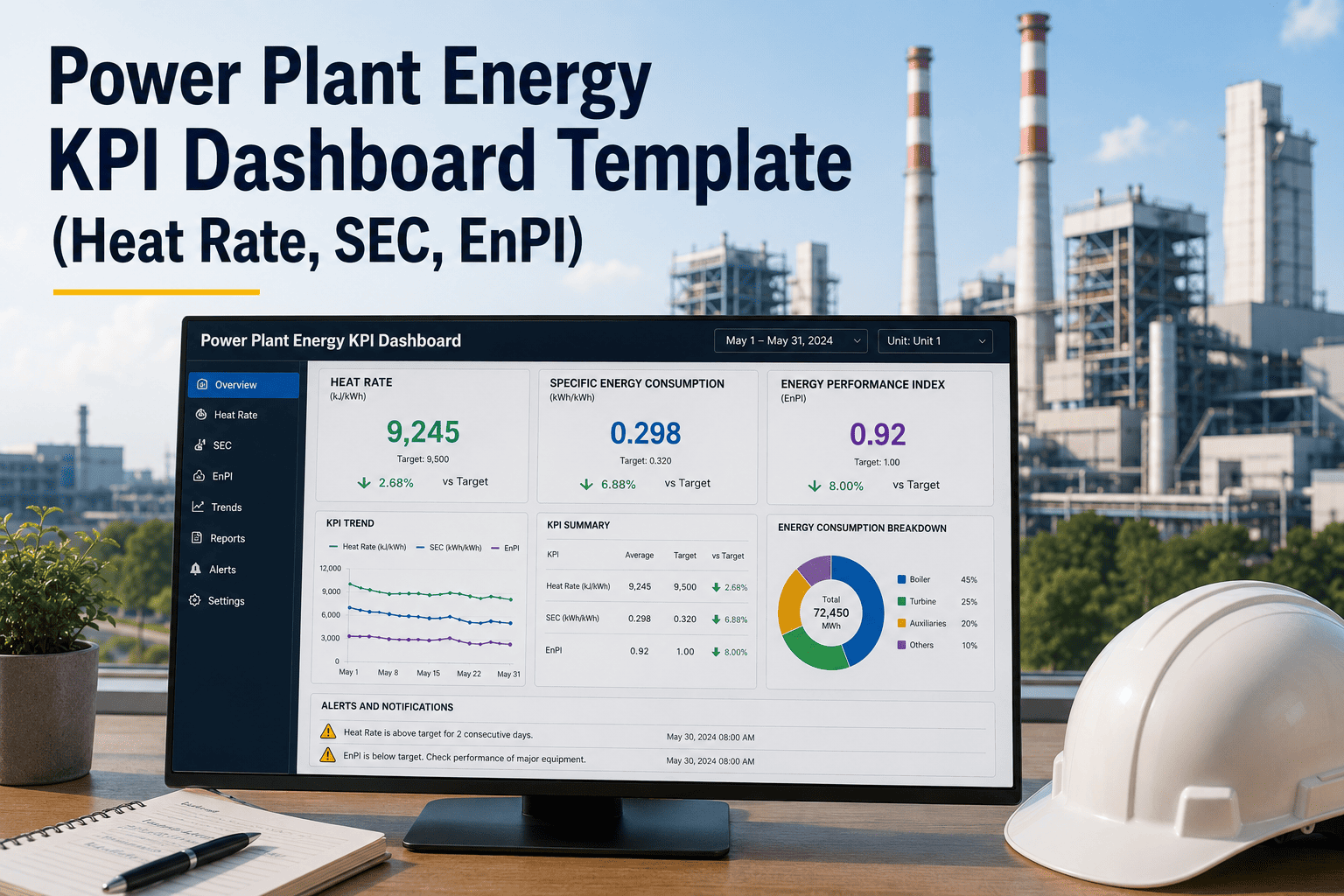
Power plant operators are heading into 2026 with two pressures stacking on top of each other — tightening decarbonization targets and rising fuel costs — yet the highest-impact wins are not capital megaprojects. Field data from EPRI, IEA, and DOE shows that a 5% heat rate reduction alone can deliver multi-million-dollar annual fuel savings while simultaneously cutting CO₂, SO₂, NOx, and mercury emissions. Compressor fouling causes 70% of efficiency loss in gas turbines and a single steam trap survey at the University of Texas-Austin recovered 27 million pounds of steam annually — $384,000 in fuel — through one structured maintenance program. The pattern is clear: the wins are in the work you already plan, executed with rigor. To see how OxMaint structures these maintenance wins into trackable PM programs with measurable energy outcomes, you can start a free trial or book a 30-minute walkthrough with a power plant specialist.
Top 7 Ranked List · Power Generation · 2026
The 7 Energy and Decarbonization Wins Every Power Plant Should Lock In for 2026
Ranked by measurable impact, speed to deploy, and ROI — these are the maintenance-driven wins that cut fuel burn, slash emissions, and protect plant margins in the year ahead.
5%
Heat rate gain unlocks millions in annual fuel savings per plant
70%
Of gas turbine efficiency loss is from compressor fouling alone
10%
Typical steam trap failure rate in steam-using plants
<6 mo
Payback period for most maintenance-driven decarbonization wins
The 2026 Decarbonization Scoreboard — Where the Real Carbon Hides
Before ranking the wins, look at where carbon emissions actually originate inside a typical thermal power plant. The map below shows why operational efficiency — not just fuel switching — is the dominant lever for 2026.
Boiler & Combustion Losses
Biggest single source — combustion tuning & air-fuel ratio matter
Turbine & Compressor Fouling
Of gas turbine efficiency loss is fouling-related — fully recoverable
Condenser & Heat Exchanger Fouling
Vacuum loss directly raises heat rate & emissions per MWh
Steam Trap & Leak Losses
15–30% of traps fail every 3–5 years without inspection program
Auxiliary & Parasitic Loads
Often unmonitored — fans, pumps, motors degrade silently
i
What this means for 2026: Over 80% of decarbonization wins available to existing plants come from maintenance excellence — not new fuel, not new turbines. The seven wins below are ranked by what actually moves the carbon needle this year.
The Top 7 Power Plant Decarbonization Wins for 2026 — Ranked
Each entry shows impact magnitude, deploy speed, and payback. The countdown runs from rank 7 to rank 1 — the highest-impact win sits at the top.
Heat Rate Improvement Program
The single biggest lever any thermal plant has. Studies on 660 MW supercritical units show structured optimization yields a 0.64% mean thermal efficiency gain and 93 kJ/kWh heat rate reduction — translating into 156.4 million tons of lifetime CO₂ reduction when scaled across 59 comparable plants. Heat rate improvement is widely recognized as the most cost-effective method of lowering CO₂, SO₂, NOx, and mercury emissions simultaneously.
3–5%
Efficiency gain potential
Impact: Very High
Speed: Medium
ROI: Very High
Online & Offline Compressor Washing
Gas turbine fouling is responsible for roughly 70% of compressor efficiency loss — and it is almost fully recoverable. Online washing every 3–7 days combined with structured offline cleans during outages recovers up to 2 MW of lost power per turbine and yields 0.5–1.0 polytropic efficiency points. The Texas case study showed a single online wash system cut NOx emissions by 1,958 lbs/year and CO by 1,468 lbs/MW-hr.
2 MW
Recoverable per unit
3–7 days
Online wash cadence
Impact: High
Speed: Fast
ROI: Very High
Comprehensive Steam Trap Survey & Replacement
DOE estimates that 15–30% of steam traps in a system will fail within 3–5 years without inspection. The University of Texas-Austin replaced 240 traps and recovered 27 million pounds of steam annually — $384,000 in fuel savings. Notre Dame cut steam loss by 11.8 million pounds and CO₂ by 3.4 million pounds within two years of starting a survey program. DOE estimates a federal-sector trap maintenance program could save $80 million annually with under 6-month payback.
$384K
UT-Austin annual savings
3.4M lbs
CO₂ cut at Notre Dame
Impact: High
Speed: Very Fast
ROI: Very High
Condenser Cleaning & Vacuum Optimization
Steam-side and waterside fouling on condensers raises back-pressure, degrades vacuum, and directly increases heat rate. Tube cleaning, eddy-current testing, and chemical treatment programs are among the lowest-cost interventions with measurable carbon impact. Cycle alignment (cycle isolation) to reduce fluid leakage through valves is a companion intervention EPRI identifies as a top-tier heat rate improvement step.
Impact: Medium-High
Speed: Medium
ROI: High
Biomass & Hydrogen Co-Firing Readiness
IEA flags biomass co-firing and hydrogen-readiness as growing pathways for existing coal and gas plants. Hydrogen-ready turbines, combustion engines, and fuel cells enable phased decarbonization without scrapping assets — though hydrogen costs and electricity price volatility remain economic constraints in 2026. Plants that begin combustion testing, fuel handling assessments, and burner upgrades this year position themselves for compliance windows ahead.
10–20%
Co-fire ratio achievable
Impact: Long-Term
Speed: Slow
ROI: Variable
CCUS Retrofit Planning & Front-End Studies
Global CO₂ capture capacity at coal facilities currently stands near 10 mtpa — just 0.06% of coal-related emissions. The Taizhou coal plant in China retrofitted a 0.5 Mt/year capture unit using amine-based post-combustion technology, and Net Zero Teesside Power in the UK is expected online in 2027 as one of the first commercial-scale gas-fired plants with CCUS. The 45Q tax credit reached $50/ton for geologic storage in 2026. Plants that complete front-end engineering and CO₂ stream characterization in 2026 are positioned to act when economics align.
$50/ton
45Q sequestration credit
90%+
Capture rates demonstrated
Impact: Major
Speed: Slow
ROI: Policy-Dependent
Predictive Maintenance & Auxiliary Load Optimization
Pumps, fans, motors, ID/FD fans, and balance-of-plant equipment account for 5–15% of gross generation as parasitic load — and the degradation is mostly invisible without monitoring. Vibration analytics, motor current signature analysis, and condition-based PM programs catch bearing wear, misalignment, and impeller fouling before they raise auxiliary power consumption. This is the foundation layer that makes every other win measurable.
5–15%
Parasitic load range
Continuous
Monitoring cycle
Impact: Medium
Speed: Medium
ROI: High
Turn These 7 Wins Into Trackable Work Orders With OxMaint
Compressor wash schedules, steam trap surveys, condenser cleanings, heat rate audits — OxMaint structures every decarbonization win into recurring PMs with measurable energy outcomes, mobile field execution, and audit-ready records.
Impact vs Speed — Decarbonization Wins Compared at a Glance
Not every win deploys on the same timeline. The matrix below shows which wins to prioritize for fast carbon impact this year versus which require longer programs.
| Rank |
Win |
Carbon Impact |
Deploy Speed |
Payback |
Owner |
| 1 |
Heat Rate Improvement |
Very High |
Medium |
~12 months |
Plant Performance Engineer |
| 2 |
Compressor Washing |
High |
Fast |
<6 months |
Operations / Maintenance |
| 3 |
Steam Trap Survey |
High |
Very Fast |
<9 months |
Reliability / Maintenance |
| 4 |
Condenser & Vacuum Optimization |
Medium-High |
Outage-Based |
~12 months |
Maintenance Planning |
| 5 |
Co-Firing Readiness |
Long-Term |
Slow |
2–3 years |
Engineering / Fuel Strategy |
| 6 |
CCUS Front-End Studies |
Major |
Slow |
3–5 years |
Capital Projects / Regulatory |
| 7 |
Predictive Maintenance & Auxiliary Loads |
Medium |
Medium |
~12 months |
Reliability Engineering |
OxMaint links every win above to an asset hierarchy with recurring PMs, KPIs, and audit trails — start a free trial to map your plant in minutes.
Your 12-Month 2026 Implementation Roadmap
A structured rollout protects ROI. Here is how leading thermal plants sequence the seven wins across the year — quick-cash first, then heat rate program, then longer-horizon planning.
Q1 — Foundation & Fast Wins
- Launch comprehensive steam trap survey (Rank 3)
- Set up online compressor wash schedules (Rank 2)
- Establish OxMaint asset hierarchy & KPIs
Q2 — Capture Recurring Savings
- Replace failed traps; install monitoring sensors
- Begin condenser cleaning & vacuum testing (Rank 4)
- Roll out auxiliary load monitoring (Rank 7)
Q3 — Heat Rate Deep Work
- Execute heat rate improvement program (Rank 1)
- Cycle isolation, boiler tuning, feed water heater audit
- Document baseline vs post-optimization performance
Q4 — Strategic Positioning
- Co-firing readiness study & burner assessment (Rank 5)
- CCUS front-end engineering scoping (Rank 6)
- Compile annual carbon & cost savings audit package
How OxMaint Connects the 7 Wins Into One Workflow
Every win on this list needs three things to deliver actual value: a schedule, an owner, and a documented outcome. That is exactly what OxMaint does.
01
Schedule Every Win as Recurring PM
Compressor washes, trap surveys, condenser cleanings, and heat rate audits — all configured as date-based, meter-based, or condition-based triggers tied to specific assets.
02
Auto-Assign & Mobile-Execute
Work orders route to the right technician with checklists, photos, readings, and resolution capture on mobile — no clipboards, no missing signatures.
03
Track Energy & Carbon Outcomes
Each completed work order links to performance KPIs — heat rate, MW recovered, steam loss reduced, CO₂ avoided — building an audit-ready decarbonization ledger.
04
Report to Regulators & Boards
Export full maintenance & performance history for compliance filings, board-level sustainability reports, and ESG disclosures — produced in hours, not weeks.
Frequently Asked Questions
What is the single highest-impact decarbonization win for power plants in 2026?
Heat rate improvement programs. Research on supercritical coal plants shows even a 0.64% mean thermal efficiency gain delivers a 93 kJ/kWh heat rate reduction — scaling to 156.4 million tons of lifetime CO₂ reduction across comparable plants. Heat rate improvement is consistently identified as the most cost-effective method of lowering CO₂, SO₂, NOx, and mercury simultaneously.
Start a free OxMaint trial to structure your heat rate program.
How fast can a steam trap survey actually pay back?
DOE data shows replacing failed traps typically pays back in well under a year through energy savings. The University of Texas-Austin recovered 27 million pounds of steam annually — $384,000 in fuel — after replacing 240 traps. Notre Dame cut steam loss by 11.8 million pounds and CO₂ by 3.4 million pounds within two years of starting their program. Most plants see ROI inside 9 months.
How often should gas turbine compressors be washed?
Online washes are generally recommended every 3 to 7 days depending on air quality and plant duty cycle, with structured offline cleans during scheduled outages. Field tests show this cadence recovers 0.5 to 1.0 polytropic efficiency points and up to 2 MW of lost power per turbine. OxMaint automates wash scheduling and tracks recovered output as a measurable KPI —
book a walkthrough to see the configuration.
Is CCUS realistic for most coal and gas plants in 2026?
Global CO₂ capture at coal facilities is still only 10 mtpa — under 0.1% of coal emissions. CCUS is realistic primarily for plants with secure CO₂ off-take (EOR or sequestration sites), strong policy support (45Q at $50/ton in 2026), and sufficient runway to deploy 3–5 year capital programs. For most plants, 2026 is a year for front-end engineering and CO₂ stream characterization — not full retrofit.
How does a CMMS like OxMaint actually move the carbon needle?
A CMMS converts decarbonization wins from intentions into recurring, measurable, owner-assigned work. Without a CMMS, compressor washes get skipped, trap surveys get postponed, and heat rate audits become annual rituals rather than continuous programs. OxMaint structures every win on this list into trackable PMs with mobile field execution, performance KPIs, and audit-ready documentation — turning maintenance into a documented decarbonization program.
Can OxMaint integrate with our DCS, historian, and energy monitoring systems?
Yes. OxMaint supports REST API and OPC-UA integration for SCADA, DCS, and plant historian connectivity. Performance signals — heat rate, vacuum, exhaust temperatures, vibration — can trigger condition-based work orders automatically.
Book a demo to discuss integration with your specific DCS vendor and historian platform.
Lock In Your 2026 Decarbonization Wins — Starting This Quarter
The plants that will lead on emissions and margins in 2026 are not the ones with the biggest capital budgets — they are the ones executing the seven wins above with discipline, documentation, and measurable outcomes. OxMaint is the CMMS infrastructure that makes that possible across heat rate programs, compressor washing, steam trap management, condenser optimization, predictive maintenance, and long-horizon CCUS and co-firing readiness.