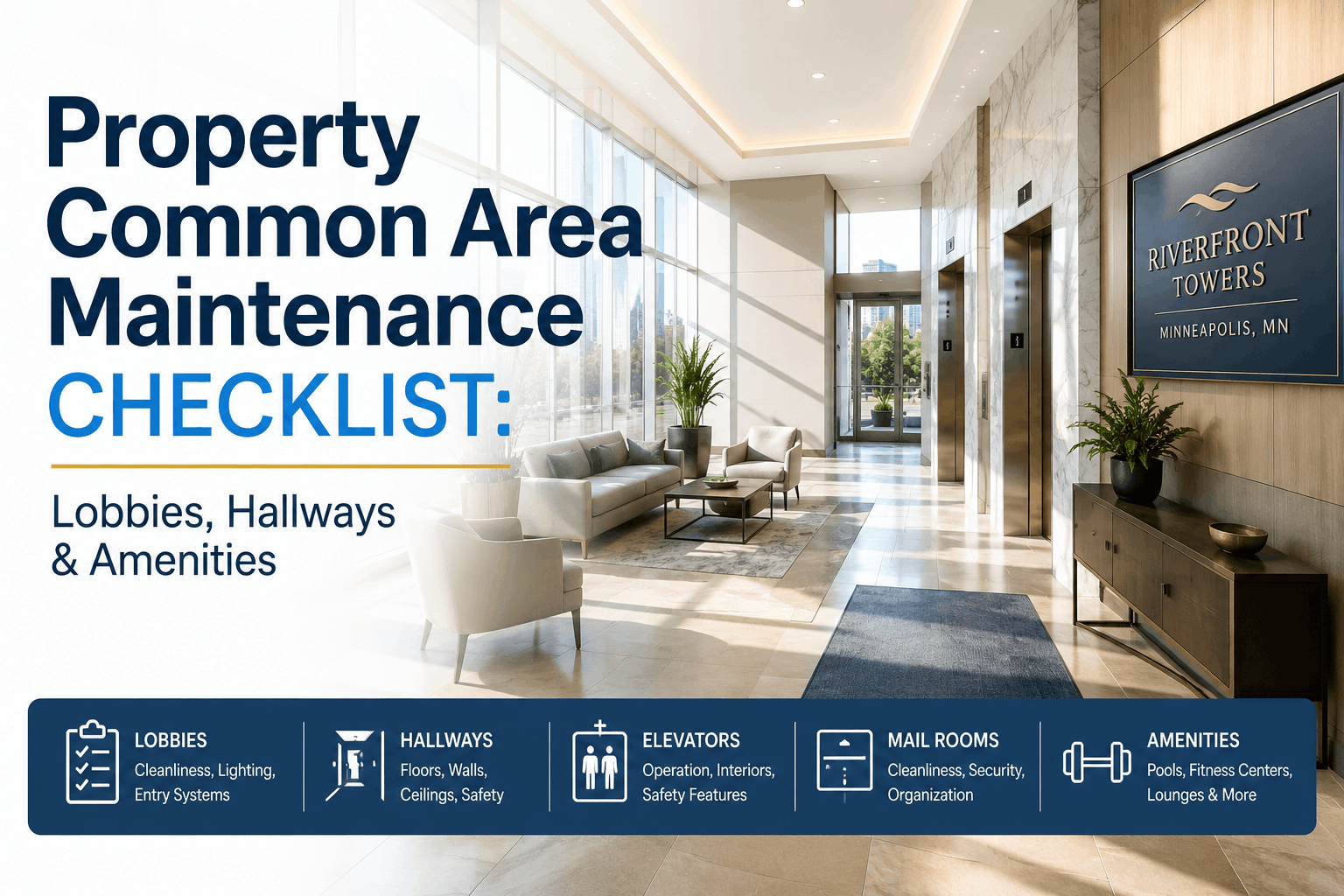
Common areas in multi-unit buildings account for 30-40% of total maintenance costs yet receive inconsistent attention compared to individual units. Lobbies, hallways, elevators, parking areas, and shared amenities deteriorate rapidly without structured daily, weekly, and monthly inspection schedules. Non-compliant lighting, fire safety violations, or ADA accessibility issues create liability exposure and tenant dissatisfaction. Oxmaint's common area maintenance checklist automates daily cleaning schedules, weekly safety inspections, and compliance tracking — keeping shared spaces clean, safe, and audit-ready while reducing emergency maintenance calls by 50%.
1. Daily Common Area Cleaning & Inspection
Daily attention prevents dirt accumulation, odor issues, and safety hazards. A 15-20 minute daily walk-through of lobbies, hallways, and main thoroughfares catches problems before they compound into resident complaints.
2. Weekly Safety & Compliance Inspections
Weekly checks focus on safety systems, accessibility compliance, and deeper facility inspection beyond daily cleaning. These tasks prevent code violations and insurance liability exposures.
?️ Fitness Center Maintenance
Wipe down all equipment contact surfaces (handles, seats, screens) daily with disinfectant. Inspect equipment for function and damage. Out-of-service equipment should display notice and be removed immediately. Residents review fitness amenities heavily — a broken treadmill generates more negative feedback than minor apartment wear.
? Pool & Spa Maintenance
Pool chemistry (chlorine, pH) must be tested daily and documented. Drain and clean skimmer baskets. Inspect tile and deck for cracks or slip hazards. Pools require certified operators and annual inspections. Safety equipment must be accessible. Chemical storage requires specific security protocols — failure to comply triggers regulatory violations and liability exposure.
? Courtyard & Outdoor Spaces
Landscape maintenance includes weekly lawn mowing (growing season), leaf cleanup, and irrigation system checks. Seating areas, benches, and tables require inspection for damage and cleanliness. Outdoor lighting must function nightly. Sidewalk cracks or uneven pavement create trip liability — inspect and repair promptly to prevent resident injury claims.
3. Monthly Deep Cleaning & Maintenance Tasks
Monthly inspections address deeper maintenance issues that daily and weekly routines don't cover. These tasks prevent long-term deterioration and extend system lifecycles.
4. Quarterly Compliance & Safety Audits
Quarterly inspections verify regulatory compliance, insurance requirements, and identify capital maintenance needs before they become emergencies. Documented quarterly audits prove due diligence to regulators and insurers.
Common Area Compliance Requirements by Jurisdiction
| Requirement | Frequency | Jurisdiction | Non-Compliance Penalty |
| Fire Alarm Testing | Annual (monthly battery test) | NFPA 72 (All US States) | $100-500/month fine + liability |
| Sprinkler System Inspection | Annual | NFPA 25 (Most States) | $500+ per violation + insurance denial |
| Elevator Certification | Annual | ASME A17.1 (All States) | Elevator must be shut down, $1000+ fine |
| Exit Sign Illumination | Daily (visual) | NFPA 101 (All States) | Fire code violation, $200-500 fine |
| ADA Accessibility | Ongoing | ADA Title III (All States) | Federal lawsuit, damages + attorney fees |
| Backflow Prevention Testing | Annual | Uniform Plumbing Code (All States) | Water service termination, $100-300 fine |
5. Common Area Maintenance Cost Benchmarks & ROI
Understanding typical maintenance costs helps property managers budget effectively and defend maintenance spending to owners and boards. Properly maintained common areas reduce emergency repairs by 60-70% and improve tenant satisfaction scores.
Daily Maintenance Costs
Staffing: $15-25/hour (2-3 hours daily = $30-75/day)
Cleaning Supplies: $200-400/month
Utilities (lobby climate): $150-300/month
Monthly Total: $900-1,500 for typical 100-unit building
Annual Preventive Maintenance
Fire Safety Testing: $800-1,500
Elevator Certification: $1,200-2,000
Pest Control (monthly): $1,200-1,800
HVAC Service (quarterly): $1,600-2,400
Annual Preventive Total: $5,000-8,000
Emergency Repair Savings: $20,000-40,000+ (avoided emergency calls)
Capital Maintenance (5-Year Cycle)
Floor refinishing: $3,000-8,000
Paint touchups: $2,000-4,000
Lighting upgrade: $4,000-10,000
Landscaping refresh: $2,000-5,000
5-Year Capital Average: $2,200-5,400/year