A missed inspection today becomes an emergency repair next quarter. Commercial buildings have dozens of interdependent systems — and every one of them has a failure point. This checklist gives facility managers and property teams a complete, system-by-system preventive maintenance framework organized by inspection frequency, so nothing gets skipped and nothing fails without warning.
30%
of building energy waste eliminated through regular HVAC preventive maintenance
3–5x
higher cost to repair reactive failures vs. planned preventive work
25%
longer asset lifespan when maintained on a consistent PM schedule
62%
reduction in unplanned capital events with documented PM programs
How to Use This Checklist
This checklist is organized by system and inspection frequency — monthly, quarterly, semi-annual, and annual. Each item includes what to check and what to look for. Work through each section with your maintenance team or licensed contractors and log results in your maintenance platform for audit trails and trend tracking.
Monthly
Routine checks your in-house team can complete on a set schedule
Quarterly
Deeper system inspections, filter changes, and performance tests
Semi-Annual
Contractor-level inspections for life safety and major building systems
Annual
Comprehensive audits, certifications, and capital condition assessments
HVAC Systems Checklist
HVAC accounts for 40–60% of a commercial building's energy use and is the leading source of tenant complaints. Consistent PM extends equipment life by 18–22% and prevents the $15,000–$80,000 emergency replacement events that derail capital budgets.
Inspection Item
Monthly
Quarterly
Semi-Annual
Annual
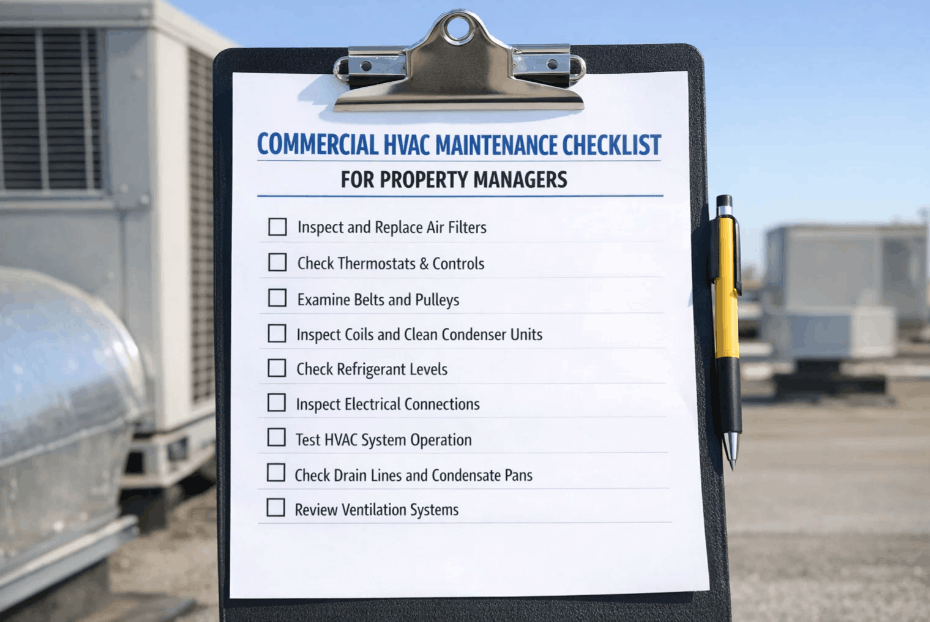
Inspect and replace air filters
✓
✓
Check thermostat calibration and controls
✓
✓
Inspect belts, bearings, and fan blades
✓
✓
Clean condenser and evaporator coils
✓
✓
Check refrigerant levels and inspect for leaks
✓
✓
Inspect ductwork for leaks, blockages, and damage
✓
✓
Test economizer operation and controls
✓
✓
Full system performance test and combustion analysis
✓
Electrical Systems Checklist
Electrical failures are the leading cause of commercial building fires. Preventive inspections identify arc flash hazards, overloaded circuits, and deteriorating connections before they become code violations or safety incidents.
Inspection Item
Monthly
Quarterly
Semi-Annual
Annual
Test emergency lighting and exit signs
✓
✓
Inspect panel boards for tripped breakers or heat
✓
✓
Check GFCI outlets and test reset function
✓
Thermographic scan of electrical panels and connections
✓
✓
Inspect grounding systems and lightning protection
✓
Full load analysis and power quality assessment
✓
Plumbing Systems Checklist
Inspection Item
Monthly
Quarterly
Semi-Annual
Annual
Check for visible leaks under sinks and at fixtures
✓
✓
Test water pressure at all fixtures and risers
✓
Flush and test backflow prevention devices
✓
✓
Inspect water heater anode rods and temperature settings
✓
✓
Inspect roof drains, gutters, and downspouts
✓
✓
Camera inspection of main sewer lines
✓
Fire Safety & Life Safety Systems
Fire and life safety inspections are mandated by code — missed inspections result in fines, failed certificate-of-occupancy renewals, and catastrophic liability exposure. These items are non-negotiable and must be documented with licensed contractors.
Inspection Item
Monthly
Quarterly
Semi-Annual
Annual
Inspect fire extinguisher tags and pressure gauges
✓
✓
Test smoke detectors and carbon monoxide alarms
✓
✓
Inspect sprinkler heads for damage or obstruction
✓
✓
Test fire alarm panel and pull stations
✓
✓
Inspect standpipe systems and fire pump operation
✓
✓
Full fire suppression system certification (NFPA 25)
✓
Emergency evacuation drill and egress path audit
✓
✓
Elevator & Vertical Transportation
Inspection Item
Monthly
Quarterly
Semi-Annual
Annual
Inspect door operation, sensors, and safety edges
✓
✓
Test emergency communication and lighting in cab
✓
✓
Lubricate guide rails, cables, and governor
✓
✓
Inspect machine room ventilation and cleanliness
✓
✓
State-mandated elevator inspection and certification
✓
Full load test and safety device inspection
✓
Building Envelope, Roof & Exterior
Inspection Item
Monthly
Quarterly
Semi-Annual
Annual
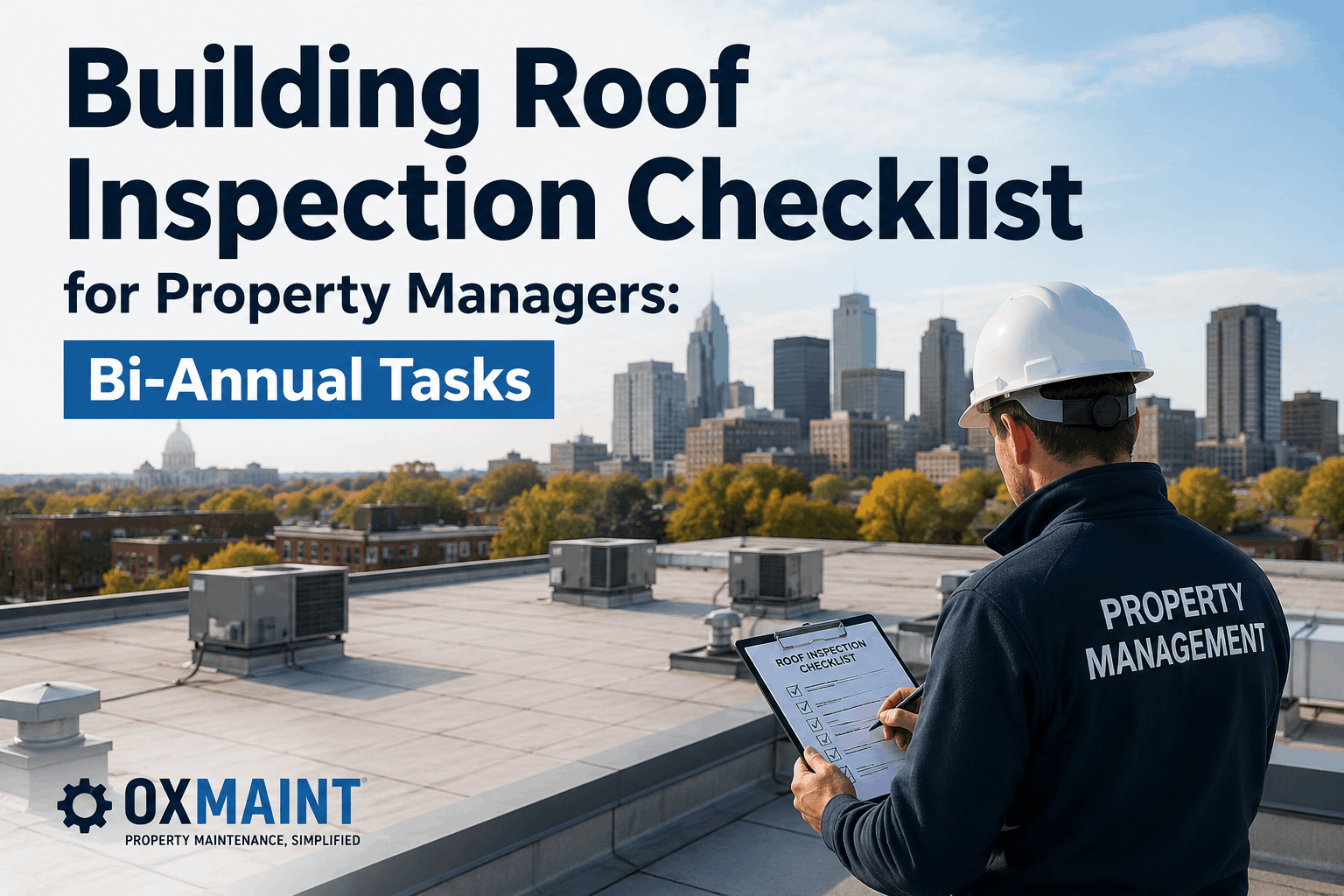
Walk roof for visible membrane damage or ponding
✓
✓
Inspect exterior caulking, sealants, and flashing
✓
✓
Check parking lot lighting, markings, and drainage
✓
Inspect facade, expansion joints, and window seals
✓
✓
Professional roof condition assessment and report
✓
Annual Compliance & Certification Summary
These items require licensed contractors, documented reports, and submission to local authorities. Keep certification records on file for at least five years and track renewal dates in your maintenance platform to avoid lapses.
Fire Suppression
NFPA 25 sprinkler inspection
Fire pump annual test
Suppression agent certification
Annual — Licensed Contractor Required
Elevator Systems
State elevator inspection certificate
Load test documentation
Safety device test records
Annual — State Authority Required
Backflow Prevention
Backflow preventer test and report
Cross-connection survey
Municipal submission of records
Annual — Filed with Water Authority
Electrical Systems
Thermographic inspection report
Generator load bank test
Arc flash hazard assessment
Annual — Licensed Electrician Required
Roof & Envelope
Roof warranty inspection
Facade condition report
Insurance inspection sign-off
Annual — Roofing Contractor Required
HVAC & Refrigerants
EPA Section 608 refrigerant log
Combustion efficiency report
Air quality certification
Annual — EPA Certified Technician
What Separates a Checklist from a System
A checklist on paper is only as good as the follow-through behind it. Without a system to assign, track, document, and analyze PM tasks across your portfolio, inspections get missed, results get lost, and you are back to reactive mode inside of six months.
Paper / Spreadsheet Checklist
✗
No proof of inspection — audit trails missing
✗
Missed tasks go undetected until failure
✗
No trend data — same issues repeat every year
✗
Contractor invoices not linked to work performed
✗
Compliance certification dates tracked manually
VS
Managed PM Program with Software
✓
Photo-documented inspections with time stamps
✓
Overdue tasks auto-escalate to supervisors
✓
Repair cost trends flag assets approaching replacement
✓
Vendor invoices attached to completed work orders
✓
Certification renewals auto-scheduled and tracked
Frequently Asked Questions
How often should a commercial building PM checklist be reviewed and updated?
Review your PM checklist at least annually, and after any significant equipment replacement, code change, or insurance inspection. As assets age, inspection frequency for high-wear items like HVAC filters and fire system components should increase. Maintenance software platforms automatically adjust task frequency based on asset condition scores and repair history, which removes the manual burden of keeping checklists current.
Which PM tasks require licensed contractors vs. in-house staff?
In-house maintenance staff can handle routine visual inspections, filter replacements, minor plumbing checks, and basic electrical tests like testing GFCI outlets and emergency lighting. Tasks that require licensed contractors include fire suppression system certification (NFPA 25), elevator load testing, electrical thermographic scans, refrigerant handling, and any inspection that must be filed with a regulatory authority. Always document contractor credentials and retain inspection reports on file.
What is the cost of skipping preventive maintenance on commercial buildings?
Deferred PM consistently costs 3–5x more than planned maintenance when systems fail reactively. A commercial HVAC unit that receives quarterly PM may last 18–22 years; the same unit without PM typically fails at 11–14 years and often requires emergency replacement at peak-season rates. Beyond equipment cost, deferred maintenance increases insurance premiums, creates compliance liability, and accelerates tenant complaints that lead to lease non-renewals.
How do I track PM compliance across multiple commercial properties?
Managing PM compliance across multiple properties with spreadsheets or paper records almost always results in missed tasks, inconsistent documentation, and gaps in certification records. The reliable solution is a centralized maintenance platform that assigns PM tasks to each property and system, tracks completion status in real time, stores photo documentation and contractor reports, and alerts facility managers when tasks are overdue or certifications are approaching expiration. This is how institutional portfolios maintain consistent PM compliance at scale.
Does preventive maintenance reduce commercial property insurance premiums?
Yes. Insurers view documented PM programs as evidence of reduced risk, and many commercial property insurers offer premium reductions of 8–14% for buildings with verifiable maintenance records. Properties that have experienced water damage, fire events, or code violations due to deferred maintenance typically see significant premium increases. A well-documented PM program with digital inspection records provides the audit-ready evidence insurers require when assessing risk at renewal.
Turn This Checklist into an Automated PM Program
Oxmaint converts every item on this checklist into scheduled, assigned, and tracked work orders — with photo documentation, contractor management, compliance certificate tracking, and portfolio-wide reporting built in. No more paper. No more missed inspections. No more reactive surprises.
PM tasks auto-scheduled by system and frequency
Photo-documented inspections with audit trails
Compliance certification tracking and renewal alerts
Works across single buildings or 50+ property portfolios




.png)
