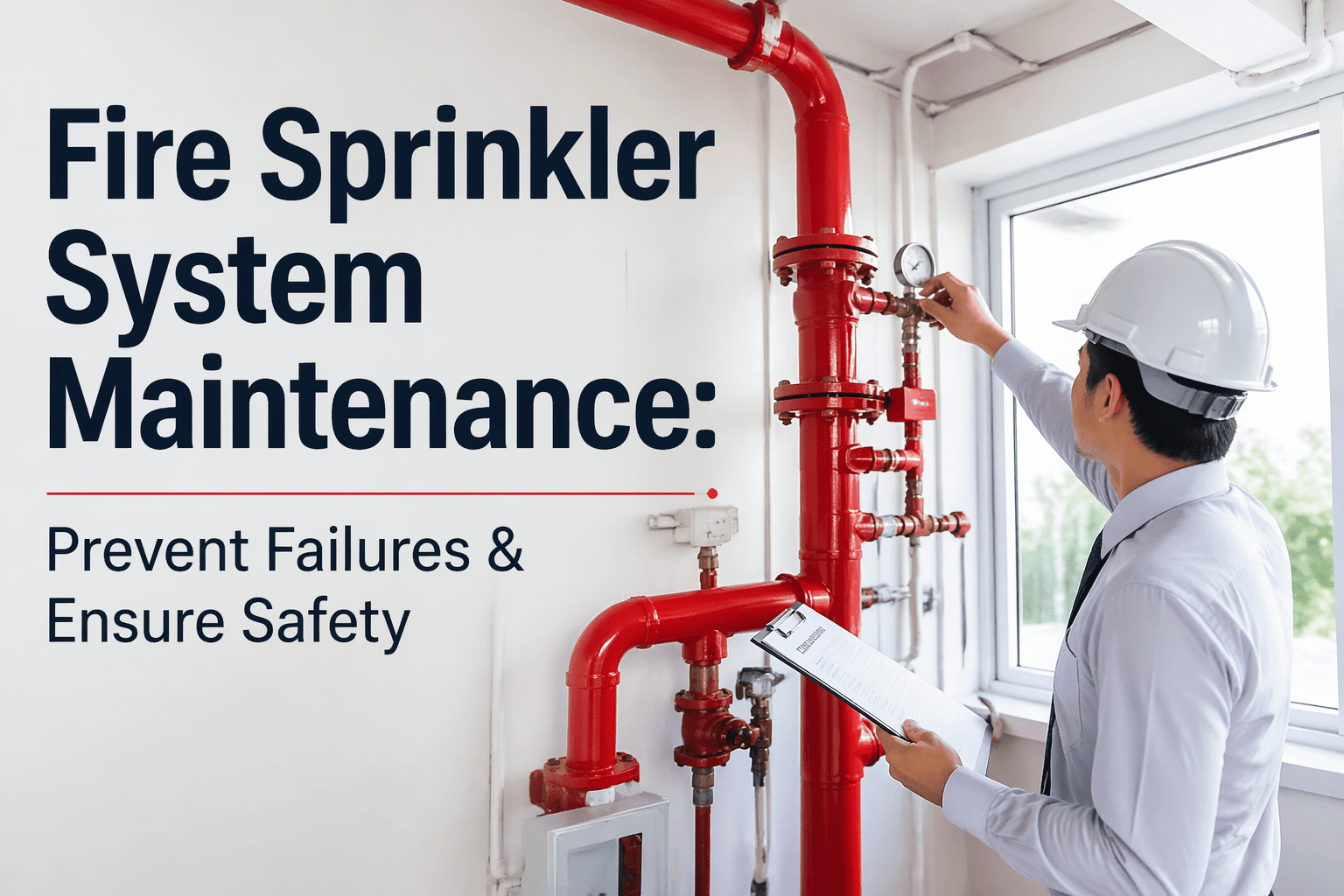
Fire sprinkler systems are the last line of defence between a contained incident and a catastrophic loss — yet they are among the most under-maintained assets in commercial and hospitality facilities. A corroded pipe, a painted-over sprinkler head, or a closed valve that nobody noticed can render an entire zone inoperable. The failure does not show up on any dashboard. There is no alarm. The system simply does not work when it needs to. OxMaint gives facilities teams a structured, auto-scheduled sprinkler maintenance program — with inspection checklists, failure pattern tracking, and compliance documentation built in. Sign up free to activate your fire sprinkler PM schedule today, or book a demo to see how OxMaint manages fire protection assets across a full building portfolio.
Most sprinkler failures are not dramatic events — they are slow, invisible degradations that accumulate between inspections. Each failure mode below has a specific inspection task that catches it early. OxMaint generates and schedules these tasks automatically. Book a demo to see the full fire protection PM template in OxMaint.
Wet pipe systems trap oxygen at the top of water columns, creating an electrolytic corrosion cycle that eats through steel pipe walls over years. MIC accelerates the process in systems with organic contamination.
Detection signal: Discoloured water at test drain, visible external rust at fittings, unexplained pressure loss on weekly gauge checks.
OxMaint PM: Weekly pressure log, annual internal obstruction investigation per NFPA 25 Section 14.
Painted or Obstructed Heads
Paint or physical obstructions applied during redecoration can prevent a sprinkler head from activating or alter its spray pattern — rendering it completely ineffective at the point of a fire event.
Detection signal: Visual inspection reveals coating on deflector or frame, head within 18 inches of storage, fusible link partially fused by previous heat exposure.
OxMaint PM: Annual visual inspection of all heads — photo evidence required per head. Post-renovation checklist auto-triggered on work order completion in any room.
A partially or fully closed control valve isolates part of the sprinkler system without triggering any alarm. Consistently cited as the leading cause of sprinkler failure — almost always a result of maintenance work where the valve was not reopened and verified.
Detection signal: Valve position indicator showing partial closure, tamper switch not transmitting to panel, reduced volume at downstream test point.
OxMaint PM: Weekly valve status inspection with position photograph. Tamper switch test quarterly. Post-maintenance checklist mandatory for any work involving valve operation.
Inadequate Water Pressure
Building system changes — additional floors, new equipment rooms, HVAC modifications — can reduce available pressure at sprinkler heads below the design minimum, producing a spray pattern insufficient to suppress a developing fire.
Detection signal: Pressure gauge readings trending below design pressure, pump test showing reduced output, end-of-main flow test below specified GPM.
OxMaint PM: Monthly pressure log against design specification baseline. Annual pump performance test. Alert triggered at 10% below design minimum.
Dry System Air or Nitrogen Loss
Slow leaks at fittings, valve seats, or head orifices allow pressure to decay in dry pipe systems — eventually triggering a false trip or allowing water to enter the pipe where it can freeze in cold zones.
Detection signal: Compressor cycling more frequently than baseline, air pressure decay exceeding 1.5 PSI per week, low air supervisory alarm activating.
OxMaint PM: Weekly air/nitrogen pressure log. Compressor cycle count monthly. Annual dry valve trip test per NFPA 25.
Alarm and Monitoring System Faults
If the waterflow alarm, tamper switch, or supervisory signals are disconnected or faulted, there is no notification when the system activates or when a valve closes. The fire department does not respond. The building team does not know.
Detection signal: Panel showing supervisory or trouble fault, waterflow alarm test producing no panel indication, monitoring company not receiving test signal.
OxMaint PM: Quarterly waterflow alarm test with monitoring company verification. Annual full system functional test documented per head zone.
USA
NFPA 25 / IFC / OSHA — OxMaint generates NFPA 25-aligned inspection records for all system types. Inspection frequencies, test documentation, and impairment records are auto-generated and exportable for AHJ or insurance inspection.
Canada
NFPA 25 / CAN/ULC-S536 — Canadian fire protection inspection requirements under CAN/ULC-S536 and provincial fire codes supported. OxMaint generates province-specific compliance packages with contractor sign-off records.
UK
BS EN 12845 / BS 9251 / RRO — OxMaint schedules inspections aligned to BS EN 12845 commercial and BS 9251 residential sprinkler standards. RRFSO-compliant inspection records with competent person sign-off per visit.
Germany
DIN EN 12845 / VdS CEA 4001 — VdS-certified sprinkler system inspection requirements supported. OxMaint generates dual-language inspection records and coordinates annual VdS inspection scheduling with insurer documentation.
Australia
AS 1851 / BCA / State Fire Regs — AS 1851 inspection and testing frequency requirements across all system types supported. OxMaint generates state-specific compliance records for NSW, VIC, QLD, and WA fire authority submissions.
Saudi Arabia
NFPA 25 / Saudi Civil Defence — Saudi Civil Defence fire protection requirements aligned to NFPA 25 with SASO overlay. OxMaint supports Arabic-language inspection records and Civil Defence submission documentation.
100%
Fire authority audit pass rate across OxMaint-managed sprinkler portfolios
Zero
Insurance claim denials due to missed inspections on OxMaint-maintained systems
83%
Of sprinkler deficiencies identified during PM — before any operational failure
3 weeks
Average time from sign-up to full NFPA 25 PM schedule running
Fire Protection PM — Free to Start
Every Sprinkler Zone. Every Inspection. Every Compliance Record. One Platform.
OxMaint turns fire sprinkler maintenance from a clipboard exercise into a documented, audit-ready program — with auto-scheduled inspections, photo evidence, and failure pattern tracking running from day one.
What is the most commonly missed fire sprinkler inspection task?
Control valve position verification is consistently the most missed task — and the most consequential. A valve left partially closed after maintenance work can isolate an entire zone without triggering any alarm. OxMaint requires a photograph of each valve indicator at every weekly inspection, creating an unambiguous visual record. Sign up free to activate the valve inspection checklist immediately.
How does OxMaint handle impairment management when a zone is taken offline?
When a sprinkler zone is taken offline for maintenance, OxMaint raises an impairment work order that tracks the offline status, responsible person, and expected restoration time. Escalation notifications go to the fire safety manager at configurable intervals. System restoration is verified with a photo of the valve returned to open position before the impairment record is closed. Book a demo to see the impairment workflow in action.
Can OxMaint manage contractor-performed sprinkler inspections?
Yes. External fire protection contractors access OxMaint via a limited mobile login — receiving inspection work orders, completing checklists, uploading test certificates, and closing tasks with digital sign-off. All contractor records are stored against the specific asset and included in the compliance audit export alongside internal inspection records.
How quickly can we get a compliant fire sprinkler inspection program running?
Most facilities have their fire protection assets registered and first inspection schedules running within 5 to 7 business days. OxMaint's pre-built NFPA 25 and AS 1851 templates mean inspection tasks are pre-populated — you are selecting and adjusting, not building from scratch. Book a demo and we will walk through your specific system types before the call ends.
Does OxMaint support both wet pipe and dry pipe system inspection requirements?
Yes. OxMaint has separate PM templates for wet pipe, dry pipe, preaction, and deluge systems — each with inspection tasks and frequencies specific to that system type. Dry system templates include air pressure logging, compressor cycle tracking, and dry valve trip test scheduling. Sign up free and select your system type during asset setup.