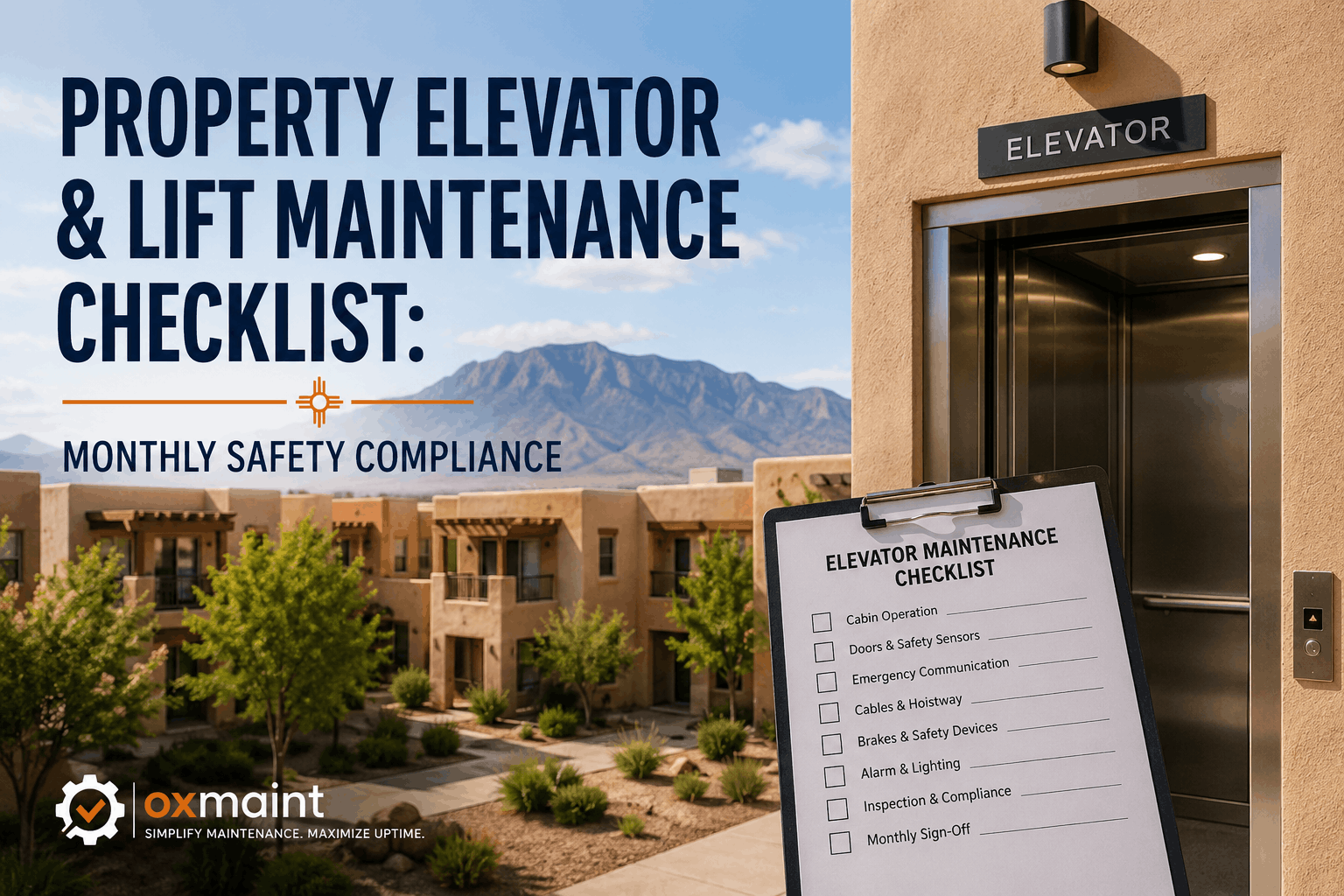
Commercial elevators and vertical transportation systems are safety-critical assets that demand structured, frequency-based preventive maintenance to ensure passenger safety, regulatory compliance, and long-term reliability. A comprehensive elevator maintenance checklist enables facility managers and licensed elevator technicians to systematically inspect door operators, safety devices, machine room equipment, cab interiors, and pit components — covering monthly, quarterly, and annual PM tasks. Whether you manage a single-tenant office tower or a multi-building portfolio, a disciplined Sign up free inspection program reduces unplanned downtime, keeps you ahead of ASME A17.1 and local code requirements, and extends equipment service life significantly.
Automate Your Elevator Preventive Maintenance Program
Schedule monthly, quarterly, and annual elevator inspections, assign licensed technicians, capture digital checklists, and generate timestamped compliance records — across every lift and building.
1. Machine Room Inspection — Monthly PM Tasks
The machine room is the operational heart of any traction elevator system. Monthly inspections verify that drive components, controllers, and safety monitoring systems are functioning correctly and safely within their design parameters.
2. Door Operator & Landing Door System Inspection
Door-related malfunctions account for the majority of elevator service calls and entrapment incidents. Systematic inspection of door operators, safety edges, and interlock mechanisms is essential at every maintenance visit.
3. Safety Device Testing — Quarterly Inspection Requirements
Elevator safety devices are passive life-safety systems that must be tested at defined intervals to ensure they will perform correctly in an emergency. Quarterly testing provides documented evidence of system readiness between annual regulatory inspections.
4. Hoistway, Suspension System & Sheave Inspection
The hoistway contains the primary load-bearing and suspension components of the elevator system — wire ropes, sheaves, guide rails, and counterweight assemblies that must be regularly inspected to prevent catastrophic mechanical failures.
5. Cab Interior, Controls & Passenger Environment
The elevator cab interior represents the passenger-facing aspect of the system — its condition directly impacts tenant satisfaction, ADA compliance, and the perceived quality of building management. Monthly inspections ensure cab systems are functional and compliant.
6. Pit Inspection & Hydraulic System Assessment
The elevator pit and hydraulic systems require careful inspection for moisture intrusion, oil containment integrity, and safety device operability. Pit conditions directly affect equipment longevity and code compliance during annual regulatory inspections.
7. Annual Full-Load & Safety Performance Testing
Annual comprehensive load testing and safety device performance verification is required by ASME A17.1 and most local elevator codes. These tests must be performed by licensed elevator mechanics and witnessed by a qualified inspector or authority having jurisdiction (AHJ).
8. Documentation, Compliance Records & Continuous Improvement
Elevator maintenance documentation is a regulatory requirement — not optional recordkeeping. Proper maintenance records protect building owners from liability, support permit renewals, and provide the data foundation for predictive maintenance decisions.
Ready to Take Control of Your Elevator Maintenance Program?
OxMaint auto-schedules monthly, quarterly, and annual elevator PM tasks, assigns licensed technician workflows, captures digital inspection results with timestamps, and generates complete audit-ready compliance records for every elevator in your portfolio.
Frequently Asked Questions About Elevator Maintenance
1. How often should commercial elevators be inspected and maintained?
Commercial elevators require monthly preventive maintenance visits covering lubrication, brake checks, and door system inspection; quarterly safety device testing including firefighters' emergency operation and governor switch verification; and an annual full-load performance and safety test witnessed by an authority having jurisdiction (AHJ) inspector. High-usage elevators in Class A office or healthcare facilities may require bi-monthly PM visits to maintain performance and reduce callback frequency.
2. What are the most common causes of elevator service calls and callbacks?
Door system malfunctions — including worn safety edges, misadjusted clutch-to-vane coupling, and door track debris — account for approximately 50–70% of all elevator callback incidents. Other frequent causes include leveling inaccuracy, nuisance trips from false safety circuit faults, controller error codes, and lighting failures in the cab or machine room. A structured PM program that addresses these systems on a defined schedule significantly reduces callback frequency and reactive repair costs.
3. What records are required for elevator regulatory compliance?
Most jurisdictions require on-site maintenance logs documenting all PM visits with technician license numbers, dates, tasks performed, and deficiency notes; annual inspection test reports submitted to the AHJ; a valid operating certificate posted in the machine room or cab; and records of any significant repairs, parts replacements, or modernization work performed. Records must typically be retained for a minimum of three years and made available during AHJ inspections.
4. What is the difference between a preventive maintenance visit and an annual elevator inspection?
Preventive maintenance visits are performed by the elevator service contractor on a scheduled frequency (monthly, quarterly) to service equipment, perform lubrication, adjust systems, and conduct routine safety tests. The annual inspection is a formal code-compliance inspection — typically performed by a third-party licensed elevator inspector or AHJ representative — that verifies all safety devices, safety tests, and operational requirements meet ASME A17.1 and local code standards, resulting in the issuance (or denial) of an operating certificate.
5. How can a CMMS improve elevator maintenance management for commercial buildings?
A computerized maintenance management system (CMMS) like OxMaint centralizes elevator PM scheduling by unit and frequency, auto-dispatches work orders to licensed technicians at the correct intervals, captures digital checklist completion with technician sign-off and timestamps, tracks parts usage and replacement history, generates audit-ready compliance reports, and provides management with real-time visibility into PM completion rates and callback trends across an entire elevator portfolio — eliminating paper-based documentation gaps and manual scheduling errors.