Property maintenance budgets fail for a simple reason: they're built backwards. Most property managers start with last year's spending, apply a 5-10% increase for inflation, call it a budget, and hope they don't overshoot. When emergencies inevitably occur, budgets blow out. When projects get deferred, budgets underspend. Nobody understands whether the portfolio is operating efficiently because there's no framework for comparison. A proper maintenance budget starts with operational need, not historical spending. What assets exist in your portfolio? What maintenance schedule does each asset require? What does maintenance actually cost in your market? Only then do you allocate budget to match operational reality. This eliminates the guessing. When emergencies still occur, you absorb them within contingency allocation, not by cutting preventive maintenance. When projects get deferred, you understand the cost deferral and can defend the decision with data. OxMaint's budgeting framework ties work order history to asset registers, forecasts maintenance spend by category, and tracks actual-vs-budgeted spending month-by-month so variance is visible and actionable.
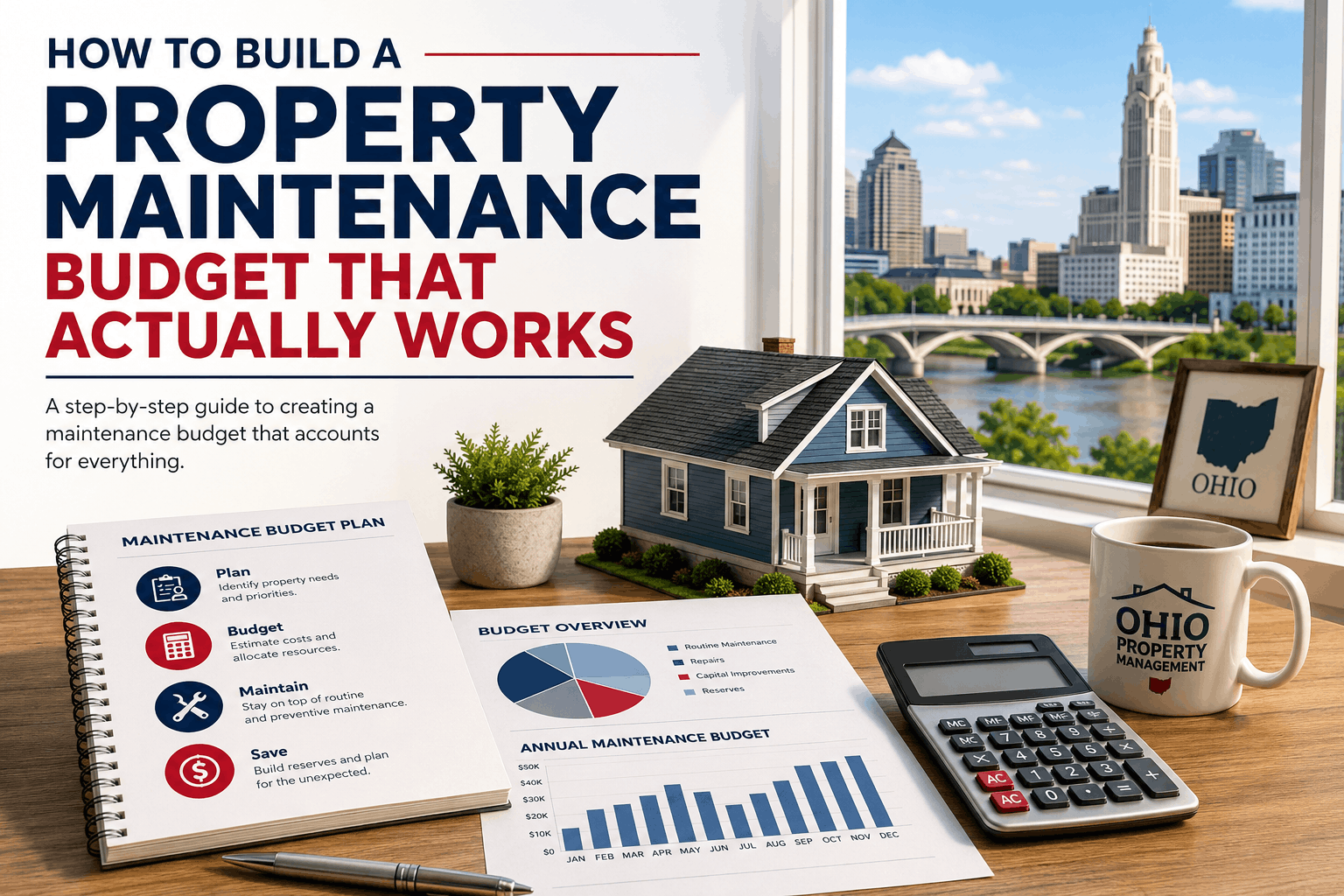
How to Build a Property Maintenance Budget That Actually Works
Most property maintenance budgets fail because they're built from historical spending instead of operational need. This guide walks through the step-by-step methodology for building budgets that align with actual maintenance requirements, track variance accurately, and defend budget authority to ownership with data.
Why Backward-Built Budgets Fail: The Historical Spending Trap
The common approach: take last year's total maintenance spend, adjust for inflation, divide by the number of units or properties, and call it next year's budget. This creates a budget that has no relationship to actual operational need. Last year you had one catastrophic emergency that inflated spending by $80K above average. This year your budget includes that $80K as baseline. Or last year you deferred three roofing projects due to cash constraints. This year the budget looks lean compared to what you actually need to accomplish. The only way to build an accurate budget is to start from zero: list every asset in your portfolio, assign maintenance schedule and cost to each asset, sum the total to get your required budget, then add contingency for unknowns. This seems like more work upfront, but it eliminates the guessing. When budget variance occurs, you understand why—not because spending got sloppy, but because equipment failed unexpectedly or project scope expanded. You can defend variance to ownership with precision because the budget was built from operational need, not history. This approach also forces you to recognize deferred maintenance. If you're skipping preventive maintenance to make budget, the budget is too low. You either need to increase budget or accept the risk and cost of reactive maintenance. Making that decision explicitly—with full visibility to what it costs—is fundamentally different from letting deferral happen invisibly because you're working from a budget that doesn't reflect actual needs.
The Five Budget Components: What Every Maintenance Budget Must Include
A complete property maintenance budget includes five distinct components: planned preventive maintenance (the predictable schedule of routine service), reactive repairs (the emergencies that still occur despite PM), capital projects (major renovations or replacements), contingency (the buffer for unknowns), and administrative overhead (staff, software, coordination). Most property managers budget for the first two and under-allocate the last three. This creates chronic shortfalls. Here's the framework for allocating budget across all five categories, with realistic percentages based on property type and age.
Step-by-Step: How to Build a Bottom-Up Maintenance Budget
Start from zero and build up instead of starting from historical spending and adjusting. This takes one afternoon for a small property, 2-3 days for a large portfolio. The discipline of this exercise forces you to understand your maintenance requirements at the asset level. Follow this exact sequence to ensure no categories are overlooked.
Budget Category Deep-Dive: Allocating Across Maintenance Spend
Different property types and asset mixes require different budget allocations. An older building with aging mechanical systems needs higher allocation to reactive repairs. A newly constructed building needs higher allocation to capital projects. A densely occupied apartment complex needs higher allocation to common area maintenance and turnover costs. Use these frameworks as starting points for your portfolio type, then adjust based on your actual asset age and condition data.
Budget Variance Kills Credibility. Track It Monthly.
Once you've built a bottom-up budget, the work doesn't end—it starts. Track actual spending against budgeted spending monthly. When variance occurs, understand why. Is PM slipping? Are emergencies accumulating? Is a capital project scope creeping? Make these visible, and you maintain budget authority throughout the year.
Variance Tracking: Monthly Monitoring for Budget Control
The most disciplined budget fails if you don't track variance. Many property managers create a budget in January and never look at it again until October, by which point the year has cascaded past forecast. Proper variance management requires monthly tracking: actual spending vs. budgeted, variance as percentage, trend analysis (is variance growing month-to-month?), and intervention thresholds (if variance exceeds 15%, trigger a review). This quarterly rhythm gives you three opportunities per year to intervene: at the 3-month mark (when first-quarter data is in), 6-month mark (mid-course correction), and 9-month mark (final-quarter planning). Most variance surprises can be minimized with this discipline. When the 3-month review shows emergency spending at 35% against a budgeted 25%, you have nine months to reallocate funds or reset expectations. Without this rhythm, you discover at year-end that you've overspent by $80K and nobody understands why.
Frequently Asked Questions About Maintenance Budgeting
We built our first bottom-up budget in 2023—actually inventoried every asset, priced every PM service, calculated real need. It took three days. The resulting budget was $85K higher than our previous "historical + 5% inflation" approach. We pushed back on ownership for the increase, but we could show them exactly why we needed it—asset-by-asset documentation. Within six months, we'd prevented three emergencies that would have cost us $50K combined. The budget didn't feel like a constraint anymore; it felt like a foundation for making maintenance decisions with confidence.
Stop Building Budgets From History. Build From Need.
OxMaint's budgeting framework ties asset inventories to maintenance schedules, tracks actual spending by category, and generates month-by-month variance reports that surface budget variances before they become year-end surprises. Start free—build your budget baseline in one afternoon, then track variance with full visibility.
-request-template-for-building-owners.png)