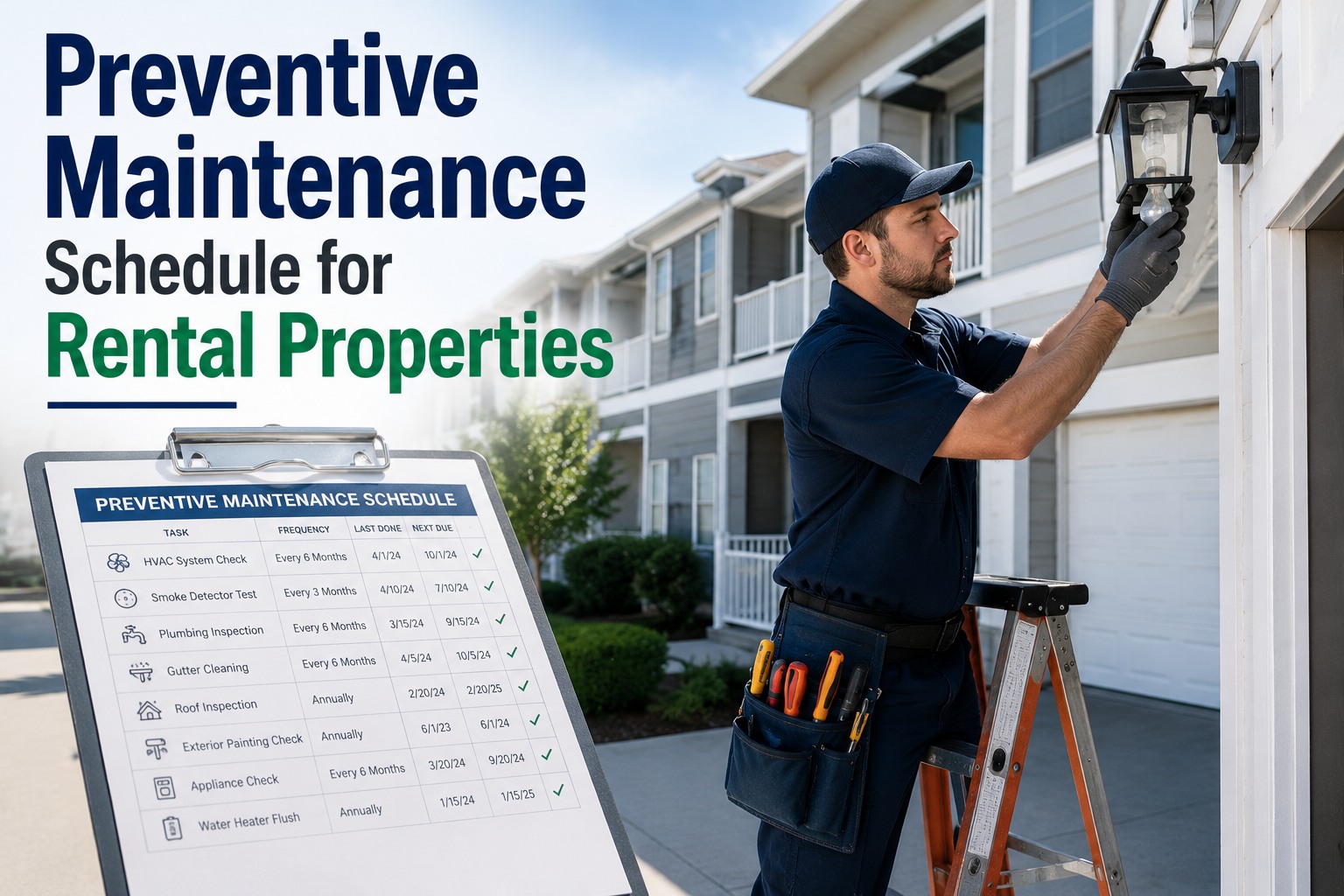
Reactive repairs on rental properties typically run 3-5x the cost of planned work, and that premium shows up in three places at once: inflated contractor invoices, lost rent from vacant units, and tenants who don't renew. A preventive maintenance schedule for rental properties flips those losses into predictable line items you can budget, batch, and delegate. Seasonal inspections, quarterly HVAC servicing, bi-annual plumbing walks, and monthly safety checks form the backbone of a durable plan that keeps assets producing for longer. Built correctly and supported by CMMS automation, the same schedule becomes a tenant-retention tool — not just a repair calendar. You can stand yours up in under an hour when you Start Free Trial on Oxmaint.
What if your next emergency call came at 2 PM instead of 2 AM?
The average landlord handles 4–6 urgent repairs per unit every year, and roughly 70% of them are preventable. A preventive maintenance schedule for rental properties catches failures at the inspection stage — when a $12 hose bib costs the same as a planned work order, not a $1,800 flood claim.
— a 43x swing per incident
A 12-month rental maintenance calendar, broken into four seasons
Each season carries distinct failure modes — freeze risk in winter, HVAC overload in summer, gutter overflow in autumn. This timeline aligns scheduled maintenance to those windows so no asset is serviced too early or too late.
Freeze protection & indoor systems
Insulate exposed pipes, verify furnace ignition and flame sensor, test smoke/CO detectors on every unit, replace HVAC filters (MERV 8+), and check attic ventilation for ice-dam risk.
Roof, gutters & exterior envelope
Clean gutters and downspouts, inspect roof flashing and shingle lift, test sump pumps, service A/C condensers before peak demand, and walk the exterior for cracking, settling, and trim rot.
HVAC load & pest thresholds
Tune cooling equipment under full load, clear condensate drains, inspect window seals and caulking, treat for wasps and rodents, and verify extinguishers and GFCI/AFCI breakers.
Heating prep & weatherization
Schedule furnace tune-ups before November, reverse ceiling fans, weather-strip doors, drain and winterize hose bibs, and chimney-sweep wood-burning units per NFPA 211.
Six asset classes every rental maintenance schedule must cover
A property PM schedule only works if it tracks assets individually, not by building. These six cards define the minimum inspection frequency, lifespan benchmark, and failure signal for each system.
HVAC
- Replace filters every 60–90 days
- Professional tune-up twice yearly
- Clear condensate line each quarter
- Verify thermostat programming
Plumbing
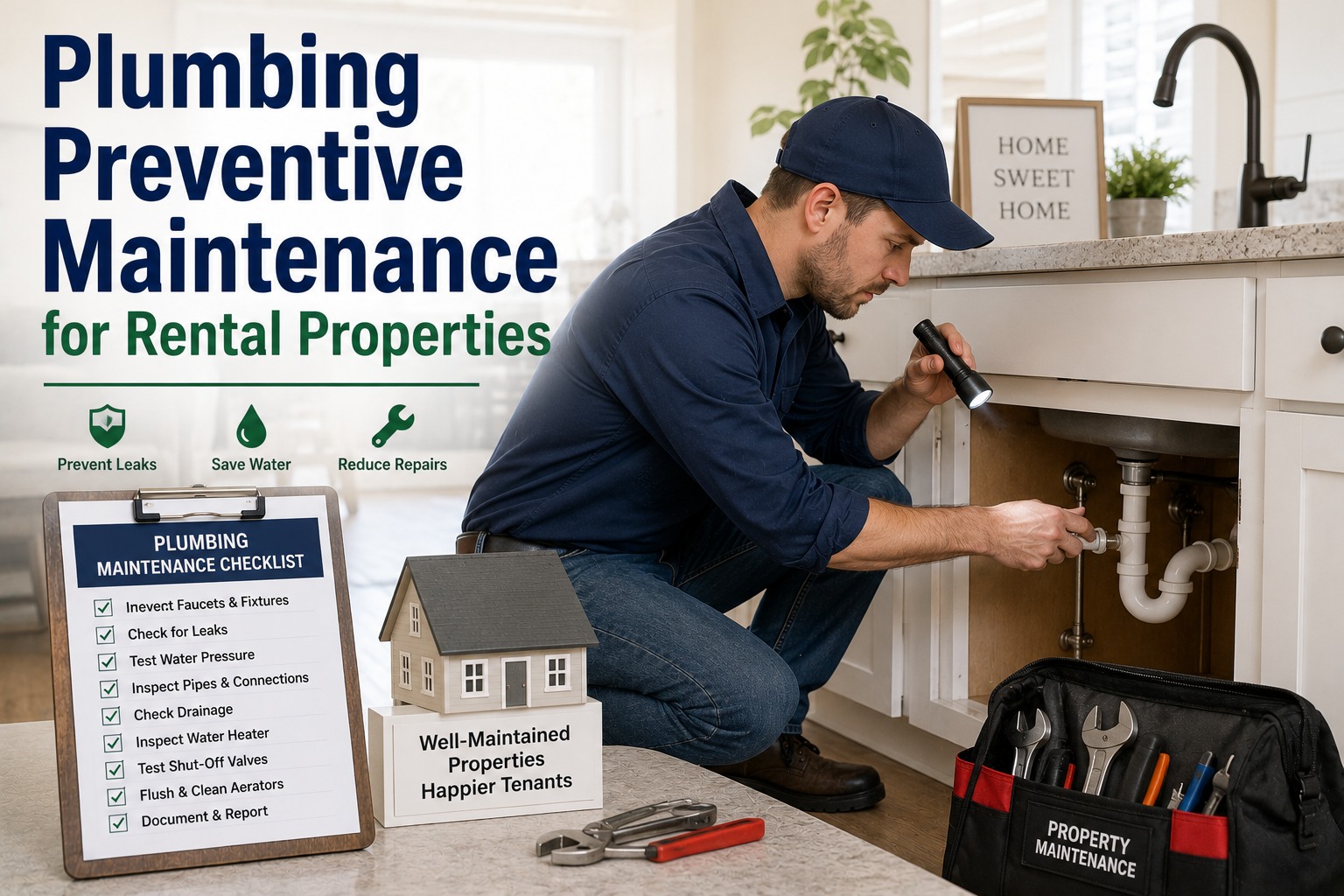
- Walk all units for slow drains quarterly
- Inspect water heater anode rod yearly
- Test shut-off valves for free movement
- Check under-sink cabinets for moisture
Electrical
- Test GFCI/AFCI outlets semi-annually
- Inspect panel for corrosion annually
- Verify smoke/CO detectors each season
- Tighten bus connections every 5 yrs
Roofing
- Drone or walk inspection each spring
- Clear debris from valleys and flashing
- Document shingle lift and granule loss
- Verify attic ventilation monthly in summer
Safety
- Extinguishers serviced annually (NFPA 10)
- Egress paths unobstructed each unit visit
- Test emergency lighting quarterly
- Document and post evacuation routes
Exterior
- Walk for siding, trim, and fascia damage
- Re-caulk windows and doors each fall
- Treat wooden decks every 2–3 years
- Inspect foundation for settling cracks
Reactive vs. preventive: the math landlords can't ignore
A 20-unit portfolio spending $4,800/year on preventive work typically avoids $14,000–$22,000 in emergency repairs. Here is the side-by-side, asset by asset.
| Asset / Task | Reactive cost (emergency) | Preventive cost (planned) | Avoided cost | Failure signal caught early |
|---|---|---|---|---|
| HVAC compressor | $2,400 – $3,800 | $95 filter + tune-up | $2,300+ | Reduced airflow, high amp draw |
| Water heater | $1,500 + $800 flood cleanup | $40 anode rod + flush | $2,260 | Rust in drain water, rumbling |
| Roof leak | $1,200 repair + $3,500 interior | $0 visual inspection | $4,700 | Lifted flashing, dark soffit stain |
| Burst pipe | $2,800 plumber + dryout | $15 insulation + $5 hose bib cover | $2,780 | Exposed pipe in unheated cavity |
| GFCI failure | $600 electrician + liability risk | $18 outlet + 5 min test | $582 | No reset on test button |
| Gutter overflow | $1,400 fascia + siding repair | $0 seasonal cleaning | $1,400 | Plant growth, streak staining |
A 40-unit portfolio: from $26K in emergency calls to a $7K planned line
Consider a 40-unit residential portfolio in the Midwest. Across the prior 12 months the operator logged 94 emergency work orders at an average of $278 each — roughly $26,100 in unplanned spend, plus 11 lost-lease turnovers directly tied to maintenance dissatisfaction. After implementing a quarterly preventive maintenance calendar with monthly safety walks, Year 2 emergency calls dropped to 31, planned maintenance spend held at $7,140, and tenant retention rose from 71% to 88%. The avoided turnover cost alone ($8,400 per turnover at the portfolio's blended rent) paid for the entire program 4x over.
Five steps to operationalize your rental maintenance calendar
Build the asset register
Tag every asset by unit, location, install date, and warranty end. A clean register is the spine of every scheduled maintenance task — without it, recurring work gets missed and warranties lapse.
Set service intervals
Apply OEM-recommended intervals and local code (NFPA, IRC) to each asset. Stagger heavy-load tasks across units so no single week is over-subscribed and vendors can batch visits.
Budget per unit per year
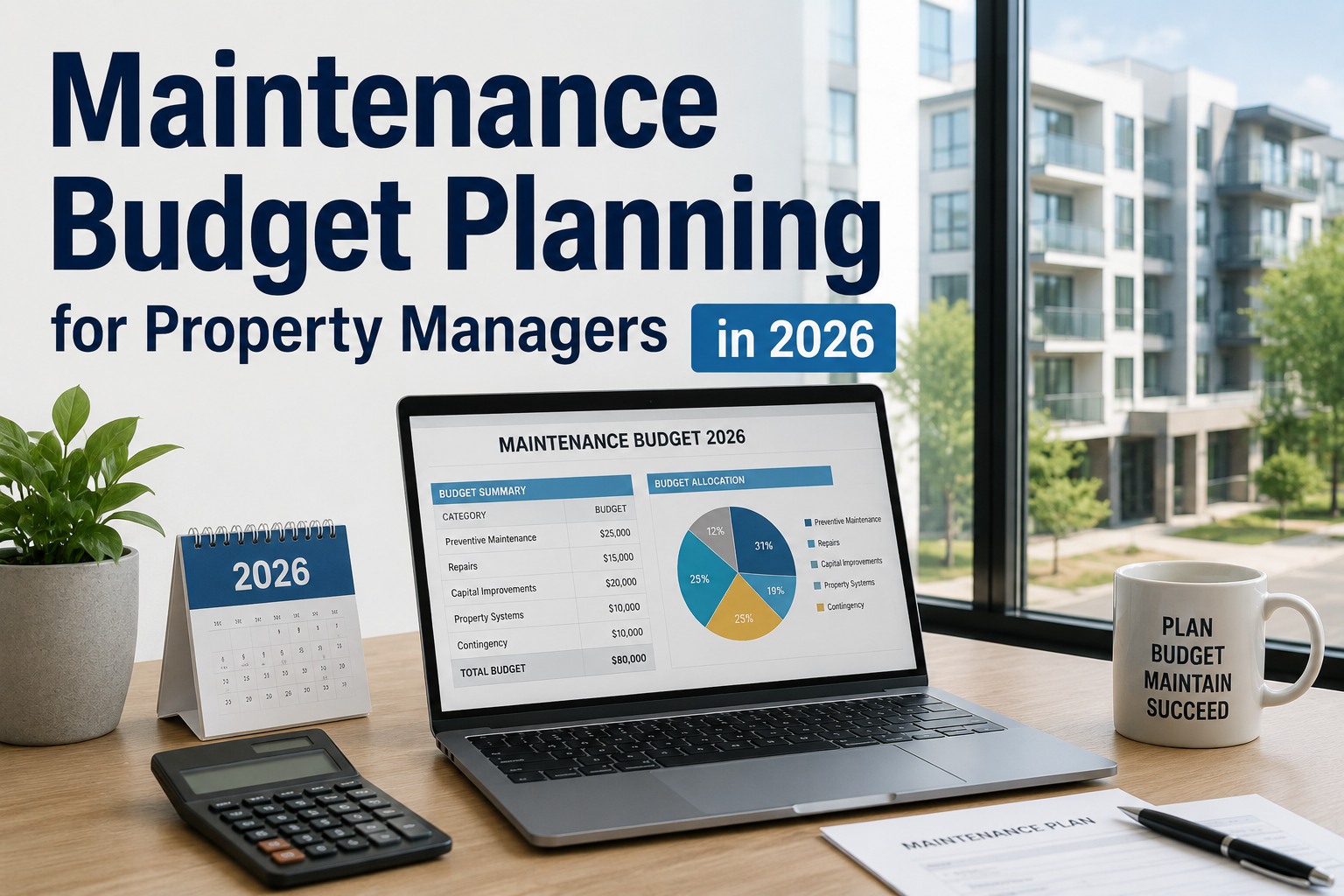
Reserve 1.0–1.5% of property value annually for maintenance, split roughly 60/40 between preventive and reactive. CMMS reporting tells you within 90 days whether that split is realistic.
Coordinate vendors
Lock master service agreements with 3–5 vetted trades. Pre-negotiated rates cut emergency invoices 15–25% and guarantee response SLAs when a tenant reports an issue.
Automate the work orders
CMMS software auto-generates recurring work orders, notifies assigned vendors, and logs completed checklists with photos. What took 6 hours of scheduling per week collapses to under 30 minutes.
What changes when the calendar runs itself
"We moved 84 units onto a preventive schedule in one weekend. The first quarter cut our emergency plumber calls from 19 to 4 — and our tenants actually noticed."
"The auto-generated work orders are the whole game. My maintenance tech opens the app Monday morning and the week is already laid out — no spreadsheets, no missed furnaces in November."
Turn next quarter's emergencies into this week's scheduled work orders.
Oxmaint builds your rental preventive maintenance calendar, assigns vendors, and tracks every checklist — so the only surprise is how few surprises you have.
Rental preventive maintenance: the five questions landlords ask most
How often should I inspect a rental unit?
Most preventive maintenance schedules call for a full interior walk every 6 months plus seasonal exterior inspections. High-turnover student housing may need quarterly interior checks; single-family long-term leases can run semi-annually. Document each visit with photos so you have a baseline if a tenant disputes a deposit deduction.
What's a realistic per-unit maintenance budget?
Plan for 1.0–1.5% of property value per year, or roughly $450–$850 per unit annually for mid-market multifamily. Split that 60% preventive and 40% reactive in year one; as the calendar matures you can shift to 70/30. Start Free Trial and Oxmaint will benchmark your actual spend against similar portfolios in your region within the first 90 days.
Do I need CMMS software, or is a spreadsheet enough?
Spreadsheets work up to about 15 units. Past that, missed recurring tasks, expired warranties, and uncoordinated vendors start costing more than software does. CMMS automation pays for itself the first time it prevents a single after-hours HVAC failure or water-heater flood.
How do I get tenants to cooperate with scheduled visits?
Give 7–14 days written notice, batch visits on the same day per building, and offer a 2-hour arrival window. Tenants who know the calendar in advance are 3x more likely to be home and far less likely to file complaints. CMMS portals let tenants confirm, reschedule, or upload photos in one click.
What's the single highest-ROI preventive task?
HVAC filter replacement on a 90-day cycle. A $12 filter changed on schedule extends compressor life 4–6 years, cuts utility bills 5–15%, and is the most-cited factor in tenant satisfaction surveys. No other task delivers that ratio of cost to avoided damage. Book a Demo to see how Oxmaint automates the entire filter rotation across every unit.
Your 12-month rental maintenance calendar is one import away.
Load your units, set your intervals, and let Oxmaint auto-generate every recurring work order — with vendor SLAs, photo checklists, and budget tracking built in.
Free 14-day trial · No credit card



-and-use-it-for-maintenance-planning.png)
