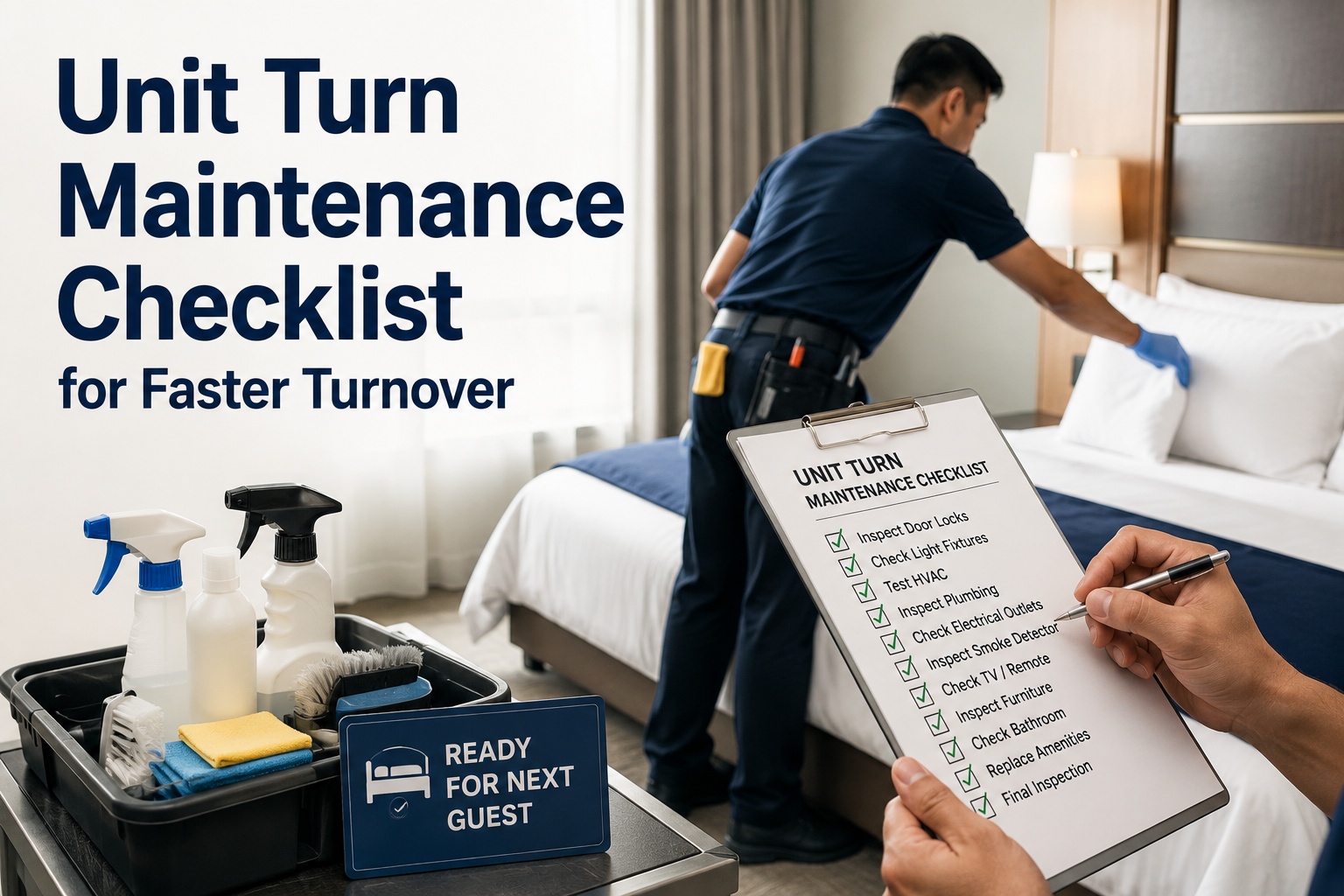
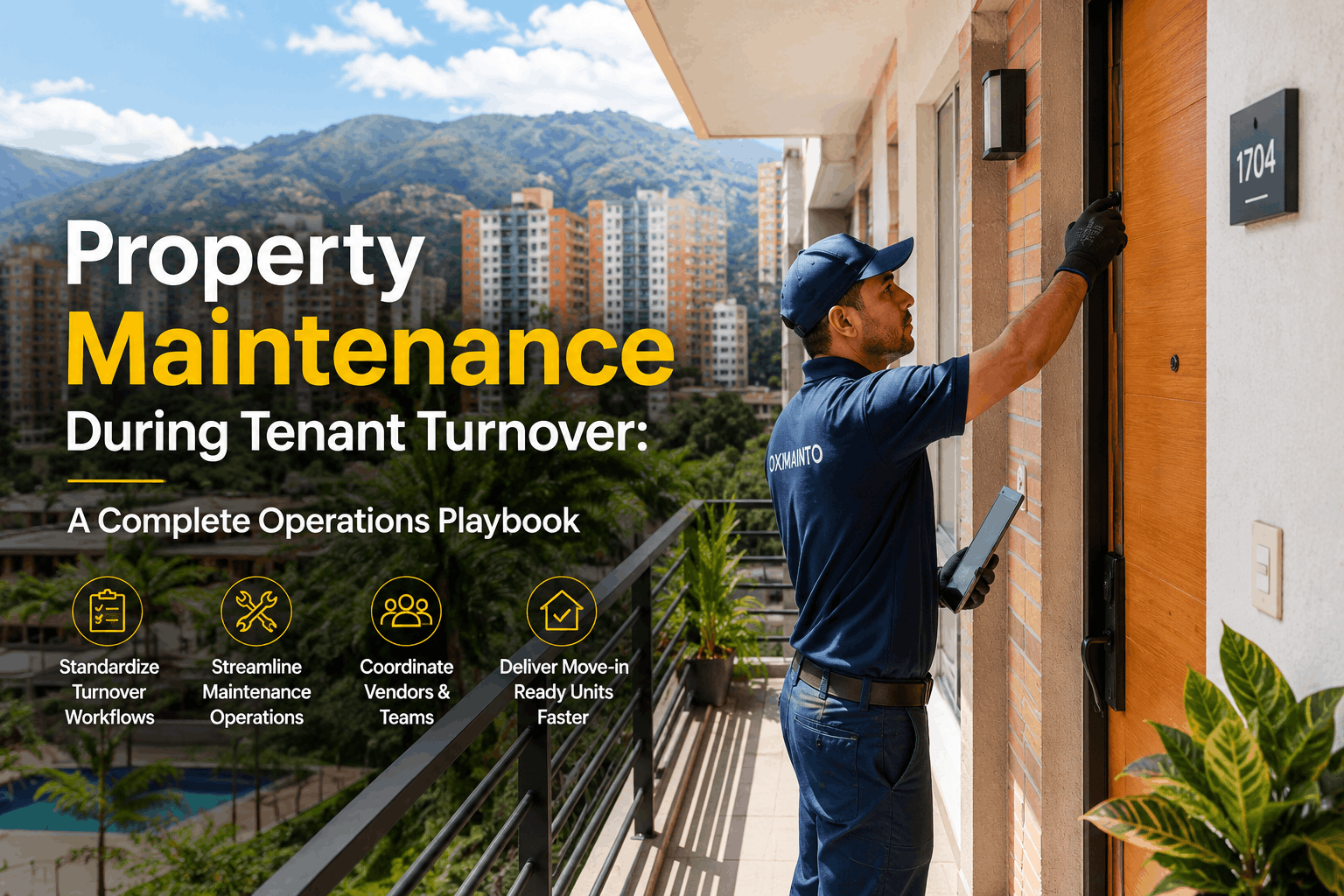
Tenant turnover is your highest-risk maintenance window. A unit renting at $2,000/month left vacant for 14 extra days loses $933 in revenue before repairs even start. The hidden costs are even larger: rushed turnovers produce low-quality move-in conditions that generate immediate complaints, erode tenant satisfaction, and shorten lease duration. A tenant who moves into a unit with visible paint issues or appliance problems starts their lease already dissatisfied — and studies show such tenants renew at 40% lower rates than those who move into well-prepared units. OxMaint's unit turnover workflow automates the entire move-out/move-in process with intelligent checklists, automated vendor dispatch, real-time tracking, and verified move-in readiness — reducing vacancy from 14–21 days to 7–10 days while improving lease quality and tenant retention.
Turnover Operations Intelligence
Automated Unit Turnover. Faster Leasing. Less Vacancy Loss.
Get units market-ready in 7–10 days instead of 14–21 through automated checklists, intelligent vendor dispatch, real-time coordination, and verified move-in quality standards. Stop losing thousands in vacancy revenue.
The True Cost of Turnover: More Than Just Vacancy Days
Property managers typically calculate turnover cost as cleaning plus repairs plus vacancy days. This understates the true financial impact by 40-60%. The full cost includes: direct hard costs (cleaning, painting, repairs, flooring, appliance service), soft costs (staff time coordinating vendors, inspecting work, marketing the unit), vacancy loss (rent days lost), and quality cost (lower rent achieved when rushed, higher concessions offered). A $2,000/month unit with 14-day vacancy and $800 in repairs actually costs $2,200 in lost revenue plus $800 in hard costs — $3,000 total. The same unit with automated turnover completing in 8 days costs $1,333 in vacancy loss plus $600 in optimized repairs — $1,933 total. The difference is $1,067 per unit. Across 50 annual turnovers, that's $53,350 in recoverable value.
The worst part of manual turnover is that most costs are invisible. Property managers don't track vendor response time, don't measure the cost of rework, don't calculate the revenue impact of delayed market-ready dates, and don't correlate move-in quality with lease duration. What isn't measured can't be improved. OxMaint's automated turnover workflow makes every cost visible and every delay measurable.
$2-5K
Avg turnover cost per unit
14-21 days
Current vacancy (manual)
7-10 days
Target (automated)
Turnover Workflow: 5 Stages to Move-In Ready
Automated turnover process from move-out notice to lease-ready status. Each stage has defined timelines, responsible parties, and verification requirements. The system prevents progression to the next stage until all previous stage tasks are complete and verified, ensuring nothing falls through the cracks during high-volume turnover periods.
01 Intake & Notice
Day 1
Auto-checklist generated based on unit type
02 Move-Out Inspection
Day 2-3
Damage documented with photos, categorized by tenant vs. wear
03 Vendor Dispatch
Day 3-4
Contractors auto-assigned based on skill, availability, and cost
04 Work Execution
Day 4-8
Real-time status tracking with photo verification of completion
05 Final Verification
Day 9-10
Move-in ready certified, marketing activated
Turnover Cost Breakdown: Where Your Money Goes
Understanding where turnover dollars are spent is the first step to optimization. Manual turnover processes consistently overpay in three areas: emergency vendor premiums (expedited work costs 30-50% more than scheduled), rework from incomplete or rushed repairs (20-25% of turnover repairs require a second visit), and extended vacancy from coordination delays (each extra vacant day costs $50-100 in lost rent). Automation addresses each of these cost drivers directly.
Cost Category
Manual Process
With OxMaint
Savings per Unit
Deep Cleaning
$350-450
$280-350
$70-100
Paint & Touch-up
$200-350
$150-250
$50-100
Flooring (carpet/vinyl)
$300-600
$250-450
$50-150
Plumbing/Electrical
$200-500
$150-350
$50-150
Appliances Service
$150-300
$100-200
$50-100
Detailed Case Study: 240-Unit Property Cuts Vacancy from 18 to 8 Days
A 240-unit property in Austin, Texas, was experiencing 18-day average vacancy between tenants. The property manager coordinated turnovers manually: phone calls to vendors, text messages for updates, physical checklists on clipboards, and in-person final inspections. During peak turnover season (June-August), the manager handled 8-12 simultaneous turnovers — a coordination nightmare that inevitably led to delayed completions, rushed work, and frustrated new tenants.
After implementing OxMaint's automated turnover workflow, the property achieved 8-day average vacancy — a 55% reduction. The key changes were: automated checklists that ensured no task was missed, intelligent vendor dispatch that routed work to the next available qualified contractor, real-time mobile updates from vendors with photo verification, and automated final inspection checklists that flagged any incomplete items before the unit was marked ready.
Turnover Inspection Checklist: 6 Critical Zones
Standard inspection items completed during move-out documentation. Each item requires photo documentation and condition rating (Good/Fair/Poor/Damaged). Items rated Poor or Damaged automatically trigger repair work orders. Items requiring replacement are flagged for capital planning review.
Kitchen
Refrigerator, stove/oven, dishwasher, microwave, sink, faucet, garbage disposal, cabinets, countertops, flooring
Bathrooms
Toilet, sink, faucet, shower/tub, tile/grout, mirror, ventilation fan, lighting, cabinets, flooring
Mechanical Systems
HVAC filter, thermostat, water heater, furnace, AC condenser, shut-off valves
Flooring & Walls
Carpet stains/tears, vinyl scratches/tears, tile cracks, drywall holes/marks, baseboards, trim
Windows & Doors
Window seals, screens, blinds, locks, door condition, door sweep, weatherstripping
Safety Systems
Smoke detectors, CO detectors, fire extinguisher, GFCI outlets, handrails
The Tenant Satisfaction Connection: Why Move-In Quality Matters
First impressions are lasting impressions. A tenant who moves into a unit with visible maintenance issues — even minor ones — starts their lease with lower satisfaction and higher expectations of future problems. OxMaint's data shows that move-in satisfaction scores directly predict lease renewal rates: tenants who rate move-in condition as "Excellent" renew at 88%, while those rating "Fair" renew at only 62%.
The financial impact is substantial. On a 200-unit property with 30% annual turnover (60 units), improving move-in satisfaction from Fair to Excellent increases renewal rate by 26 percentage points. At $1,800 average rent, each renewed tenant generates $21,600 in annual revenue. A 26% improvement on 60 units is 15 additional renewals — $324,000 in preserved annual revenue. The turnover process that produces these results costs a fraction of that amount.
Move-In Quality Rating
Tenant Satisfaction
Lease Renewal Rate
Excellent (no issues found)
94%
88%
Good (minor cosmetic issues)
78%
79%
Fair (visible maintenance needed)
52%
62%
Best Practices for Turnover Optimization
Property managers who achieve the fastest, most cost-effective turnovers follow five proven practices. First, they start the turnover process BEFORE the tenant moves out — scheduling inspections, ordering materials, and pre-booking vendors based on move-out date. Second, they use standardized checklists for every unit, customized only for unit-specific features (appliances, finishes, square footage). Third, they require photo documentation from vendors at every stage — before, during, and after work completion — eliminating disputes about what was done.
Fourth, they maintain a curated vendor list with pre-negotiated rates, so dispatch is automatic rather than price discovery each time. Fifth, they conduct final inspections using the same checklist as the initial inspection, with each item verified before the unit is marked ready for lease. Properties following all five practices achieve 7-10 day turnovers consistently, compared to 14-21 days for those using ad-hoc processes.
"Managing 5+ simultaneous turnovers used to mean chaos via text messages, missed calls, and frantic Friday afternoon cleaning crews. After implementing OxMaint's automated turnover workflow, I manage 8-10 turnovers with complete confidence. Each turnover has its own digital checklist, vendors receive automatic dispatch, and I get photo verification when work is complete. The result: vacancy dropped 55%, turnover costs dropped 28%, and lease renewal rates improved 18%. Quality-checked tenants start happy instead of frustrated — and they stay longer."
— Sarah Mitchell, Regional Property Manager, Miami, FL (240 units, 12 buildings)
Unit Turnover Operations
Automate Turnover. Reduce Vacancy. Improve Tenant Quality.
40–50% faster turnovers. 25–30% cost reduction. Better tenant move-in satisfaction and lease renewal rates. OxMaint's automated turnover workflow gives you complete visibility and control over every unit transition.
Frequently Asked Questions
Q: How do you handle urgent repairs discovered during move-out inspection?
A: OxMaint flags priority repairs immediately based on severity (life safety, habitability, cosmetic). Life safety issues trigger emergency contractor dispatch within 2 hours. Habitability issues (no heat, no hot water) trigger priority dispatch within 24 hours. The system recalculates the expected ready date and alerts all stakeholders about potential delays before they impact tenant move-in.
Q: What if a scheduled contractor doesn't show up or refuses the job?
A: The system auto-reassigns to the next-available contractor from your pre-approved vendor list with one click. Unreliable contractors are automatically deprioritized for future work based on their no-show rate. The turnover timeline is updated in real time so you can communicate any delays to leasing staff immediately. Over time, the system learns which contractors have the best reliability scores for each type of work.
Q: Can prospective tenants see the move-in status of available units?
A: Yes. The leasing portal shows real-time move-in ready status for each unit once final inspection clears. Prospects can see that a unit is "Ready Now" vs. "In Turnover — Available [Date]." This transparency builds trust and reduces leasing staff time spent checking unit status manually. Units marked ready are automatically pushed to your listing sites through API integration.
Q: How are turnover checklists customized for different unit types?
A: OxMaint stores unit attributes (bedroom count, bathroom count, square footage, appliance package, finish level, year built, renovation history) and auto-generates checklists matching the specific unit. A 3-bedroom unit with stainless steel appliances and granite counters has different inspection items than a 1-bedroom unit with basic finishes. Templates are fully customizable per property.
Q: Is automated turnover ROI positive even for properties with low turnover rates?
A: Yes. A 100-unit portfolio with 15% annual turnover (15 units) reduced from 18-day to 10-day average vacancy saves $60,000+ annually in vacancy losses alone. Improved move-in quality adds another $20,000–30,000 in preserved renewal revenue. Even at low turnover volumes, the per-unit ROI is substantial because each turnover is more expensive when you do fewer of them (less process efficiency, less vendor leverage).
Q: Can I generate security deposit deduction reports from turnover inspection data?
A: Yes. Damage identified during move-out inspection is automatically categorized as tenant-caused vs. normal wear and tear based on predefined rules. Photo documentation is attached to each deduction item. The system generates a state-compliant security deposit disposition report with itemized deductions, supporting photos, and regulatory timing tracking. This documentation protects you against deposit disputes and reduces legal exposure.
Q: Does turnover automation improve vendor relationships or strain them?
A: Structured scheduling, clear scope of work, photo documentation, and reliable payment improve vendor relationships significantly. Contractors know exactly what work is required before they arrive, can upload completion photos for instant verification, and receive payment automatically when work is approved. High-performing vendors appreciate the consistent work volume and clear expectations. The system also flags problem vendors early, allowing you to replace them before they damage your reputation or timeline.
Q: Can I integrate turnover data with my property management accounting software?
A: Yes. OxMaint integrates with major property management systems including Yardi, RealPage, AppFolio, Buildium, and Entrata. Turnover costs sync to your GL codes, security deposit deductions flow to tenant ledgers, and capital expenditures for major replacements integrate with depreciation schedules. Complete two-way sync eliminates duplicate data entry across systems.
"Managing 5+ simultaneous turnovers used to mean chaos via text messages, missed calls, and frantic Friday afternoon cleaning crews. After implementing OxMaint's automated turnover workflow, I manage 8-10 turnovers with complete confidence. Each turnover has its own digital checklist, vendors receive automatic dispatch, and I get photo verification when work is complete. The result: vacancy dropped 55%, turnover costs dropped 28%, and lease renewal rates improved 18%. Quality-checked tenants start happy instead of frustrated — and they stay longer." — Sarah Mitchell, Regional Property Manager, Miami, FL (240 units, 12 buildings)
Ready to transform your turnover process from chaos to control? OxMaint's automated unit turnover workflow combines intelligent checklists, automated vendor dispatch, real-time tracking, and verified move-in quality standards — reducing vacancy, lowering costs, and improving tenant retention. Start your free trial today — no credit card required.