Rental Property Move-In Inspection Checklist: Protect Landlords and Tenants
By Alex Jordan on June 5, 2026
A move-in inspection is the single most critical action a landlord or property manager takes before tenant occupancy. Without documented baseline photography and a detailed written inspection report, every subsequent security deposit dispute becomes "your word against theirs" — and you'll lose in small claims court without proof. This comprehensive move-in checklist ensures California AB 2801 compliance, timestamped photo documentation, and digital tenant sign-off in Oxmaint, creating legally defensible evidence that protects your security deposit deductions and keeps tenant disputes out of court.
Document Move-In with Timestamped Photos & Digital Sign-OffsOxmaint's mobile inspection app captures geotagged photos, timestamps, and tenant digital signatures — creating legally defensible move-in records that survive small claims court challenges.
The USA Fair Housing Act, state security deposit laws, and emerging regulations like California's AB 2801 (Jan 1, 2026) mandate specific move-in inspection procedures, photo requirements, and documentation timelines. Non-compliance eliminates your ability to defend deposit deductions in court.
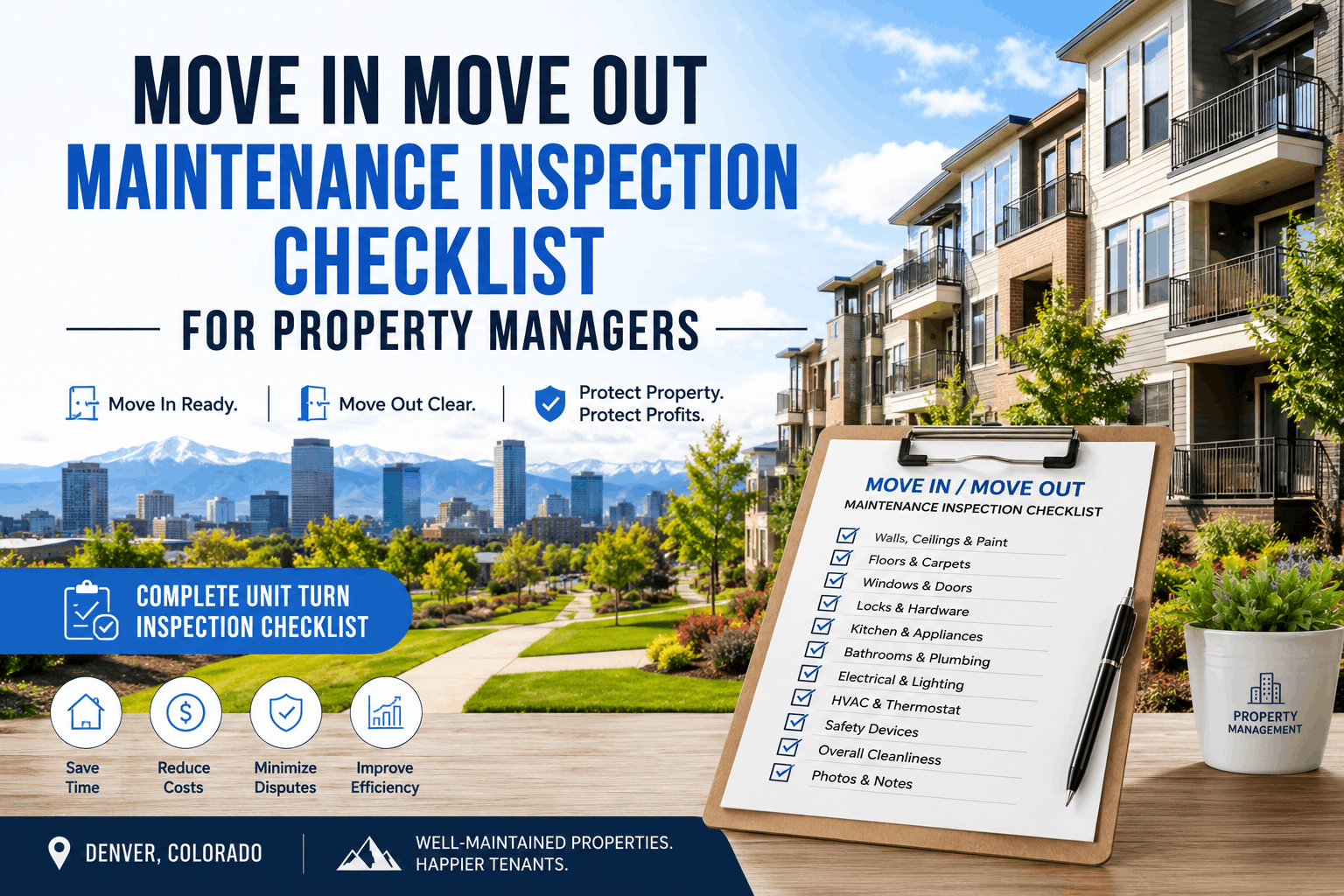
2. Room-by-Room Move-In Inspection Checklist
Conduct systematic, photographic documentation of every room, every fixture, and every appliance. Missing rooms or fixtures undermines your credibility in court and prevents valid deposit deductions.
California AB 2801 Photo Requirements (2026)
Photos must be timestamped and show unit condition before tenant occupation. For leases signed after January 1, 2026, both move-in and move-out photos are required to justify security deposit deductions. Photos without move-in baseline are legally insufficient for any deduction claims.
Timeline Compliance by State
Most states require move-in inspection within 3-7 days of occupancy. California, Texas, New York, and Florida have specific statutory requirements. Check your state laws to confirm timeline. Failure to inspect within required window may bar all deposit deductions.
3. Exterior, Parking & Common Area Inspection
Multi-unit and single-family properties with shared spaces require documentation of exterior condition, parking areas, and common facilities. Tenant responsibility for exterior damage depends on lease terms and local law.
4. Special Condition Documentation & Notes
Beyond standard room inspection, document lease-specific items, pet condition, smoking, and any pre-existing damage that must be disclosed to protect against liability.
5. Tenant Sign-Off & Report Completion
The move-in inspection is only legally valid if both parties sign off on the findings. Digital signatures and acknowledgment create stronger legal evidence than handwritten forms.
Create Legally Defensible Move-In Records with OxmaintMobile app with timestamped photo capture, room-by-room organization, tenant digital signature, and 3-year cloud backup — all compliant with California AB 2801 and federal security deposit laws.
Understanding the most common documentation errors helps landlords avoid losing deposit disputes they should have won. Most errors relate to photo quality, missing baseline documentation, or unsigned forms.
No Move-In Photos at All
The #1 landlord mistake. Without move-in baseline photos, you cannot prove whether damage was pre-existing or tenant-caused. Judges assume damage predates tenancy if you lack documentation. Move-in photos are now mandatory in California (AB 2801) for any lease signed after 1/1/2026.
Wide "Room Overview" Photos Only
Wide shots from the doorway are insufficient for proving specific damage. Close-ups of problem areas (carpet stains, wall damage, appliance condition) are required. A photo from 10 feet away cannot prove the exact condition of kitchen tile grout or wall paint damage.
Photos Without Timestamps
A photo without a date/time stamp can be challenged as taken from a prior tenancy or another unit. Always use an app that auto-timestamps (like Oxmaint) or ensure metadata is not stripped from photos. Undated photos have minimal legal weight in disputes.
Skipping Appliance Interiors
Tenants leave dirty ovens, refrigerators, and dishwashers. Without move-in photos of clean appliance interiors, you cannot charge for cleaning at move-out. Photograph inside ovens, fridges, and under sink cabinets to establish cleanliness baseline.
Not Testing Systems (AC, Heat, Water)
Tenants claim "the AC didn't work when I moved in" — without documented proof of working systems, you cannot dispute their claim. Test heating, cooling, water pressure, and hot water at move-in and document functionality in photos.
Inspection Without Tenant Present
Solo landlord inspections are weaker legally than joint inspections. Tenant presence at inspection and signature on the report is stronger evidence. A signed acknowledgment prevents later claims that the landlord "added damage after move-in" in photos.
1. Is a move-in inspection required by law in all US states?
No. California (AB 2801), Florida, and New York mandate move-in inspections for certain leases. Texas and Illinois strongly recommend but don't mandate. Check your state law. Even where not required, move-in documentation is essential to win deposit disputes.
2. What is California AB 2801 and why does it matter?
Effective January 1, 2026, California requires timestamped move-in photos for all new leases. Without compliant move-in photos, landlords cannot make security deposit deductions. Non-compliance eliminates your ability to defend deposit claims in court.
3. How long should landlords retain move-in inspection photos and documents?
Most states require 3-5 years retention. California requires 3 years minimum. Retain indefinitely if storage is not burdensome — move-in documentation may be needed even years after a tenancy ends if a former tenant pursues a small claims action.
4. What happens if you don't have move-in photos when a security deposit dispute goes to court?
Without move-in baseline, judges typically assume damage was pre-existing and deny all deduction claims. You lose the case even if damage is real. Move-in photos are your only evidence that damage occurred during tenancy and was tenant-caused.
5. Can digital signatures on move-in inspection forms be used in court?
Yes. All US states recognize digital signatures as legally binding under the Uniform Electronic Transactions Act (UETA). Email-signed or mobile app-signed inspection reports are admissible evidence in small claims and court proceedings.
6. How detailed should move-in inspection notes be?
Document condition of every room, every fixture, and every appliance. Be specific: "living room carpet has 2-inch stain near couch, east wall has nail hole 4 inches above outlet" — not vague descriptions like "carpet stained" or "walls damaged." Specificity strengthens deposit deduction claims.
7. Should tenants be present during move-in inspection?
Strongly recommended. Joint inspections create stronger legal documentation and prevent tenant claims of "surprise" findings. Tenant signature on the report is more defensible than landlord-only documentation in court.
8. What is "normal wear and tear" vs. tenant damage in a security deposit dispute?
Normal wear: slight carpet matting, small wall scuffs, faded paint. Tenant damage: large carpet stains, holes in walls, broken appliances, cracked tile. Move-in photos help distinguish the two — without them, courts assume wear is normal, not damage.
"I used to lose 40% of my deposit disputes because I didn't have move-in photos. After implementing Oxmaint's timestamped mobile inspections, I now win nearly every dispute. The photos are clear, dated, and the tenant signature is right there in the digital record. Small claims judges respect the documentation and I recover full deposits on legitimate damage claims."
— Jennifer Ramirez, Landlord of 8 Single-Family Rental Units, California, USA
Start Winning Your Security Deposit DisputesOxmaint's move-in inspection app gives you timestamped photos, room-by-room organization, tenant digital signatures, and cloud backup — all the legal documentation you need to defend deposit deductions in small claims court.