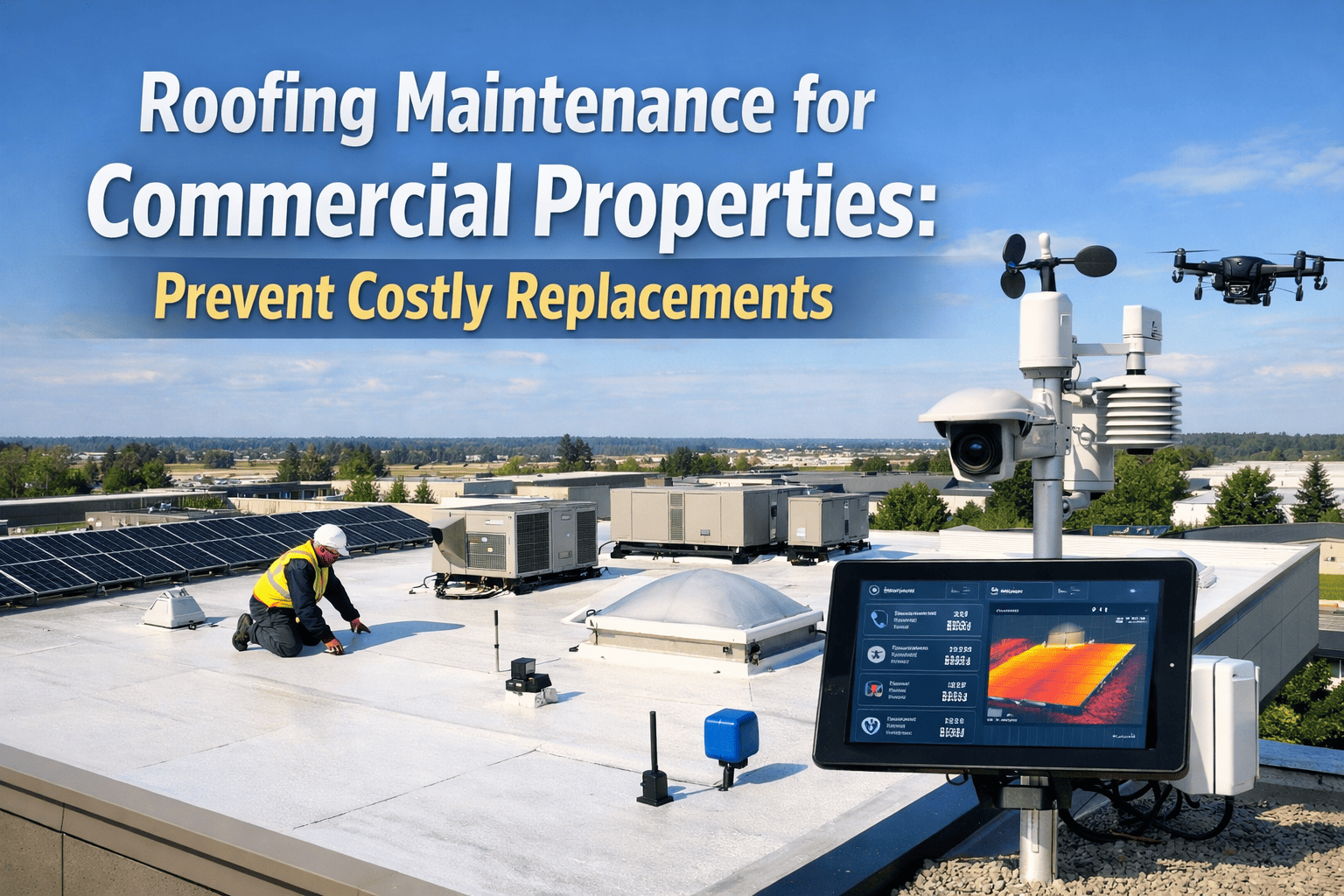
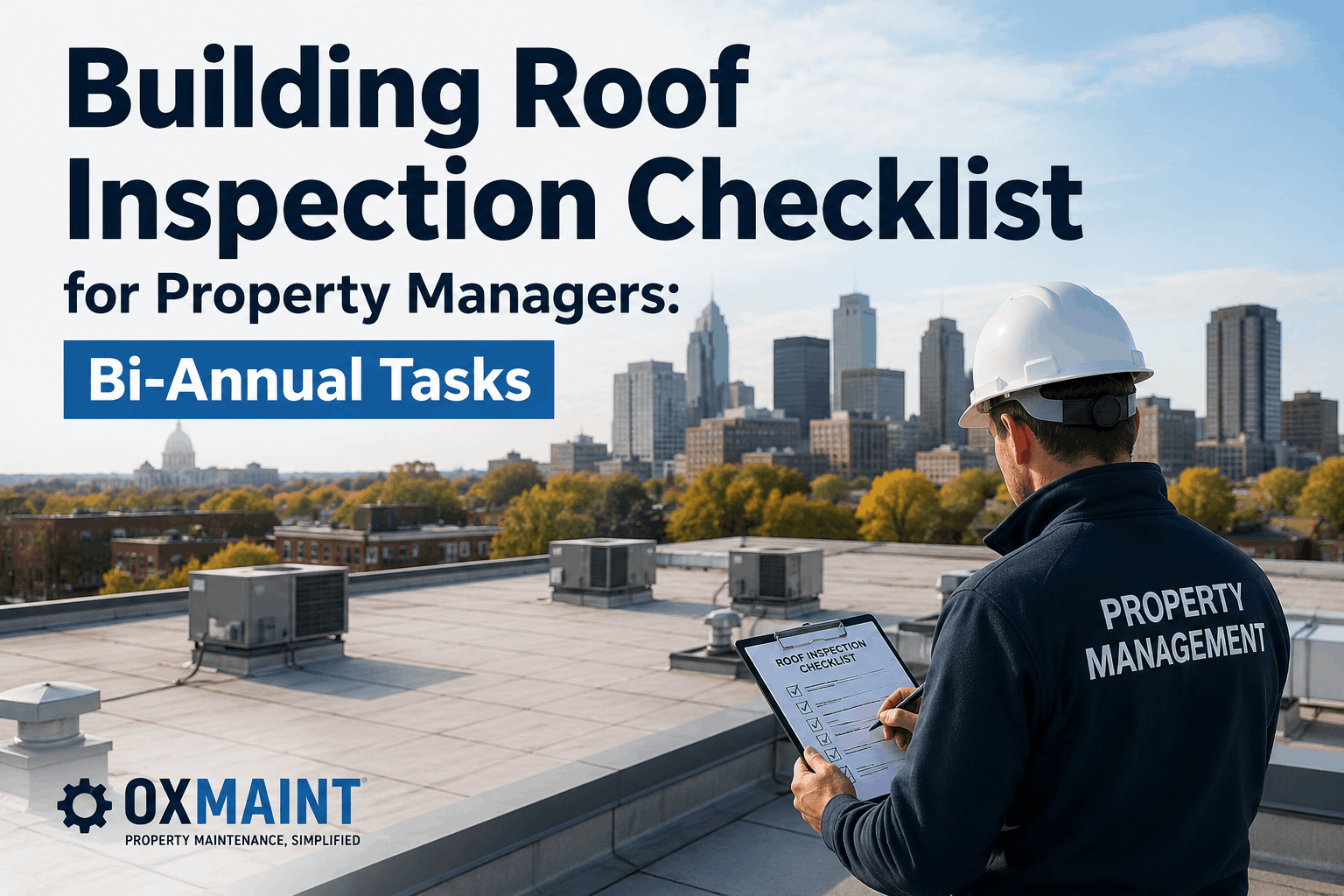
A commercial roof failure is not a maintenance problem. It is a capital event. Replacement costs range from $10 to $25 per square foot, and most building owners face them earlier than they should because proactive inspection and repair programs are never put in place. The facilities teams that extend roof lifespan by 10 to 15 years do so through disciplined, documented maintenance — not luck. Here is what that program looks like and what it costs you to skip it.
40%
Of premature commercial roof failures are directly caused by lack of routine inspection and maintenance
$25/sqft
Average cost of full commercial roof replacement versus $0.50 to $1.50 per sqft for preventive maintenance annually
15 Years
Additional lifespan achievable on flat commercial roofs when condition-based maintenance programs are maintained
$5B+
Lost annually in US commercial real estate from water damage traced to deferred roof maintenance and undetected leaks
What Is Commercial Roofing Maintenance?
Commercial roofing maintenance is the planned, documented program of inspections, minor repairs, drainage clearing, coating applications, and condition assessments that keep a roof performing within its rated lifespan. It is distinct from reactive repair, which only addresses damage after it has already compromised the building envelope, insulation, and interior assets. For flat roofs, membrane roofs, TPO, EPDM, and built-up roofing systems used across most commercial properties, minor degradation left unaddressed becomes water infiltration within months. A structured maintenance program catches those failure points before they become a $300,000 replacement project. If you manage multiple commercial properties and want to see how Oxmaint tracks roof inspection schedules and condition scores across your entire portfolio, book a 30-minute walkthrough with our team.
Routine Inspection
Biannual inspection of membrane, flashing, drains, penetrations, and seams. Finds 85% of early-stage failure points before they cause interior damage.
Preventive Repair
Sealing cracks, reattaching lifted flashings, and repairing blisters before water infiltrates. Average cost: $200 to $800 per repair versus $8,000+ after leak damage occurs.
Drainage Maintenance
Clearing drains, gutters, and scuppers quarterly. Ponding water adds structural load and degrades membrane integrity by up to 50% faster than drained surfaces.
Condition-Based Scheduling
Assigning roof condition scores after every inspection and triggering maintenance tasks automatically when thresholds are crossed, rather than waiting for scheduled calendar dates.
Track Every Roof Asset Before It Becomes a Replacement Bill
Oxmaint lets you assign condition scores to every roof section, auto-schedule inspections, and log repair history against each asset — across every property in your portfolio.
6 Critical Components of a Commercial Roof Maintenance Program
A functional roof maintenance program is not an inspection checklist. It is a repeatable system with documented outputs at every stage. These six components define what separates a roof that hits 30 years from one that gets replaced at 14.
01
Biannual Inspection Protocol
Spring and fall inspections cover membrane condition, flashing integrity, seam adhesion, penetration seals, and drain flow. Post-storm inspections should be triggered automatically when severe weather events occur.
02
Condition Scoring per Roof Section
Roofs are rarely uniformly degraded. Scoring individual sections — drains, flashings, field membrane, parapet walls — identifies where to allocate repair budget first and supports accurate CapEx projections per property.
03
Drainage Clearance Schedule
Drains, gutters, and scuppers require quarterly clearing in most climates. Ponding water left for 48 hours or more accelerates membrane breakdown and can void manufacturer warranties on TPO and EPDM systems.
04
Flashing and Penetration Maintenance
80% of roof leaks originate at flashings, penetrations, and seams — not the field membrane. Annual resealing of HVAC curbs, pipe boots, and edge flashings eliminates the most common water entry points.
05
Coating and Restoration Programs
Reflective roof coatings applied at years 10 to 12 of a membrane's life can extend serviceability by 8 to 10 additional years at 25 to 35% of full replacement cost. Condition data drives the timing decision.
06
Documented Repair History
Every repair logged against the roof asset — date, scope, contractor, cost, and materials — builds the lifecycle record needed for warranty claims, insurance disputes, and lender due diligence during refinancing or sale.
6 Roof Maintenance Failures That Trigger Premature Replacement
Most commercial roof replacements are not structural inevitabilities. They are the compounded result of deferred maintenance decisions made over several years. These are the six most common. If any of these describe your current roof program, book a session with our team to see exactly how Oxmaint structures inspection and repair workflows to stop the cycle.
01
No Inspection Schedule
Properties without a documented inspection cadence average 3.2 times more water damage claims than those on biannual programs. Without inspection, deterioration is only discovered after interior damage has occurred.
02
Deferred Minor Repairs
A $350 flashing repair deferred for 12 months becomes a $14,000 deck replacement after water infiltrates the insulation layer. Minor repairs delayed beyond 90 days carry a 6x average remediation cost multiplier.
03
Blocked Drainage Systems
A single blocked drain can create 1,500 lbs of additional dead load per 1,000 square feet of ponding water. Structural damage from drainage failure can cost $50,000 to $200,000 in combined roof and deck repair.
04
Missing Repair Documentation
Without a repair log, warranty claims are unprovable and insurance adjusters have grounds to dispute claims. Undocumented roofs also present lower valuations during commercial property appraisals and refinancing reviews.
05
Ignoring HVAC Roof Traffic
Membrane punctures from unprotected HVAC service access are the second-leading cause of premature flat roof failure. Without walk pads and documented technician access logs, each service visit creates untracked damage risk.
06
No CapEx Forecast for Roof Replacement
Without condition scoring and remaining useful life estimates, roof replacement arrives as a budget emergency. 68% of property managers in reactive maintenance models report CapEx overruns exceeding 20% annually.
Stop Discovering Roof Problems After Interior Damage Has Already Started
Oxmaint auto-schedules roof inspections, tracks condition scores per section, and logs every repair — so your team finds problems on the roof, not in the ceiling tiles below it.
How Oxmaint Manages Commercial Roof Maintenance Across Your Portfolio
Oxmaint treats every roof as a tracked asset with its own condition record, maintenance schedule, and repair history — not just a line item on a work order list. Start a free trial and configure your first roof inspection schedule tied to your property's asset record in under an hour.
Step 01
Roof Asset Registry with Condition Scores
Every roof section — field membrane, flashings, drains, penetrations — is entered as an asset with age, material type, install date, and current condition score. Portfolio-wide visibility in one dashboard.
Step 02
Automated Inspection Scheduling
Biannual inspection tasks auto-generate and assign to your roofing technician or contractor. Post-storm inspections can be triggered manually from mobile. No calendar management, no missed cycles.
Step 03
Repair Work Orders Linked to Asset Records
Every repair is logged against the specific roof asset — scope, cost, contractor, materials, and photos. This builds the documented repair history needed for warranty claims and insurance disputes.
Step 04
Condition-Based Maintenance Triggers
When a roof section drops below a defined condition threshold after inspection, a repair or coating work order generates automatically. Maintenance happens before failure, not after it.
Step 05
Rolling CapEx Forecasting for Roof Replacement
Condition scores and remaining useful life estimates feed directly into 5 to 10 year capital models. Ownership groups and lenders get defensible replacement timelines backed by inspection data, not guesswork.
Step 06
Multi-Site Roof Portfolio Reporting
Aggregate roof condition scores, maintenance spend, and upcoming CapEx requirements across every property in under 2 minutes. Exportable for investor presentations and lender packages.
Reactive Roof Management vs. Preventive with Oxmaint
Same roof. Same building. The only variable is whether your maintenance program finds problems before or after they become replacement-level damage.
Inspection
Only triggered after a leak is reported. Damage to insulation and deck is already present by first inspection visit.
Biannual scheduled inspections with auto-assigned work orders. Post-storm inspections triggered from mobile in minutes.
Repair Cost
Emergency roofing calls carry 2 to 4x labor premium. Interior remediation adds $5,000 to $40,000 on top of roof repair costs.
Minor repairs at standard rates before infiltration occurs. Average preventive repair: $200 to $800 versus $8,000+ reactive.
Lifespan
TPO and EPDM roofs average 14 to 17 years without maintenance versus rated 25 to 30 year lifespans. Replacement arrives 10 years early.
Condition-based maintenance and timely coating programs extend roof lifespan 10 to 15 years beyond reactive averages.
Documentation
No repair log. Warranty claims denied for lack of maintenance records. Insurance disputes unresolvable without documentation.
Every inspection and repair logged against the asset record. Always audit-ready for warranty, insurance, and lender review.
CapEx Planning
No condition data. Roof replacement appears as a budget surprise. 68% of reactive portfolios report CapEx overruns above 20% annually.
Remaining useful life estimates and condition scores feed rolling 5 to 10 year CapEx models. Ownership gets defensible numbers.
Tenant Impact
Leak events disrupt tenants, trigger lease clauses, and create liability exposure. Each incident increases non-renewal risk significantly.
Proactive maintenance eliminates most leak events. Tenants receive advance notice of scheduled roof access with zero interior disruption.
Smart Building Investment Analysis: Costs vs. Returns
Roof maintenance technology and structured inspection programs have a clear ROI for commercial portfolios. Every dollar invested in prevention returns multiples compared to reactive remediation. We can project these numbers against your actual roof age, square footage, and current maintenance spend in a 30-minute session with no obligation.
| Solution |
Implementation Cost |
Annual Savings |
Payback Period |
| Roof Inspection Scheduling (CMMS) |
$1,200 / building |
$42,000 / avoided leak remediation costs |
Under 2 weeks |
| Condition Scoring and Roof Lifecycle Tracking |
$900 / building |
$35,000 / deferred replacement timeline |
Under 2 weeks |
| IoT Leak Detection Sensors (Drains, Flashings) |
$2,400 / building |
$52,000 / prevented water infiltration failures |
Under 4 weeks |
| Automated CapEx Forecasting for Roof Replacement |
$1,800 / portfolio |
$28,000 / budget accuracy and CapEx planning |
Under 3 weeks |
| Portfolio-Level Roof Reporting Automation |
$1,100 / portfolio |
$19,000 / labor and insurance documentation |
Under 3 weeks |
| Full IoT + CMMS Platform Deployment |
$8,500 / building |
$143,000 / building annually |
Under 6 months |
Complete IoT implementation delivers 3.2x ROI within 18 months, with most solutions paying for themselves in under 6 months.
Investment Reality: Full IoT deployment costs average $8,500 per building but returns $143,000 annually. The 3.2x ROI makes IoT investment essential for competitive operations.
Your Roof Portfolio Needs Condition Data, Not Guesswork
Oxmaint delivers inspection scheduling, condition scoring, repair history, and CapEx forecasting for every roof in your portfolio — no implementation fees, live in days.
The Numbers Behind Structured Roof Maintenance Programs
$1.2M+
Net ROI in year one for mid-size commercial portfolios with structured preventive roof maintenance programs
80%
Of roof leaks originate at flashings and penetrations — all preventable with annual resealing on a documented schedule
3.2x
ROI within 18 months of full preventive maintenance and IoT monitoring platform deployment across a commercial portfolio
25-35%
Cost of roof restoration with coatings versus full replacement — extending serviceable life by 8 to 10 years at a fraction of CapEx
Frequently Asked Questions
How often should a commercial roof be inspected?
The industry standard for commercial roofs is two formal inspections per year — spring and fall — with additional post-storm inspections triggered after hail, high winds, or significant rainfall events. Roofs older than 15 years or showing condition scores below 70% should move to quarterly inspections to catch accelerating degradation before it reaches the replacement threshold. Properties with HVAC equipment on the roof should also inspect for membrane damage after every major service visit. Documenting every inspection cycle is essential for warranty compliance and insurance claim support.
Book a walkthrough to see how Oxmaint auto-schedules and assigns roof inspections across your entire property portfolio.
What is the average lifespan of a commercial flat roof with proper maintenance?
TPO roofing systems carry a rated lifespan of 22 to 30 years with proper maintenance. EPDM membranes typically last 20 to 25 years. Built-up roofing systems average 15 to 20 years. Without a structured maintenance program, actual lifespans fall 30 to 40% short of these ratings due to deferred minor repairs and unaddressed drainage issues. Roof coating and restoration applied at the midpoint of the roof's life adds 8 to 10 additional years of serviceability at 25 to 35% of full replacement cost — making condition-based timing the most important financial decision in roof asset management.
How much does commercial roof maintenance cost annually?
Annual preventive maintenance for a commercial flat roof typically costs between $0.50 and $1.50 per square foot, including biannual inspections, drain clearing, minor repairs, and documentation. For a 50,000 square foot roof, that translates to $25,000 to $75,000 per year in maintenance spend. Full replacement of the same roof runs $10 to $25 per square foot, totaling $500,000 to $1.25M. Properties that maintain structured PM programs consistently reach or exceed rated roof lifespans, meaning the cost of one avoided replacement funds 10 to 20 years of preventive maintenance at typical commercial scale.
Let us run the numbers against your actual roof portfolio in a 30-minute session.
Does roof maintenance affect warranty coverage?
Most commercial roofing warranties — NDL (No Dollar Limit) and standard labor-and-materials coverage — include maintenance compliance requirements. Manufacturers typically require documented biannual inspections and prompt repair of identified deficiencies to keep warranty coverage active. Without that documentation, warranty claims are routinely denied even when the failure clearly falls within the covered period. Maintaining a digital repair log with inspection dates, photos, and contractor details in your CMMS is the most efficient way to protect warranty coverage across a multi-property portfolio without manual record assembly.
When should a commercial roof be replaced versus restored?
The restoration versus replacement decision depends on condition score, remaining useful life estimate, and the percentage of the roof area requiring repair. Industry guidance: roofs with more than 25% of the membrane showing active damage or severe degradation typically require replacement. Roofs with localized damage and a condition score above 60% are strong candidates for restoration with acrylic or silicone coatings. A documented inspection history with condition scoring makes this a data-driven capital decision rather than a judgment call, which also makes it easier to justify to ownership groups and lenders.
Start a free trial and build your first roof condition scoring model in Oxmaint today.
How does Oxmaint support commercial roofing maintenance specifically?
Oxmaint tracks every roof as an asset within the building hierarchy — from the portfolio level down to individual sections like flashings, drains, and field membrane. Inspection work orders auto-generate on your defined schedule and assign to the appropriate technician or contractor. After each inspection, condition scores are updated and trigger repair work orders when thresholds are crossed. Every repair is logged with cost, scope, and contractor details against the asset record — building the documented maintenance history needed for warranties, insurance, and CapEx forecasting. Portfolio-level roof condition reports export in under 2 minutes for investor and lender packages.
Your Roofs Are Depreciating. Your Maintenance Program Should Be Slowing That Down.
Oxmaint gives commercial property teams the inspection scheduling, condition scoring, repair history, and CapEx forecasting to extend roof lifespan and avoid premature replacement. One platform. Every property. Every roof. Every repair. No implementation fees. Live in days.
Roof asset registry with condition scoring per section
Biannual inspection scheduling with auto-assignment
Repair work orders logged against asset records
Condition-based maintenance triggers before failure
Rolling 5 to 10 year CapEx models for roof replacement
Portfolio-level roof reporting for investors and lenders