Managing a mixed-use property is like conducting an orchestra where retail tenants want the spotlight during business hours, residents demand quiet after dark, and office occupants expect climate control precision from 9 to 5. When a water pipe bursts in the retail corridor at 7 AM, your maintenance team faces an immediate decision: address the flooding that threatens storefronts, respond to the residential tenant whose ceiling is now leaking, or handle the office HVAC complaint that's been sitting in queue since yesterday. Without intelligent work order routing and prioritization, this scenario becomes a daily crisis rather than a manageable operation. The reality for mixed-use property managers is stark—juggling competing tenant types with different expectations, regulatory requirements, and operational schedules requires more than good intentions. It demands a systematic approach that ensures every work order reaches the right technician at the right time.
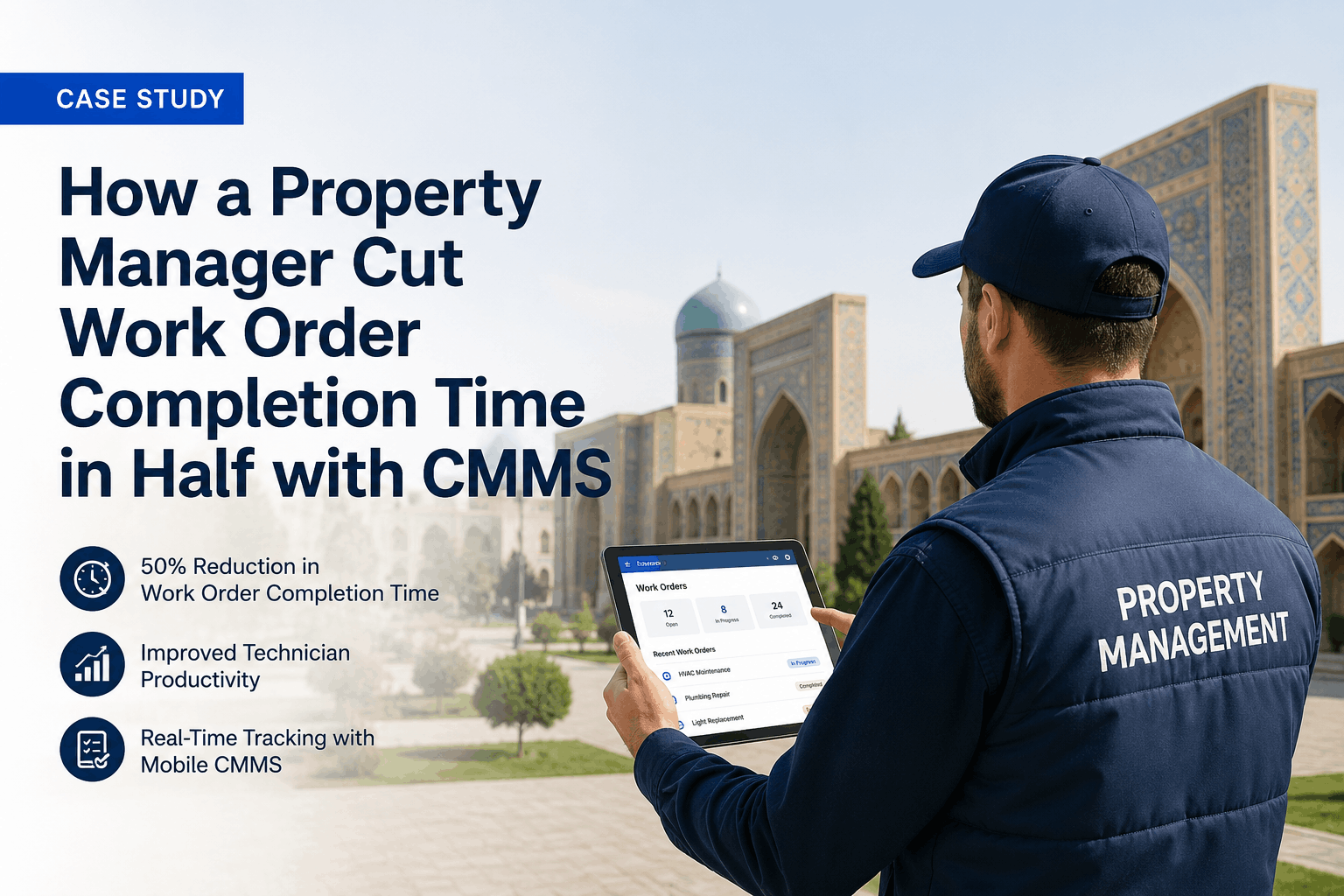
The numbers tell the story of what's at stake. Properties using digital work order systems report a 50% reduction in response time and 40% increase in tenant satisfaction. If you're struggling with manual prioritization, contact our support team for guidance. Meanwhile, properties still relying on manual prioritization see maintenance costs climb 12% annually while struggling with tenant turnover that averages $1,750 per unit. For mixed-use properties where a single dissatisfied commercial tenant can represent tens of thousands in lost revenue, getting work order management right isn't optional—it's survival.
3x
More Complex
Mixed-use properties handle 3x more work order categories than single-use buildings
30%
Cost Reduction
Properties using CMMS software experience 30% lower maintenance costs
72%
Prefer Digital
Tenants prefer digital communication for maintenance requests
2hrs
Target Response
Industry leaders target under 2-hour response for urgent requests
Transform property management compliance with Oxmaint CMMS
The fundamental problem with traditional work order management in mixed-use properties isn't effort—it's architecture. Paper-based systems and basic spreadsheets treat every maintenance request as equal, forcing property managers to manually sort, prioritize, and route each work order based on their memory of current priorities, technician availability, and tenant importance. This approach breaks down precisely when it matters most: during high-volume periods when multiple urgent requests compete for limited resources.
Modern CMMS platforms solve this by creating an intelligent routing layer between request submission and technician dispatch. When a retail tenant submits a refrigeration failure at 6 AM and a residential tenant reports a non-emergency plumbing issue at the same moment, the system automatically evaluates criticality, tenant type, SLA requirements, and technician proximity to route each request appropriately. The refrigeration emergency goes immediately to the on-call HVAC specialist with notification to management, while the plumbing request queues for the morning shift with appropriate priority scoring.
1
Request Intake
Multi-channel submission: mobile app, web portal, phone, email
2
Auto-Classification
System categorizes by asset type, location, and urgency indicators
3
Priority Scoring
Algorithm assigns priority based on safety, impact, and SLA terms
4
Smart Dispatch
Routes to optimal technician based on skills and availability
Emergency Path
Immediate notification
Management escalation
SLA clock starts
Urgent Path
48-hour queue
Priority scheduling
Parts verification
Routine Path
Backlog integration
Batch scheduling
Resource optimization
The Four-Tier Priority Matrix for Mixed-Use Properties
Effective prioritization requires more than gut instinct—it demands a structured framework that everyone from front-desk staff to senior technicians understands and follows. The four-tier priority system adapted for mixed-use properties accounts for the unique dynamics of managing residential, commercial, and retail spaces under one roof. This matrix ensures consistency while providing flexibility for the complex scenarios that mixed-use managers encounter daily.
P1
Emergency
Response: Immediate
Triggers:
Life safety hazards, active water damage, complete power loss, fire system faults, security breaches, gas leaks
Retail: Refrigeration failure with food safety risk
Residential: No heat below 50°F outside temp
Office: Elevator entrapment
P2
Urgent
Response: Within 24–48 Hours
Triggers:
Significant operational impact, tenant business disruption, potential safety escalation, regulatory compliance risk
Retail: HVAC affecting customer comfort
Residential: Inoperable appliance (stove, water heater)
Office: Network/communications outage
P3
Routine
Response: Within 5–10 Days
Triggers:
Standard maintenance needs, minor repairs, cosmetic issues affecting perception, preventive maintenance due
Retail: Signage lighting replacement
Residential: Minor plumbing (slow drain, running toilet)
Office: Workstation repairs, furniture issues
P4
Scheduled
Response: Planned Timing
Triggers:
Preventive maintenance schedules, capital improvements, seasonal preparations, tenant improvements
All: HVAC filter changes, fire system inspections
Retail: Seasonal display modifications
Common: Parking lot maintenance, landscaping
The priority matrix becomes actionable when integrated with your CMMS. Rather than requiring staff to memorize criteria or make judgment calls under pressure, automated systems apply these rules consistently to every incoming request. Want to see how this works? Book a demo to see automated priority routing in action. When a tenant describes symptoms matching emergency criteria—keywords like "flooding," "smoke," "no power," or "stuck"—the system automatically escalates to P1 status and triggers the emergency response protocol.
From reactive to predictive — a property management blueprint with digital logs
The shift from reactive to predictive maintenance represents the single largest opportunity for mixed-use property managers to reduce costs while improving tenant satisfaction. Reactive maintenance—fixing things after they break—costs 3 to 9 times more than preventive approaches according to industry research. More critically for mixed-use properties, reactive failures tend to occur at the worst possible moments: HVAC failures during heat waves, plumbing disasters during peak retail hours, or elevator outages when office tenants are rushing to meetings.
Digital work order systems create the foundation for predictive maintenance by capturing data that paper systems never could. Every completed work order becomes a data point: which assets fail most frequently, which technicians resolve issues fastest, which tenant spaces generate the most requests, and which seasons drive the highest maintenance volume. Over time, this data reveals patterns that enable proactive scheduling. Need help setting up condition monitoring? Get support from our team.
Reactive
Fix-on-failure approach
High emergency volume
Unpredictable costs
Tenant complaints
Staff burnout
Cost Index: 100
Organized
Digital work order tracking
Centralized requests
Basic prioritization
Response tracking
Simple reporting
Cost Index: 85
Preventive
Scheduled maintenance programs
PM calendars
Reduced emergencies
Asset lifecycle tracking
Vendor management
Cost Index: 65
Predictive
Data-driven optimization
Condition monitoring
AI-powered insights
Failure prediction
Optimal timing
Cost Index: 45
Ready to Transform Your Work Order Process?
Oxmaint CMMS provides mixed-use property managers with intelligent routing, automated prioritization, and predictive insights—all in one mobile-first platform designed for multi-tenant complexity.
Measuring What Matters: KPIs That Drive Mixed-Use Performance
Effective work order management requires measurement, but not all metrics provide actionable insights for mixed-use properties. The key performance indicators that matter most connect maintenance operations to business outcomes: tenant retention, operating costs, and asset preservation. By tracking the right metrics and reviewing them regularly, property managers can identify bottlenecks, justify technology investments, and demonstrate value to ownership.
Average Response Time
Target: <2hrs urgent, <24hrs routine
Directly impacts tenant satisfaction scores and retention rates
First-Time Fix Rate
Target: >85%
Measures technician effectiveness and parts availability
PM Completion Rate
Target: >95%
Indicates program discipline and predicts emergency reduction
Mean Time to Repair
Target: Continuous improvement
Reveals efficiency trends and training opportunities
Reactive vs. Planned Ratio
Target: 20% reactive / 80% planned
Best indicator of maintenance program maturity
Cost Per Work Order
Target: Property-specific baseline
Tracks efficiency and identifies cost outliers
Expert Review: Industry Insights on Work Order Excellence
Moving from reactive chaos to proactive excellence requires smart systems and processes, not heroic effort. Standardized intake, strong prioritization, accountable vendors, rigorous KPIs, and automation create compounding benefits. When tenants can submit rich requests, when routing directs the right tech with the right parts, and when every incident drives learning, results follow. Response times drop. Costs decline. Satisfaction rises.
Automation Impact
Automated routing can process 70%+ of requests without manual effort when configured with proper decision trees. For mixed-use properties, this means routing HVAC requests to different vendors based on building section and time of day automatically.
Vendor Accountability
Running quarterly business reviews with vendors focused on response time, first-time fix rate, and cost variance creates measurable improvement. High performers earn preferred status while underperformers receive support or replacement.
Continuous Improvement
Excellence is not perfection—it's consistent improvement with measurable results. Whether managing a single building or a diverse portfolio, the principles remain: capture quality data, prioritize strategically, coordinate effectively, measure relentlessly.
The property management industry is experiencing rapid digital transformation, with technology adoption rates climbing and the market projected to reach $98.88 billion by 2029. For mixed-use property managers, embracing digital work order systems isn't just about keeping pace—it's about capturing the efficiency gains and tenant satisfaction improvements that separate thriving properties from struggling ones. Schedule a demo to see intelligent prioritization for your property.
Conclusion: Building Your Competitive Advantage
Work order routing and prioritization might seem like operational details, but for mixed-use property managers, they represent the difference between reactive firefighting and strategic asset management. The properties that master these fundamentals—implementing structured priority matrices, automating intelligent routing, tracking meaningful KPIs, and progressively moving toward predictive maintenance—consistently outperform their peers in tenant satisfaction, operating costs, and asset value preservation.
The technology exists today to transform how your property handles every maintenance request. Digital CMMS platforms designed for property management eliminate the manual sorting, lost requests, and inconsistent prioritization that plague paper-based operations. They create the audit trails that protect you during disputes and the data foundation that enables predictive insights. Most importantly, they free your team to focus on tenant relationships and strategic improvements rather than administrative chaos.
The question isn't whether to modernize your work order process—the industry trajectory makes that inevitable. The question is whether you'll lead the transition or scramble to catch up. Mixed-use properties that implement smart routing now will compound their advantages over time: better data, happier tenants, lower costs, and staff who can focus on value rather than firefighting. Contact support to start your transition.
See How Oxmaint Transforms Mixed-Use Maintenance
From automated work order routing to predictive maintenance insights, discover how leading property managers are eliminating chaos and building tenant satisfaction with digital CMMS.
Frequently Asked Questions
What makes work order management different for mixed-use properties compared to single-use buildings?
Mixed-use properties face unique complexity because they must balance competing tenant types with different operational schedules, service level expectations, and regulatory requirements. A retail tenant expects immediate response during business hours to protect customer experience, while residential tenants prioritize after-hours availability. Office tenants may have strict SLAs tied to lease agreements. Additionally, mixed-use properties often have shared systems—HVAC, elevators, parking, common areas—that affect multiple tenant types simultaneously, requiring sophisticated routing logic to determine which technicians respond and in what priority order.
How do I determine the right priority level for a work order?
Effective prioritization uses a consistent framework based on objective criteria rather than subjective judgment. The four-tier system (Emergency, Urgent, Routine, Scheduled) works well for most properties. Emergency priority applies when life safety is at risk, major property damage is occurring, or complete loss of essential services affects tenants. Urgent applies when significant operational impact exists but immediate danger does not. Routine covers standard maintenance that can wait 5-10 days, and Scheduled encompasses preventive maintenance and planned improvements. The key is defining specific triggers for each level and training staff to apply them consistently.
What KPIs should property managers track for work order performance?
The most actionable KPIs for mixed-use properties include Average Response Time (segmented by priority level and tenant type), First-Time Fix Rate (targeting above 85%), PM Completion Rate (targeting above 95%), and the Reactive vs. Planned Work Ratio (targeting 20% reactive and 80% planned). Additionally, tracking Cost Per Work Order helps identify efficiency opportunities, while tenant satisfaction scores tied to maintenance provide the ultimate business outcome measure. Review these metrics monthly at minimum, with weekly reviews during high-volume periods.
How long does it take to implement a digital work order system?
Most property management teams can implement a modern CMMS within 2-4 weeks for basic functionality, with full optimization taking 2-3 months. The first week typically involves asset inventory and system configuration. Week two focuses on building inspection templates and setting up automated routing rules. Weeks three and four cover staff training and initial rollout. The following months involve refining workflows based on actual usage, integrating vendor access, and building the historical data foundation that enables predictive insights. Properties that rush implementation often miss configuration opportunities that limit long-term value.
What's the ROI of implementing automated work order routing?
Properties using CMMS software with automated routing typically see 30% reduction in maintenance costs, 50% reduction in response times, and measurable improvements in tenant satisfaction within the first year. The ROI comes from multiple sources: reduced emergency work through better preventive maintenance, lower labor costs through efficient routing, fewer repeat visits through improved first-time fix rates, and reduced tenant turnover through faster issue resolution. For a mixed-use property spending $500,000 annually on maintenance, a 30% reduction represents $150,000 in savings—far exceeding the cost of most CMMS platforms.