Mixed-use properties present a unique energy management puzzle. When retail spaces, office suites, and residential units share the same building, you're juggling vastly different consumption patterns, operating hours, and comfort requirements—all feeding into a single utility bill. The average commercial building wastes 30 percent of its energy according to the EPA, but for mixed-use developments, that number can climb even higher without proper monitoring and maintenance strategies. The complexity that makes these properties valuable also makes them prime candidates for significant energy optimization.
The good news: modern maintenance analytics and digital audit systems have transformed energy management from guesswork into precision science. Properties implementing IoT-connected CMMS platforms consistently achieve 15 to 30 percent reductions in energy costs while simultaneously improving equipment reliability and tenant comfort. The technology exists to monitor every HVAC unit, track every kilowatt, and predict failures before they happen—turning your biggest operational expense into a controllable, optimizable asset.
Transform property management uptime with connected sensors
The days of walking hallways and manually checking equipment are giving way to sensor networks that provide 24/7 visibility into building performance. IoT sensors deployed across HVAC systems, lighting controls, and electrical panels create a continuous stream of data that reveals exactly where energy is being consumed—and wasted. Temperature sensors detect when heating or cooling systems are fighting each other. Occupancy sensors identify spaces being conditioned for no one. Power monitors flag equipment drawing excessive current long before failure occurs.
For mixed-use properties, this sensor infrastructure solves the fundamental challenge of managing different tenant types with different needs. Retail tenants need strong climate control during business hours but minimal conditioning overnight. Office tenants require consistent temperatures during the workday. Residential units need reliable comfort around the clock. Connected sensors feeding into a centralized CMMS allow building managers to create zone-specific optimization strategies that would be impossible to manage manually. Properties exploring connected building systems can schedule a demo to see how sensor data integrates with maintenance workflows.
Making audits painless — a property management lifecycle with digital logs
Energy audits have traditionally been disruptive, expensive, and infrequent—a once-every-few-years exercise that generates a report destined for a filing cabinet. Digital maintenance analytics flip this model entirely. When every work order, equipment reading, and energy consumption data point flows into a centralized system, you're conducting a continuous audit without the consultant fees or operational disruptions. ASHRAE Level 1 and Level 2 audits increasingly rely on digital data streams, with auditors using building analytics platforms to pre-identify inefficiencies before even stepping on-site.
The compliance benefits extend beyond energy optimization. Mixed-use properties face overlapping regulatory requirements—building performance standards, safety inspections, equipment certifications, and increasingly stringent carbon reporting mandates. A well-configured CMMS maintains audit-ready records automatically: every inspection documented with photos and timestamps, every maintenance task logged with completion verification, every equipment replacement tracked with warranty information. When auditors or inspectors arrive, the data retrieval that once consumed hours takes seconds. Need help setting up audit-ready documentation systems? Contact our support team for guidance on compliance configurations.
The Maintenance-Energy Connection: Where Systems Meet Savings
HVAC systems alone account for over 40 percent of commercial building energy consumption—and poorly maintained equipment can consume 15 to 20 percent more energy than properly serviced units. The connection between maintenance excellence and energy efficiency is direct and measurable. Dirty filters restrict airflow, forcing systems to work harder. Refrigerant leaks reduce cooling efficiency. Belt slippage wastes motor energy. Each deferred maintenance item adds dollars to utility bills while simultaneously shortening equipment lifespan.
Predictive maintenance capabilities transform this equation entirely. When sensors detect a compressor drawing abnormal current or a fan motor running at irregular speeds, work orders generate automatically—often weeks before failure would occur. Properties implementing predictive maintenance report 30 to 50 percent reductions in unplanned downtime and 20 to 40 percent extensions in equipment life. For mixed-use buildings where HVAC failures affect multiple tenant types simultaneously, these capabilities deliver both financial returns and tenant satisfaction improvements. Interested in seeing how predictive maintenance works in practice? Book a demo to explore real-world implementation examples.
Building Your Energy Analytics Dashboard
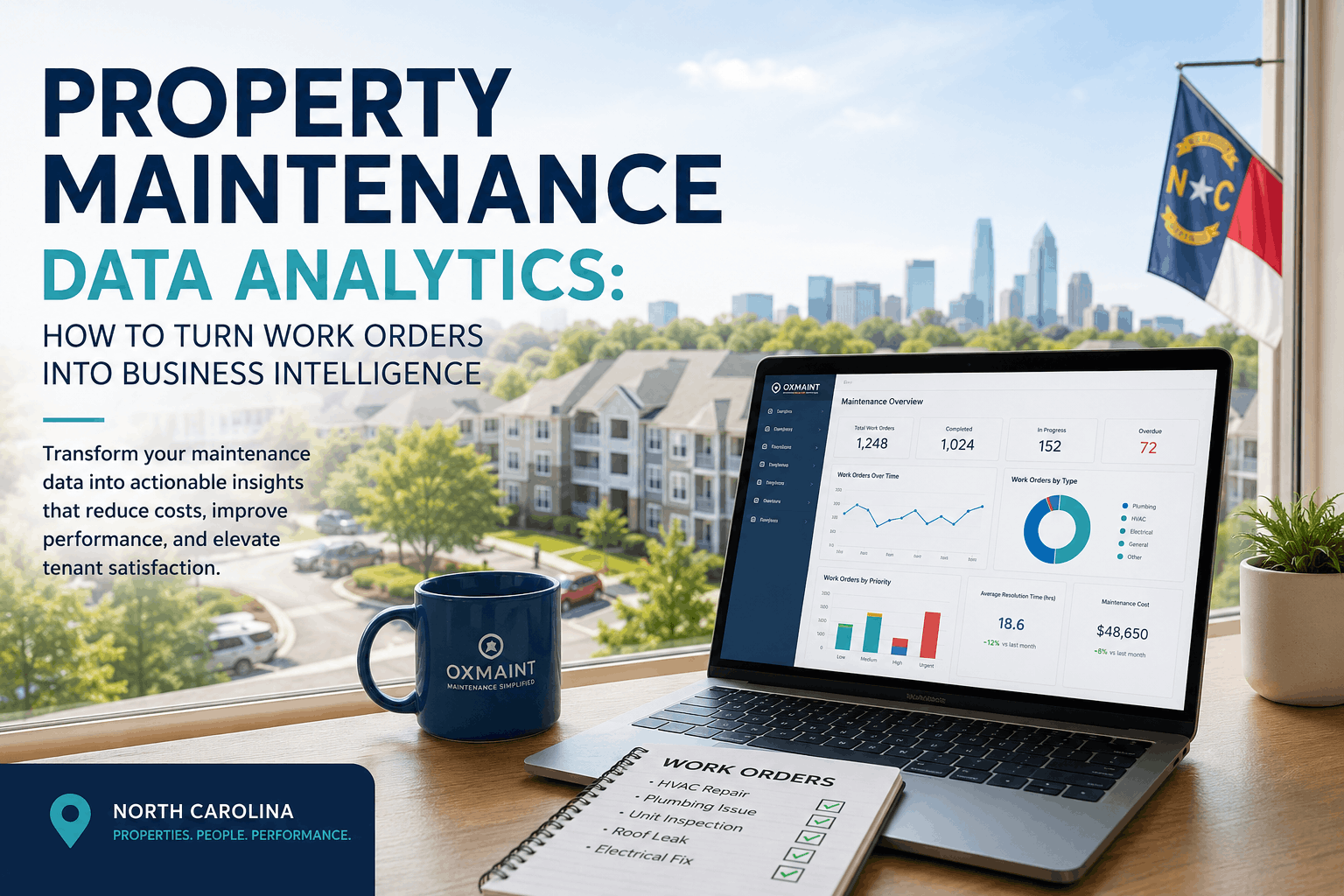
Effective energy management requires visibility—not just into current consumption, but into trends, anomalies, and the relationship between maintenance activities and utility costs. Modern CMMS platforms provide dashboard capabilities that transform raw data into actionable intelligence. Property managers can see real-time energy consumption by zone, compare performance against historical baselines, and correlate spikes with specific equipment or weather conditions.
The key metrics worth tracking include: energy use intensity (EUI) measured in kBtu per square foot; peak demand charges which often represent 30 to 50 percent of commercial electric bills; equipment-level consumption for major systems like chillers and boilers; and the ratio between preventive and reactive maintenance activities. Properties achieving the best energy performance typically maintain PM-to-reactive ratios of 80/20 or better—ensuring equipment operates at peak efficiency rather than degrading until failure. Have questions about which metrics matter most for your property type? Reach out to our team for customized recommendations.
Expert Review: The ROI of Energy-Focused Maintenance
Conclusion: From Cost Center to Strategic Asset
Energy management in mixed-use properties requires a fundamentally different approach than single-use buildings. The complexity of managing retail, office, and residential zones with different operating patterns, comfort requirements, and tenant expectations demands systems that provide granular visibility and automated optimization. Digital maintenance analytics—powered by IoT sensors, predictive algorithms, and centralized CMMS platforms—deliver this capability while simultaneously improving equipment reliability and reducing operational workload.
The financial case is compelling. Properties implementing comprehensive energy and maintenance analytics consistently achieve 15 to 30 percent energy cost reductions, 25 to 40 percent maintenance cost improvements, and equipment life extensions of 20 to 40 percent. These savings compound year over year, transforming building operations from a cost center into a competitive advantage. For mixed-use property managers ready to move beyond reactive operations toward data-driven optimization, scheduling a consultation provides the starting point for transformation.