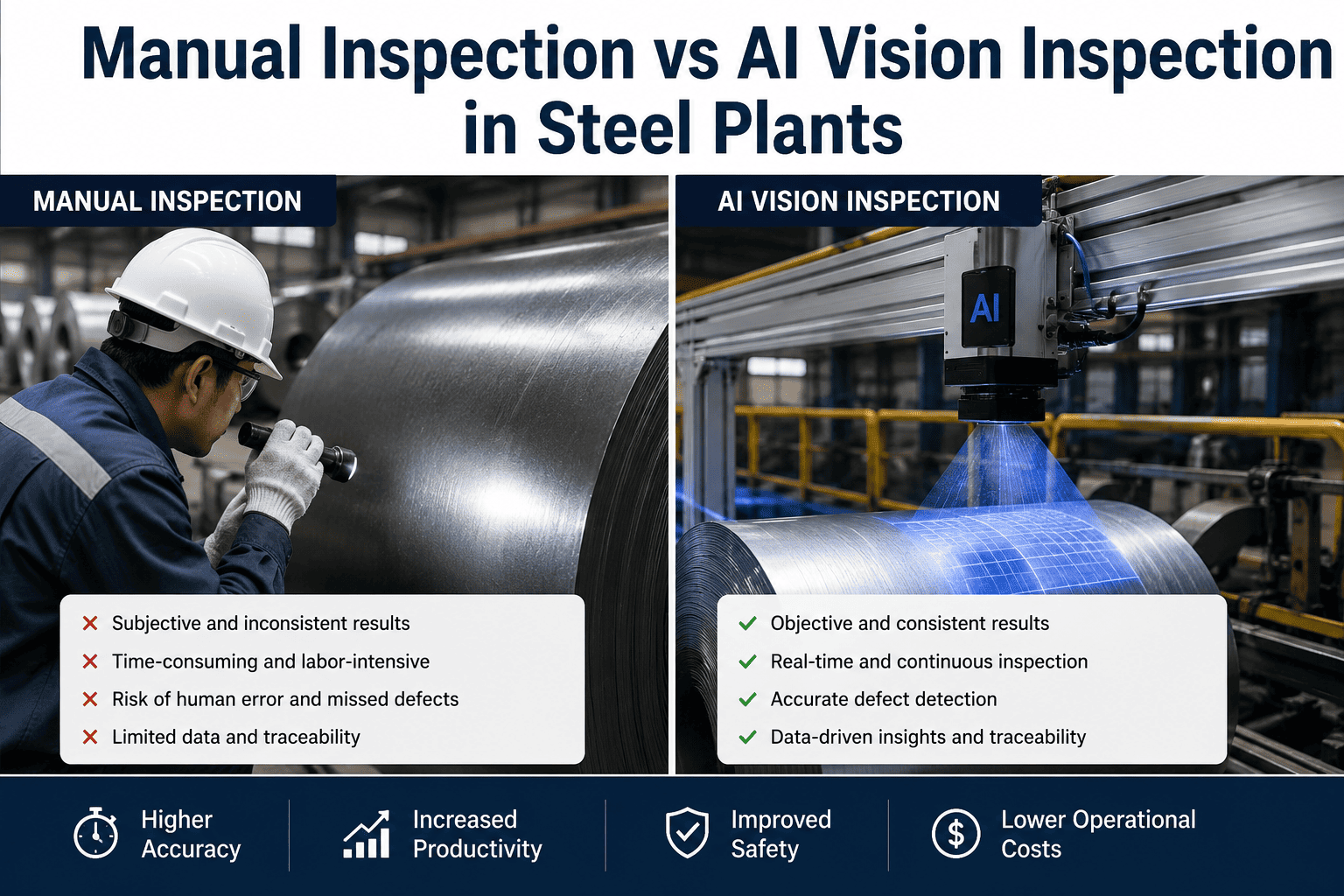
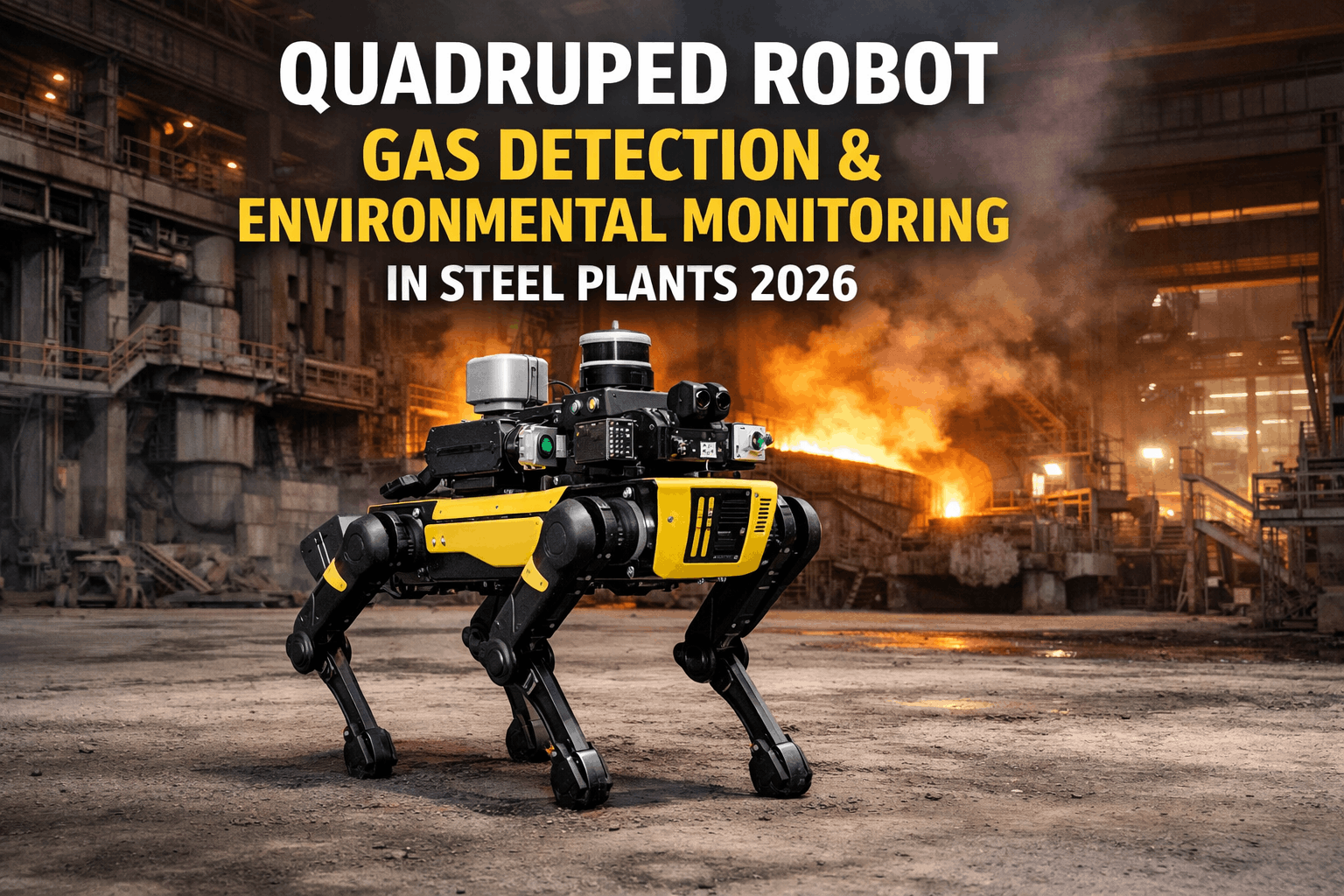
AI Vision for Safety Monitoring in Industrial Plants
By oxmaint on January 22, 2026
Industrial facilities face a sobering reality: 5,283 workers died on the job in 2023, with 2.6 million injury and illness cases reported across the United States alone. Traditional safety monitoring depends on human vigilance, but even well-trained supervisors cannot watch every worker in every zone around the clock. AI vision systems change this equation entirely. Computer vision technology now monitors facilities 24/7, detecting PPE violations, unsafe behaviors, and hazardous conditions in real-time. Schedule a consultation to explore how AI-powered safety monitoring can protect your workforce.
80%
Reduction in Workplace Incidents
Companies implementing AI-powered safety monitoring report dramatic incident reductions within months of deployment
Why AI Vision for Workplace Safety
Industrial plants face mounting pressure from OSHA regulations, workers' compensation costs, and the moral imperative to protect employees. Manual monitoring methods miss the split-second violations and hazardous conditions that lead to injuries, leaving workers exposed to preventable risks.
The Case for AI-Powered Safety Monitoring
$167B
Annual cost of workplace injuries across US employers—AI monitoring helps reduce this burden significantly
<0.3s
Time to detect safety violations—versus seconds or minutes with human monitoring approaches
80-90%
Of workplace injuries result from human error—AI provides consistent oversight that never fatigues
340M
Occupational accidents occur globally each year—AI vision systems help prevent incidents before they happen
Ready to eliminate safety blind spots? Join leading industrial facilities using AI vision to protect workers and reduce liability.
Modern AI safety systems combine existing IP camera infrastructure, edge computing, and deep learning models trained on millions of safety scenarios to deliver real-time violation detection across your entire facility.
Safety Monitoring System ComponentsFrom detection to corrective action
01
Camera Infrastructure
AI integrates with existing IP camera networks via RTSP streaming protocol. Most facilities can implement AI monitoring without purchasing new surveillance hardware—simply connect to your existing video management system.
02
Edge Processing Units
Industrial edge computers process video feeds locally, performing real-time analysis without cloud latency. Sub-second detection ensures immediate response to violations, even during network interruptions.
03
AI Detection Engine
Deep learning algorithms analyze video feeds frame by frame, recognizing PPE violations, unsafe behaviors, and hazardous conditions. Neural networks process millions of images daily with 95-99% accuracy.
04
Alert Distribution
Instant alerts through configurable channels including SMS, email, mobile app notifications, and on-site audio or visual warnings. Supervisors receive real-time notifications with violation details and evidence.
05
CMMS Integration
Direct connections to maintenance management systems enable automated work order generation. Sign up for OXmaint to convert every safety alert into documented corrective action with full audit trails.
Detection Capabilities
AI safety systems go far beyond simple camera surveillance. The technology monitors PPE compliance, identifies unsafe behaviors, and detects hazardous conditions that human monitors would miss—all simultaneously across hundreds of camera feeds.
AI Safety Detection Features
PPE Compliance
Detects hard hats, safety vests, gloves, eye protection, and respiratory equipment. AI achieves 95-99% accuracy with proper camera positioning and adequate lighting conditions.
Unsafe Behaviors
Identifies improper lifting posture, phone usage in hazard zones, ladder safety violations, and social distancing breaches. Prevents 64% of behavior-related incidents.
Hazardous Conditions
Monitors for smoke, fire, spills, leaks, and environmental hazards. Real-time detection enables immediate emergency response before conditions escalate.
Zone Intrusion
Tracks restricted area access, vehicle proximity to pedestrians, and equipment clearance zones. Alerts trigger instantly when workers enter dangerous areas.
Vehicle Safety
Monitors forklift operations, haul truck movements, and pedestrian interactions. AI tracks vehicle paths and warns of potential collision scenarios.
Ergonomic Analysis
Analyzes body positions and movement patterns to identify repetitive strain risks. Early intervention prevents cumulative trauma injuries.
See AI safety detection in action. Book a demo and we'll show you real-time monitoring capabilities for your industry.
Understanding the capabilities difference between traditional human monitoring and AI vision reveals why safety-critical industries are transitioning to intelligent surveillance systems.
Safety Monitoring Approach Comparison
Human Monitoring
❌
1-2 zones coverage at a time
Attention degrades after 20 minutes
8-12 hour shift limitations
Consistency varies by individual
Detection takes seconds to minutes
60-70%of violations go undetected
AI Vision Monitoring
✔️
100+ cameras simultaneously
Never fatigues or loses focus
24/7/365 continuous operation
100% uniform detection standards
Millisecond response times
95-99%detection accuracy achieved
Industry-Specific Applications
Different industries have distinct safety requirements, hazard profiles, and regulatory obligations. AI vision systems adapt detection models and alert protocols to each sector's unique operational environment.
AI Safety Monitoring by Industry
Industry
Primary Hazards
Key Detection Focus
Regulatory Framework
Manufacturing
Machine guarding, lockout/tagout
PPE compliance, equipment clearance, ergonomics
OSHA 1910, ISO 45001
Construction
Falls, struck-by, electrocution
Harness use, hard hats, exclusion zones
OSHA 1926, EM 385-1-1
Oil & Gas
Fire, explosion, H2S exposure
FRC clothing, gas detection, hot work permits
API, OSHA PSM, EPA RMP
Mining
Cave-ins, vehicle incidents, dust
Proximity detection, respiratory protection
MSHA, 30 CFR
Logistics
Forklift incidents, ergonomic strain
Pedestrian safety, loading dock protocols
OSHA 1910.178
Food Processing
Slips, cuts, chemical exposure
Hygiene compliance, knife safety, spill detection
OSHA, FDA FSMA
AI models are trained on industry-specific safety scenarios and regulatory requirements to optimize detection accuracy and reduce false positives for each sector.
Upgrade Your Safety Monitoring Today
OXmaint connects AI vision systems across your entire operation—centralizing safety alerts, violation tracking, and corrective action management while each camera delivers real-time intelligence.
AI safety investments deliver returns through direct incident reduction, lower workers' compensation costs, reduced OSHA penalties, and improved insurance rates. The financial impact compounds across multiple value streams.
Documented Industrial BenefitsBased on deployment data across multiple industrial sectors
80%
Reduction in workplace incidents
64%
Risk reduction within 3 months
40%
Lower compensation claims
25%
Fewer lost workdays
Calculate your potential savings. Create a free OXmaint account and our team will help model the ROI for your specific operation.
Successful AI safety deployment requires careful planning across camera infrastructure, zone configuration, and organizational change management. A phased approach delivers quick wins while building toward comprehensive coverage.
Traditional safety monitoring relies on supervisors who can only watch one area at a time and whose attention naturally wanes. AI vision systems fundamentally change this equation—providing consistent, tireless oversight that catches violations humans would miss while documenting everything for compliance purposes.
— Industrial Safety Director
Protect Your Workers, Protect Your Business
Your safety supervisors can't watch every worker in every zone around the clock. OXmaint helps you deploy AI vision systems that monitor your entire facility 24/7, detect violations in milliseconds, and automatically generate documented corrective actions—transforming safety from reactive incident response to proactive risk prevention.
Does AI safety monitoring work with existing cameras?
Yes, AI safety systems integrate with any IP camera network via RTSP streaming protocol. Most facilities can implement AI monitoring without purchasing new surveillance hardware. The software connects to your existing video management system and processes feeds in real-time. Schedule a consultation to assess your current infrastructure.
How accurate is PPE detection?
Modern AI vision systems achieve 95-99% accuracy on PPE detection including hard hats, safety vests, gloves, and eye protection. Accuracy improves further with proper camera positioning and adequate lighting. Systems can be tuned to reduce false positives while maintaining high detection rates.
What happens when a violation is detected?
The system sends instant alerts through configurable channels including SMS, email, mobile app notifications, and on-site audio or visual warnings. When integrated with OXmaint, violations automatically generate work orders with attached evidence for investigation and resolution tracking. Sign up for a free account to see the alert workflow in action.
How does this integrate with our maintenance system?
OXmaint's CMMS platform connects directly with AI safety monitoring systems via API. Detected incidents create work orders automatically, assign responsible personnel, attach photographic evidence, and track resolution through completion. This creates a documented audit trail for OSHA compliance.
What about worker privacy concerns?
AI safety systems focus on safety compliance, not surveillance. The technology detects PPE and behaviors without facial recognition or individual tracking. Clear communication about the safety purpose, worker involvement in zone configuration, and celebrating safety improvements help build acceptance. Book a demo to discuss privacy-conscious deployment strategies.