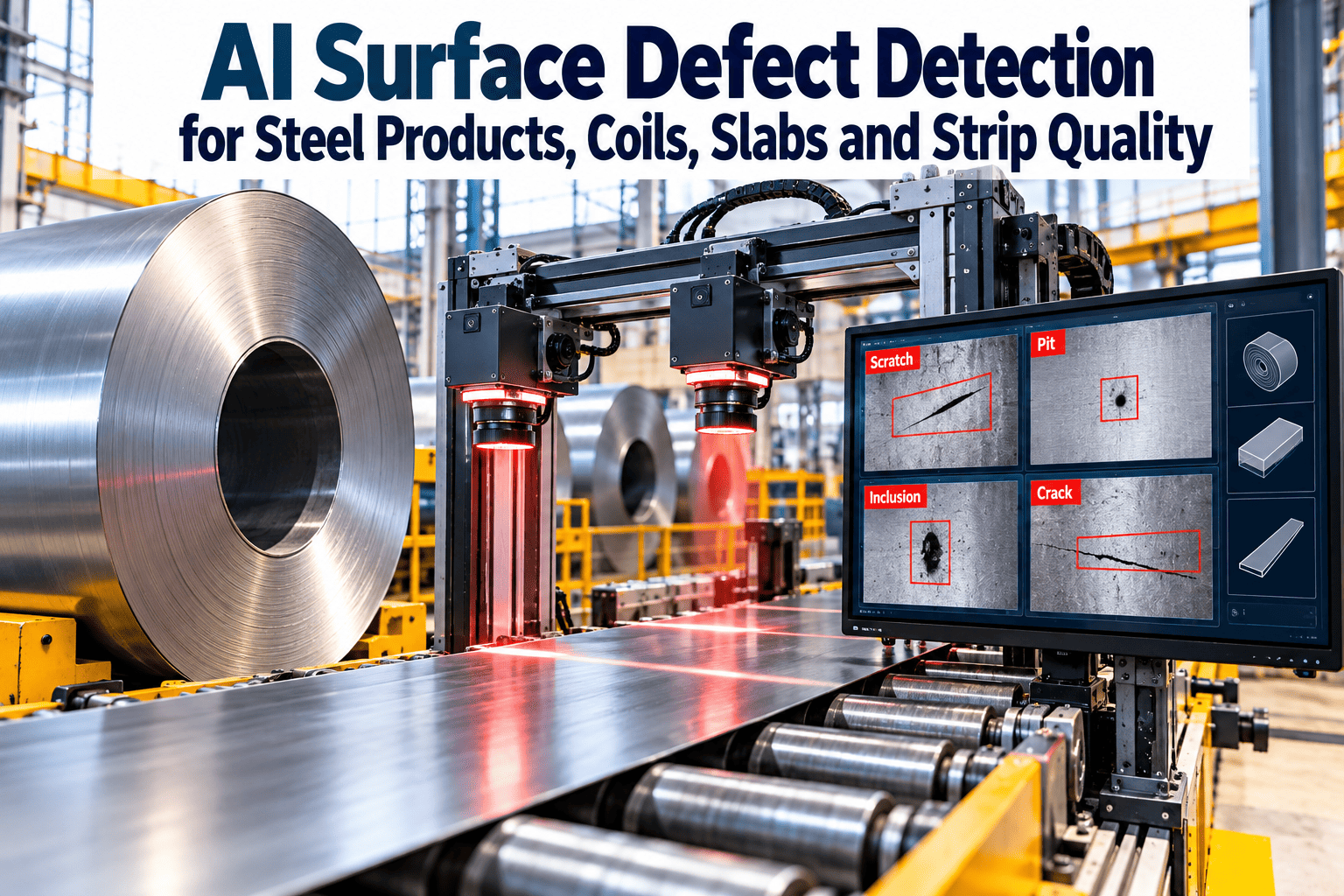
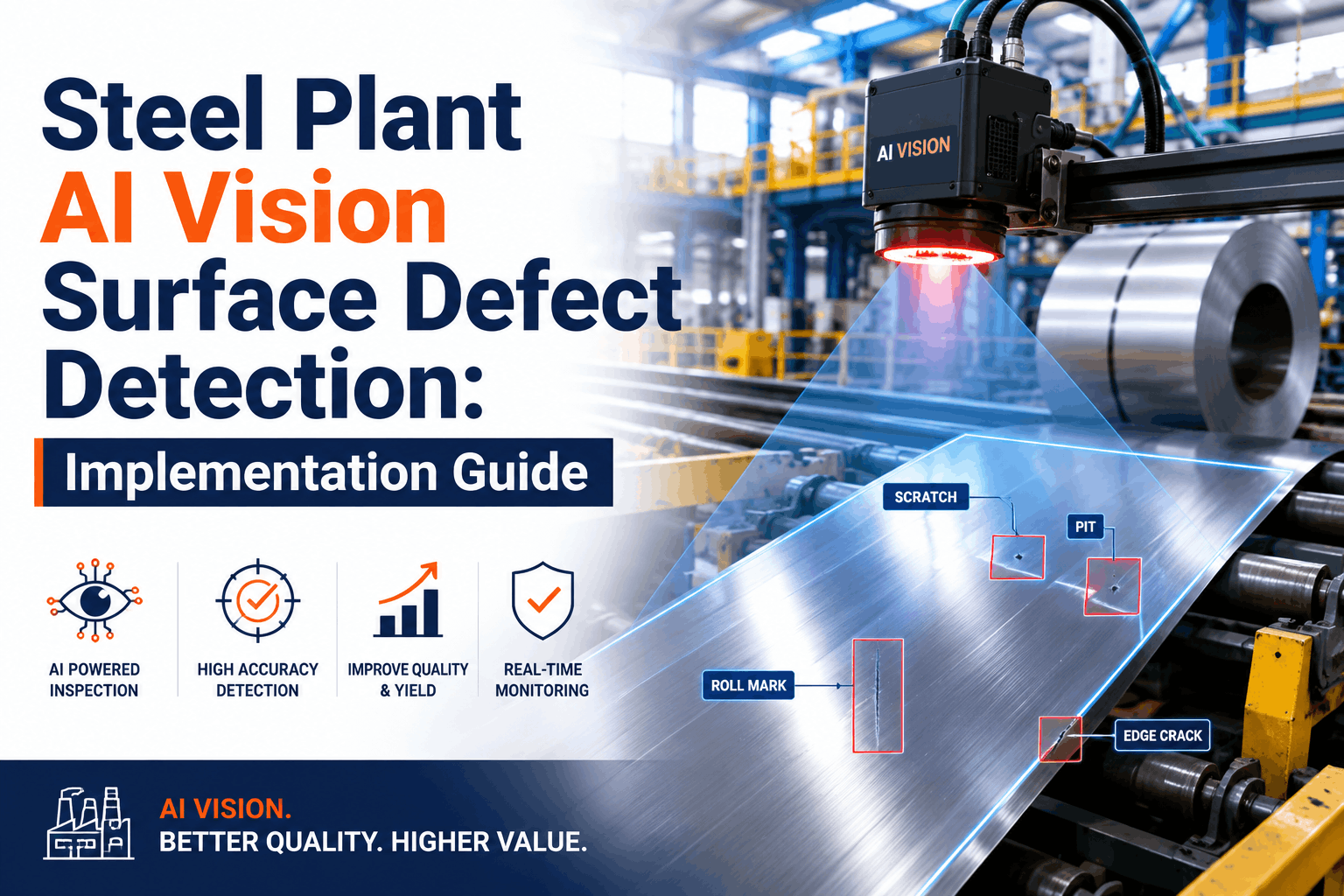
Steel surface defect detection has relied on human visual inspectors for over a century — and the results have been consistently inadequate. A trained inspector examining hot-rolled coils on a finishing line at production speed sees roughly 60–70% of surface defects present on the strip. The remaining 30–40% pass through undetected — scratches masked by scale, edge cracks hidden by strip curvature, inclusions too subtle for the human eye at line speed, and lamination defects invisible on the surface until downstream processing reveals them. A flat-rolled steel producer in the Ohio Valley shipped 14,200 tonnes of coil to an automotive stamping customer over six months before a pattern of press-shop cracking revealed a systematic surface inclusion defect that had been present since the caster. The root cause was a tundish nozzle erosion issue that created alumina streaks on the slab surface — defects that were technically visible on the hot strip mill exit but occurred at a frequency and contrast level that human inspectors could not reliably detect at 900 metres per minute. The total cost of the quality escape exceeded $3.8 million in customer claims, returned material, re-inspection labour, and lost future orders from a tier-one automotive account that took eighteen months to recover.
AI-powered vision inspection systems have fundamentally changed what is possible in steel surface defect detection. Deep learning models trained on millions of labelled defect images can now detect, classify, and grade surface defects at production speed with accuracy levels exceeding 95% — operating 24 hours a day without fatigue, inconsistency, or the subjectivity that makes human inspection unreliable. These systems identify defect types that human inspectors cannot see at line speed, correlate defect patterns back to upstream process conditions, and feed real-time quality data into CMMS and production systems to trigger immediate corrective actions. Oxmaint integrates AI vision inspection data directly into maintenance and quality workflows — connecting surface defect detection to root cause analysis, equipment condition tracking, and corrective action management across the entire steelmaking process chain. Start your free trial to see how AI vision transforms steel quality management from reactive customer complaints to proactive defect elimination at the source.
Deep learning vision systems detect, classify, and grade steel surface defects at production speed with 95%+ accuracy — replacing inconsistent manual inspection with 24/7 automated quality intelligence. This is the definitive technology guide covering camera systems, lighting architectures, AI model training, defect classification taxonomies, integration with CMMS and process control, and ROI benchmarks for hot strip mills, cold rolling lines, plate mills, and finishing operations.
A production-grade AI vision inspection system for steel surface defect detection consists of five integrated technology layers — each one essential for achieving the speed, accuracy, and reliability that steel manufacturing demands. Missing any single layer degrades the entire system's performance. The architecture below represents the current state-of-the-art deployed in world-class steel mills operating hot strip, cold rolling, plate, and finishing lines.
Manual visual inspection of steel surfaces is not merely inaccurate — it is systematically biased toward missing the defects that matter most to customers. The cascade below illustrates how human inspection limitations compound from individual missed defects to multi-million-dollar quality escapes that destroy customer relationships and market position. Discover how Oxmaint eliminates every gap in this cascade.
AI vision systems classify steel surface defects into structured taxonomies that map each defect type to its root cause, severity impact, and customer application sensitivity. The table below presents the major defect categories detectable by AI vision, their typical origins in the steelmaking process chain, and the detection performance comparison between human inspection and AI systems.
Deploying AI vision inspection in a steel mill is a phased process that builds imaging infrastructure, trains AI models on plant-specific defect data, validates detection accuracy against known samples, and integrates with existing quality and maintenance systems. Attempting to deploy at full scale without this phased approach invariably produces high false-positive rates that destroy operator confidence and undermine adoption.
Most steel plants sit at Level 1 — relying entirely on manual visual inspection with zero automated defect detection capability. Understanding your inspection maturity level determines the implementation path, investment requirements, and realistic timeline for achieving AI-powered quality assurance across your production lines.
The transformative value of AI vision inspection is not just defect detection — it is the ability to connect surface quality data back to upstream equipment conditions and process parameters in real time. When the AI system detects a pattern of roll marks increasing in severity over 48 hours, that is not a quality problem — it is an equipment maintenance trigger. The five action pathways below show how AI vision data drives both quality and maintenance improvement simultaneously.
The six integration capabilities below describe how Oxmaint connects AI vision inspection systems to maintenance execution — ensuring that every defect pattern indicating equipment degradation triggers the right maintenance action at the right time, closing the loop from quality detection to root cause elimination.