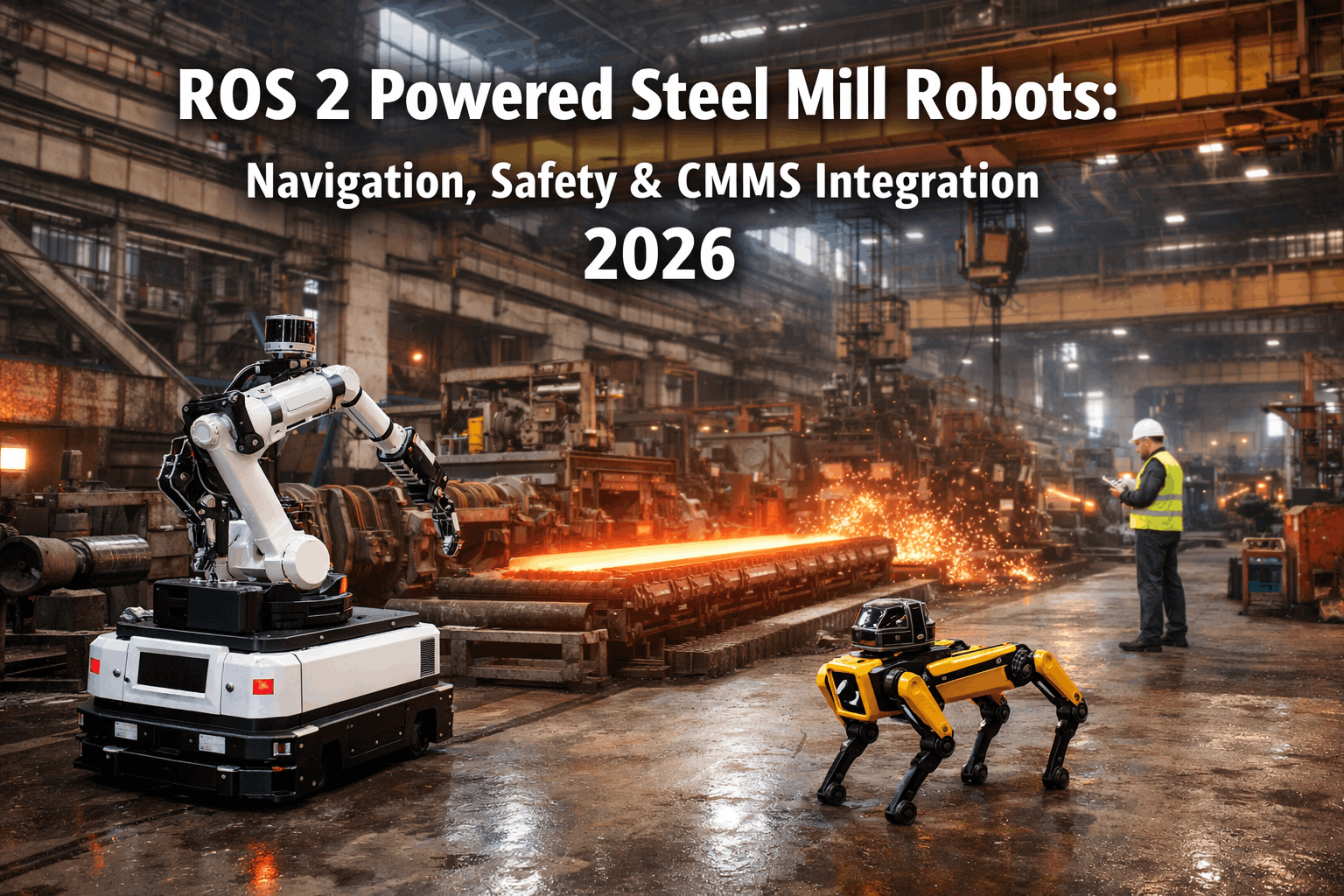
Steel mills operate some of the most demanding crane fleets in heavy industry. Overhead bridge cranes, ladle cranes, charging cranes, slab handling cranes, and coil cranes move loads from 10 to 500+ tons through extreme temperatures exceeding 60°C ambient, molten metal splash zones, and 24/7 continuous duty cycles classified A7/A8 under FEM standards. OSHA 1910.179 mandates both frequent (daily-to-monthly) and periodic (1-to-12-month) inspections covering hooks, wire ropes, hoists, brakes, structural members, electrical systems, and all functional operating mechanisms. From 2011 to 2017, an average of 42 crane-related deaths occurred annually in the United States alone. Traditional crane inspections require workers to climb tall structures, enter confined spaces above active production, and visually assess components while exposed to radiant heat from furnaces and molten metal below.
Robotic crane inspections generate massive volumes of structured data — defect images with AI classifications, NDT thickness readings, vibration baselines, thermal profiles, and compliance timestamps. That data only drives maintenance action when it connects to your work order system. Oxmaint CMMS integrates drone inspection reports, crawler NDT data, and sensor alerts directly into your crane fleet maintenance program — auto-generating corrective work orders, scheduling OSHA-compliant periodic inspections, and tracking every component's condition history from hooks to bridge girders.
Ladle Cranes
Transport molten steel at 1,600°C. Operate in extreme radiant heat. Double/quad girder designs with 4 independent brakes. Failure = catastrophic breakout risk. Duty class A7/A8.
Charging Cranes
Feed scrap metal and raw materials into EAF/BOF. High-cycle operations with electromagnetic or hydraulic grabs. Severe mechanical shock from scrap drops. Heavy dust and heat exposure.
Slab & Billet Cranes
Handle hot semi-finished steel products between caster and rolling mill. Electromagnetic lifting or specialized clamps. Precision positioning critical for continuous flow. High ambient temperatures.
Coil Handling Cranes
Transport steel coils in rolling mill and storage. Specialized C-hooks or lifting beams. Tight clearances in coil storage bays. High-frequency operations with precise stacking requirements.
Tundish Cranes
Handle tundishes in continuous casting. Frequent mold changes between sequences. Critical to maintaining casting line throughput. Exposed to molten steel splash and high ambient temps.
Maintenance Cranes
Auxiliary cranes for equipment change-outs, mold replacement, and general maintenance across all areas. Intermittent use with variable loads. Often the least-inspected cranes — yet critical for plant uptime.
Track Every Crane in Your Steel Mill Fleet
Oxmaint builds the digital inspection history for every crane — ladle, charging, slab, coil, tundish, and maintenance — with OSHA-compliant scheduling, component tracking, and automated work order generation from robotic inspection data.
4 Robotic Inspection Technologies for Steel Mill Cranes
AI-Powered Inspection Drones
Autonomous or piloted drones capture thousands of extremely high-resolution images per inspection flight. AI algorithms trained on crane manufacturer tolerance parameters detect rust, cracks, color variations, missing nuts, empty bolt holes, mold, and deformation — identifying defects as small as 2.7 microns (less than 3% of human hair width). Complete a full overhead crane survey without climbing, scaffolding, or production shutdown.
Magnetic Crawlers with NDT
Wall-climbing robots using permanent magnets (Halbach configurations) adhere to crane steel structures even through thick coatings. Carry ultrasonic testing (UT) sensors to measure wall thickness, detect internal corrosion, and find cracks invisible to visual inspection. Navigate girder webs, flanges, and box sections that are impossible to reach manually without rigging. Some hybrid systems combine drone delivery with crawler deployment for maximum reach.
Computer Vision Defect Detection
Deep learning models (YOLOv5+) process drone and fixed-camera imagery in real time, automatically classifying anomalies into categories: structural cracks, surface corrosion, missing fasteners, deformed hooks (15%+ throat opening or 10°+ twist per OSHA), wire rope damage, and coating degradation. Models trained on crane manufacturer specifications and OSHA/ASME B30.2 tolerance parameters. AI flags severity levels and generates inspection reports with precise defect locations.
IoT Sensor Networks
Permanently installed vibration sensors (accelerometers, MEMS, piezoelectric transducers) and thermal imaging cameras provide 24/7 condition monitoring of critical crane components. Detect bearing degradation, gear mesh anomalies, brake wear, motor overheating, and structural fatigue through continuous baseline comparison. Acoustic emission (AE) sensors identify crack initiation and weld defects through transient elastic wave detection. All data streams via IIoT to centralized dashboards and CMMS.
OSHA Inspection Matrix: What to Check and How Robots Help
| Component | OSHA Frequency | Manual Method | Robotic Method | Advantage |
|---|---|---|---|---|
| Hooks | Visual daily; certified monthly | Ground-level or climb visual; throat gauge | Drone HD photo + AI measurement of throat opening & twist angle | Precise digital record; detects <15% deformation consistently |
| Wire Ropes | Visual daily; documented monthly | Walk rope length by hand; count broken wires | Drone zoom imaging + AI broken wire counting; MFL sensor crawlers | Full-length scan without rope removal; internal damage detection |
| Structural Members | Periodic 1-12 months | Scaffolding/man-lift visual; UT spot checks | Drone survey + magnetic crawler UT mapping | 100% coverage; no scaffolding; finds internal corrosion |
| Brakes & Motors | Daily functional; periodic full | Operational test; manual bearing check | IoT vibration + thermal sensors; continuous monitoring | 24/7 trend data; predicts failure before functional loss |
| Runway & Rails | Periodic 1-12 months | Walk runway with measuring tools | Magnetic crawlers with eddy current + UT; LiDAR alignment | Detects subsurface cracks; measures rail wear/alignment precisely |
| Electrical Systems | Periodic; insulation annually | Megger test; visual wiring inspection | Thermal drone imaging; IoT current/temp monitoring | Finds overheating connections; no production stoppage |
Automate OSHA-Compliant Crane Inspection Scheduling
Oxmaint auto-schedules frequent and periodic inspections for every crane in your fleet based on duty class, usage hours, and OSHA 1910.179 requirements. Robotic inspection data flows directly into certification records with inspector signatures and timestamps.
Traditional vs. Robotic Crane Inspection
Integration Workflow: Robot Data to Maintenance Action
Capture
Drones fly, crawlers scan, IoT sensors stream. Thousands of images, UT readings, vibration waveforms, thermal profiles collected per inspection cycle.
Analyze
AI classifies every defect with type, severity, location, and component mapping. Computer vision compares against OSHA/ASME tolerances and manufacturer limits.
Report
Digital inspection report generated with photos, defect maps, severity ratings, and compliance status. Timestamped and signed for OSHA certification records.
Act
CMMS auto-generates corrective work orders prioritized by severity. Critical findings trigger immediate lockout. Routine defects scheduled into next maintenance window.
Frequently Asked Questions
What robotic technologies are used for crane inspection in steel mills?
Four primary robotic technologies serve steel mill crane inspection: AI-powered inspection drones (autonomous or piloted) that capture thousands of high-resolution images per flight, with AI algorithms detecting defects as small as 2.7 microns including rust, cracks, missing fasteners, and deformation. Magnetic crawlers using permanent magnets to adhere to crane steel structures while carrying ultrasonic testing (UT) and eddy current sensors for contact-based NDT — measuring wall thickness, detecting internal corrosion, and finding subsurface cracks in girders, rails, and box sections. Computer vision AI systems that process imagery from both drones and fixed cameras, automatically classifying anomalies against OSHA 1910.179 and ASME B30.2 tolerance parameters, and generating digital inspection reports with severity ratings and precise defect locations. IoT sensor networks with permanently installed vibration, thermal, and acoustic emission sensors providing 24/7 continuous monitoring of bearings, gearboxes, brakes, and motors — detecting degradation trends and predicting failures before functional loss.
How do robotic crane inspections comply with OSHA standards?
OSHA 1910.179 requires frequent inspections (daily-to-monthly) and periodic inspections (1-to-12 months) for overhead and gantry cranes, with specific component checks for hooks, wire ropes, hoist chains, operating mechanisms, and structural elements. Robotic systems satisfy these requirements by producing documented, timestamped inspection records with inspector signatures — the certification records OSHA mandates for monthly hook inspections and all periodic assessments. AI-powered drone inspections provide the visual assessment OSHA requires for daily-to-monthly frequent checks (hooks, ropes, functional mechanisms), while simultaneously capturing far more detailed photographic evidence than manual visual observation. For periodic inspections, the combination of drone surveys, crawler NDT data, and IoT trending provides comprehensive coverage of all structural members, electrical systems, and mechanical components. OSHA's position that documentation must be readily available and retained for the equipment's service life is directly served by CMMS integration, where all robotic inspection data is permanently archived against each crane's asset record. The key compliance advantage is consistency — AI applies the same detection criteria every time, eliminating the variability inherent in human visual inspection.
What types of cranes in a steel mill need inspection most frequently?
OSHA requires severe-service cranes to have periodic inspections performed quarterly, while normal/heavy-service cranes need annual periodic inspections. In a steel mill, ladle cranes (100-320 tons, handling molten steel at 1,600°C) and charging cranes (50-200 tons, high-cycle scrap feeding) are classified as severe service due to extreme temperatures, heavy loads, and continuous operation — they require the most frequent periodic inspections plus daily-to-monthly frequent checks. Slab/billet cranes and tundish cranes in the casting area also operate under severe conditions with high ambient temperatures and continuous duty. Coil handling cranes in rolling mills and storage bays typically fall into heavy service. Maintenance cranes with intermittent use may qualify for less frequent periodic schedules, but OSHA requires that any crane idle for over one month must receive all frequent inspections before returning to service, and cranes idle over six months need both frequent and periodic inspections. All steel mill cranes should be inspected before and after any relocation, modification, or upgrade.
How does robotic inspection data integrate with CMMS?
Integration follows a four-stage data pipeline: Capture — drones, crawlers, and IoT sensors collect imagery, NDT measurements, and condition data. Analysis — AI classifies defects by type, severity, component, and location, comparing against manufacturer limits and regulatory tolerances. Reporting — digital inspection reports are auto-generated with photos, defect maps, severity ratings, compliance status, timestamps, and inspector credentials — satisfying OSHA documentation requirements. Action — reports feed directly into CMMS work order generation: critical findings trigger immediate lockout/tagout work orders; moderate findings are scheduled into the next maintenance window; minor findings are logged for trend monitoring. The CMMS maintains the complete inspection history for every crane, enabling predictive analytics — when AI detects accelerating corrosion rates or increasing vibration amplitudes, it can forecast when a component will breach safety thresholds and schedule preemptive repair. This transforms crane maintenance from calendar-based periodic inspection to condition-based predictive maintenance while maintaining full OSHA compliance documentation.
Your Cranes Deserve Robotic Intelligence
Oxmaint connects drone, crawler, AI vision, and IoT sensor data to your complete crane fleet management — OSHA-compliant scheduling, automated work orders, and the digital inspection history every steel mill needs.