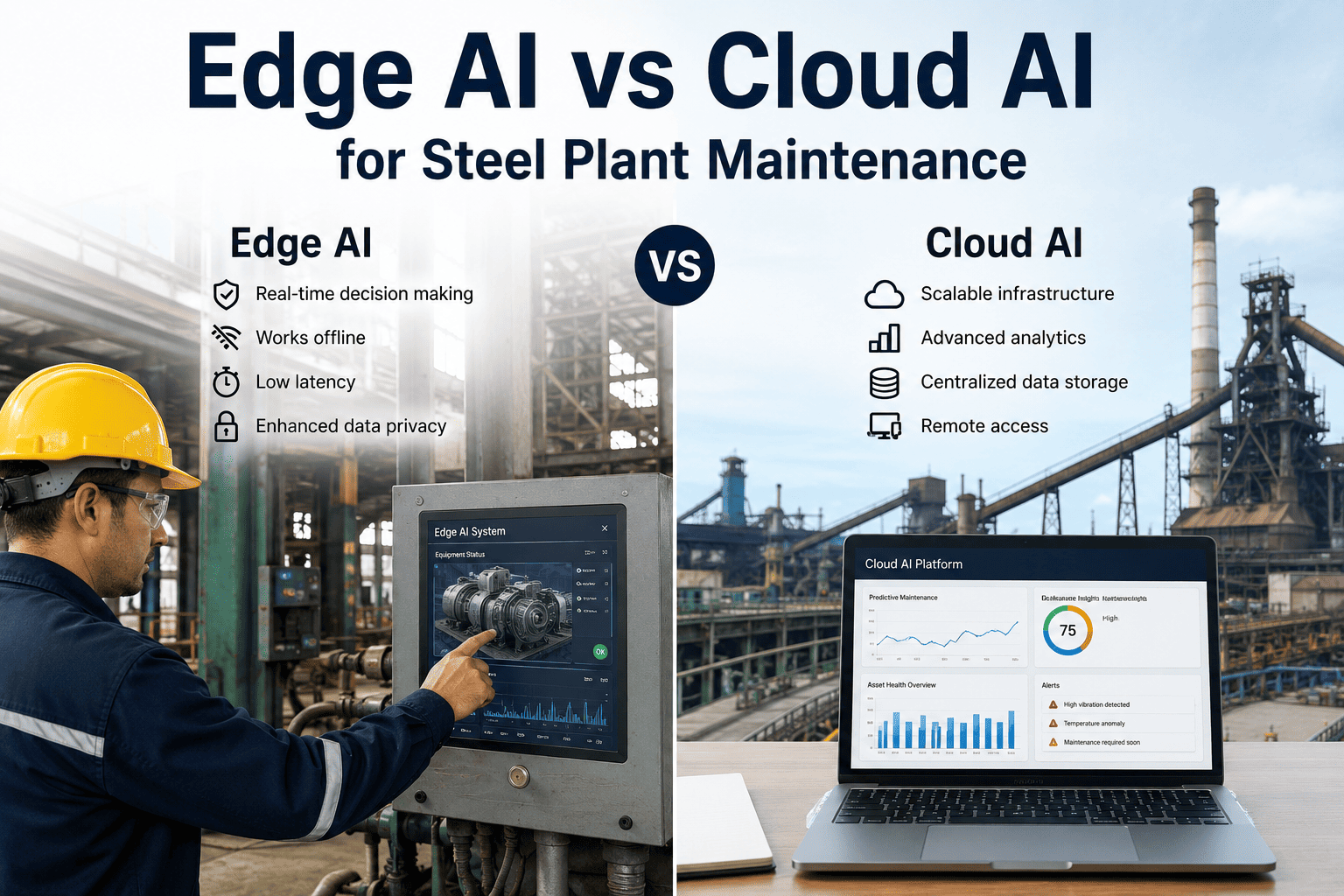
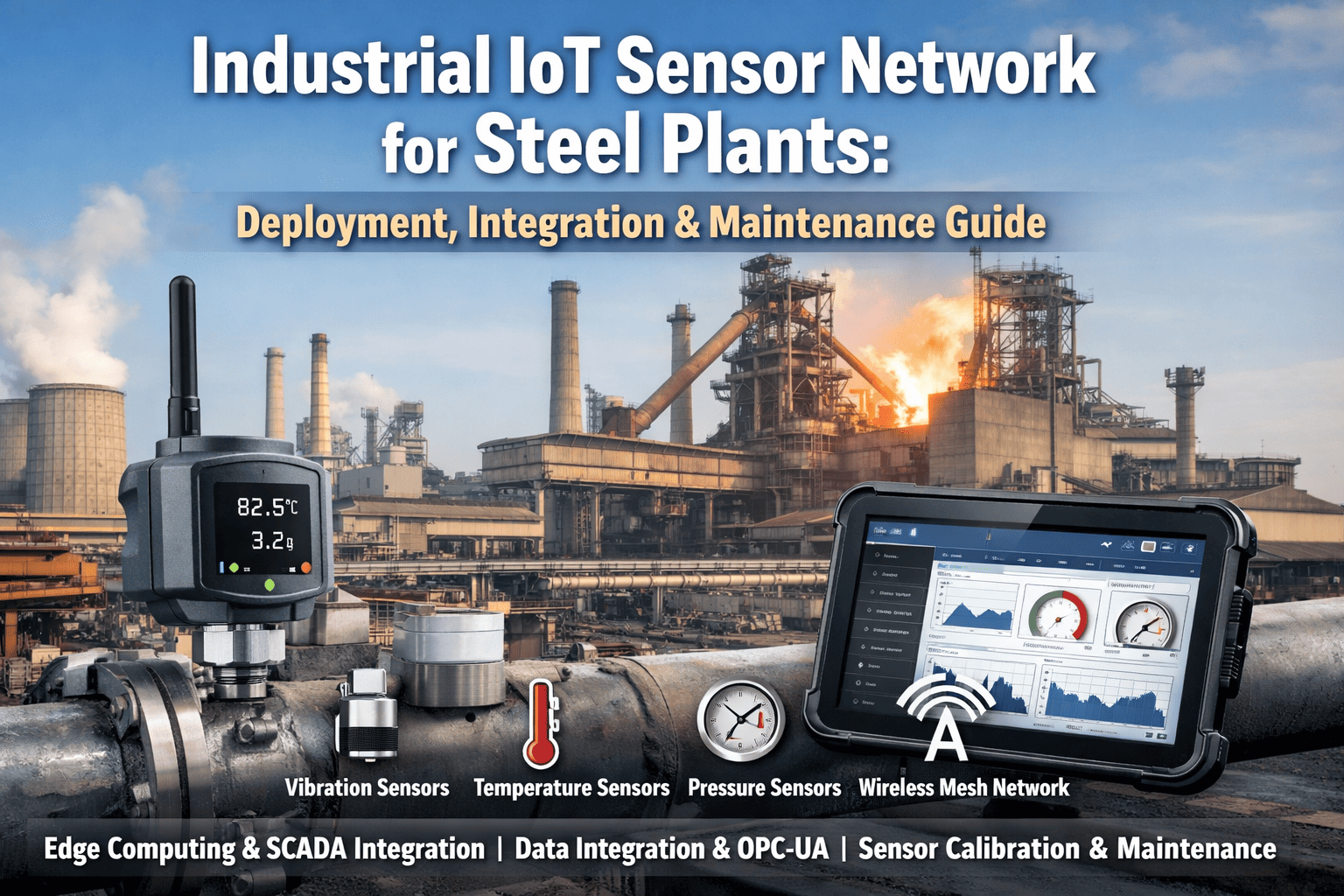
Edge-deployed AI for steel plant operations represents a critical evolution in industrial digitalization, addressing the unique connectivity, security, and latency challenges inherent to heavy manufacturing environments. While cloud-based solutions offer scalability, steel plants often operate in areas with limited bandwidth, strict data sovereignty requirements, and a need for millisecond-level response times that only on-premise infrastructure can guarantee. On-premise Large Language Models (LLMs) empower plant managers, maintenance teams, and operators with intelligent assistance that resides securely within the facility's firewall, enabling real-time decision support, automated documentation, and knowledge retrieval without exposing sensitive operational data to external networks. This comprehensive guide explores how edge-deployed AI is transforming steel production—delivering the power of generative AI while maintaining the security and control required for critical industrial operations. Schedule a consultation to explore how secure edge AI can transform your plant operations.
The Strategic Imperative for Edge AI in Steel
Steel production environments present unique challenges that make cloud-only AI solutions impractical for many critical use cases. Network latency can delay critical alerts, bandwidth constraints limit data transmission, and cybersecurity concerns restrict data egress. Edge-deployed AI resolves these tensions by bringing computation to the data source, enabling real-time intelligence where it matters most—on the shop floor, in the control room, and within maintenance workflows.
Key Use Cases for On-Premise LLMs
Large Language Models deployed at the edge unlock specific capabilities that cloud-based AI cannot match in industrial settings. From instant maintenance troubleshooting to automated safety compliance checks, on-premise LLMs integrate directly with plant systems to provide contextual intelligence where it's needed most.
Maintenance Troubleshooting
Technicians query the LLM using natural language to diagnose equipment issues. The model accesses local maintenance histories, manuals, and sensor data to provide instant repair guidance without waiting for cloud responses.
Safety Protocol Retrieval
Operators instantly access safety procedures, permit requirements, and hazard warnings by asking questions. The LLM validates queries against current plant safety rules and ensures compliance before work begins.
Shift Handover Summaries
Automatically generate concise shift reports from operator logs, alarm histories, and production data. The LLM highlights critical events, pending actions, and anomalies for seamless shift transitions.
Process Optimization Advice
Analyze historical production data to suggest parameter adjustments for quality improvement or energy reduction. The LLM provides explanations rooted in plant-specific historical performance.
Architecture & Security Framework
Deploying LLMs on-premise requires a robust architecture that balances performance with security. Steel plants need systems that integrate with existing SCADA, MES, and CMMS platforms while maintaining strict access controls and data isolation.
Implementation Roadmap
Successful edge AI deployment follows a structured approach that prioritizes security, integration, and user adoption. This roadmap ensures that AI capabilities are delivered incrementally while maintaining operational stability.
Infrastructure Assessment
Evaluate existing hardware, network capacity, and security posture. Identify suitable locations for edge servers and determine GPU requirements for model inference.
Data Preparation
Clean and structure historical data for model training and retrieval. Establish data governance policies and access controls for sensitive operational information.
Pilot Deployment
Deploy LLM in a controlled environment with limited user access. Test integration with key systems (CMMS, MES) and validate response accuracy and latency.
Scale & Optimize
Expand access to broader user groups. Continuously monitor performance, refine models based on feedback, and optimize resource utilization.
Benefits vs. Cloud-Based AI
Understanding the trade-offs between edge and cloud AI helps steel plants make informed decisions about their digital strategy. While cloud offers ease of management, edge provides control and performance critical for industrial operations.
ROI & Business Value
Edge-deployed AI delivers tangible returns through efficiency gains, risk reduction, and operational excellence. The investment in on-premise infrastructure pays dividends through improved productivity and protected intellectual property.