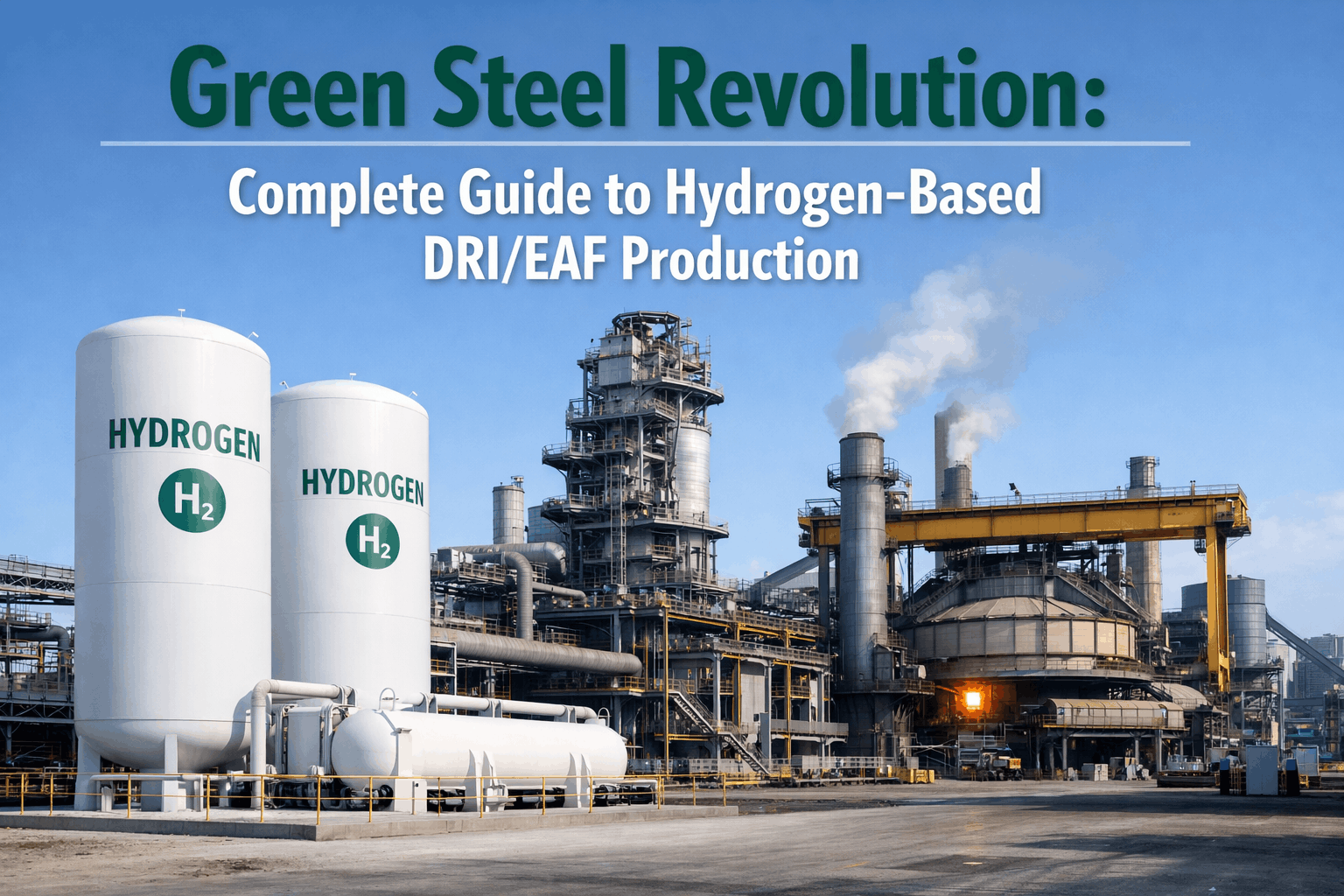
A steel producer in Sweden commissioned their first hydrogen-based direct reduced iron facility, replacing coal-fired blast furnaces with green hydrogen and electric arc furnaces. Within six months, unplanned downtime on hydrogen electrolyzers and DRI shaft furnace components threatened production targets and carbon reduction commitments. Traditional maintenance approaches designed for conventional steelmaking didn't address the unique requirements of hydrogen infrastructure and next-generation reduction systems. After implementing maintenance management through Oxmaint, the facility achieved 94% electrolyzer availability, reduced DRI system downtime by 67%, and met their first-year decarbonization targets. This guide covers maintenance requirements for hydrogen DRI and EAF systems in green steel manufacturing.
Green steel represents the industry's path to decarbonization—replacing coal-based blast furnaces with hydrogen direct reduction and electric arc furnaces powered by renewable energy. This transformation introduces entirely new equipment categories: hydrogen electrolyzers, hydrogen storage and distribution systems, shaft furnaces designed for H2 reduction, and EAF systems optimized for DRI feedstock. Maintenance teams must develop new competencies while maintaining production reliability during this critical transition. Book a demo to see how Oxmaint supports green steel maintenance operations.
Green Steel Manufacturing: Hydrogen DRI & EAF Maintenance Guide
Maintenance strategies for hydrogen-based direct reduction and electric arc furnace systems supporting steel decarbonization.
Green Steel Process Overview
Understanding the hydrogen-based steelmaking process flow.
Green Electricity
Renewable power from wind, solar, or hydro sources
Electrolysis
Water split into hydrogen and oxygen
DRI Shaft Furnace
Iron ore reduced by hydrogen gas
Electric Arc Furnace
DRI melted and refined to steel
Hydrogen System Maintenance
Oxmaint tracks hydrogen infrastructure critical to green steel production.
Electrolyzers
PEM or alkaline electrolyzers splitting water into hydrogen and oxygen. Efficiency and availability directly impact H2 supply to DRI process.
Hydrogen Storage
Compressed or liquid hydrogen storage providing buffer between electrolyzer output and DRI demand. Safety-critical infrastructure.
H2 Distribution
Piping network delivering hydrogen from storage to DRI shaft furnace at required pressure and flow rates.
Track Green Steel Equipment Performance
Oxmaint provides specialized maintenance tracking for hydrogen infrastructure and DRI systems.
DRI Shaft Furnace Maintenance
Direct reduction ironmaking equipment requires specialized maintenance approaches.
Reduction Zone
Where hydrogen gas reduces iron ore pellets to metallic iron. Refractory condition, gas distribution, and temperature uniformity critical to metallization rates.
Transition Zone
DRI moves from reduction to cooling section. Material flow characteristics and temperature control affect product quality.
Cooling Zone
Cooling gas quenches DRI before discharge. Heat recovery systems capture thermal energy for process efficiency.
Gas Handling
Hydrogen recirculation, top gas treatment, and process gas heating systems. Efficiency directly impacts hydrogen consumption.
Electric Arc Furnace Maintenance
EAF systems optimized for DRI feedstock have specific maintenance requirements.
Electrode System
Graphite electrodes delivering electrical energy to melt DRI charge. Consumption rates, holder maintenance, and positioning systems.
Furnace Shell
Water-cooled panels and refractory lining containing molten steel. Thermal cycling creates wear requiring regular inspection.
Power System
Transformer, reactor, and electrical distribution delivering MW-scale power. Reliability essential for production continuity.
Material Handling
DRI charging systems, scrap handling, and alloy addition equipment. Continuous feeding systems for hot DRI require specialized maintenance.
Optimize Green Steel Uptime
Oxmaint connects hydrogen systems, DRI equipment, and EAF maintenance in a unified platform.
Safety Considerations
Hydrogen systems require rigorous safety protocols integrated with maintenance activities.
Hydrogen Hazards
Wide flammability range (4-75%), invisible flame, embrittlement risk. All maintenance requires hot work permits and continuous gas detection.
LOTO Requirements
Multiple energy sources—electrical, pneumatic, hydraulic, and stored gas pressure. Complex isolation procedures for integrated systems.
Confined Space
Shaft furnace internals, storage vessels, and process equipment require atmospheric monitoring and rescue provisions.
High Temperature
DRI discharge at 700°C+, EAF steel at 1600°C+. Thermal isolation verification essential before equipment access.
Decarbonization Tracking
Maintenance data supports sustainability reporting and carbon reduction verification.
Carbon Intensity
Track emissions per tonne of steel produced. Equipment efficiency directly impacts carbon intensity metrics.
Hydrogen Consumption
Monitor hydrogen usage per tonne DRI. Maintenance affects electrolyzer efficiency and process optimization.
Energy Intensity
Electrical consumption per tonne across electrolysis, DRI, and EAF. Equipment condition impacts energy efficiency.
Asset Availability
Overall equipment effectiveness for green steel systems. Availability drives production volume and emissions targets.
Maintenance Strategy
Recommended approaches for green steel equipment categories.
Electrolyzers & Compressors
Vibration analysis, efficiency trending, and cell voltage monitoring enable condition-based maintenance for critical hydrogen equipment.
DRI Shaft Furnace
Scheduled refractory inspection, gas system maintenance, and burden distribution checks based on operating hours and cycles.
H2 Storage & Piping
Inspection intervals based on risk assessment considering hydrogen embrittlement, pressure cycling, and safety consequences.
EAF Refractory
Major relining during planned campaigns coordinated with production schedule. Gunning and spot repairs between campaigns.
Frequently Asked Questions
Support Your Steel Decarbonization
Join steel producers using Oxmaint to maintain hydrogen DRI and EAF systems for sustainable production.