
Hydrogen-based direct reduction iron (H2-DRI) plants represent a fundamentally different maintenance challenge than traditional natural gas DRI operations. When hydrogen replaces natural gas as the reduction gas in a MIDREX or HYL shaft furnace, the chemical reaction changes from gas-solid carbon reduction to hydrogen-solid chemical reduction, producing water vapor instead of CO₂ as a byproduct. This seemingly simple chemistry shift creates cascading implications for equipment materials, safety systems, water management, sensor calibration, and maintenance discipline that most steel plant maintenance teams have never encountered. A traditional natural gas DRI plant operates familiar equipment — compressors, heat exchangers, control systems — that maintenance technicians have managed for decades. A hydrogen DRI plant introduces hydrogen embrittlement risks in pressure vessels and piping, electrolyzer maintenance complexity, hydrogen permeation issues in compressors, pressure swing adsorption systems for H₂ purity, and ATEX (explosive atmosphere) zone management that requires specialized skills. The maintenance infrastructure required to operate hydrogen-based steelmaking with zero safety incidents is substantially different from conventional plant maintenance — and most mills are unprepared. A CMMS configured specifically for hydrogen safety systems, hydrogen-specific equipment maintenance, and hydrogen operator competency tracking becomes not a convenience but a legal and operational necessity.
Hydrogen Embrittlement, Permeation, and Material Integrity in DRI Furnaces
The most critical hydrogen-specific maintenance challenge is hydrogen embrittlement — the phenomenon where hydrogen atoms diffuse into steel and reduce its ductility and fracture resistance. Pressure vessels, piping, and fittings in hydrogen-based DRI plants experience continuous hydrogen exposure at elevated temperatures and pressures. Standard carbon steel vessels rated for natural gas service become brittle when exposed to hydrogen — particularly at pressures above 350 bar and temperatures exceeding 100°C. This material degradation is silent and invisible; a pressure vessel may look perfectly sound while its internal material properties degrade continuously. Traditional non-destructive examination (ultrasonic thickness checks, visual inspection) cannot detect hydrogen damage in progress — only post-mortem fractography can confirm embrittlement has occurred.
The hydrogen DRI plant maintenance strategy must include: (1) Material selection — using only hydrogen-compatible materials (special alloys like stainless steel 316L, inconel, or hydrogen-resistant carbon steels) in all hydrogen-contact surfaces; (2) Pressure vessel certification — conducting hydrogen-specific pressure vessel inspections every 2–3 years (vs. every 5–7 years for natural gas) to verify material integrity; (3) Temperature monitoring — tracking vessel wall temperatures continuously to detect thermal transients that accelerate hydrogen diffusion; and (4) Hydrogen permeation testing — conducting periodic permeation flux measurements on critical equipment to quantify hydrogen ingress rates and predict remaining service life.
Hydrogen permeation through compressor seals is a particular challenge. Standard compressor seals designed for natural gas allow minimal gas leakage. Hydrogen molecules are significantly smaller and permeate through elastomer seals much faster — a seal that leaks 0.1% of gas flow with natural gas may leak 5–10% with hydrogen. This creates a two-fold problem: (1) hydrogen loss from the system (reducing energy efficiency), and (2) hydrogen release to atmosphere (safety hazard if leak occurs near ignition sources). A hydrogen DRI plant must use hydrogen-specific compressor seals (PTFE-based, not elastomer-based) and monitor seal differential pressure drop weekly — a declining differential indicates permeation increase and seal replacement urgency. Many mills using MIDREX or HYL equipment with hydrogen blending discover this in operation: their compressors, designed for natural gas, begin to leak hydrogen within months of hydrogen introduction, requiring expensive equipment replacement and production disruption.
Water Vapor Management in Hydrogen DRI: Gas Cooling and Condensation Systems
When hydrogen reduces iron ore in a DRI furnace, the reaction produces water vapor: 3H₂ + Fe₂O₃ → 2Fe + 3H₂O. This water vapor concentration is enormous — up to 540 kg of water per tonne of DRI produced in high-hydrogen-blend operation. Traditional natural gas DRI plants produce minimal water (combustion by-products are primarily CO₂ and N₂); water management is straightforward. Hydrogen DRI plants must manage water condensation continuously to avoid fouling the gas recycling loop, corrosion in heat exchangers, and reduced metallization rates caused by incomplete gas drying.
The gas cooling and water condensation system in a hydrogen DRI plant is more complex than in natural gas DRI: (1) Primary cooler — cools hot reduction gas (900°C+) to 40–60°C, causing water vapor to condense; (2) Water scrubber — removes condensed liquid water and water vapor using mist eliminator packs; (3) Dryer unit — further reduces moisture to <–40°C dew point using molecular sieves or silica gel; (4) Hydrogen recycling loop — feeds dry hydrogen back to furnace. If any stage fails, hydrogen reaches the furnace wet, reducing metallization rates (target 93–95% metallization can drop to 85–90% if inlet gas dew point is above 0°C). A maintenance failure here costs production immediately — reduced metallization means more reduction gas required to achieve target iron content, increasing energy consumption and carbon footprint.
Critical maintenance tasks in the water management system: (1) Heat exchanger fouling inspection every 2–3 weeks — scale and corrosion deposits reduce cooling efficiency; (2) Mist eliminator pack inspection monthly — packed beds clog with condensed salts from process impurities; (3) Desiccant replacement every 6–12 months depending on water loading — molecular sieves lose drying capacity and must be regenerated or replaced; (4) Water outlet tank draining daily — accumulated water creates corrosion risk and microorganism growth if stagnant; (5) Dew point analyzer calibration monthly — drift in sensor readings can result in false confidence that gas is dry when moisture is actually rising. A CMMS tracks all of these inspection intervals and automatically flags out-of-specification readings (dew point >0°C, cooler outlet temperature >60°C, desiccant break-through) that signal immediate maintenance intervention needed.
Hydrogen Leak Detection, Safety Instrumented Systems, and Operator Training
Hydrogen safety systems in DRI plants are fundamentally different from natural gas DRI safety because hydrogen's properties — low minimum ignition energy (0.02 mJ, vs. 0.25 mJ for natural gas), wide explosive range (4–75% H₂ in air), high flame temperature (2000°C) — make uncontrolled hydrogen release far more dangerous. A natural gas leak in a DRI plant is annoying and inefficient; a hydrogen leak in an operating plant can explode with minimal warning. The safety instrumentation and operator discipline required for hydrogen service is several orders of magnitude stricter.
A hydrogen DRI plant must include: (1) Multiple hydrogen sensors (catalytic bead or thermal conductivity types) distributed throughout the plant at potential release points — furnace outlet, compressor discharge, hydrogen pipeline, pump discharge; (2) Safety Instrumented System (SIS) that automatically isolates hydrogen supply and depressurizes systems if any sensor detects hydrogen concentration >2% at a non-process location; (3) Pressure relief valves sized to safely depressurize hydrogen vessels in <10 seconds; (4) Grounding and bonding of all hydrogen-contact equipment to prevent static charge accumulation; and (5) Operator training and competency certification in hydrogen-specific emergency response — what to do if a hydrogen leak is detected, how to safely depressurize equipment, evacuation procedures.
Hydrogen sensor maintenance is critical and often neglected. Catalytic bead sensors (the most common type) become fouled by dust, siloxanes, and process contaminants; a fouled sensor can read 0% hydrogen while hydrogen is actually leaking at 10% concentration. Sensor calibration must be performed every 30–60 days using certified hydrogen test gas. Many plants discover this failure mode the hard way — a hydrogen leak occurs, sensors don't alarm (because sensors are fouled), and an explosion happens. A CMMS configured for hydrogen sensor management tracks calibration intervals, logs calibration results, flags sensors with drift exceeding tolerance bands, and automatically alerts operations if calibration is overdue.
Operator training for hydrogen DRI is substantially different from natural gas DRI training. Operators must understand hydrogen-specific risks, recognize symptoms of hydrogen leaks (hissing sounds, frost formation on cold equipment, difficulty starting ignition), and respond decisively to safety alarms. Competency assessments must include written tests on hydrogen properties, emergency response scenarios, and practical skills (depressurizing systems safely, identifying hydrogen leak sources, using respiratory protection). Recurrent training must occur annually with documented sign-off. A CMMS tracks training completion, competency assessment results, and recertification dates — ensuring no operator operates hydrogen equipment without current certification.
Hydrogen Compressor Maintenance & Seal Integrity Monitoring
Hydrogen compressors (screw or centrifugal type) operating at 5–10 bar discharge pressure require daily discharge pressure monitoring, weekly seal differential pressure checks, monthly oil analysis for seal leakage indicators, and quarterly hydrogen-permeation leak rate testing. Seals designed for natural gas fail within 6–12 months when exposed to hydrogen. Replacement seals must be hydrogen-compatible (PTFE-based, not elastomer). Compressor efficiency degradation indicates seal wear — a 2–3 point efficiency loss signals seal replacement urgency.
Hydrogen Piping Inspection & Pressure Testing
Hydrogen distribution piping (stainless steel 316L, not carbon steel) must be inspected for cracks, corrosion, and hydrogen-induced stress fractures every 12–18 months using eddy current or phased-array ultrasonic methods. Pressure tests at 1.5× operating pressure must be conducted every 3 years. Threaded connections and flanges are high-risk areas — hydrogen permeates through thread sealants; connections must use metal-to-metal sealing (cone-and-thread, not PTFE tape). Any leak detected on hydrogen piping requires immediate isolation and repair; no temporary patches permitted (unlike natural gas lines where temporary closure is sometimes tolerated short-term).
Shaft Furnace Refractory Integrity in Hydrogen Operation
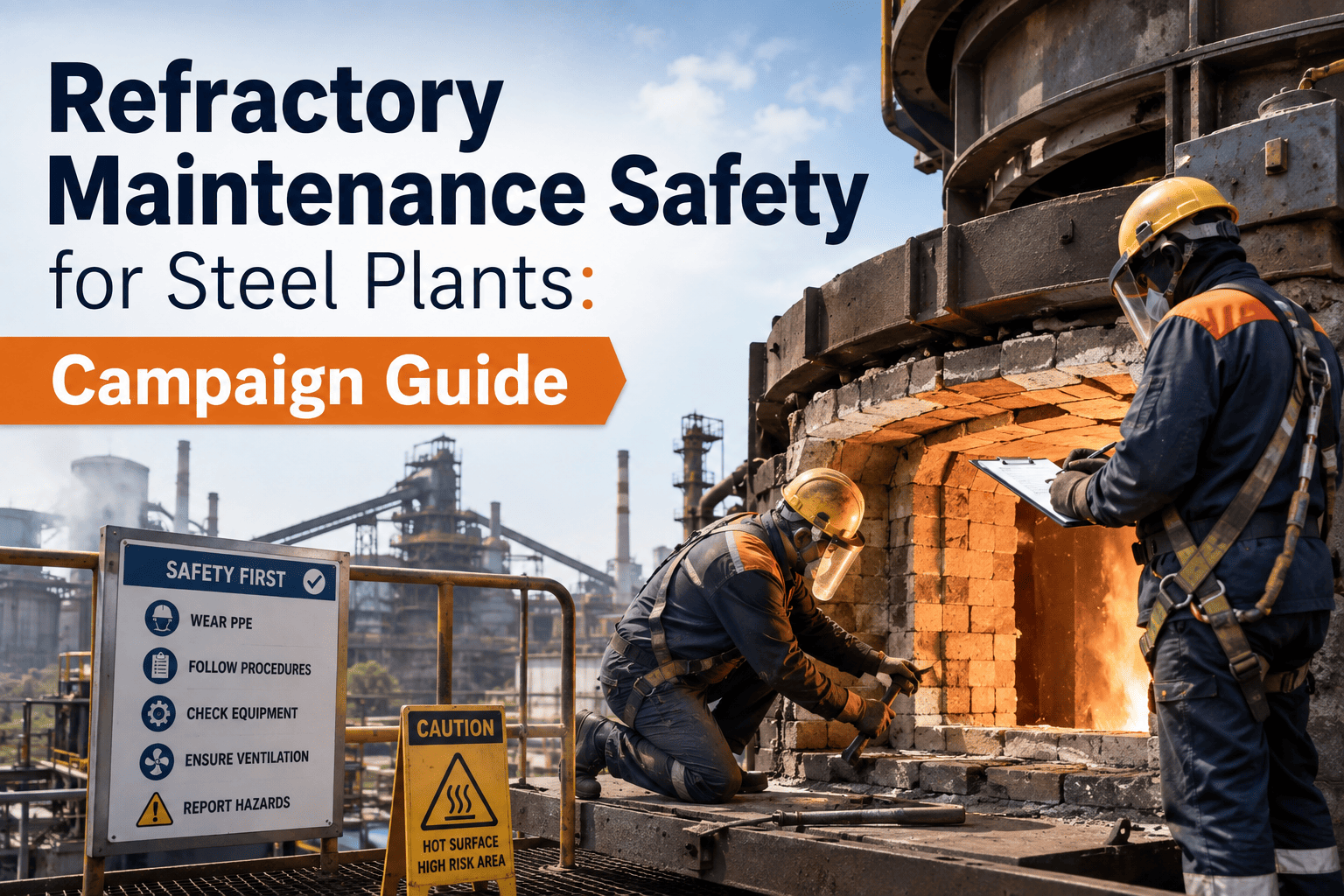
DRI shaft furnaces in hydrogen service experience different refractory wear patterns than natural gas DRI. Hydrogen flames are hotter and faster-burning than natural gas flames, creating localized hot spots in the reduction zone. Shell temperature monitoring at multiple elevations (especially upper furnace) is critical — shell temperatures >250°C indicate potential refractory thinning. Refractory inspection frequency should increase to every 2–3 years in hydrogen service (vs. 3–5 years in natural gas DRI). Hydrogen-specific refractory damage includes hydrogen-induced cracking in alumina-silicate materials at high temperatures. Furnace lining life expectancy in hydrogen service is estimated to be 20–30% shorter than in natural gas service — a design consideration for equipment procurement and campaign planning.
Electrolyzer Maintenance (For On-Site Green Hydrogen Production)
Plants producing hydrogen on-site via electrolyzer require specialized maintenance discipline: ion-exchange membrane replacement every 3–5 years (cost $500K–2M depending on size), electrode cleaning to remove mineral scale deposits, cooling water treatment to prevent corrosion (electrolyzer cooling systems are highly susceptible to fouling), and power supply monitoring (electrolyzer efficiency degrades if voltage or frequency drifts from specification). Electrolyzer efficiency loss of 2–3% annually is normal; loss >5% signals maintenance intervention needed. Maintenance technicians trained on electrolyzer operation are scarce in North America — plan for external service contracts and specialist engagement.
Pressure Swing Adsorption (PSA) System for Hydrogen Purity
PSA systems remove nitrogen and other impurities from hydrogen produced by electrolyzer or steam methane reformer, achieving >99.99% H₂ purity required for DRI furnace. PSA maintenance includes: adsorbent material replacement every 2–3 years, valve inspection and replacement (pneumatic valves controlling gas flow cycles endure 10,000+ cycles daily), pressure drop monitoring across adsorbent beds (rising pressure drop signals fouling or material degradation), and desiccant regeneration. PSA system failure reduces hydrogen purity, causing process impurities (nitrogen, water) to reach furnace, degrading metallization rates.
Hydrogen DRI Maintenance FAQs: Skills, Timeline & Safety
How do we prepare our maintenance team for hydrogen-based DRI when they have only natural gas DRI experience?
Begin hydrogen-specific training 12–18 months before H₂-DRI startup. Partner with equipment manufacturers (MIDREX, HYL, Primetals) on operator and technician training; hire external specialists for first 12 months of operation; build internal competency over time. Hydrogen safety training is mandatory for all personnel working on or near hydrogen systems. Expect 150–200 training hours per technician to achieve hydrogen competency.
What is the cost of operating a hydrogen DRI plant vs. natural gas DRI in terms of maintenance expenses?
Hydrogen DRI maintenance costs are estimated 15–25% higher than natural gas DRI due to more frequent inspections, specialized materials, hydrogen sensor calibration, and operator training. Hydrogen-specific equipment replacement (compressor seals, hydrogen sensors, PSA adsorbent) drives incremental cost. These increments are typically justified by energy cost savings or carbon value, but require explicit financial modeling in business cases.
How often must hydrogen sensors be calibrated, and what happens if calibration is missed?
Hydrogen sensors must be calibrated every 30–60 days using certified hydrogen test gas. If calibration is missed, sensor accuracy degrades and hydrogen leak detection reliability decreases — increasing safety risk. A fouled or drifted sensor can read 0% hydrogen while hydrogen is present at 10% concentration. CMMS automatically tracks calibration due dates and alerts operators if overdue; prevents this failure mode through systematic discipline.
Are existing natural gas DRI maintenance team members capable of transitioning to hydrogen DRI maintenance?
Yes — experienced DRI technicians understand furnace operation, gas recycling systems, and equipment fundamentals. However, they must receive comprehensive hydrogen-specific training (hydrogen properties, embrittlement risk, leak detection, emergency response) before assuming responsibility for hydrogen systems. Count on 6–12 months of mentorship from hydrogen-experienced personnel before they're fully independent on hydrogen maintenance tasks.
What are the most common hydrogen-related incidents in DRI plants, and how can they be prevented?
Most common: hydrogen sensor failure resulting in undetected leaks (prevented by rigorous calibration discipline), hydrogen permeation through compressor seals creating atmospheric release (prevented by hydrogen-compatible seals and weekly differential pressure checks), and hydrogen-induced stress fractures in piping (prevented by regular inspection and pressure testing). All three are systematic maintenance failures, not design flaws — prevented through CMMS-enabled discipline.
How do we train replacement operators as our current hydrogen-trained team ages or leaves?
Hydrogen expertise is not portable across facilities — each plant has unique hydrogen systems and operational procedures. Plan for 6–12 months of overlapping operation where new operators shadow experienced operators, participate in routine maintenance, and gradually assume independent operational responsibility. CMMS tracks operator competency assessments and recertification dates, ensuring no operator exceeds their competency level in assuming new responsibilities.
What is the expected lifetime of hydrogen-specific equipment (compressors, piping, sensors) vs. natural gas equipment?
Hydrogen-compatible stainless steel piping and fittings last 15–20 years; standard natural gas carbon steel piping fails within 5–8 years in hydrogen service. Hydrogen-specific compressor seals last 3–5 years; hydrogen sensors require replacement every 5–7 years. Equipment lifecycles are shorter in hydrogen service — a financial consideration in capex planning and depreciation schedules. Budget for 20–30% higher equipment replacement costs over plant lifetime.
If we blend hydrogen into natural gas DRI (instead of running 100% hydrogen), do maintenance requirements change significantly?
Yes — even at 30–50% hydrogen blending, hydrogen embrittlement, seal permeation, and water vapor management requirements increase substantially. A 50% hydrogen blend produces similar water vapor levels as 100% hydrogen operation. You must still implement hydrogen sensors, hydrogen-compatible seals, and rigorous water management — you don't get a free pass by partial blending. Full hydrogen commitment enables simpler design and operational discipline compared to variable hydrogen-blending systems.

-maintenance-and-shaft-furnace-reliability.png)


