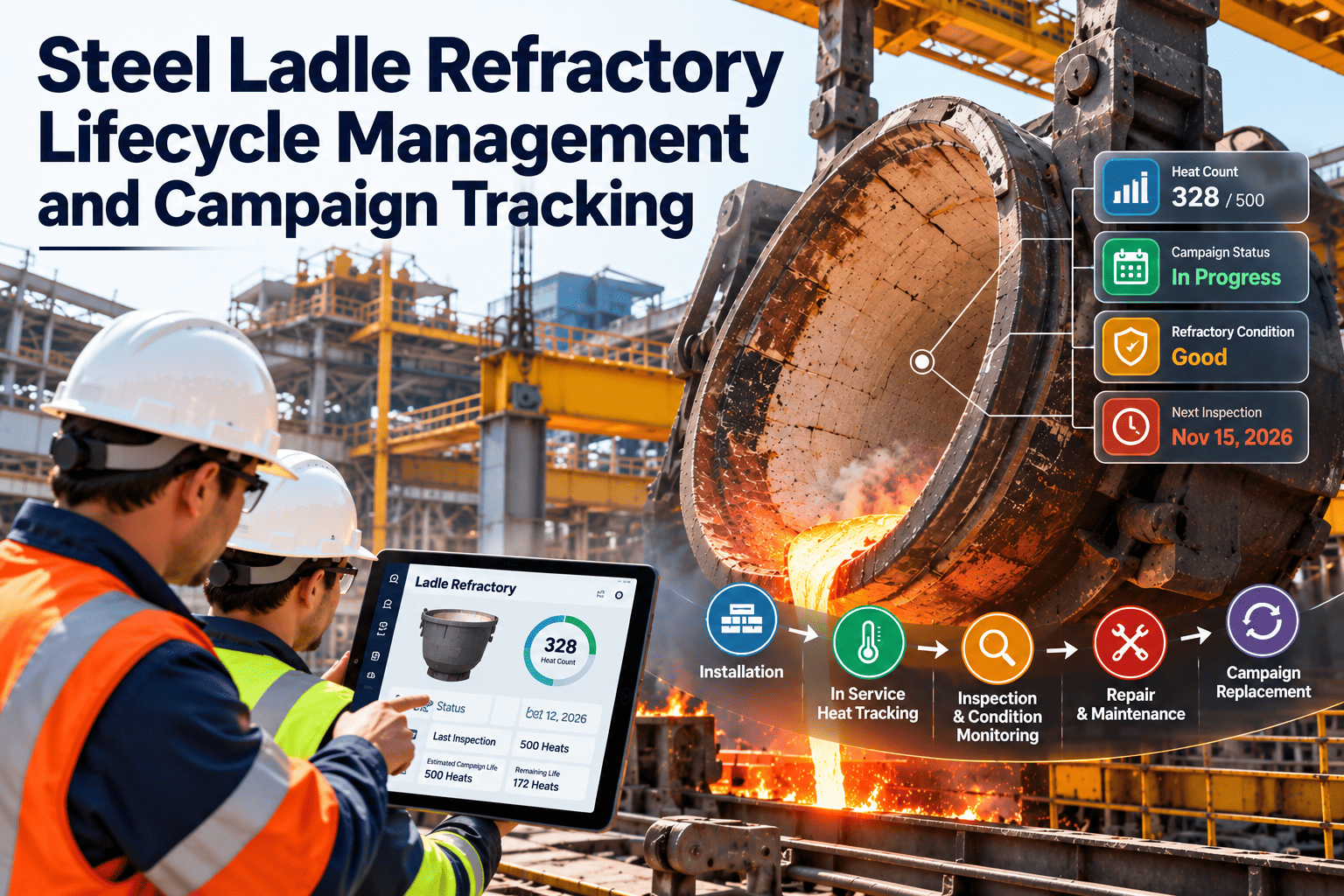
A steel ladle carries liquid metal through some of the harshest conditions in the plant, and its refractory lining is the only barrier between the melt and the steel shell. Wear is uneven, driven by slag, temperature cycling, stirring and the steel grade being made, so the same ladle can look sound in one zone and be critically thin in another. Inspection decisions made on a quick visual check, without heat history behind them, lead to either early relines that waste refractory or late ones that risk a breakout. This checklist covers the zones, readings and records that support safe campaign decisions, and shows how steel plant maintenance software keeps lining history tied to each ladle.
Steel Plant Ladle Lining Inspection Checklist for Steelmaking Operations
Ladle and refractory management: connect heat count, wear readings and repair decisions in one campaign record.
Inspect each lining zone, record what you find against the ladle's heat history, and decide to continue, repair or reline with evidence rather than habit.
Slag line
Barrel and working lining
Bottom, well block and purge plug
Sliding gate and nozzle
Why Ladle Lining Inspection Needs a Record, Not Just a Look
Uneven wear
Slag line, impact area and purge plug zones wear at different rates, so one overall judgement hides local risk.
Changing practice
Steel grade, treatment time, argon stirring and slag chemistry change the demand on each lining zone.
Mixed memory
Knowledge of how a ladle behaved lives with individuals, and is lost when crews or suppliers change.
Cost on both sides
Early relines consume refractory and downtime. Late ones raise the risk of shell damage, breakouts and unplanned stoppages.
Campaign Lifecycle of a Ladle Lining
1
Reline and cure
Record materials, installer, drying and heat-up.
2
In service
Count heats, log grades, treatments and temperatures.
3
Post-teeming check
Inspect, measure and photograph at defined intervals.
4
Decide
Continue, hot repair, spot gun or schedule a reline.
5
Teardown review
Compare actual wear with records and update practice.
Zone-by-Zone Inspection Guide
| Zone | What to Check | What It May Indicate | Record |
|---|---|---|---|
| Slag line | Remaining thickness, erosion profile, spalling, slag penetration | Slag chemistry or contact time outside expected range | Thickness readings and photographs by position |
| Barrel and impact area | Cracks, joint opening, hot spots, localised erosion | Thermal cycling or tapping and pour stream effects | Location, size and change since last check |
| Bottom | Build-up, pitting, lifting bricks, skull residue | Incomplete cleaning or penetration beneath the surface | Condition notes and cleaning actions |
| Purge plug | Permeability, blocked or open plug, surrounding erosion | Stirring failure or plug wear near end of life | Plug status, gas flow test results and replacement |
| Well block and nozzle | Cracks, seating, erosion, slide gate plate condition | Risk of poor flow control or leakage | Component life, replacement date and heat count |
| Steel shell and trunnions | Discolouration, cracks, distortion, warm spots | Lining failure behind the surface or structural stress | Shell temperature observations and inspection findings |
The Inspection Checklist
Before Casting
- Confirm ladle ID, current campaign number and heat count against the system record.
- Check preheat temperature and time against the plant standard.
- Verify the sliding gate, nozzle and purge plug are fitted and function tested.
- Check for wet spots, loose material, skull or build-up in the bottom.
- Confirm no open hold or repair flag exists on the ladle.
After Teeming
- Record slag line condition and compare it with the last inspection.
- Inspect barrel, impact zone and joints for new cracks or erosion.
- Note abnormal events such as long holds, re-treatment or temperature excursions.
- Photograph defined positions so changes can be compared over time.
- Look for shell hot spots and report them immediately.
Cold Inspection
- Measure remaining thickness at set locations using the approved method.
- Assess bottom, well block and purge plug condition after cooling and cleaning.
- Decide on gunning, patching, component change or reline, and record the reason.
- Record repair materials, quantity, crew and curing requirement.
- Release the ladle only after authorised sign-off.
Reline and Teardown
- Record campaign end heat count and the reason for relining.
- Photograph and note worn-out zones before demolition.
- Check shell condition, anchors and permanent lining.
- Log new brick, castable and component batches against the ladle.
- Compare actual wear against the pre-set expectation and update practice.
Keep Heat History and Wear Readings Together
Oxmaint links inspections, work orders and component history to each ladle, so lining decisions use the full campaign record.
Continue, Repair or Reline: A Decision Guide
Continue
Wear is within the plant limit across all zones, no shell warning signs, and the trend matches the expected curve. Next inspection date is set.
Repair
Local wear, spalling or plug and nozzle issues exist but the surrounding lining is sound. Repair method, material and curing are recorded.
Reline
Thickness is at or below the limit in any critical zone, damage is widespread, or shell indications exist. The ladle is held and routed for reline.
What to Record Against Each Ladle
Identity
Ladle number, shell details, capacity, lining design and installation date.
Service history
Heat count, steel grades, treatment practices, hold times and temperature events.
Inspection results
Thickness readings, photographs, observed defects and the inspector.
Repairs
Gunning or patching, component changes, materials, quantities and curing details.
Components
Purge plug, well block, nozzle and slide gate plate life, with replacement dates.
Outcome
Reason and heat count at campaign end, plus teardown findings.
Trends Shaping Refractory Management
- Heat-based tracking. Wear is judged against heats and operating conditions, not just calendar time.
- Condition-based decisions. Measurements and imaging inform repair timing, which supports planning and reduces surprise relines.
- Supplier feedback. Teardown records and campaign data help refractory suppliers and operations review material choices together.
- Planned spares. Ladle availability depends on keeping enough relined ladles, plugs and nozzles ready for the schedule.
How Oxmaint Fits Ladle Maintenance Workflows
Asset management
Register each ladle, slide gate, purge system and lining component with history and documents.
Inspections
Use mobile forms for zone checks with required readings, photographs and sign-off.
Work orders
Turn findings into repair or reline jobs with labour, materials and curing recorded.
Preventive scheduling
Trigger inspections by heat count or interval, and plan reline slots against casting schedules.
Inventory
Control refractory, plugs, nozzles and gate plates, with minimum levels and usage by ladle.
Reports
Compare campaign life, repair frequency and component life across ladles and periods.
KPIs for Ladle Lining Performance
Heats per campaign
Average and spread by lining design and practice.
Unplanned reline rate
Share of relines triggered by failure or alarm.
Inspection compliance
Scheduled checks completed on time.
Component life
Heats achieved by plug, well block and nozzle.
Refractory use
Material consumed per heat or per tonne.
Ladle availability
Ready ladles against the casting plan.
Build a Campaign Record for Every Ladle
Start tracking inspections, repairs and component life in one place with Oxmaint.
Common Wear Mechanisms to Watch For
Chemical attack
Slag and steel chemistry dissolve or react with the lining, often concentrated at the slag line. Record slag type and contact time alongside thickness.
Thermal shock
Rapid heating and cooling between heats causes cracking and spalling. Delays, long holds and empty ladle idle time are worth logging.
Mechanical erosion
Tapping stream impact and gas stirring erode specific zones. Wear here is often local and can progress faster than the average.
Penetration and infiltration
Metal or slag entering joints and open pores weakens the lining behind a surface that may look acceptable.
Installation and curing faults
Poor drying, joint quality or heat-up control can shorten life from the start, so record the reline procedure as carefully as the service life.
Safety Points During Inspection
Access and Isolation
- Confirm the ladle is positioned, secured and isolated from crane and process movement before anyone approaches.
- Control entry points, with a named person responsible for access.
- Check gas lines, purge connections and hydraulics are isolated where the task requires.
- Use the approved method for any work in a confined or restricted area.
Personal Protection and Escalation
- Wear the heat, dust and impact protection your site procedure requires for the inspection task.
- Stop work and report if the shell shows hot spots, cracks or distortion.
- Do not release a ladle with an unresolved safety observation.
- Record who inspected, who authorised release and the time of each step.
Practical Tips for Better Lining Records
- Fix the measurement positions. Use the same locations each time so thickness trends mean something, and mark them on the inspection form.
- Use consistent defect wording. A shared list of terms such as spalling, erosion, joint opening and penetration avoids confusion between inspectors.
- Photograph from the same angles. Comparable images make it easier to judge change between inspections and to discuss findings with suppliers.
- Record abnormal heats. Delays, grade changes and temperature excursions explain wear that normal heat counts cannot.
- Review teardown results. Compare what was found with what was expected, and adjust limits and inspection frequency accordingly.
- Keep spare ladles in the plan. The decision to reline is easier when a ready ladle is available and the casting schedule is not at risk.
Questions to Ask Your Refractory Supplier
Material fit
Which lining design suits your steel grades, slag practice and treatment cycle, and what wear pattern should we expect?
Inspection limits
What remaining thickness and condition criteria do you recommend, and how should they differ by zone?
Support and feedback
How will teardown findings be shared, and how will lining changes be trialled and assessed?
Planning Ladle Availability Around Lining Condition
Ladles in service
Track current heat count and condition status so the melt shop knows which ladles are close to a decision point.
Ladles awaiting inspection
Queue ladles after teeming and make sure each one has an inspector and a time window assigned.
Ladles in repair
Show repair type, curing time and expected return so scheduling does not rely on guesswork.
Ladles in reline
Plan reline slots against crew availability, refractory deliveries and expected casting demand.
Ladles in preheat
Confirm preheat time and temperature are recorded, because poor preheat shortens lining life and raises risk.
Spare ladles
Hold enough ready units to cover unplanned reline decisions without interrupting the casting sequence.
Inspection Findings and Follow-Up Actions
| Finding | Typical Immediate Action | Follow-Up in the System |
|---|---|---|
| Local slag line erosion beyond the usual rate | Increase inspection frequency and review slag practice | Create a work order, flag for supplier review and log slag details |
| New crack or joint opening in the barrel | Assess depth, photograph and decide on repair or continued service with limits | Attach images, set a recheck date and record the decision maker |
| Purge plug blocked or leaking | Test, replace or repair as the plant procedure requires | Record component life, replacement and gas flow results |
| Shell hot spot | Stop use, isolate and escalate immediately | Place the ladle on hold, open a corrective work order and record the authorised release |
| Bottom build-up or skull | Clean using the approved method and re-inspect the area | Log cleaning, any lining damage found and preventive actions |
Frequently Asked Questions
How often should a steel ladle lining be inspected?
Follow your plant standard and refractory supplier guidance, typically after each heat visually and with measurements at set intervals. Frequency often increases late in a campaign.
Why track heat count for each ladle?
Heat count links wear to actual use, so decisions rely on history. Oxmaint can store it alongside inspections.
Which zones usually need the closest attention?
The slag line, impact area, purge plug and well block commonly drive early decisions, but each plant's wear pattern should be confirmed from its own records.
Can maintenance software predict lining life?
It does not replace refractory expertise, but trended heat, thickness and repair data help estimate remaining life. A demo can show how.
What should be recorded at teardown?
Record heat count, reason for reline, zone wear patterns and photographs. These findings feed future lining design and inspection limits.
Make Every Ladle Lining Decision Evidence-Based
Use Oxmaint to connect heat history, inspections, repairs and component life, and plan relines before they become emergencies.