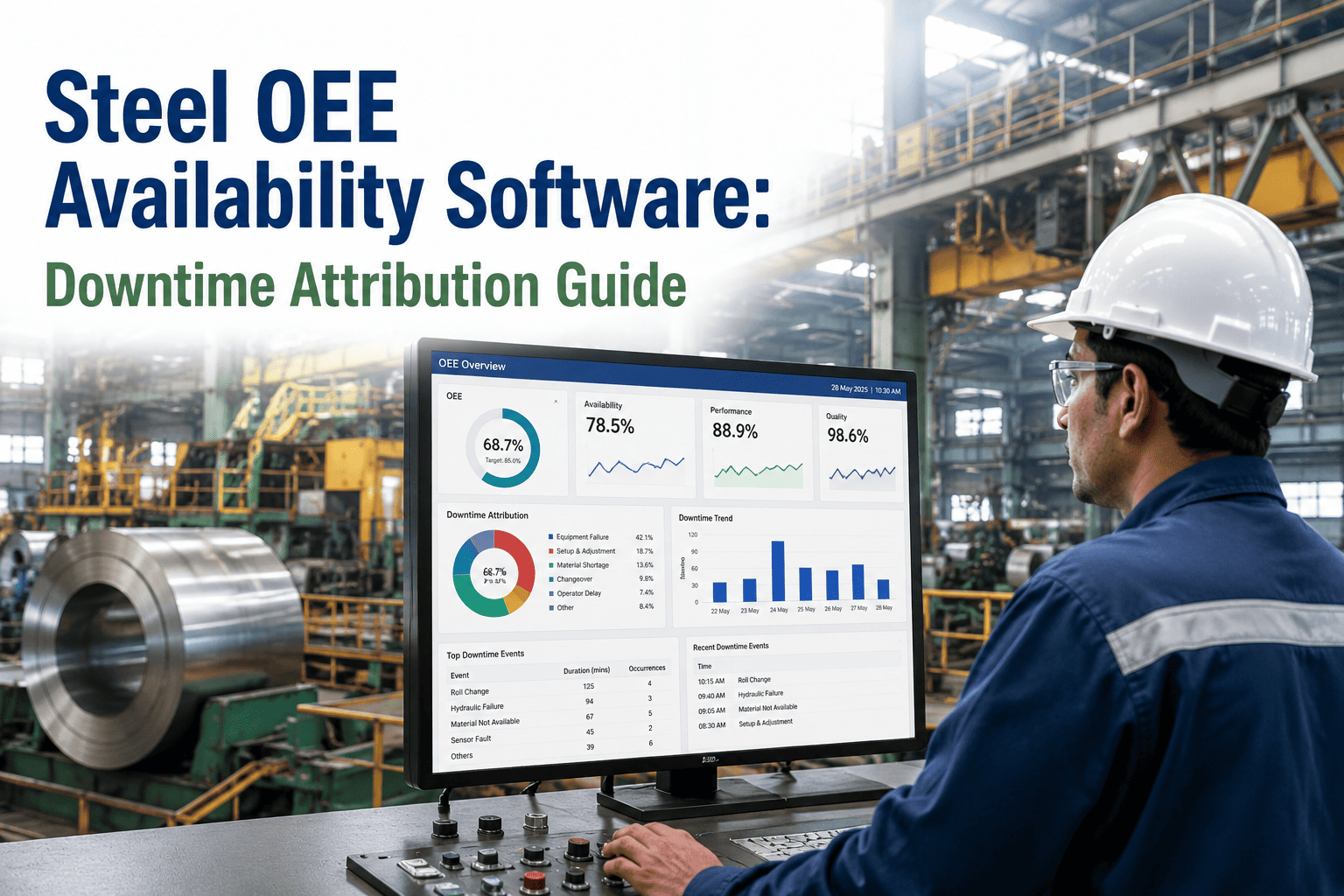
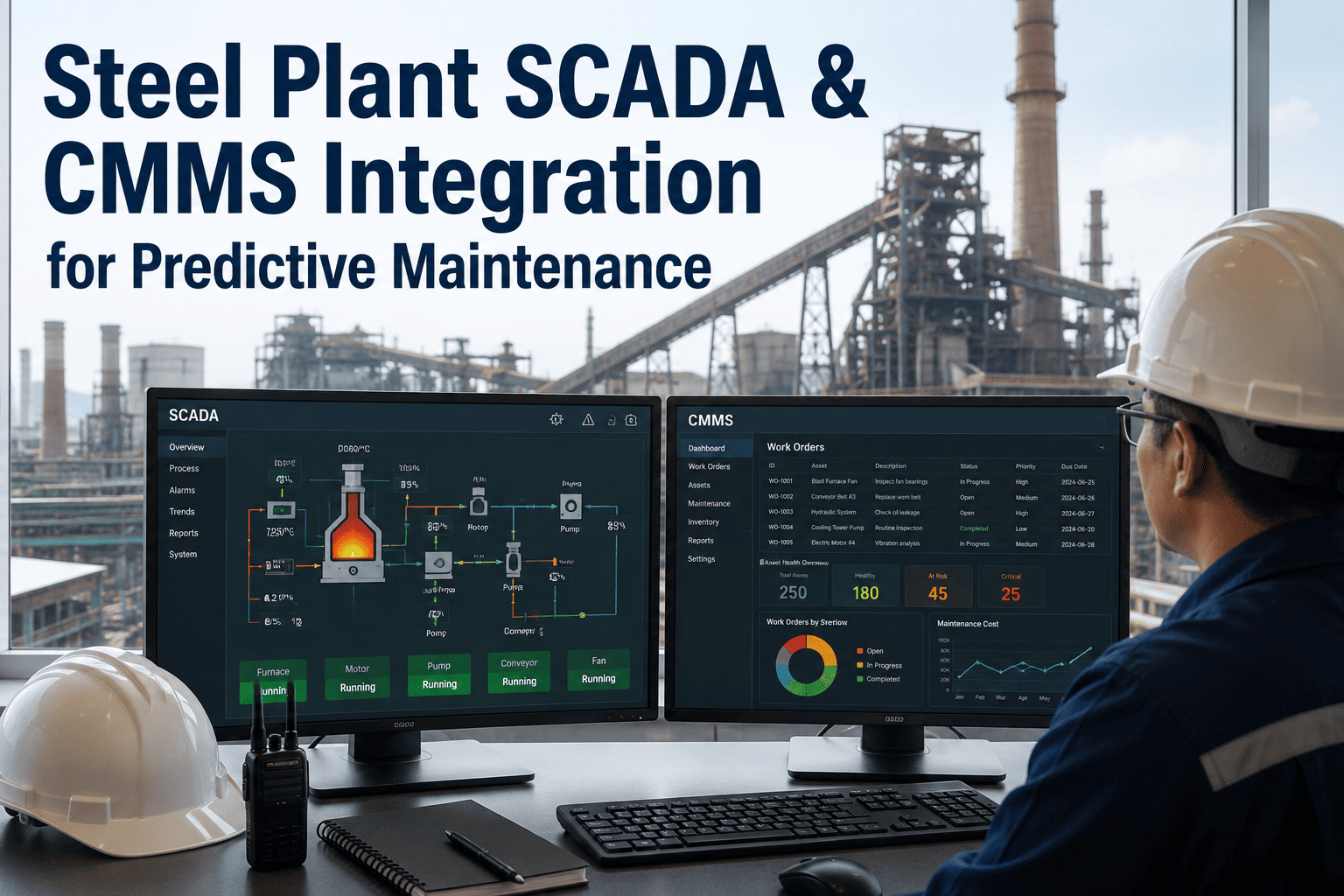
When your production line stops, every second counts. But here's the problem: your OEE dashboard shows you're losing money, while your maintenance team scrambles through paper logs trying to figure out why.
This disconnect between knowing you have a problem (OEE) and fixing it (CMMS) costs manufacturers annually. According to recent industry research, 88% of manufacturers use preventive maintenance, yet most still operate with fragmented systems where production data and maintenance actions live in separate worlds.
The solution? Integrating OEE tracking with CMMS software creates a powerful closed-loop system where problems are automatically detected and solved. This integration transforms maintenance from a reactive cost center into a proactive profit driver, with manufacturers reporting 25-35% reductions in unplanned downtime and 200-400% ROI within 24 months.
The Problem: Why OEE and CMMS Need Each Other
Most manufacturing facilities track OEE religiously. They know their Availability, Performance, and Quality scores. They can tell you exactly where production losses occur. But knowing the problem and solving it are two different things.
The OEE-Only Approach
Shows you're losing 15% to equipment failures
Identifies which machines are problematic
Tracks downtime trends over time
But provides zero capability to actually fix anything
Integrated OEE + CMMS
Detects the 15% equipment failure loss
Automatically creates maintenance work orders
Schedules preventive tasks before failures occur
Closes the loop between detection and resolution
How OEE-CMMS Integration Works
Integration isn't just about connecting two software systems—it's about creating an intelligent feedback loop where production data automatically drives maintenance actions with Schedule demo. Here's how the pieces fit together:
Real-Time OEE Monitoring
Sensors and production systems continuously track Availability, Performance, and Quality metrics across all equipment.
Automated Detection
System identifies performance drops, quality issues, or availability problems as they happen—not hours or days later.
Intelligent Work Orders
CMMS automatically generates prioritized maintenance tasks based on OEE impact, equipment criticality, and resource availability.
Measurable Improvement
OEE scores improve as maintenance prevents failures, optimizes performance, and maintains quality standards.
The Complete Integration Ecosystem
4 Game-Changing Benefits of Integration
Drastically Reduce Downtime
Integration enables predictive maintenance based on actual OEE performance trends. Instead of waiting for machines to fail, the system detects degradation patterns and schedules maintenance during planned windows.
Lower Maintenance Costs
By shifting from reactive to preventive maintenance driven by OEE data, you avoid expensive emergency repairs and overtime costs. Spare parts inventory optimizes based on actual failure patterns.
Faster Response Times
Manual coordination between production and maintenance teams creates delays. Integrated systems eliminate the lag—when OEE drops, work orders generate automatically with all necessary context.
Data-Driven Decision Making
Integration creates a single source of truth connecting equipment performance to maintenance history. See exactly which maintenance activities improve OEE and which don't deliver ROI.
Standalone vs. Integrated: The Reality
| Scenario | Standalone OEE Dashboard | Integrated OEE + CMMS |
|---|---|---|
| Equipment shows performance drop | ✗ Manager sees alert, emails maintenance, waits for response | ✓ Work order auto-created, technician notified instantly |
| Recurring quality issues | ✗ Data shows problem, but no connection to maintenance history | ✓ System links quality drops to specific maintenance needs |
| Preventive maintenance planning | ✗ Scheduled by calendar, ignoring actual equipment condition | ✓ Triggered by OEE trends and equipment performance data |
| Downtime root cause analysis | ✗ Requires manual correlation of production and maintenance logs | ✓ Automatic analysis shows maintenance impact on OEE |
| Resource allocation | ✗ Maintenance priorities based on operator calls or gut feel | ✓ Prioritized by actual OEE impact and equipment criticality |
See OEE + CMMS Integration in Action
Oxmaint combines world-class OEE tracking with powerful CMMS capabilities in one integrated platform. Stop managing two disconnected systems and start driving real improvement.
Real-World Integration Success Stories
70% Reduction in Equipment Breakdowns
An electronics manufacturer integrated OEE tracking with their CMMS to enable predictive maintenance. By monitoring performance trends and automatically scheduling maintenance before failures occurred, they achieved dramatic results.
44% Downtime Reduction Through Integration
A mid-sized manufacturer replaced their standalone OEE dashboard and paper maintenance logs with an integrated platform. The result: maintenance teams could respond to OEE alerts immediately with full equipment context.
Key Features to Look for in an Integrated Solution
Not all integrated platforms are created equal. Here are the essential capabilities that separate true integration from basic data sharing:
OEE Capabilities
CMMS Capabilities
Integration Capabilities
Analytics & Reporting
Avoiding Common Integration Pitfalls
Trying to Integrate Everything at Once
The Mistake: Attempting to connect OEE, CMMS, ERP, MES, and five other systems in one massive project.
The Fix: Start with OEE-CMMS integration on critical equipment. Add other integrations only after proving value.
Ignoring User Adoption
The Mistake: Focusing purely on technical integration while neglecting operator and technician training.
The Fix: Involve floor teams early, provide hands-on training, and show them how integration makes their jobs easier.
Poor Data Quality
The Mistake: Integrating systems without first ensuring accurate OEE calculations and clean equipment data.
The Fix: Validate ideal cycle times, standardize reason codes, and clean asset records before integration.
No Clear Success Metrics
The Mistake: Implementing integration without defining how you'll measure ROI or success.
The Fix: Establish baseline metrics before implementation and track specific KPIs weekly.
Calculate Your Potential ROI
Use these industry benchmarks to estimate the financial impact of OEE-CMMS integration in your facility:
Frequently Asked Questions
Do I need to replace my existing OEE or CMMS system to get integration?
Not necessarily. Some platforms offer APIs that allow integration between separate OEE and CMMS systems. However, purpose-built integrated platforms like Oxmaint typically deliver better results because they're designed from the ground up for seamless data flow. Integration projects between disparate systems often face technical challenges, ongoing maintenance costs, and data synchronization issues.
How long does it take to see ROI from OEE-CMMS integration?
Most manufacturers achieve positive ROI within 12-18 months, with many seeing significant improvements within 6-9 months. The timeline depends on factors like current OEE scores, maintenance maturity, and implementation approach. Facilities starting with low OEE (under 60%) and reactive maintenance often see the fastest returns because there's more room for improvement.
What's the difference between integration and just sharing data between systems?
Data sharing is one-way and often manual—like exporting OEE reports to review in your CMMS. True integration is bidirectional and automatic: OEE performance triggers CMMS actions, while maintenance activities update equipment status in the OEE system. Integration creates a closed-loop feedback system where the two platforms work as one.
Can integration work for small and mid-sized manufacturers, or is it only for large plants?
Integration is valuable at any scale—in fact, smaller facilities often achieve better percentage ROI than large operations because they can implement faster and see immediate impact. Modern cloud-based integrated platforms ($50-150 per user monthly) are specifically designed for scalability, making them accessible and cost-effective for manufacturers of all sizes.
How do I get operators and maintenance technicians to actually use the integrated system?
Three keys to adoption: (1) Involve them early—get input on workflows and pain points during implementation. (2) Show immediate value—demonstrate how the system makes their jobs easier, not harder. (3) Provide proper training—hands-on sessions with mobile apps and dashboards, not just PowerPoint presentations. When teams see integration solving real problems (faster work orders, better parts availability, less paperwork), adoption follows naturally.
What happens if our facility doesn't have IoT sensors or automated data collection?
You can still integrate OEE and CMMS effectively, though the benefits increase with automation. Many facilities start with operator-entered data for OEE and basic CMMS work orders, then add sensors and automation over time. The key is getting the integration working first with manual data, which immediately improves response times and decision-making. As you prove ROI, investing in automated data collection becomes much easier to justify.
Ready to Connect Your OEE and CMMS?
Oxmaint delivers complete OEE-CMMS integration out of the box. Track production performance and manage maintenance in one unified platform—no complex IT project required.