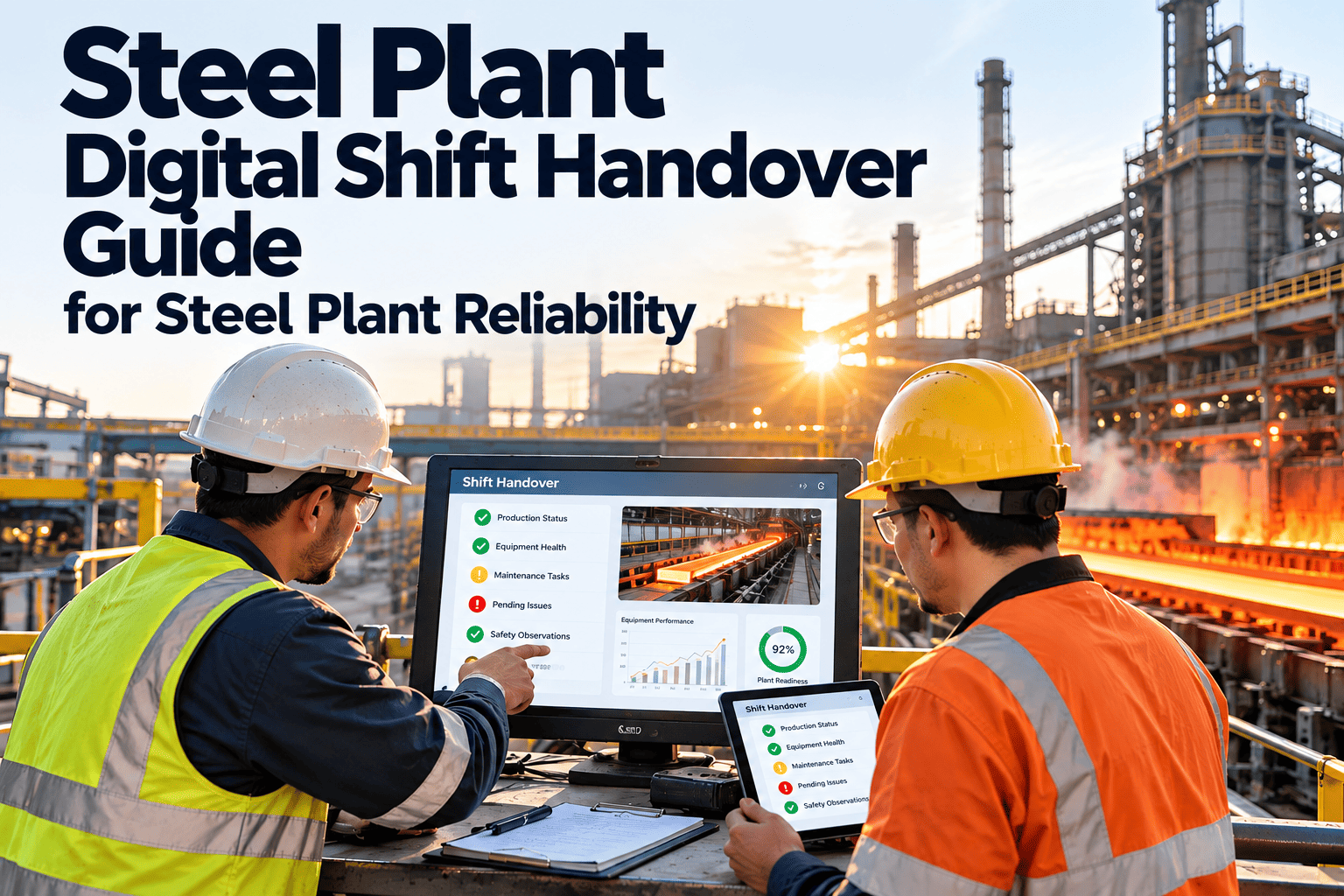
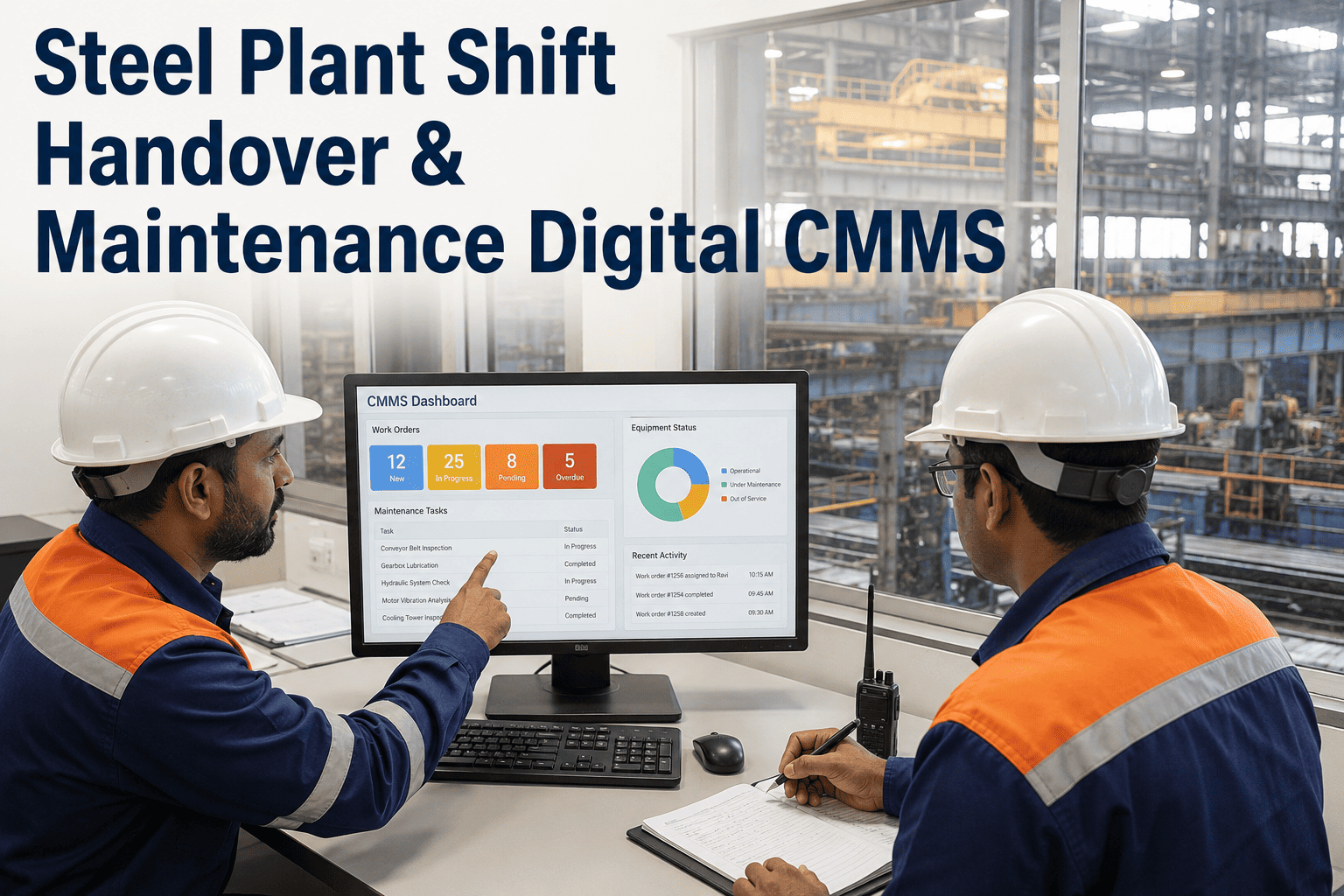
In a steel plant running three shifts across blast furnaces, rolling mills, and utilities, the moment one shift ends and another begins is the most dangerous and costly gap in operations. Critical equipment faults go unmentioned. Maintenance actions taken in the previous shift are never recorded. The incoming team starts blind — and pays for it with repeated breakdowns, missed safety checks, and hours of wasted investigation. OxMaint's Workforce Management module replaces paper logbooks and verbal handovers with a structured digital system that ensures nothing falls through the shift gap.
Shift Handover Problems in the Steel Industry
Why steel plant shift handovers fail — and how digital logbooks eliminate missed tasks, repeated breakdowns, and the safety gaps that paper can never close
The 5 Shift Handover Failures That Cost Steel Plants the Most
Research across integrated steel facilities shows that most handover failures are not caused by negligence — they are structural problems with how information is captured, stored, and transferred at shift change. These five failure modes account for over 80% of handover-related downtime and safety incidents.
When outgoing operators communicate shift status verbally, retention is under 40% — meaning 6 in 10 pieces of critical information are lost before the incoming team takes their first reading. In a blast furnace or hot strip mill, forgotten fault history causes incoming operators to start from zero on problems that were already partially diagnosed.
Paper logbooks are filled inconsistently — high-pressure shifts produce the least complete records, which are exactly the shifts where the most happened. Critical entries like "BF-02 tuyere cooling suspected — monitor closely" are skipped entirely because the outgoing operator is already walking to the gate.
When a maintenance task is started but not completed in a shift — a partial valve repair, a delayed lubrication round, an open safety isolation — the incoming shift has no structured way to know it exists unless the outgoing technician specifically mentions it. Most don't.
Running equipment status — whether an asset is running normally, running with a known fault, under monitor, or on standby — is almost never formally documented at shift change. Incoming operators discover equipment limitations only when they try to use full capacity and the fault re-manifests.
In most steel plants, there is no mechanism to verify whether a handover was complete, accurate, or received. When a breakdown occurs six hours into a new shift due to a fault the previous shift knew about, there is no record to establish when the information gap occurred or who was responsible.
OxMaint's digital shift logbook structures every handover — pending tasks, equipment status, alerts, and technician sign-off — in under 5 minutes. Book a demo or start free today.
Real Cost of Handover Failures — Steel Plant Data
| Failure Mode | Frequency (per 100 shifts) | Avg. Downtime Caused | Estimated Cost / Incident |
|---|---|---|---|
| Unknown pending fault at shift start | 12–18 incidents | 3.4 hrs investigation + repair | $22,000–$68,000 |
| Missed safety isolation handover | 4–8 incidents | 2–6 hrs (+ incident investigation) | $40,000–$140,000+ |
| Incomplete PM task — restarted from zero | 20–35 incidents | 1.8 hrs duplicated labour | $4,000–$12,000 |
| Equipment status unknown — capacity error | 8–14 incidents | 2.1 hrs average | $14,000–$38,000 |
| Repeat breakdown (known fault not escalated) | 6–10 incidents | 4.8 hrs average | $35,000–$95,000 |
What a Good Steel Plant Handover Must Cover
A structured shift handover in a steel plant environment is not a conversation — it is a verified information transfer across five critical categories. Every field must be recorded, confirmed, and acknowledged by the incoming team lead before the outgoing team is released.
Digital vs. Paper Handover — Performance Gap
Digital Shift Handover — Live in Your Plant in One Week
OxMaint's shift logbook module runs on any mobile device — no hardware investment, no IT project. Structured handover forms, pending WO transfer, safety isolation log, and incoming team sign-off. Ready in 7 days.
Expert Review
"Shift handover is the maintenance discipline that nobody measures — which is exactly why it costs so much. In a 5,000-tonne-per-day integrated steel plant, we calculated that poor handover quality was responsible for 38% of all repeat failures and approximately $2.4 million in annual avoidable downtime. The fix was not motivational — it was structural. When we moved to OxMaint's digital logbook, completion rates went from 52% to 97% within 30 days, and incoming teams stopped spending the first 40 minutes of every shift chasing information. The productivity gain alone paid for the platform in the first month. See the platform at app.oxmaint.ai."
Frequently Asked Questions
Stop Losing Production to Shift Handover Gaps
OxMaint's digital logbook ensures every shift starts with full visibility — equipment status, open tasks, safety isolations, and priority actions. Structured. Accountable. Live in your plant in one week.