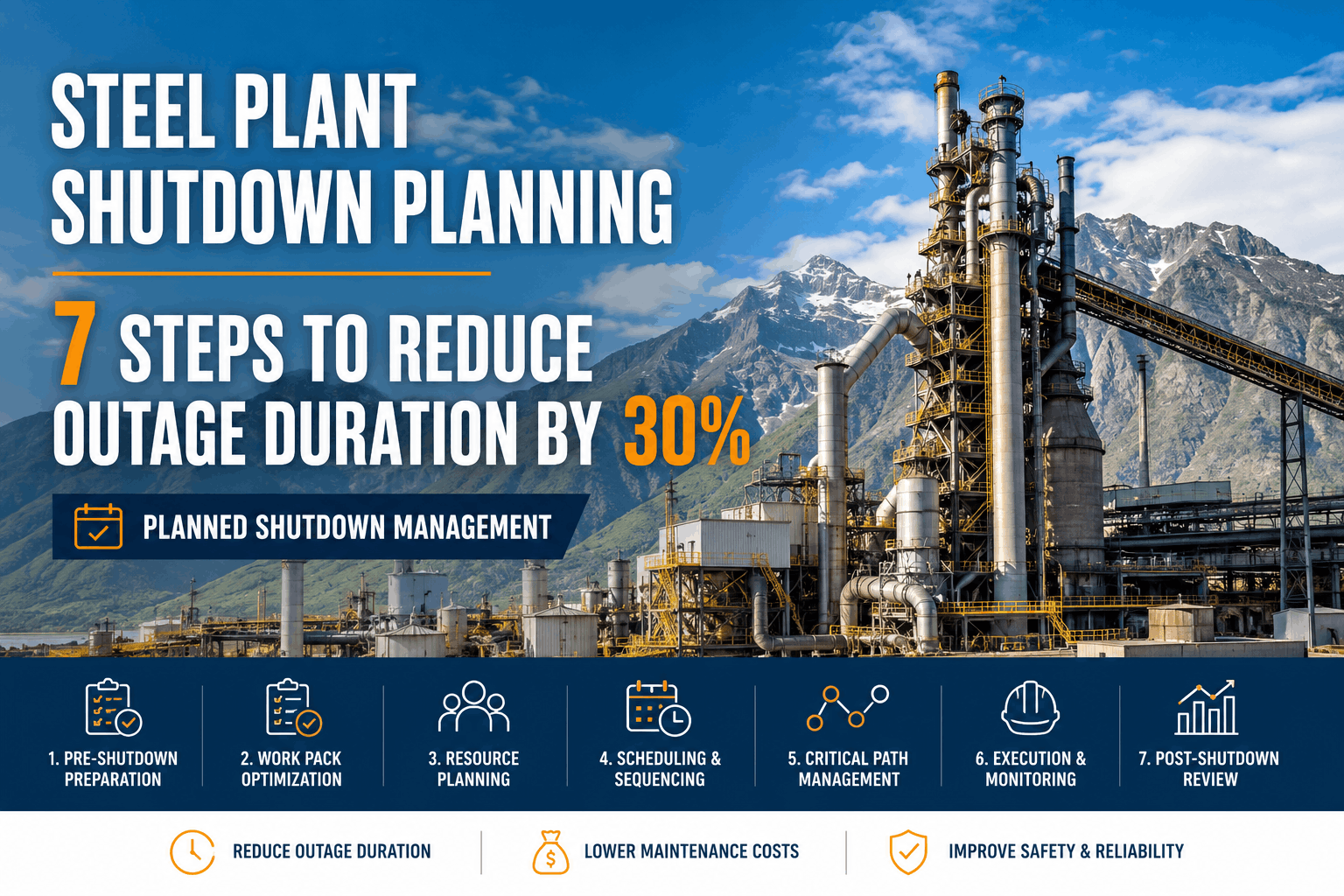
A steel mill in Pennsylvania completed their blast furnace reline three days behind schedule—each day of extended downtime cost $1.2 million in lost production. The overrun stemmed from poor coordination between refractory contractors, mechanical crews, and electrical teams, with critical path activities delayed by material staging issues that proper planning would have prevented. After implementing shutdown planning through Oxmaint, the plant completed their next major turnaround on schedule, reduced planning labor by 40%, and achieved zero safety incidents across 847 contractor personnel. This guide covers shutdown planning approaches for blast furnace relines and rolling mill overhauls.
Major steel plant shutdowns—blast furnace relines, rolling mill overhauls, caster maintenance campaigns—represent the largest capital expenditures and longest production interruptions facilities face. A 45-day blast furnace reline involves thousands of work orders, dozens of contractor crews, and millions of dollars in materials and labor. Success requires systematic planning that starts months before the first refractory brick is removed. Book a demo to see how Oxmaint supports steel plant shutdown management.
Steel Plant Shutdown Planning: Blast Furnace Reline & Mill Overhaul Guide
Comprehensive planning strategies for major steel plant turnarounds and outage management.
Planning Timeline
Major shutdowns require phased planning beginning 12-18 months before execution.
Scope Definition
Define shutdown boundaries, preliminary work list development, budget estimation, and contractor prequalification.
Detailed Planning
Work order development, resource loading, critical path analysis, material procurement, contractor selection.
Execution Prep
Final scheduling, contractor mobilization plans, safety training, staging area preparation, tool requirements.
Final Readiness
Material receipt verification, contractor kick-off meetings, daily schedule finalization, communication protocols.
Blast Furnace Reline Scope
Oxmaint tracks all reline work packages from blowdown through restart.
Blowdown & Cooling
Controlled furnace shutdown, burden descent, gas system isolation, and cooling period before personnel entry.
Demolition
Refractory removal from hearth, bosh, belly, and stack. Stave and cooling system inspection and replacement.
Reconstruction
New refractory installation, stave replacement, cooling system hookup, instrumentation installation.
Dry-Out & Startup
Controlled heat-up to cure refractory, blow-in preparation, and production ramp-up to full capacity.
Plan Your Next Shutdown
Oxmaint provides integrated outage planning with critical path tracking and contractor coordination.
Rolling Mill Overhaul
Mill shutdowns address mechanical wear, roll shop requirements, and drive system maintenance.
Stand Rebuilds
Housing inspection, bearing replacement, roll gap adjustment systems, and structural integrity verification.
Drive Systems
Motor inspection, gearbox overhaul, spindle replacement, and coupling alignment across mill line.
Roll Shop
Roll grinding machine maintenance, roll storage systems, and roll handling equipment overhaul.
Auxiliary Systems
Cooling water systems, hydraulic units, lubrication systems, and descaling equipment maintenance.
Critical Path Management
Oxmaint identifies and tracks critical path activities that determine shutdown duration.
Identify Critical Activities
Determine longest duration path through shutdown schedule. Any delay on critical path extends total outage.
Resource Load Critical Path
Ensure adequate labor, equipment, and materials assigned to critical activities. No resource conflicts allowed.
Build Float Activities
Identify non-critical work with schedule float. Use float as buffer and resource balancing opportunity.
Daily Progress Tracking
Monitor critical path completion percentage daily. Early warning of slippage enables corrective action.
Contractor Coordination
Major shutdowns involve multiple specialty contractors working simultaneously.
Refractory Contractors
Demolition and installation of refractory linings. Specialized crews for different brick types and installation methods.
Mechanical Contractors
Equipment removal, rebuilds, and installation. Rigging, millwright, and pipefitting services.
Electrical Contractors
Motor work, instrumentation installation, cable pulling, and termination. Power system maintenance.
Insulation & Scaffolding
Scaffold erection supporting all trades. Insulation removal and reinstallation on hot equipment.
Inspection Services
Non-destructive testing, thickness surveys, and quality verification of completed work.
Crane & Rigging
Heavy lift services for major component removal and installation. Critical path for large equipment moves.
Coordinate All Contractors
Oxmaint provides single-platform visibility across all contractor activities and progress.
Material Management
Shutdown material logistics require advance procurement and staged delivery.
Long-Lead Items
Staves, large motors, custom fabrications, and specialty refractory requiring 6-12 month lead times. Order early.
Bulk Materials
Refractory brick, mortar, gaskets, and consumables. Staged delivery to match installation schedule.
Spare Parts
Bearings, seals, instruments, and replacement components for discovered conditions. Buffer stock required.
Consumables
Welding supplies, fasteners, gasket material, and installation consumables. On-site stores management.
Safety Management
Shutdown safety requires systematic planning for concentrated high-risk activities.
Contractor Orientation
Site-specific safety training for all contractor personnel before work begins. Documented completion required.
LOTO Coordination
Complex lockout/tagout for interconnected systems. Group lockout procedures for multi-contractor work areas.
Hot Work Management
Concentrated welding and cutting operations near combustibles. Fire watch coverage and permit management.
Confined Space
Furnace interior, vessels, and enclosed equipment require entry permits, atmospheric monitoring, and rescue provisions.
Daily Execution
Structured daily routines maintain momentum and identify issues early.
Morning Briefing
Review prior shift accomplishments, current day priorities, safety focus topics, and resource requirements.
Progress Tracking
Real-time work order updates from field supervisors. Critical path activity monitoring throughout shift.
Afternoon Update
Midday progress assessment, issue escalation, and resource reallocation for emerging needs.
End-of-Day Report
Completed work summary, schedule variance analysis, next day preparation, and management reporting.
Frequently Asked Questions
Deliver On-Time Shutdowns
Join steel plants using Oxmaint to plan and execute major turnarounds on schedule and on budget.