
In 2026, the U.S. steel industry's highest-performing maintenance programs share one structural advantage: they converted sensor data into action automatically — without routing every alert through a human decision point that adds hours of delay between failure detection and technician dispatch. The results are documented and quantifiable. A Pittsburgh hot strip mill eliminated 58% of its cobble events by connecting AGC servo response monitoring to Oxmaint's automated work order engine. An Indiana EAF mini-mill reduced electrode consumption 11% through per-heat data capture that identified operating practice improvements invisible to weekly manual stock counts. A Michigan cold rolling mill prevented $1.52M in motor replacements by catching 12 winding failures via motor current signature analysis before they progressed to full winding collapse. These are not theoretical projections — they are measured outcomes from U.S. steel operations running predictive maintenance programs with Oxmaint as the CMMS backbone that converts sensor intelligence into executed repair events. This guide documents the top 10 predictive maintenance wins in steel plants in 2026 — covering vibration analysis, oil analysis, thermal imaging, motor current analysis, and AI multi-parameter failure prediction — organized by the specific steel asset, the detection technology, and the measurable outcome. Use these case examples as your benchmark when building your own predictive maintenance program with a structured steel plant maintenance schedule as the foundation.
The PdM Technology Stack for Steel Plants in 2026
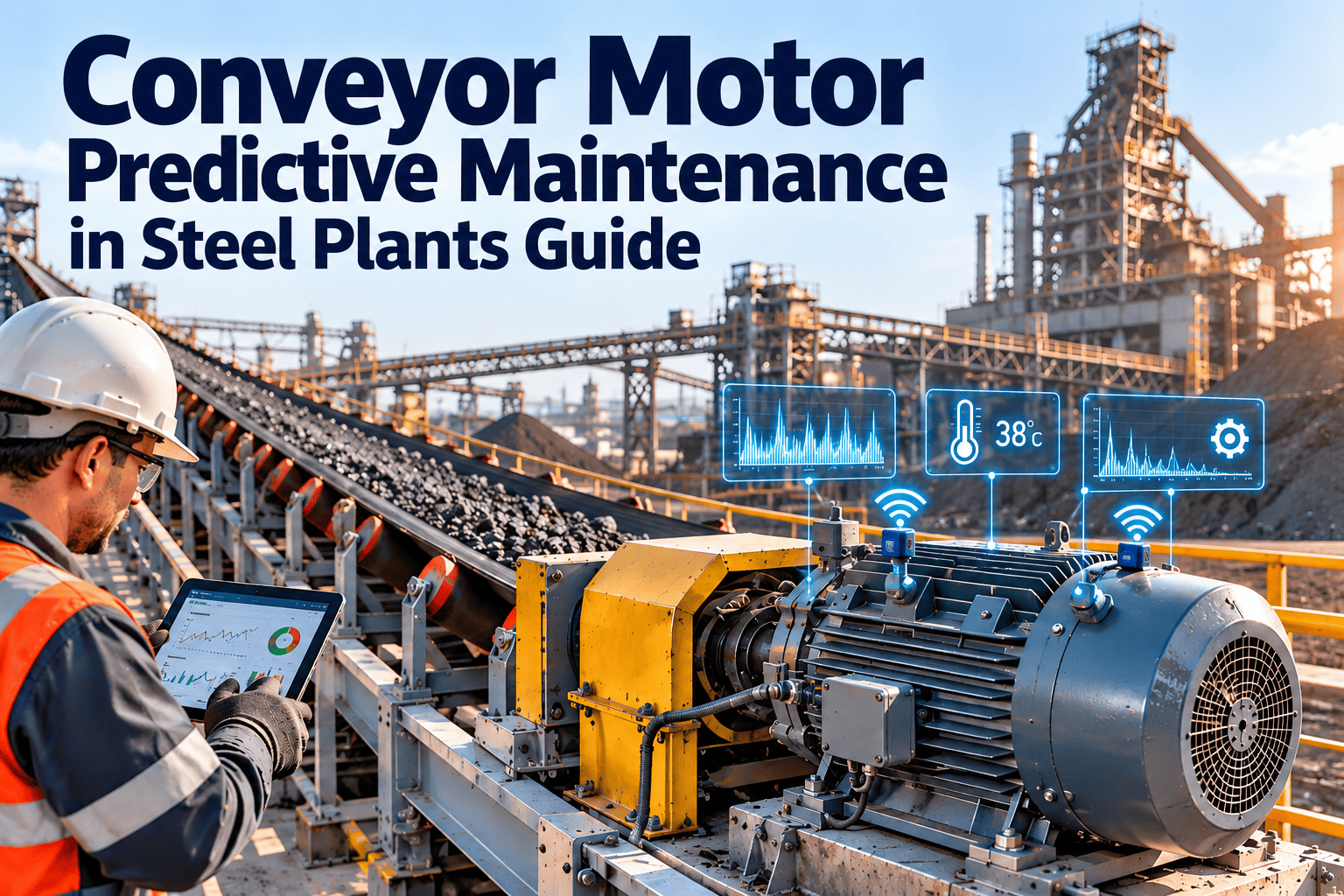
Steel plant predictive maintenance programs in 2026 are not single-technology programs — they are multi-modal sensing architectures where different failure modes are matched to the detection physics most sensitive to their specific signature. Bearing fatigue is best detected by vibration frequency analysis (BPFO, BPFI, BSF signatures) 4–8 weeks before audible failure. Lubrication degradation is best detected by oil analysis (viscosity shift, wear metal particle count, contamination index) 3–6 weeks before bearing surface damage accelerates. Electrical insulation breakdown is best detected by motor current signature analysis (MCSA) and thermal imaging — MCSA catches rotor bar defects and stator winding degradation; thermal imaging catches hot spots in switchgear, motor windings, and electrical connections before insulation failure. Cooling system integrity — the highest-consequence failure domain in EAF steelmaking — is best detected by pressure and flow monitoring, flagging circuit deviations within hours of a developing leak rather than days after it becomes a production crisis.
What transforms individual sensor technologies from data collection into failure prevention is the connection to a CMMS that automatically converts sensor alerts into assigned, tracked, and completed repair work orders. According to 2026 DOE predictive maintenance research, 95% of industrial PdM adopters report positive outcomes — but the programs that achieve the top-tier results (10× ROI within 2–3 years) are consistently those where the sensor-to-work-order workflow operates without manual intermediate steps. Oxmaint is the CMMS backbone behind every case study below — the platform that converted sensor anomalies into repair work orders automatically, on the day the signal appeared, rather than routing them through a dashboard queue that waits for a human to notice and react.
Top 10 Predictive Maintenance Wins in Steel Plants 2026
A work roll bearing in a Pennsylvania hot strip mill's finishing stand began generating BPFO (Ball Pass Frequency Outer Race) harmonics at 4× the baseline amplitude during a routine vibration sweep. Oxmaint's AI engine identified the signature as a Stage 2 bearing defect — progressing but 4–6 weeks from surface failure. A planned bearing replacement was executed during the next scheduled rolling schedule gap. The bearing extracted during replacement showed clear outer race pitting across 40% of the race surface — the failure that, left undetected, would have caused an in-roll bearing seizure and a hot strip rolling accident at 200m/min strand speed. Estimated avoided cost: $1.6M in emergency downtime and mill damage. Intervention cost: $8,400.
Monthly oil sampling on the blast furnace top drive gearbox at an Ohio integrated mill detected a sharp rise in ferrous wear particle count — from a normal 180 ppm to 2,400 ppm across two consecutive monthly samples. Particle shape analysis indicated large, irregularly shaped particles consistent with fatigue spalling on gear tooth flanks. Oxmaint generated an immediate high-priority work order for oil drain, visual gear inspection, and particle filtration. Visual inspection confirmed progressive tooth flank fatigue on 3 of 8 helical gear teeth. The gearbox was replaced during the next planned blast furnace reline window. An undetected failure of the BF top drive during production would have required a 5–7 day unplanned furnace outage — an estimated $4.2M production loss at that facility's iron output rate.
A quarterly thermal imaging survey of the EAF main transformer secondary bus bar connections at an Indiana mini-mill detected a hot spot 87°C above ambient at one bolted connection — a differential that indicates significant contact resistance from loosened or oxidized connections. Oxmaint auto-generated a planned work order for bus bar inspection, torque checking, and connection refurbishment during the next planned furnace cool-down. The connection was found to have a 40% contact area reduction from oxidation. Refurbished at a cost of $3,200. An undetected progression would have caused arc flash at the connection — destroying the transformer's secondary side, requiring a 4–6 week replacement lead time, and generating an estimated $6.8M in production losses plus environmental and safety incident consequences.
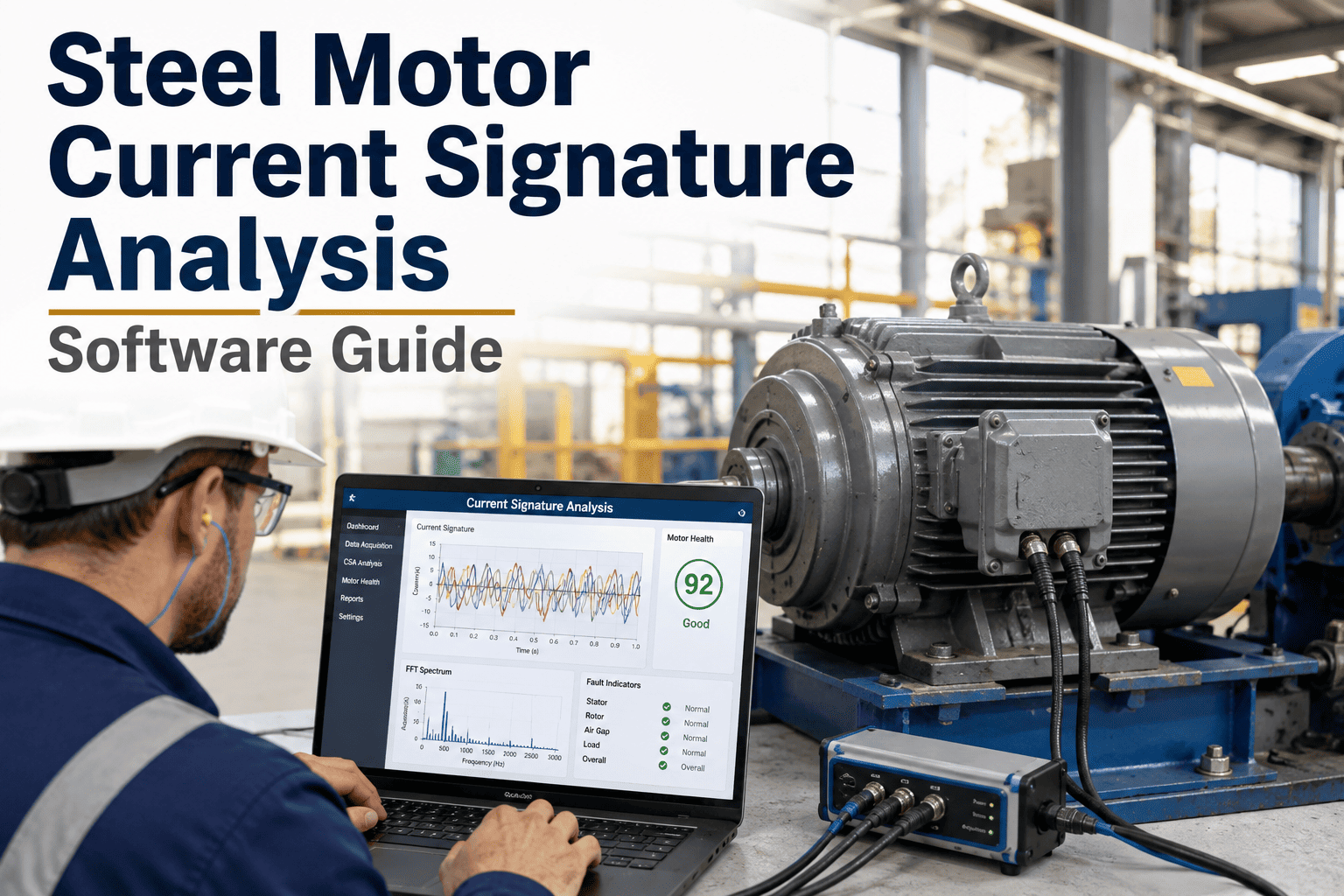
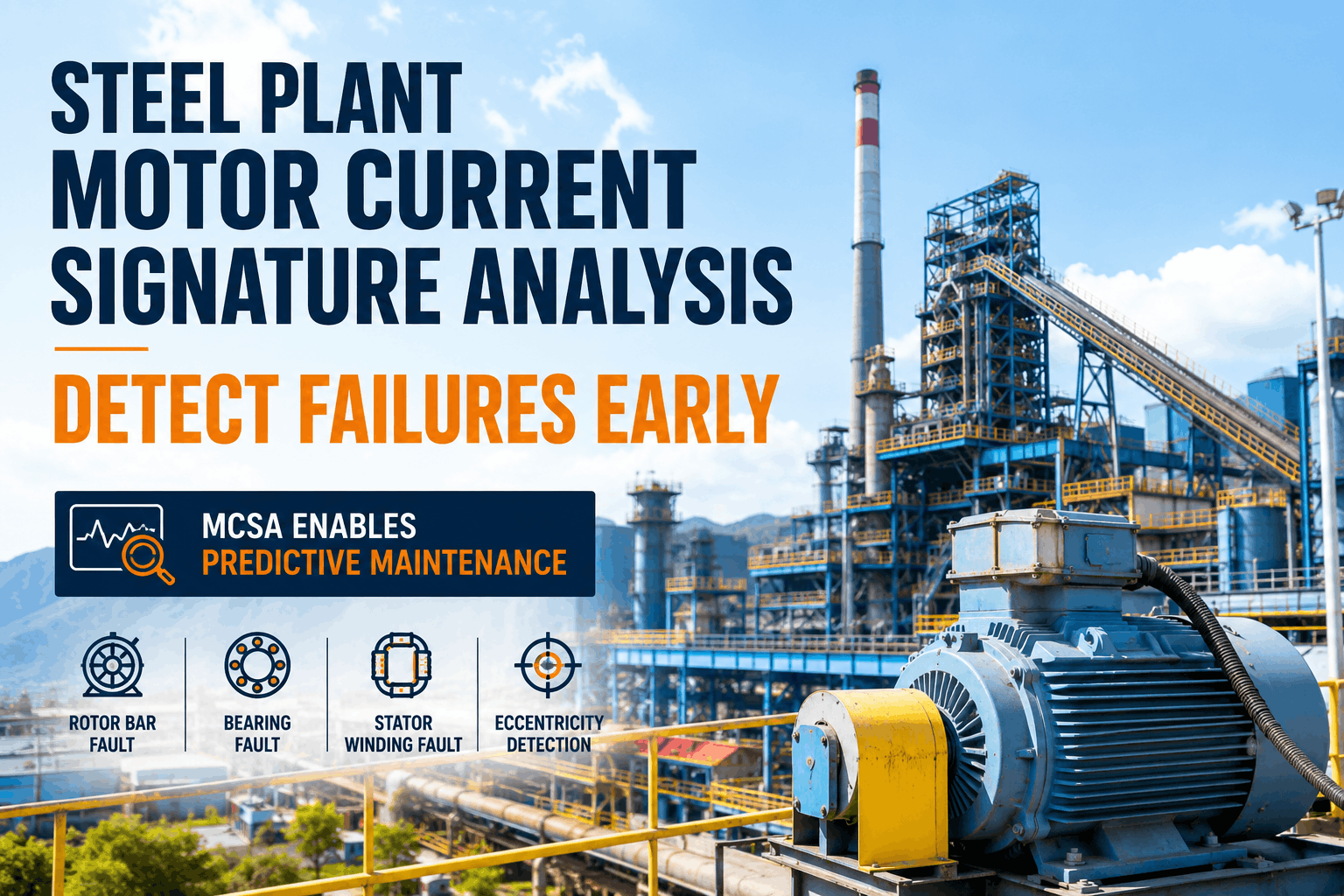
A Michigan cold rolling mill deployed MCSA monitoring on its 28 largest drive motors targeting stator winding insulation breakdown and rotor bar defects that manifest in current signature degradation before visible thermal or vibration symptoms appear. Oxmaint ingested MCSA data feeds and generated work orders when current signature degradation exceeded configured thresholds — calibrated per motor based on historical baseline signatures. In 14 months, 12 individual winding issues were identified and repaired at an average intervention cost of $18,000 per motor — versus the $145,000 average replacement cost of a failed motor at that plant. Total avoided replacement cost: $1.52M. The program also identified thermal acceleration patterns in 6 motors with inadequate cooling — corrected during planned downtime.
A Midwest integrated mill's rolling mill gearbox predictive program switched from single-sensor vibration thresholding to Oxmaint's AI multi-parameter model — correlating vibration, oil particle count, temperature, and motor current simultaneously. The result was a false positive rate reduction from 38% (single-sensor threshold) to 6% (multi-sensor AI model) — meaning technicians went from ignoring every third alert to acting on virtually every alert received, because trust in alert precision was established. The first multi-parameter alert that the old system would have missed (vibration within normal range, but oil particle count AND temperature trending together) identified a gearbox approaching early Stage 3 bearing failure. Planned replacement during scheduled maintenance prevented what reliability engineering estimated as a $3.4M emergency failure at full rolling speed.
AGC servo valve response time trending on Pittsburgh's hot strip mill finishing stands identified a pattern where response time degradation of 8–12ms from baseline reliably preceded cobble events within 2–3 weeks. Oxmaint connected servo response monitoring outputs to automated work orders when response time trends crossed the degradation threshold. Hydraulic maintenance during the next scheduled pass at the stand brought response times back within specification. Cobble rate fell 58% in 12 months, and OEE improved 8.4 percentage points — equivalent to $14M in additional annual production value. Rolling mill yield loss from cobbles dropped from $2.3M annual to $870K annual. The program paid back its full instrumentation and Oxmaint configuration cost in the first month of cobble reduction.
A continuous caster segment roller bearing at an Ohio integrated mill showed early vibration frequency elevation at the BPFI frequency — an inner race defect signature — combined with rising iron fines in the segment's grease sample. Oxmaint's AI correlation model flagged the combined signature as a Stage 2–3 transition bearing defect requiring replacement within 3 weeks. Segment roller replacement was executed during the next planned caster stop. The extracted bearing showed significant inner race spalling — if left another 2–3 casting sequences, the probability of a seized roller during a heat, causing a strand shape defect and potential breakout, was assessed by the reliability team at above 70%. A caster breakout event at that mill carries an estimated $800K in direct damage and production loss plus a 48-hour restart sequence.
Integrated thermal monitoring and cooling water flow rate trending on the blast furnace shell at a Texas integrated mill detected a developing hot spot on one cooling stave panel — heat flux 34% above the adjacent stave baseline, combined with cooling water outlet temperature 6°C higher than the paired inlet differential should produce. Oxmaint generated an immediate planned maintenance work order for stave inspection during the next reline window. Visual inspection through a tapping hole confirmed early refractory erosion behind the stave, with the stave itself showing beginning deformation. Emergency stave replacement was avoided — the issue was repaired during the planned window at a total cost of $180,000 versus an estimated $6.1M for a forced furnace shutdown from stave burnout with hot metal spillage and production interruption.
Hydraulic pressure and position response monitoring on EAF electrode arm hydraulic cylinders at an Indiana mini-mill detected cylinder drift patterns — a leading indicator of hydraulic seal wear — that were generating irregular electrode position control during arcing. The irregular positioning was causing elevated electrode consumption (3–7% above optimal for the affected heats) and a higher-than-normal electrode breakage rate. Oxmaint flagged the position control degradation as a maintenance priority. Seal replacement corrected the position control precision, and the combined effect of better electrode positioning, per-heat consumption tracking, and operating practice adjustments reduced annual electrode costs by $380,000. The hydraulic seal maintenance intervention itself cost $4,800.
A U.S. steel group's 5-plant Oxmaint deployment — encompassing 156 wireless IoT sensors across 32 critical assets per plant — documented total portfolio predictive maintenance savings of $2.1M annually in Year 1. The savings breakdown: $840K from prevented emergency HVAC, hydraulic, and drive system failures at planned repair cost; $620K from bearing and gearbox replacement at the maintenance-intervention stage rather than the catastrophic failure stage; $380K from electrode consumption optimization at the EAF sites; and $260K from motor winding interventions before full failure. PM compliance across all 5 plants averaged 91% versus the 54% portfolio baseline. Emergency maintenance costs fell an average of 38% across the portfolio. The program invested $220,000 in Oxmaint platform costs and IoT hardware, generating a first-year return of 9.5× before second-year compounding effects.
ROI by PdM Technology — Steel Plant Benchmarks 2026
"Before Oxmaint, our sensor data lived in a dashboard that required a reliability engineer to notice and act on every alert. That bottleneck meant alerts sat for 24–72 hours before becoming work orders — and by then, the repair window was often gone. Oxmaint's automated sensor-to-work-order workflow removed that bottleneck entirely. Our false positive rate dropped below 8%, our technicians trust and act on every alert, and we documented $2.1M in Year-1 predictive savings across our five-plant portfolio."
.png)

