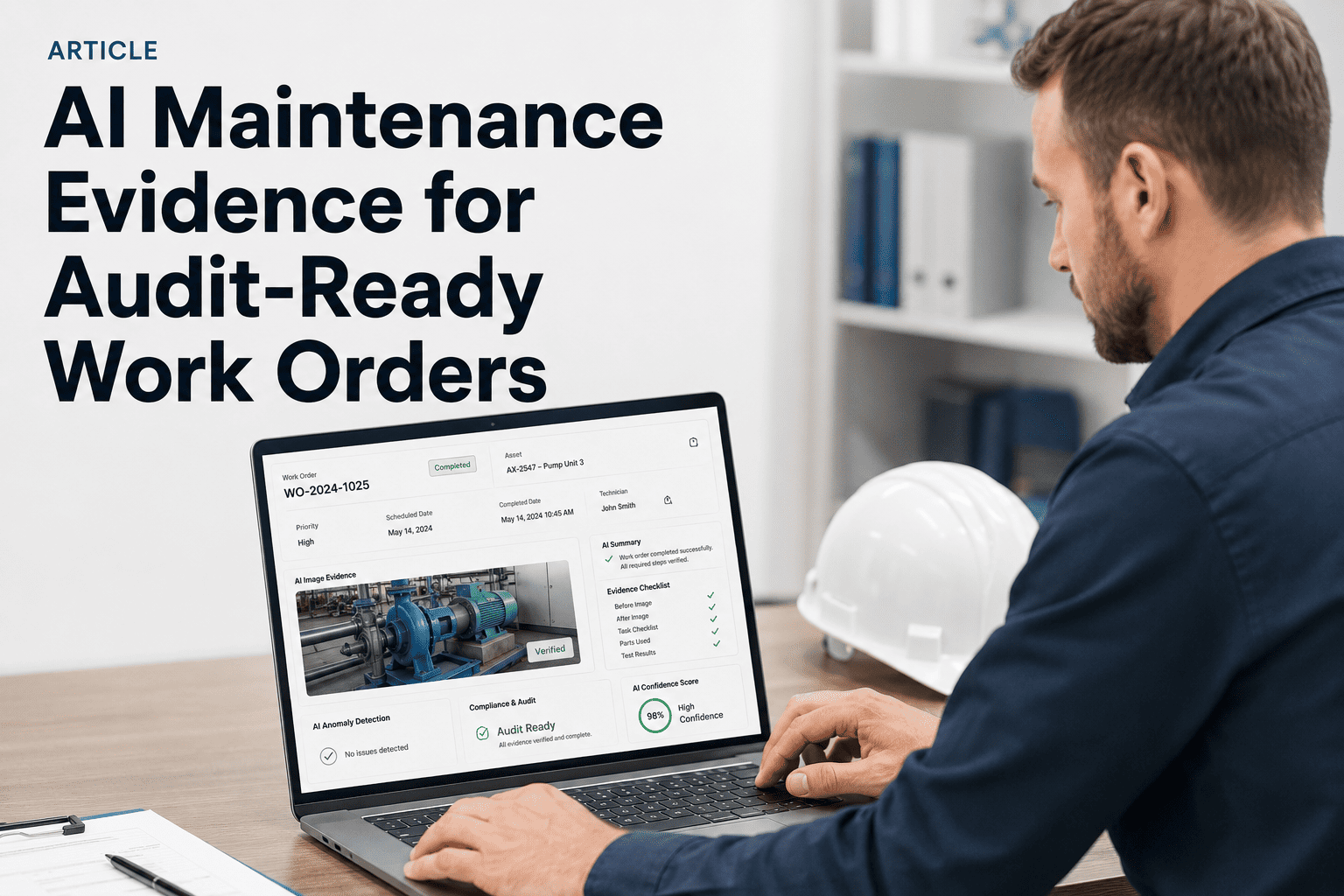
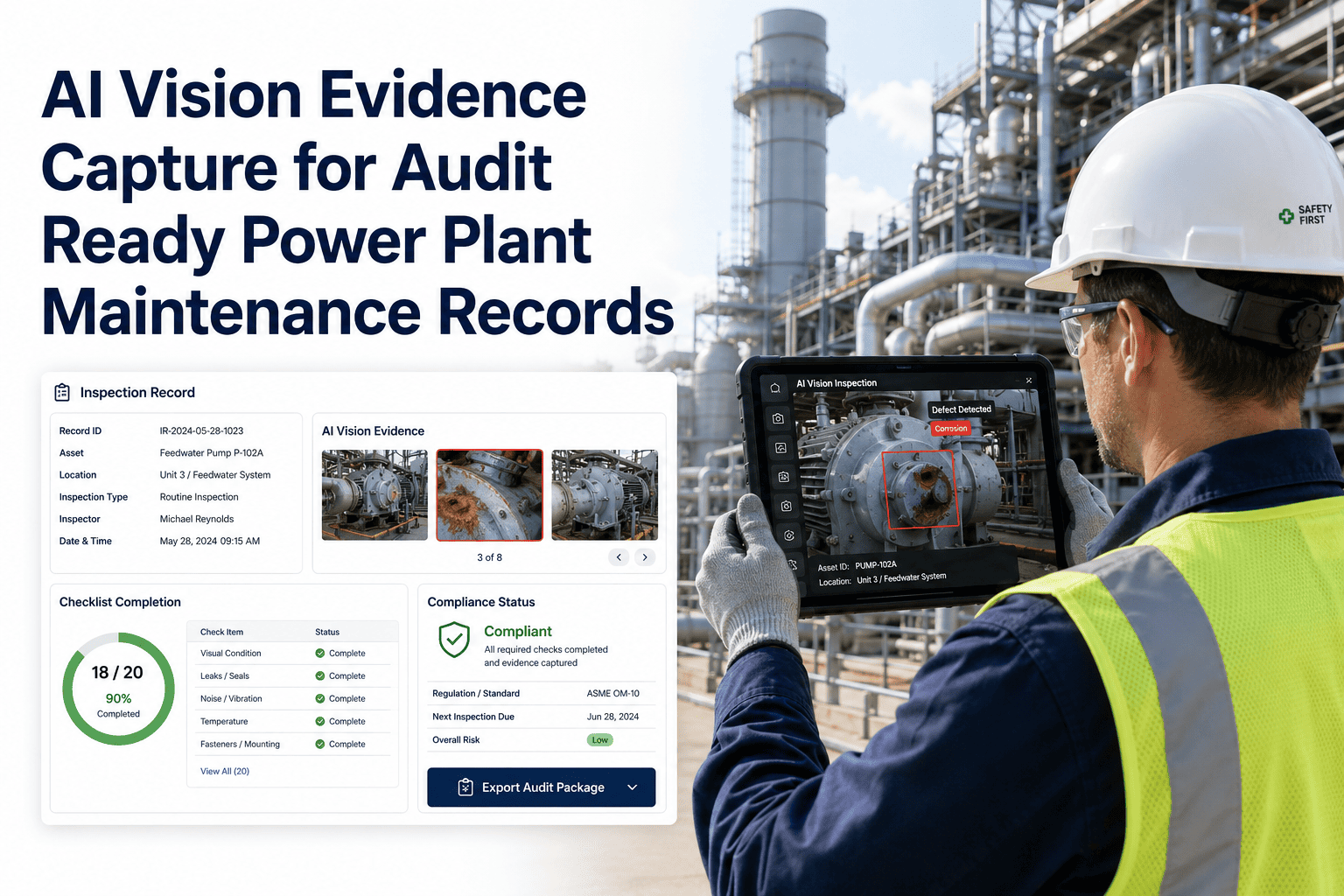
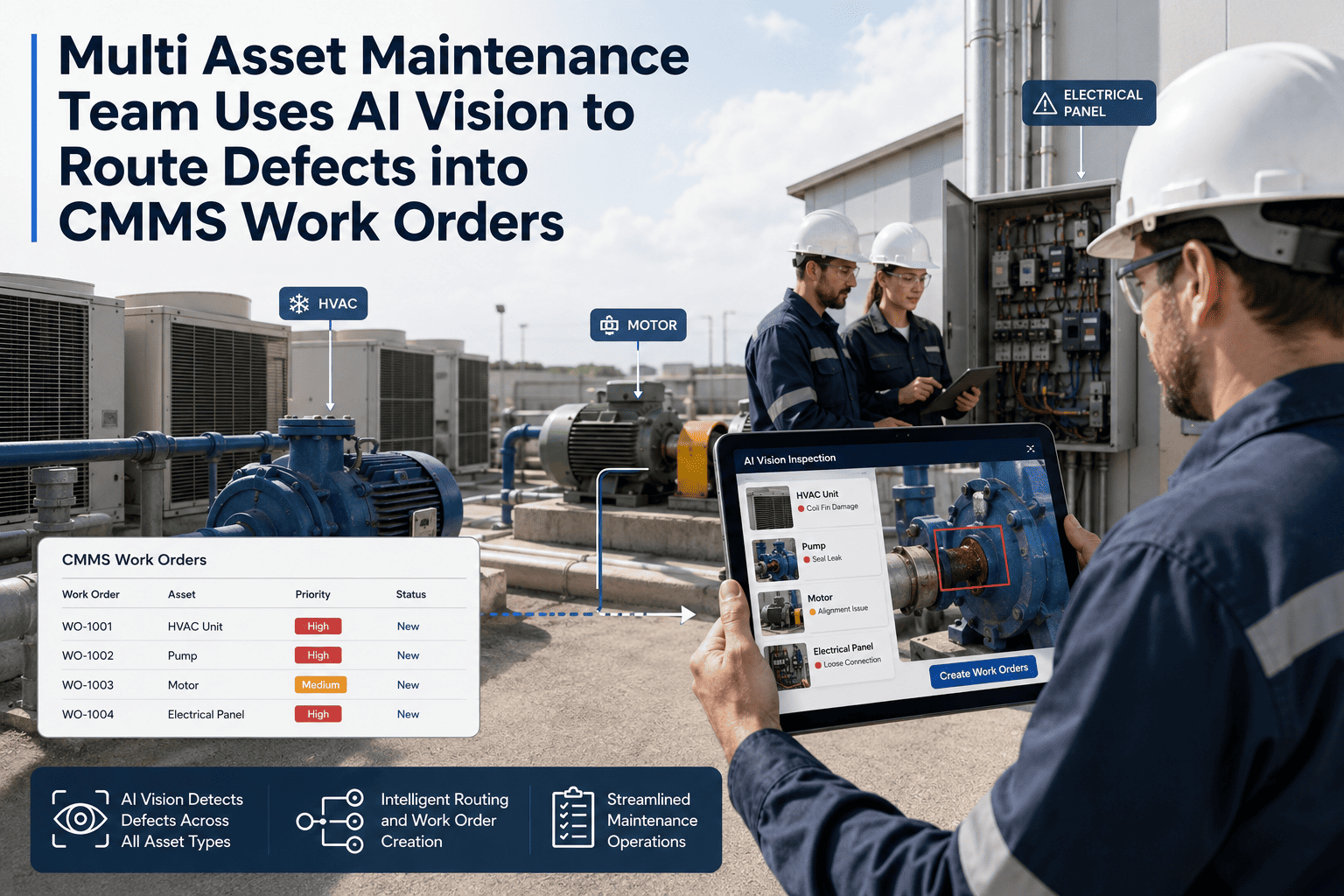
Audit readiness used to mean filing cabinets and spreadsheet printouts — artifacts that auditors tolerated because nothing better existed. Today, the standard has changed. Regulatory bodies, insurance providers, and internal risk teams increasingly expect continuous, timestamped, photo-linked maintenance evidence that proves what was inspected, what was found, what was done, and who did it. AI-generated maintenance evidence does exactly that — and when it feeds directly into CMMS work orders, the documentation builds itself without a single manual entry. This article on AI maintenance evidence for audit-ready work orders explains what that evidence chain looks like, what it must contain to satisfy the most common compliance frameworks, and how teams using OxMaint are passing audits that previously required weeks of documentation preparation. Start your free trial to see the evidence chain in action, or book a demo and walk through an audit report generated from real work orders.
Article · AI Vision Evidence · Audit-Ready Maintenance
AI Maintenance Evidence for Audit-Ready Work Orders
How AI-generated inspection evidence builds a compliance-ready documentation chain — automatically, from first detection to closed work order.
What Auditors Actually Look for in Maintenance Records
A compliance audit of maintenance records is not a spot-check of whether PMs were completed. It is a systematic test of whether the maintenance program can prove its claims under adversarial scrutiny. These are the six evidence dimensions that consistently determine pass or fail.
✓
Timestamped Evidence
Every inspection event must carry an immutable timestamp at the point of detection — not the point of data entry. AI-generated evidence timestamps at capture.
✓
Visual Proof of Condition
Auditors want to see what was found, not just what was reported. Annotated AI detection images provide visual proof that manual descriptions cannot.
✓
Unbroken Chain: Detection to Repair
There must be a traceable link from the condition that was detected, to the work order created, to the technician who resolved it — with no undocumented gaps.
✓
Asset Identity and History
The inspection record must tie to a specific asset tag with a complete history — not a generic equipment category or a location description.
✓
Response Time Documentation
How long between detection and work order creation? Between work order creation and technician assignment? Between assignment and completion? All must be logged.
✓
Technician Identity and Qualification
Who performed the repair, with what qualification level, on which date? The work order completion record must capture this — ideally with a digital signature.
What AI-Generated Evidence Contains vs. Manual Records
Manual Inspection Record
Handwritten or typed description of condition
Timestamp at time of data entry (not detection)
No visual evidence unless photos manually attached
Asset identified by room/zone, not tag ID
Work order created manually, gap between detection and creation
No severity scoring — severity is subjective to the inspector
Audit trail has gaps at every handoff point
AI-Generated Evidence (OxMaint)
Structured defect classification with confidence score
Timestamp at moment of AI detection, immutable
Annotated image embedded in work order automatically
Asset tag ID mapped to hierarchy — site, system, component
Work order auto-created within 60 seconds of detection
Severity scored against asset criticality and defect type
Unbroken chain from detection to closure, exportable for audit
Compliance Frameworks: What Each Standard Requires from Maintenance Evidence
| Framework |
Key Evidence Requirement |
AI + CMMS Coverage |
| ISO 55000 |
Asset condition data, maintenance records, evidence of risk-based decisions |
Detection logs, WO history, severity-based routing |
| OSHA 1910.132 |
Documentation of equipment inspections and corrective actions taken |
Inspection event log with annotated images and WO closure |
| 21 CFR Part 11 |
Electronic records with secure, timestamped, non-repudiable audit trail |
Immutable timestamped records, digital signatures on WO closure |
| ISO 9001 |
Calibrated inspection processes, records of nonconformance and correction |
Defect classification, WO creation, repair evidence, failure codes |
| IEC 62443 |
Documented maintenance activities on industrial control system assets |
Asset-tagged maintenance records with technician ID and timestamp |
Walk through a real audit report generated from OxMaint AI maintenance evidence.
See the full evidence chain — detection image, work order, technician completion, failure code — exported as a compliance-ready audit pack in one click. Book a live session and bring your compliance checklist.
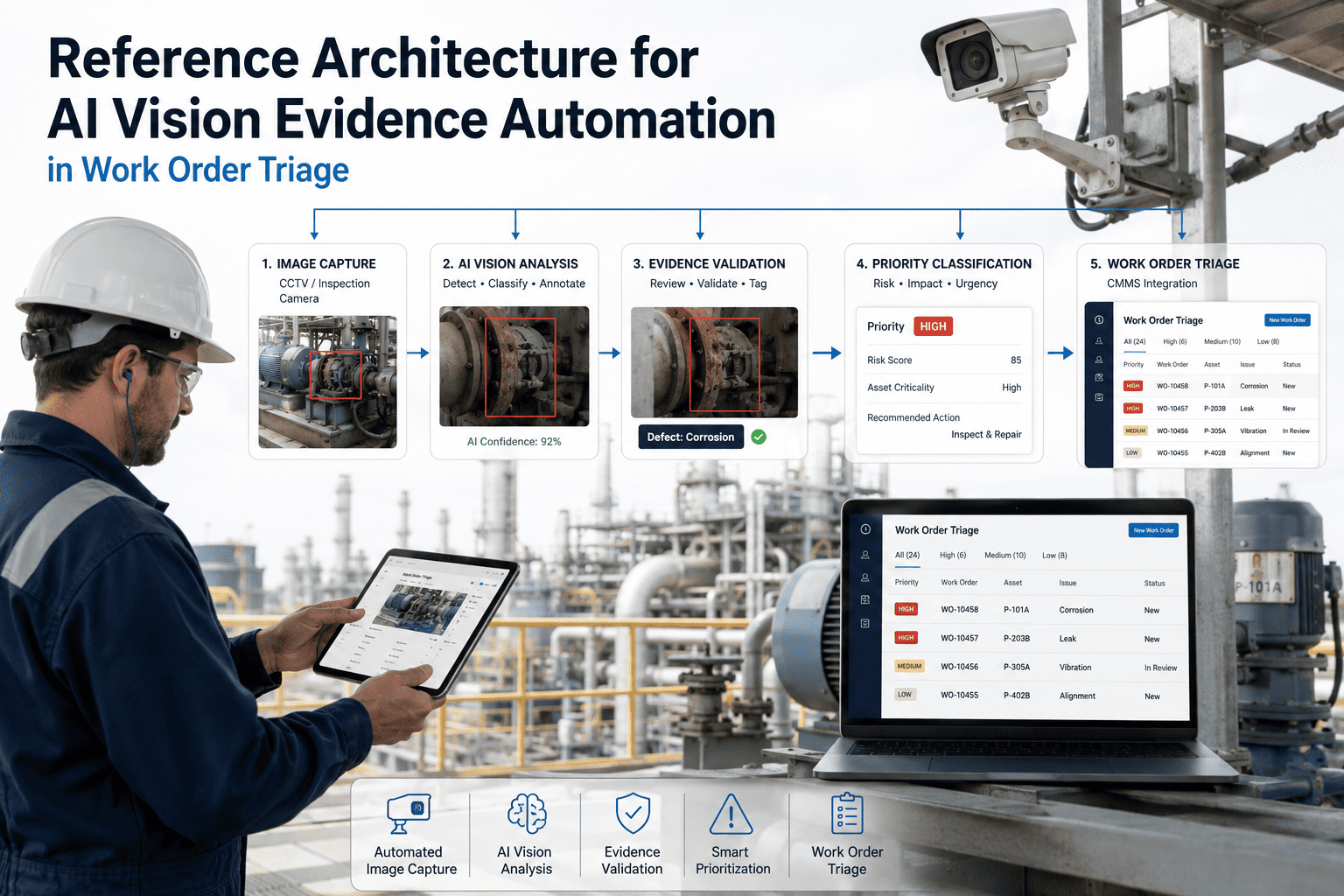
The Evidence Chain: From AI Detection to Audit Export
AI Detection Event
Defect identified, annotated image captured, confidence score assigned, asset tag matched — all at moment of detection with immutable timestamp.
Audit artifact: Detection record with image
Automatic Work Order Creation
CMMS creates work order within 60 seconds — pre-populated with detection evidence, asset history, severity level, and assigned technician.
Audit artifact: WO creation timestamp and assignment log
Technician Execution
Technician receives work order on mobile device, follows CMMS-guided procedure, captures completion photos, records what was found.
Audit artifact: Technician ID, procedure steps, completion photos
Work Order Closure with Failure Code
Repair outcome, failure mode, parts used, and resolution method logged against the asset record with digital signature and close timestamp.
Audit artifact: Failure code, parts record, digital signature
Audit Export
One-click audit pack exports the full evidence chain — detection, WO, technician, closure — formatted for the specific compliance framework being audited.
Ready for auditor review
Expert Review
Sunita Patel
Compliance & Maintenance Systems Consultant, 16 years — ISO 55000, GMP, OSHA
The single most common finding I document in maintenance compliance audits is the same one year after year: the gap between what happened and what was recorded. Not because the maintenance didn't happen — it usually did. But because manual records are timestamped at data entry, not at the event. AI-generated inspection evidence solves this structurally. When the detection record, the work order, and the closure log all carry immutable AI-timestamped evidence, the gap disappears. The most significant shift I've seen in the last two years is organizations going from three weeks of audit preparation to generating a compliant evidence pack in under an hour. That's not an incremental improvement — it's a different operating model for compliance.
Frequently Asked Questions
Can AI-generated maintenance evidence satisfy 21 CFR Part 11 requirements?
Yes, when the evidence chain meets the four core requirements: records are electronic, timestamped, attributable to a specific user or system, and non-repudiable. OxMaint's AI-to-CMMS pipeline produces records that satisfy all four — with digital signatures on work order closures providing the audit trail that Part 11 requires.
Book a demo to review your specific compliance requirements against OxMaint's evidence architecture.
How are AI detection records stored and protected against tampering?
Detection events are written to an immutable log at the moment of AI capture — separate from the work order record that follows. Neither the detection record nor the work order history can be edited after creation; only new records can be appended. This architecture satisfies the tamper-evidence requirements of ISO 55000, OSHA, and FDA audit standards.
Start a free trial to review the data architecture documentation.
What format does the audit export use — and can it be customised per compliance framework?
OxMaint's audit export generates PDF and CSV evidence packs that can be filtered by asset, date range, defect type, technician, or work order status. Framework-specific templates for ISO 55000, OSHA, and GMP include the evidence fields most commonly requested during audits.
Book a demo and bring a past audit finding to see how OxMaint would have covered it.
What happens to the evidence chain if a work order is reassigned mid-execution?
Every assignment change is logged with a timestamp and the identity of who made the change and why. The evidence chain tracks all technicians who touched the work order — not just the one who closed it. Re-assignments appear as a sequential event log, not as an overwrite of the original assignment record.
Start free to test the assignment audit trail with your team structure.
Does OxMaint support multi-site audit evidence across different facilities?
Yes. OxMaint's multi-site hierarchy allows corporate compliance teams to export unified audit packs across all facilities, or facility-specific packs for individual site audits. Asset hierarchies, detection records, and work orders are partitioned by site but visible in aggregate from the corporate dashboard.
Book a demo to see the multi-site compliance view.
The next audit should take one hour to prepare, not three weeks.
OxMaint builds the evidence chain automatically — from the moment AI detects a defect to the work order, the repair, and the closure record. Export a complete audit pack in one click. Start free or see it live.