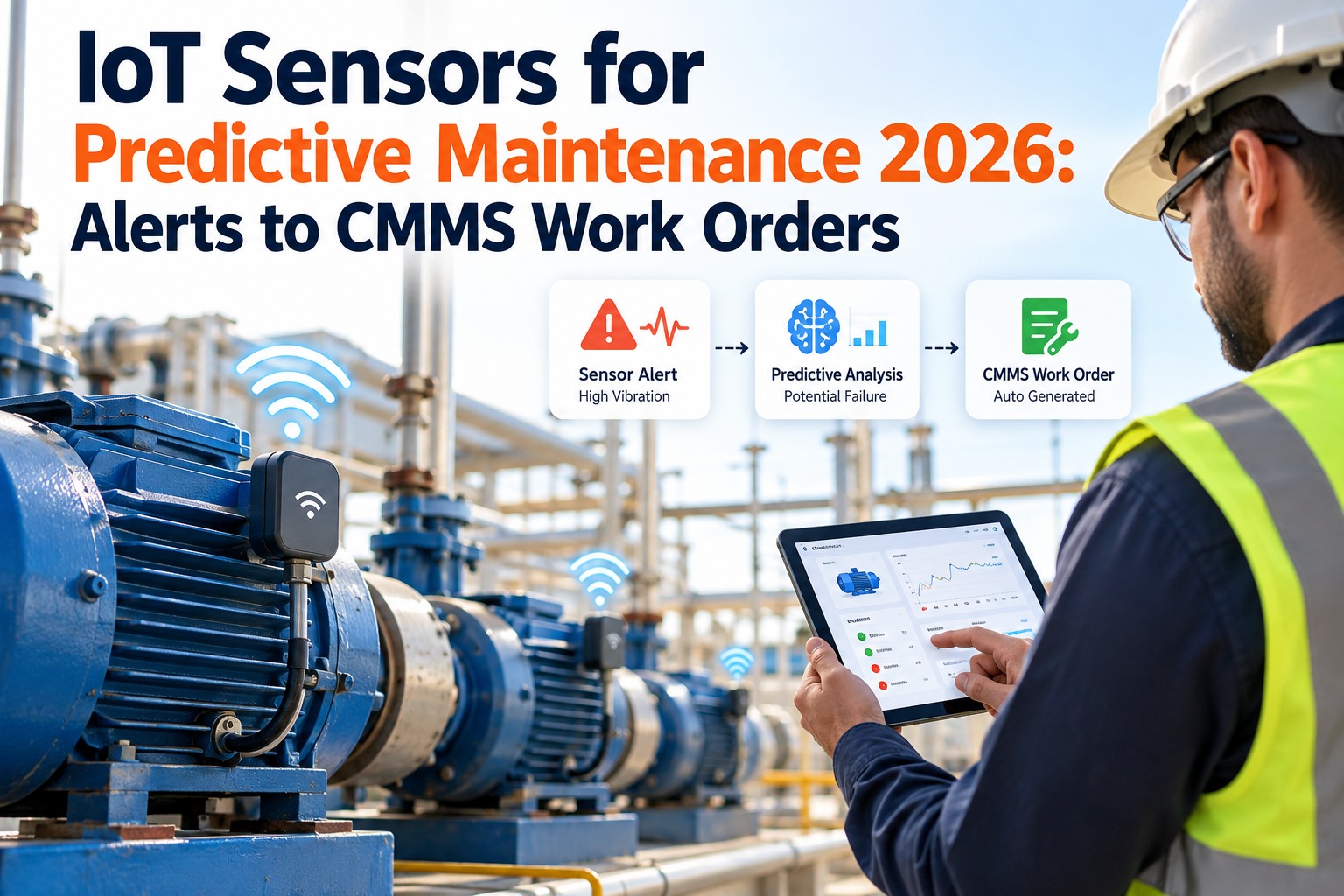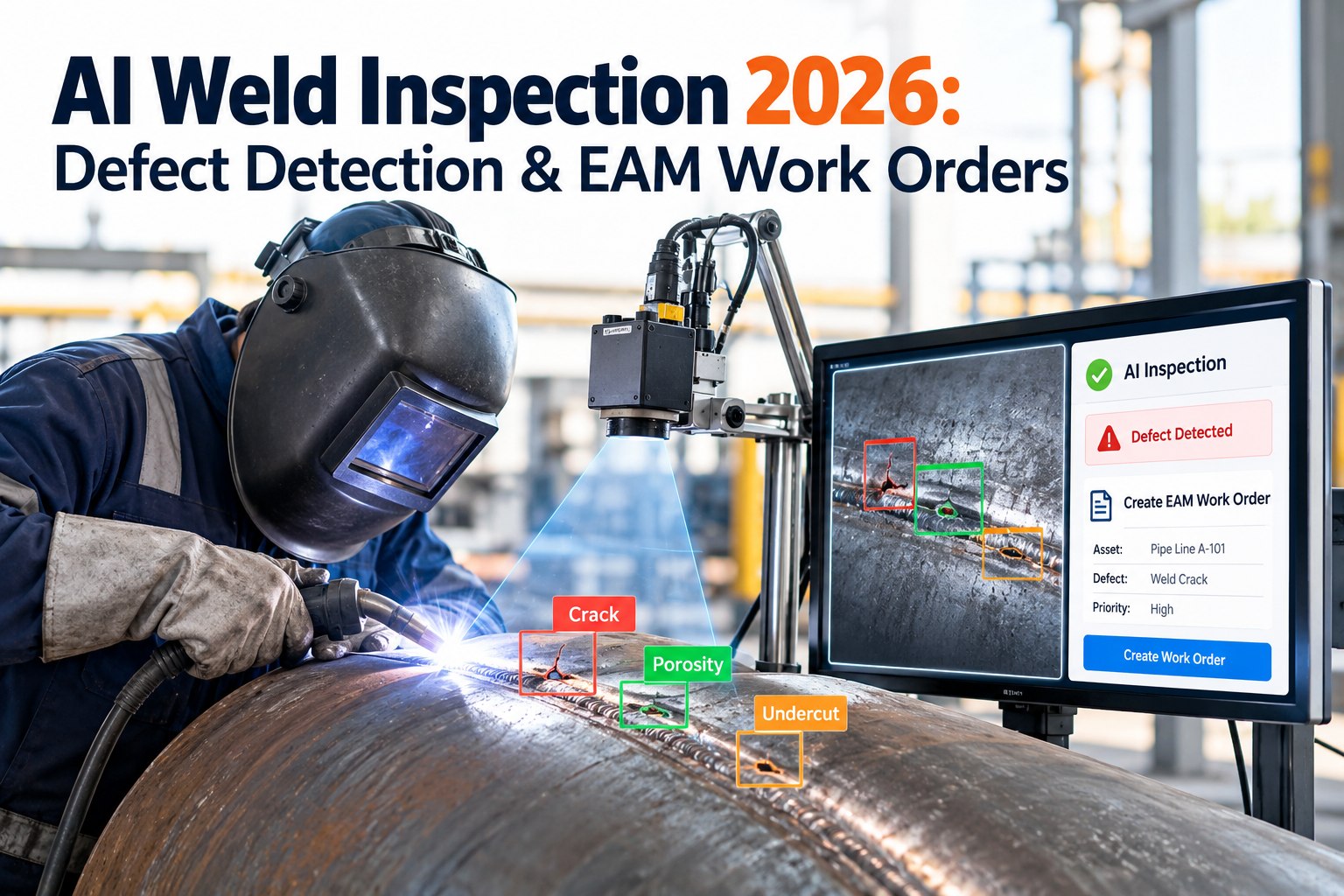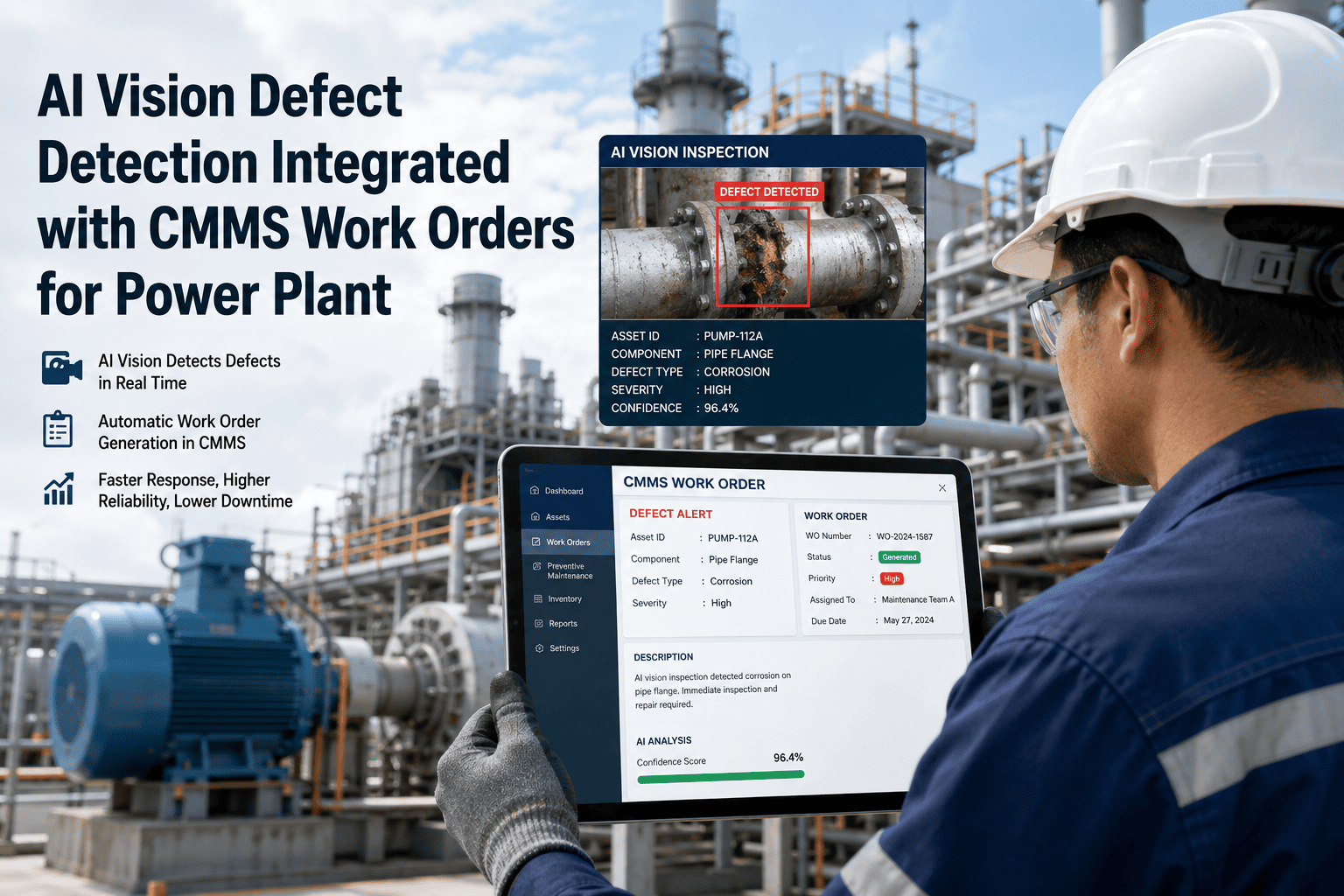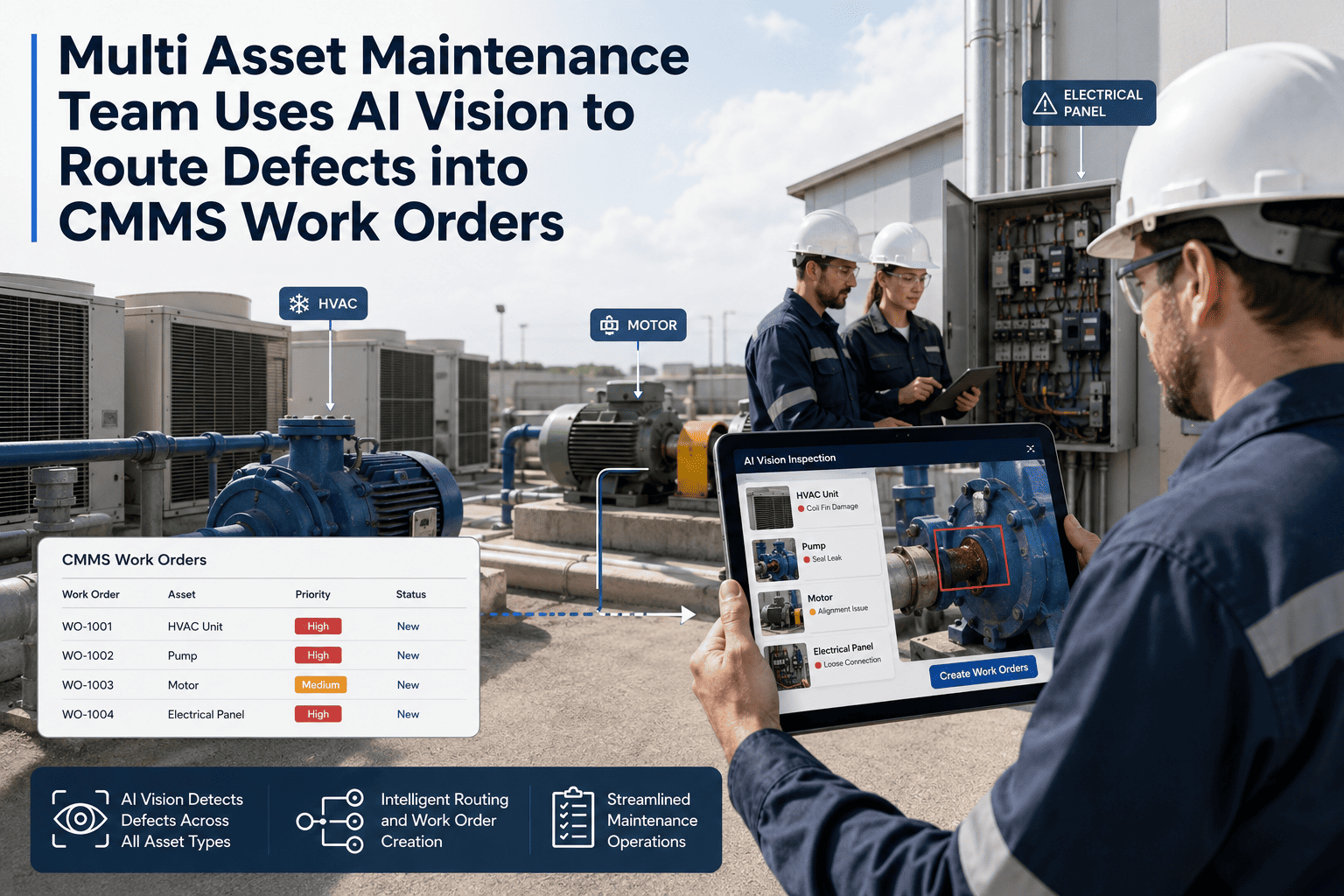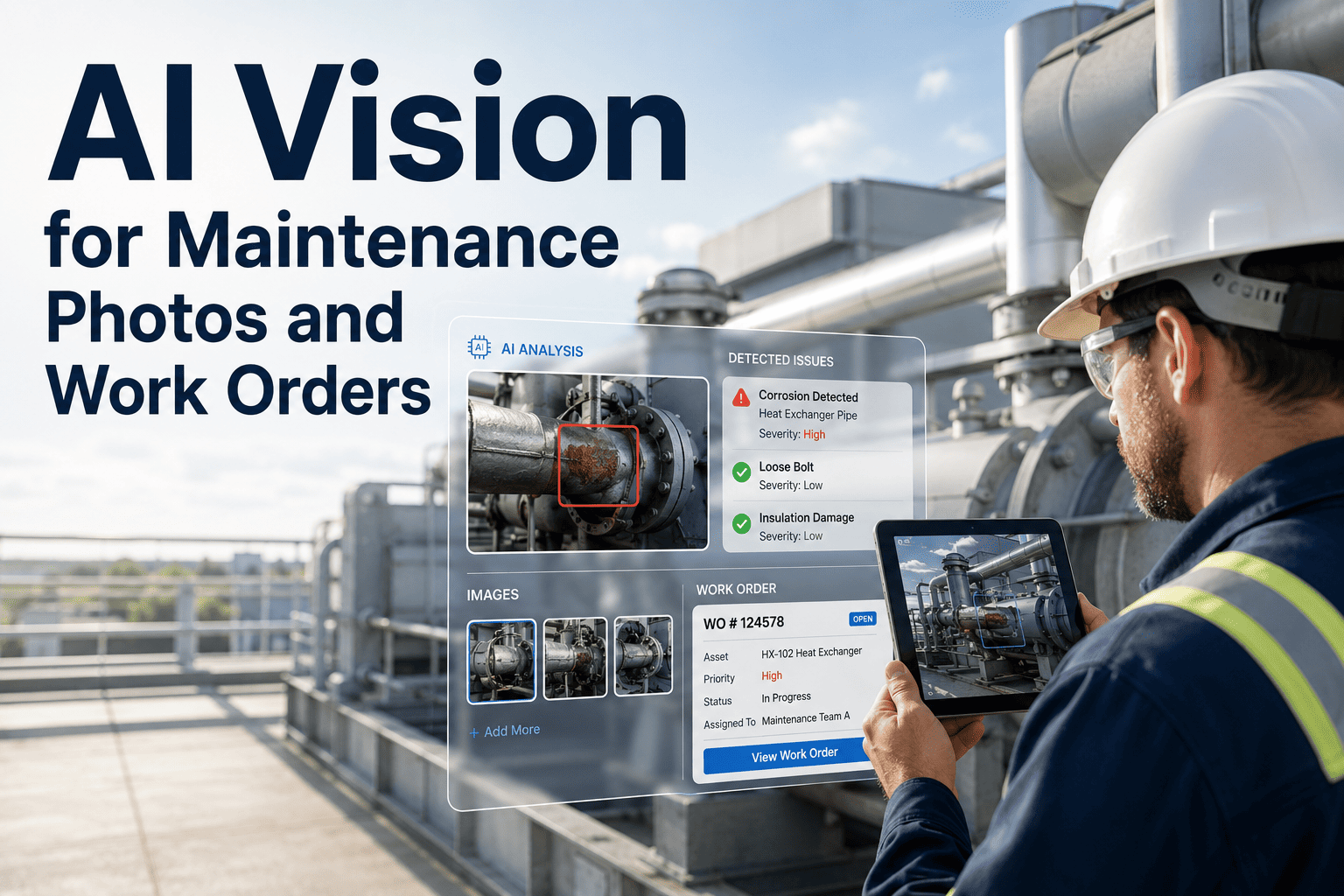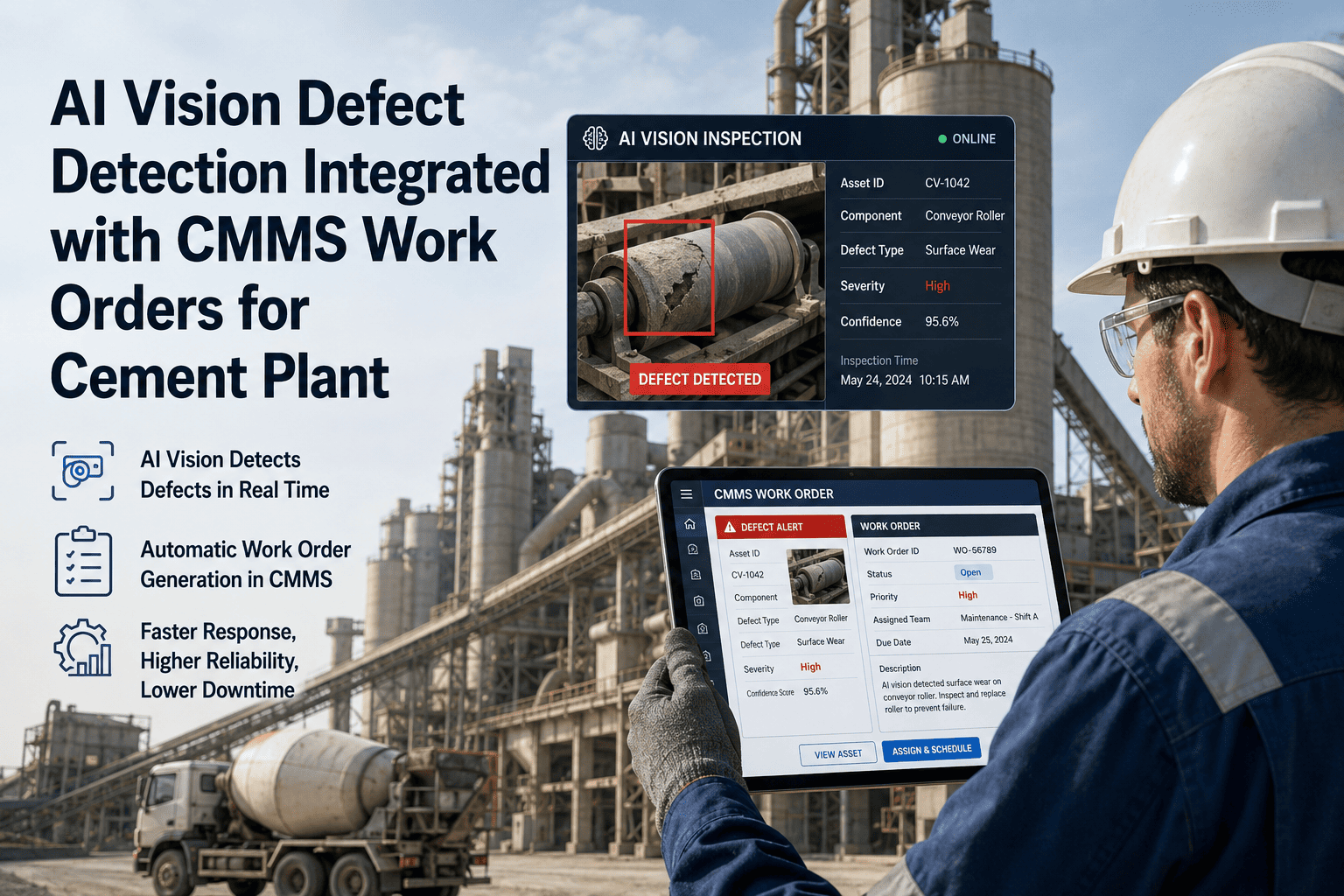
Cement plant equipment operates in one of the harshest environments in heavy industry — constant vibration, extreme heat, abrasive dust, and relentless mechanical stress that degrades kiln liners, conveyor belts, crusher teeth, and separator blades on predictable but often undocumented timelines. Traditional visual inspection in cement plants is dangerous, infrequent, and dependent on inspector experience — meaning defects are often caught only when they have already progressed to costly failure. AI vision systems now provide continuous, automated defect detection across cement plant assets, but the detection event is only the beginning. OxMaint connects AI camera defect findings directly to your CMMS work order engine — so the moment a vision system flags a kiln shell deformation, a conveyor belt splice crack, or a clinker cooler plate fracture, a work order is created, assigned, and tracked without any manual handoff, lost email, or missed shift handover communication.
AI
Defect Detected
CF
Classified & Scored
WO
Work Order Created
TS
Technician Assigned
CL
Repair Closed
CEMENT PLANT AI MAINTENANCE
From Camera Defect to Closed Work Order — Automatically
OxMaint integrates AI vision detection with your cement plant CMMS so every finding becomes a tracked, assigned, evidence-backed work order — no manual triage required.
Cement Plant Defects AI Vision Catches Before Failure
CRITICAL
Kiln Shell Red Spots
Thermal cameras detect refractory brick loss before the kiln shell overheats — typically giving 12–36 hours advance warning versus the 2–4 hours a manual check would provide.
OxMaint Action: Immediate shutdown WO + supervisor alert
HIGH
Conveyor Belt Splice Failure
Vision cameras mounted on conveyor galleries identify splice separation, edge fraying, and cover damage before a full belt break shuts down raw material or clinker transport lines.
OxMaint Action: Priority repair WO with belt specs attached
CRITICAL
Clinker Cooler Plate Cracking
Aerial and fixed cameras identify grate plate fractures in clinker coolers that cause hot clinker bypass, energy waste, and accelerated damage to downstream equipment if undetected.
OxMaint Action: Maintenance window WO with parts reservation
HIGH
Crusher Jaw & Liner Wear
3D vision scanning measures liner wear profiles on jaw crushers and cone crushers — replacing manual measurement with continuous monitoring that triggers replacement before capacity loss.
OxMaint Action: Scheduled replacement PM with lead time alert
MEDIUM
Bag Filter & Dust Collector
Vision and pressure differential monitoring detects broken filter bags before emissions compliance violations occur — creating corrective work orders with photographic evidence for environmental records.
OxMaint Action: Filter replacement WO with compliance note
MEDIUM
Bucket Elevator Cup Damage
Camera inspection inside bucket elevators identifies cracked or missing cups, damaged belts, and casing wear that reduce capacity and create spillage and safety hazards.
OxMaint Action: Scheduled inspection WO with photo evidence
82%
of kiln unplanned stoppages attributable to refractory failures detectable by thermal vision
$180K
average cost of one unplanned kiln shutdown in a mid-sized cement plant (production loss + emergency repair)
4.5x
ROI reported by cement plants deploying AI vision with integrated CMMS work order automation
What an AI Vision-Generated Work Order Looks Like in OxMaint
WO-2024-4821
CRITICAL
AssetRotary Kiln #2 — Shell Section 14
SourceAI Vision Camera — Thermal Detection Event
Detection Time2024-11-14 03:42 UTC
Assigned ToKiln Maintenance Team — Shift Supervisor notified
EvidenceThermal image: 340°C surface, threshold 280°C
Required ActionConfirm brick loss, schedule refractory inspection window
EXPERT REVIEW
Rajiv Sharma, CMRP
Certified Maintenance & Reliability Professional — Cement & Mining Industry, 21 Years
Cement plants lose more production to defect detection gaps than to any other single cause. The equipment fails — that is unavoidable. But the timing of when you find out is entirely within your control. AI vision systems in cement plants are producing extraordinary early warning data — thermal kiln maps updated every hour, belt condition scans every 15 minutes. The plants that are turning that into competitive advantage are not the ones with the best cameras. They are the ones where every camera finding goes into a work order system that holds someone accountable for acting on it. OxMaint does that integration work so the plant manager actually sees a closed loop, not another dashboard nobody responds to.
Connect Your Cement Plant AI Vision to OxMaint Work Orders
Stop losing defect findings in shift handover emails. Every camera alert becomes a tracked work order automatically.
Frequently Asked Questions
Which AI vision platforms does OxMaint integrate with for cement plant defect detection?
OxMaint integrates with AI vision platforms via REST API and webhook, meaning any camera system that can classify and push a detection event — including fixed thermal cameras, drone platforms, and machine vision systems from providers like FLIR, Cognex, Keyence, and Vention — can route findings to OxMaint automatically. Integration is scoped during onboarding and typically requires 1 to 2 weeks for initial configuration and field mapping. Custom defect classification mappings to OxMaint work order types are fully configurable per asset category.
How does OxMaint handle shift handover for AI vision-generated work orders in a 24/7 cement plant?
Work orders in OxMaint remain visible and assigned across shift changes — the incoming shift supervisor sees all open, in-progress, and pending AI-generated work orders for their zone at shift start. Critical-severity work orders generate notifications to both the outgoing and incoming supervisor at handover time. The work order history records every status update, technician note, and response action — creating an unbroken chain of custody that does not depend on verbal handover communication or shift log entries.
Can OxMaint track defect progression over time for assets like kiln refractory or conveyor belts?
Yes. OxMaint links AI vision findings to the same asset record across multiple detection events — so you can see the full history of a kiln section's thermal readings, a belt segment's condition scores, or a crusher liner's wear progression over months. This trend data helps maintenance engineers make data-backed decisions about replacement timing versus continued monitoring, and supports capital budget justification for major component replacements. Book a demo to see asset condition trending live.
How does OxMaint help cement plant teams prioritize AI vision work orders when multiple defects are detected simultaneously?
Each AI vision defect is classified by severity when it enters OxMaint — based on configurable thresholds you define per asset type (for example, kiln thermal readings above 300°C are always Critical regardless of other queue depth). The work order dashboard sorts all open AI-generated work orders by severity and detection time, giving the shift supervisor an instantly clear priority sequence. Technicians receive only their assigned work orders ranked by priority, so critical repairs are always acted on before lower-severity findings regardless of how many camera alerts have accumulated.