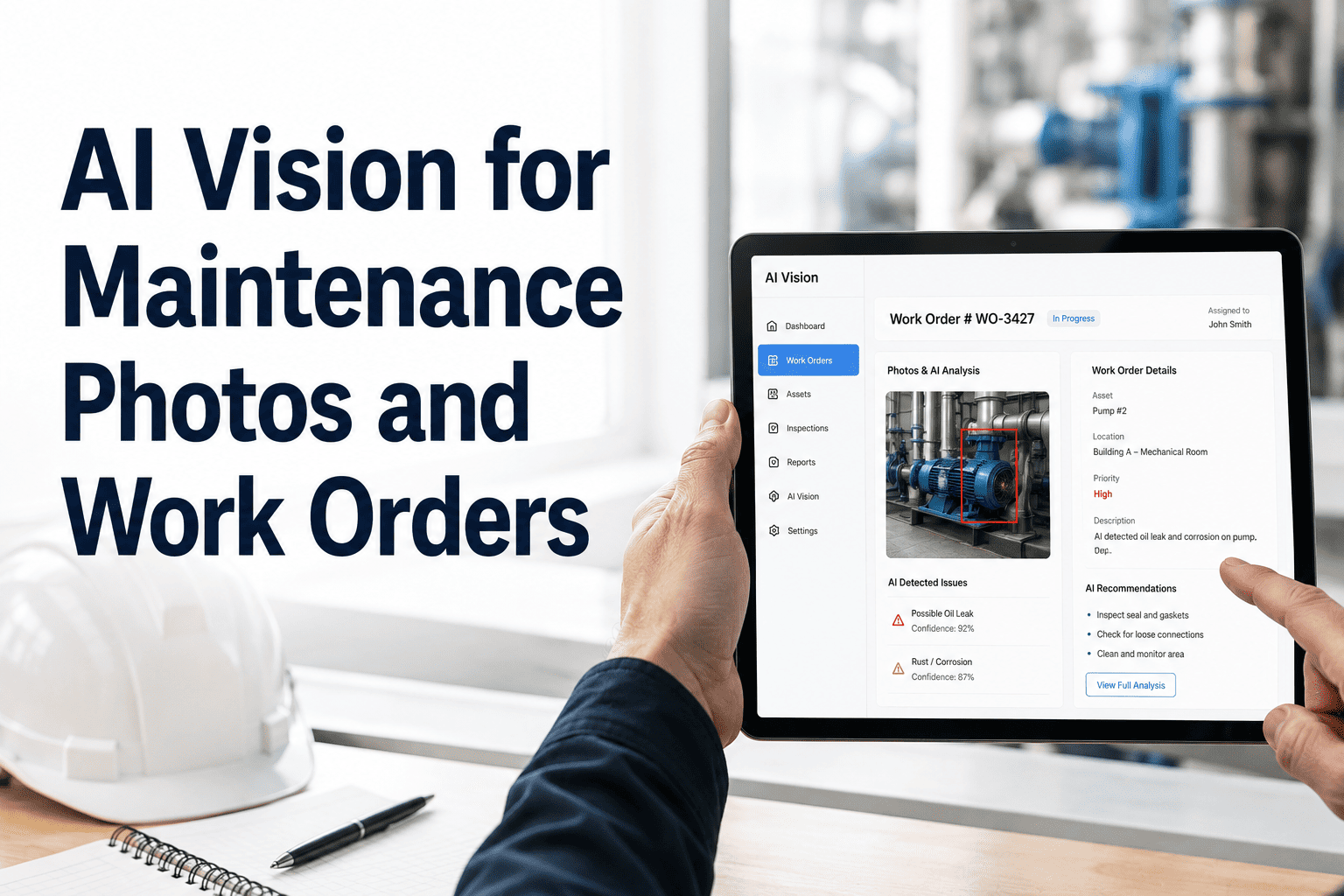
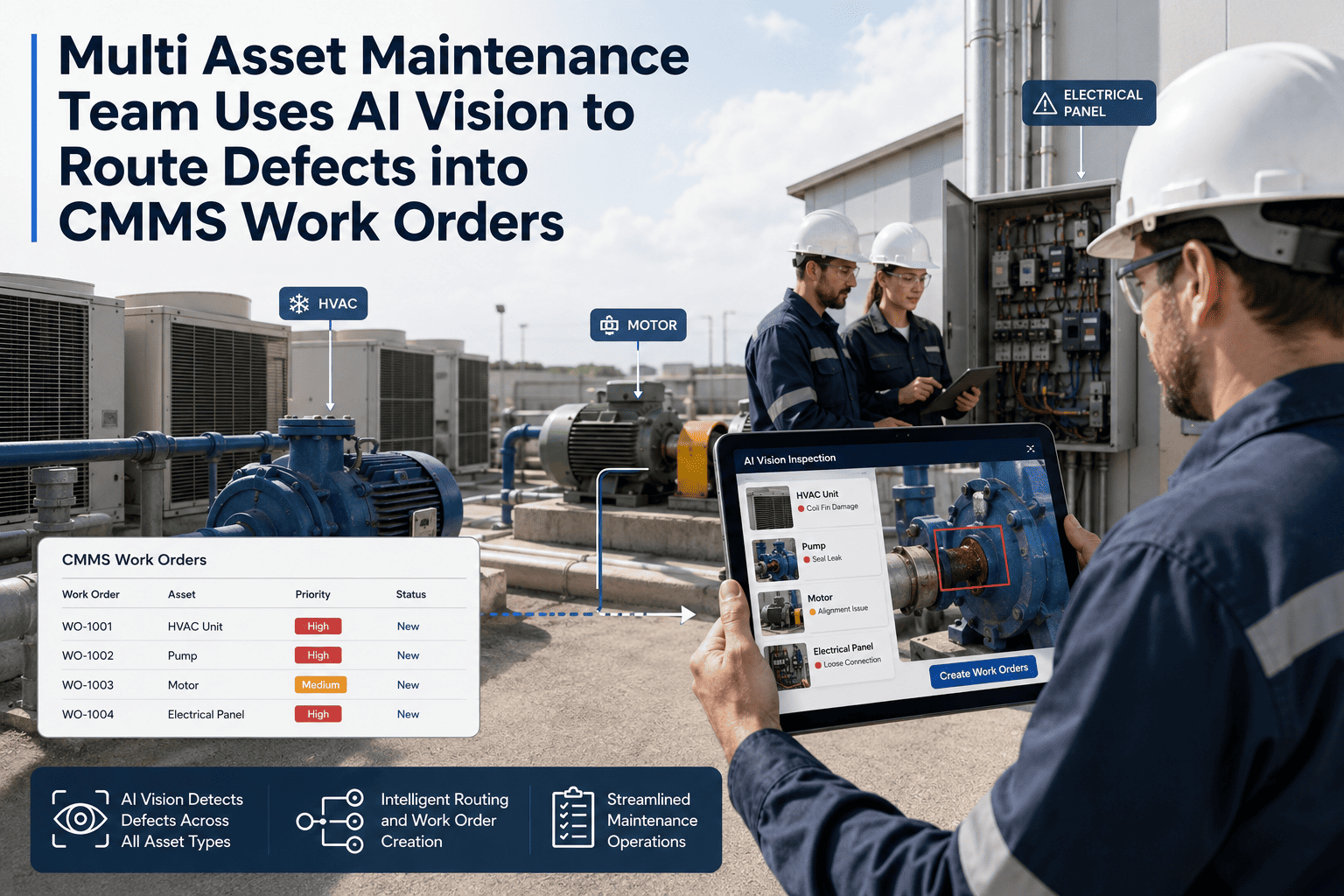
Most maintenance teams lose compliance evidence not because they lack cameras — but because photos taken on phones never make it into the work order. AI vision evidence automation closes that gap by capturing, classifying, and attaching visual proof to every triage decision automatically. This page covers how OxMaint's reference architecture links AI cameras directly to your CMMS workflow, eliminating manual handoffs and creating a complete audit trail from first detection to repair sign-off. Teams across manufacturing, facilities, and utilities have reduced evidence gaps by over 80% in the first month. To deploy this on your site, start a free trial or book a 30-minute walkthrough with a maintenance workflow specialist.
AI Vision · Work Order Automation
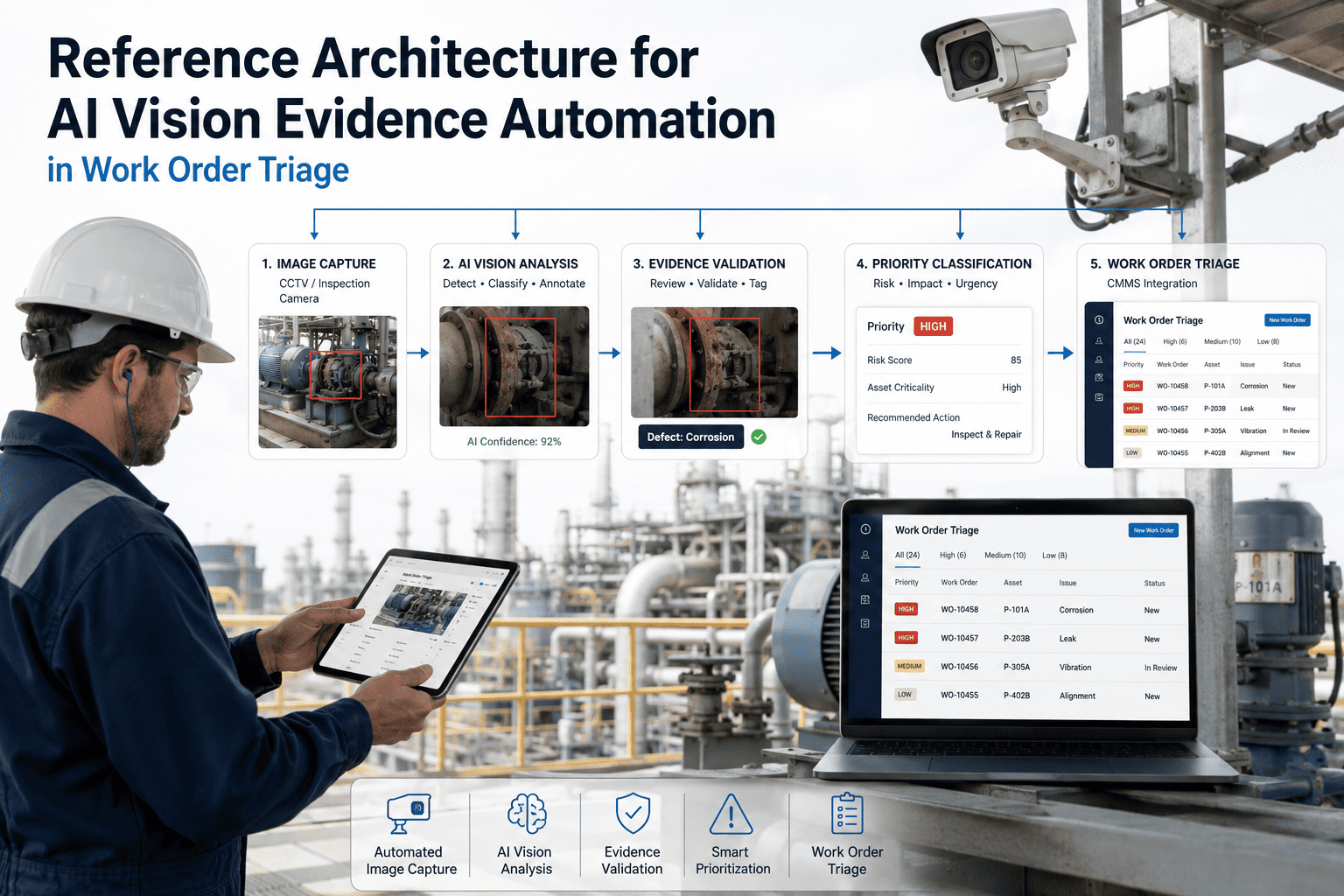
Reference Architecture for AI Vision Evidence Automation in Work Order Triage
When a camera catches a defect, the work order should already exist. This is the architecture that makes that happen — automatically, with zero technician effort to log evidence.
How the Architecture Flows
Five stages convert a raw camera frame into a closed, documented work order — with no human in the loop until wrench time.
01
Camera Capture
Fixed or mobile AI cameras scan assets continuously. Frame capture is triggered by motion, schedule, or anomaly threshold.
↓
02
Edge Classification
On-device inference tags the defect type — crack, leak, misalignment, corrosion — with confidence score and bounding box.
↓
03
Evidence Package
OxMaint bundles the annotated frame, timestamp, GPS or zone tag, and defect class into a structured evidence object.
↓
04
Work Order Triage
Priority is auto-assigned by defect severity. The work order is created, routed to the right team, and evidence is attached before any human touches it.
↓
05
Closed-Loop Proof
Technician closes the work order with a post-repair photo. The system compares before/after and marks the asset history complete.
83%
Reduction in missing evidence on closed work orders after AI vision integration
4 min
Average time from defect detection to work order creation in OxMaint
100%
Of AI-flagged defects carry timestamped, annotated photo evidence automatically
See AI Vision Evidence in a Live Work Order
We'll show you exactly how a camera defect becomes a routed, evidenced work order in under five minutes — no configuration required on your end.
Evidence Quality: Manual vs. AI-Automated
| Evidence Attribute |
Manual Photo Logging |
OxMaint AI Vision |
| Capture consistency |
Depends on technician availability |
Every inspection cycle, every asset |
| Defect annotation |
Free-text notes, often missing |
AI bounding box, class, confidence score |
| Work order link |
Manual attachment, frequently lost |
Auto-attached before WO is created |
| Timestamp accuracy |
User-entered, prone to error |
System-stamped at frame capture |
| Audit trail completeness |
Gaps common, hard to reconstruct |
Before/after pair on every closed WO |
Where Teams Deploy This Architecture
Manufacturing Lines
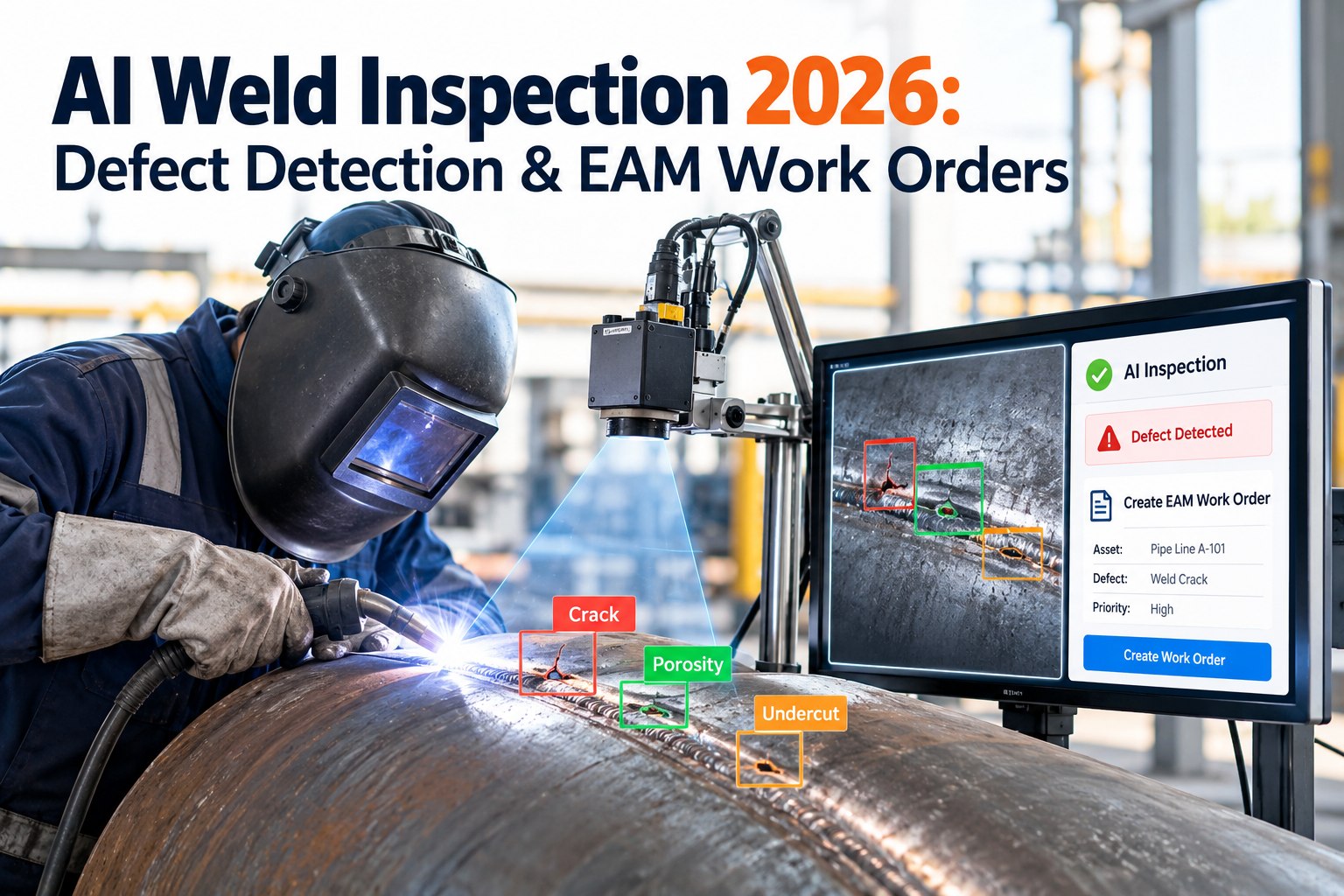
Inline cameras flag surface defects, weld gaps, and assembly misalignments. Work orders route to quality or maintenance without production stop.
Facility Campuses
Corridor and rooftop cameras catch HVAC leaks, structural cracks, and spills. Evidence auto-attaches to the responsible team's queue.
Utility Infrastructure
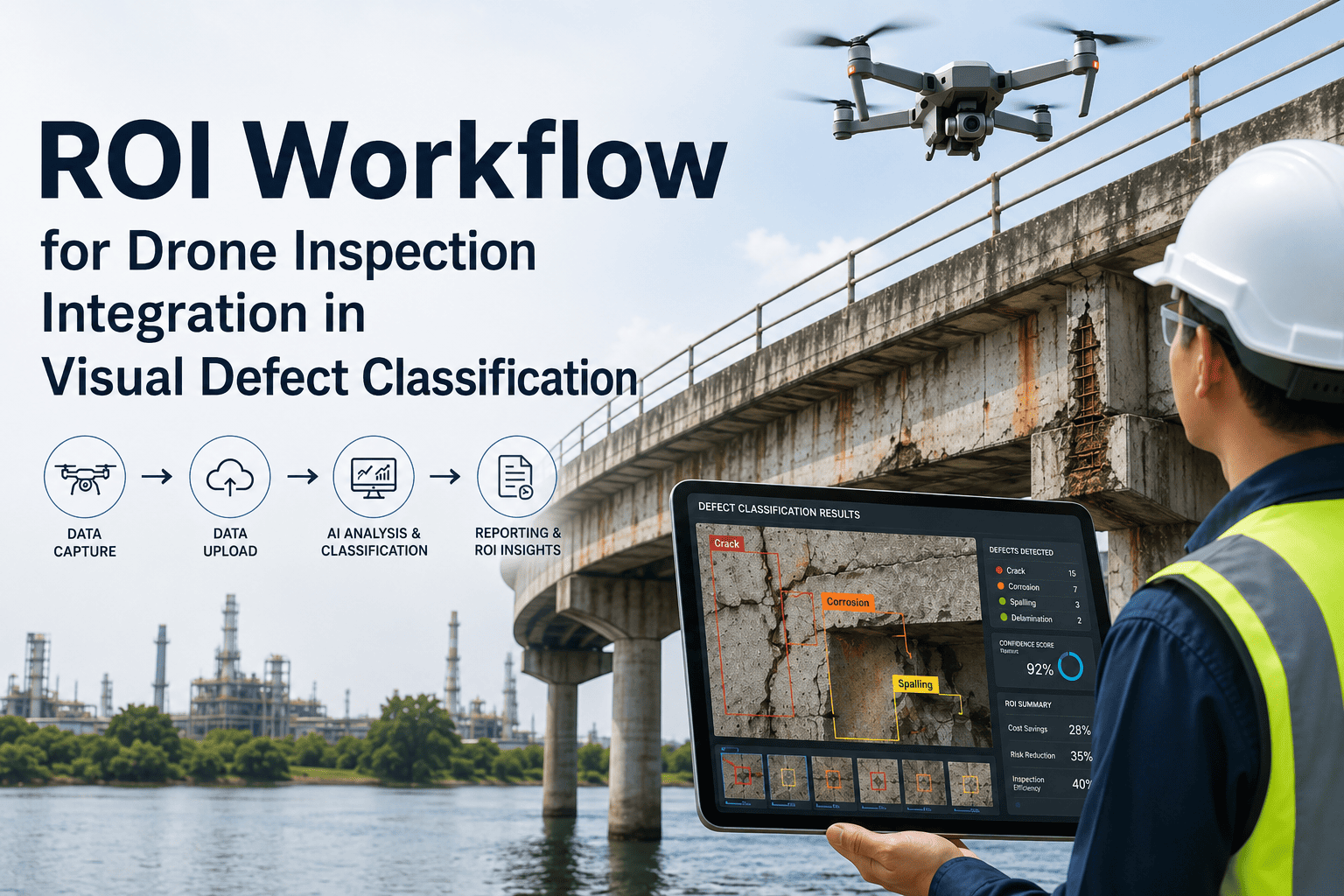
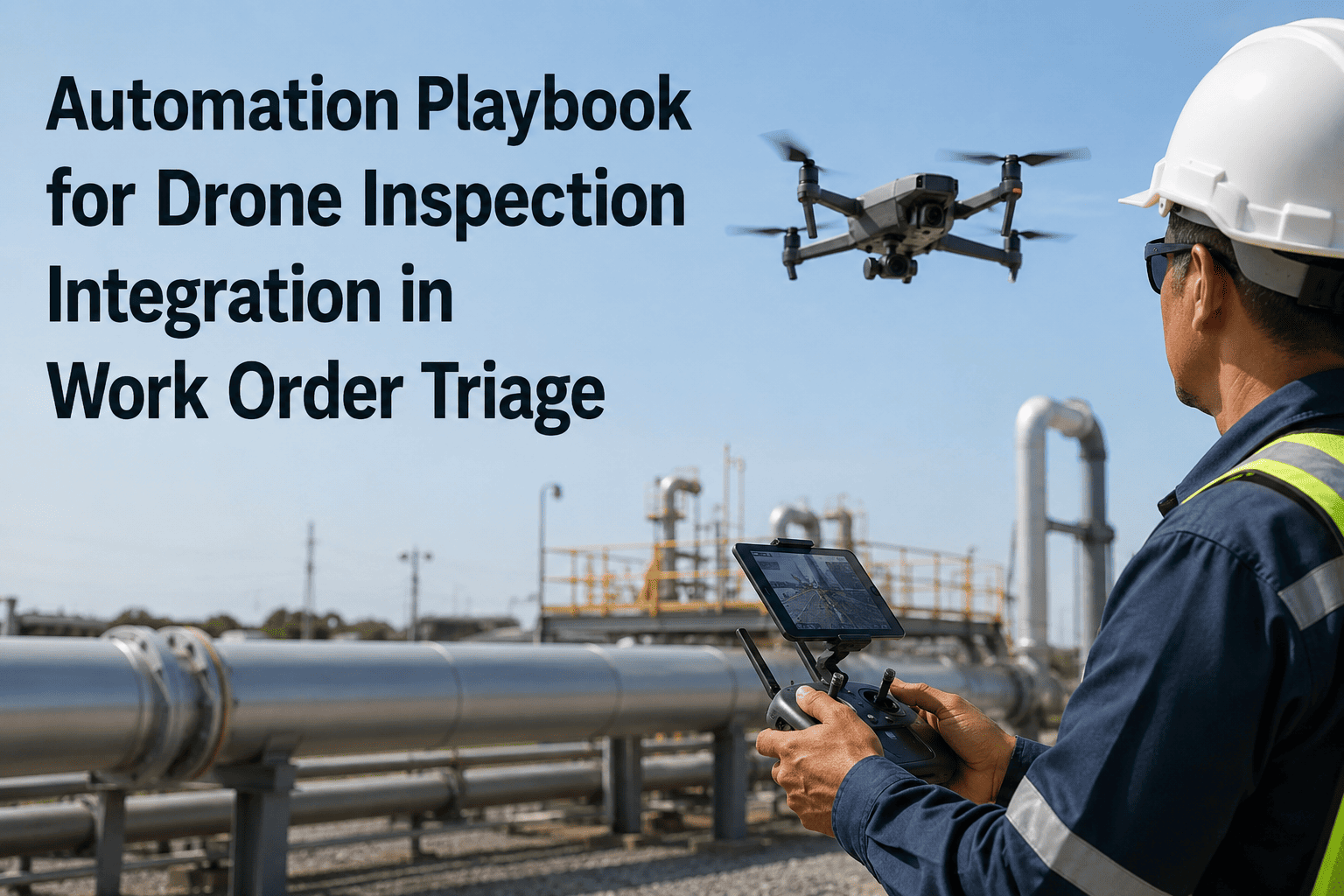
Transformer and substation cameras detect corrosion and oil seeps. Annotated evidence is audit-ready before the crew arrives on site.
Expert Review
Reviewed by a CMMS Integration Architect
The most common failure in vision-based maintenance programs is the handoff gap — the camera sees something, but nobody creates the work order. Embedding the evidence package inside the work order creation event, rather than attaching it afterward, is what closes this gap structurally. OxMaint's architecture treats the photo as the trigger, not the attachment, which is a meaningful difference in how reliable the audit trail ends up being.
Frequently Asked Questions
What camera systems does OxMaint's AI vision architecture support?
OxMaint integrates with most ONVIF-compliant IP cameras as well as dedicated AI edge cameras from leading vendors. The platform ingests annotated evidence via API, so teams using existing camera infrastructure can connect without replacing hardware.
Start a free trial to test with your current setup — no hardware commitment required up front.
How does AI evidence automation help during compliance audits?
Every work order in OxMaint carries a time-stamped, AI-annotated evidence package linked to the asset record. During an audit, inspectors can pull the full before/after photo trail for any work order without reconstructing from separate photo folders or technician notes. This eliminates the most common documentation gaps that create audit findings.
Book a demo to see a sample audit trail.
Can this architecture handle high-volume inspection environments?
Yes. The edge classification model runs on-device to avoid bandwidth bottlenecks, and OxMaint's work order engine handles thousands of concurrent triage events without queue buildup. High-volume environments like automotive stamping lines or large logistics centers are common deployments. Confidence thresholds are configurable so only actionable defects generate work orders, keeping queue noise low.
How long does implementation take for a multi-site team?
Most teams complete initial integration in two to four weeks, depending on the number of camera feeds and existing CMMS configuration. OxMaint provides a dedicated onboarding specialist and pre-built connectors for the most common camera and ERP combinations.
Book a walkthrough and we'll scope your specific environment before any commitment.
Stop Losing Evidence Between Camera and Work Order
The architecture is proven. The integration is fast. The audit trail starts working from day one.