ai-maintenance-scheduling-peak-season-operations

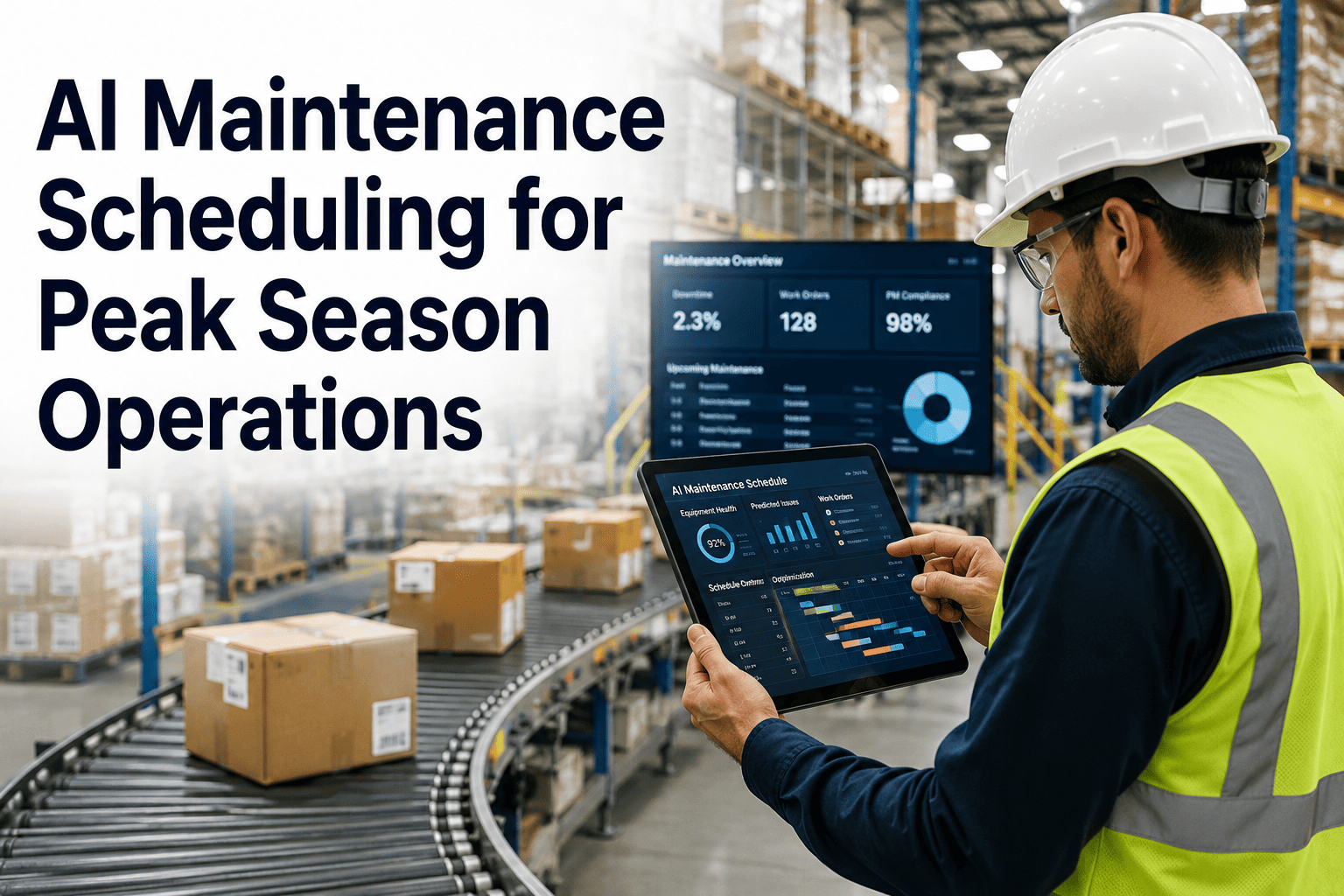
AI Maintenance Scheduling for Peak Season Operations


Every plant manager has lived this moment: production ramps up for peak season, the schedule fills with rush orders, and somewhere on the floor a compressor or a forklift picks exactly that week to fail. It is not bad luck. Industry data shows aging equipment is the single largest cause of unplanned downtime, and the average facility already absorbs 25 unplanned stoppages a month even in a normal month — before demand, shift counts, and asset load all spike together. Sign in to OxMaint to see how AI scheduling aligns your PM calendar with real shift and demand data before your next peak window opens. Book a demo to walk through a live peak-season readiness scan for your own asset list.

OxMaint · AI Maintenance Scheduling
Peak season does not create new failures. It just removes the slack that used to hide them. AI scheduling puts that slack back — automatically.

Where Peak-Season Downtime Actually Comes From

Four causes explain almost all unplanned downtime industry-wide. Peak season does not add a fifth cause — it just increases how expensive the same four causes become.

42%
aging equipment
Aging equipment42%
Mechanical failure21%
Operator or process error11%
Scheduling and coverage gaps26%
A typical facility already logs roughly 326 downtime hours a year outside of peak season. Every one of those four causes gets worse once shift counts, fleet utilisation, and occupancy all rise together.

How AI Scheduling Reads Four Signals Before It Touches Your Calendar

Manual planners can usually track one variable at a time. OxMaint's scheduling engine reads all four continuously and re-ranks your PM queue whenever any of them shift.

AI Scheduling Engine

01
Production Shift Load
Reschedules non-urgent PM away from double-shift days and pulls it forward into planned lulls, so technicians never compete with the line for access.
02
Fleet Demand Signals
Tracks utilisation hours on vehicles and mobile equipment, moving inspections earlier when a unit is running harder than its normal seasonal baseline.
03
Facility Occupancy Patterns
Cross-checks HVAC, access control, and footfall data so shutdown-sensitive work is only scheduled in genuinely low-occupancy windows.
04
Asset Risk Score
Weighs failure history, age, and criticality so the highest-risk assets always get first claim on the technician hours available that week.
Most teams find their peak-season PM backlog before it becomes a peak-season breakdown — the moment they let scheduling data drive the calendar instead of the other way round.

The Six-Point Pre-Peak Readiness Checklist

Run this before your next demand spike. Each point maps directly to a scheduling rule OxMaint applies automatically once your asset list and shift calendar are loaded.

1
Pull every PM currently overdue or due within 30 days and re-rank by asset criticality.
2
Flag any asset whose utilisation hours are trending above its seasonal baseline.
3
Confirm parts availability for your top 10 highest-risk assets before demand peaks.
4
Map technician headcount against planned shift expansion for the peak window.
5
Move shutdown-sensitive work into low-occupancy slots before the calendar fills.
6
Set an automated re-rank trigger so the schedule adjusts itself as conditions change.

Manual Scheduling vs AI Scheduling During Peak Season

The gap between the two approaches barely shows in a quiet month. It shows up fast the moment shift counts, fleet hours, and occupancy all move at once.

Scheduling FactorManual / SpreadsheetAI Scheduling with OxMaint
Reaction to shift changesUpdated when a planner remembers to check itRe-ranked automatically as shift data changes
Fleet utilisation trackingReviewed monthly at bestMonitored continuously against seasonal baseline
PM backlog visibilityBuried across separate sheets per siteRanked in one live queue by asset risk
Technician allocationFirst-come, first-scheduledWeighted toward highest-risk assets first
Downtime during demand spikesRises in step with production loadPredictive maintenance can cut downtime up to 50%
Time to first measurable resultNo fixed timeline — depends on planner bandwidthMost teams see 60–70% of savings within one quarter
Scroll right to view full comparison on mobile
Expert Review
This scheduling framework was reviewed by OxMaint's maintenance operations team against real customer deployments across manufacturing, fleet, and facility accounts that run seasonal demand cycles. The four-signal model — shift load, fleet demand, occupancy, and asset risk — reflects the inputs that consistently separated plants that held their failure rate flat during peak season from plants that saw it spike.

Frequently Asked Questions — AI Maintenance Scheduling for Peak Season

Most teams start rebalancing the PM calendar 30 to 45 days before their known demand spike, since that gives enough time to clear overdue work on high-risk assets first. Sign in to OxMaint to run a 30-day backlog scan against your current asset list.
No. It removes the manual work of cross-checking shift, fleet, and occupancy data by hand, and surfaces a ranked queue the planner still approves. The planner keeps final say on every schedule change. Book a demo to see the approval workflow in action.
It needs your existing asset register, PM intervals, and shift calendar as a starting point — fleet and occupancy feeds can be added after that baseline is live. Sign in to OxMaint to see the exact data fields required for setup.
Yes. Each site can carry its own shift calendar and seasonal baseline, while asset risk ranking still runs on the same shared logic across the whole portfolio. Book a demo to see a multi-site scheduling view.
Teams generally see the backlog visibly clear within the first peak cycle, with most of the measurable savings landing inside the first quarter of use. Sign in to OxMaint to track your own backlog trend from week one.
No. The same four signals apply to fleet operations facing seasonal delivery surges and facilities managing occupancy-driven maintenance windows, not just production plants. Book a demo to see it mapped to your specific operation type.
OxMaint · Peak Season Readiness · AI Maintenance Scheduling

The equipment that fails during peak season was already at risk in the off-season. AI scheduling is what catches it before the calendar gets too full to notice.

Shift-aware scheduling. Fleet demand tracking. Occupancy-safe shutdown windows. Asset risk ranking — running continuously, not just once a quarter.

Share This Story, Choose Your Platform!