Data centers operate under a single, non-negotiable requirement: uptime. Cooling infrastructure, power delivery systems, and fire suppression equipment are not support functions — they are the direct enablers of the service level agreements your clients depend on. When a CRAC unit fails or a PDU trips unexpectedly, the consequences move from the machine room to the boardroom within hours. AI predictive maintenance gives data center facilities teams the ability to intercept failure trajectories before they reach critical thresholds — and OxMaint delivers that capability with the asset history and compliance documentation your uptime reporting requires.
Data Center Maintenance · AI Predictive Maintenance · Uptime Protection
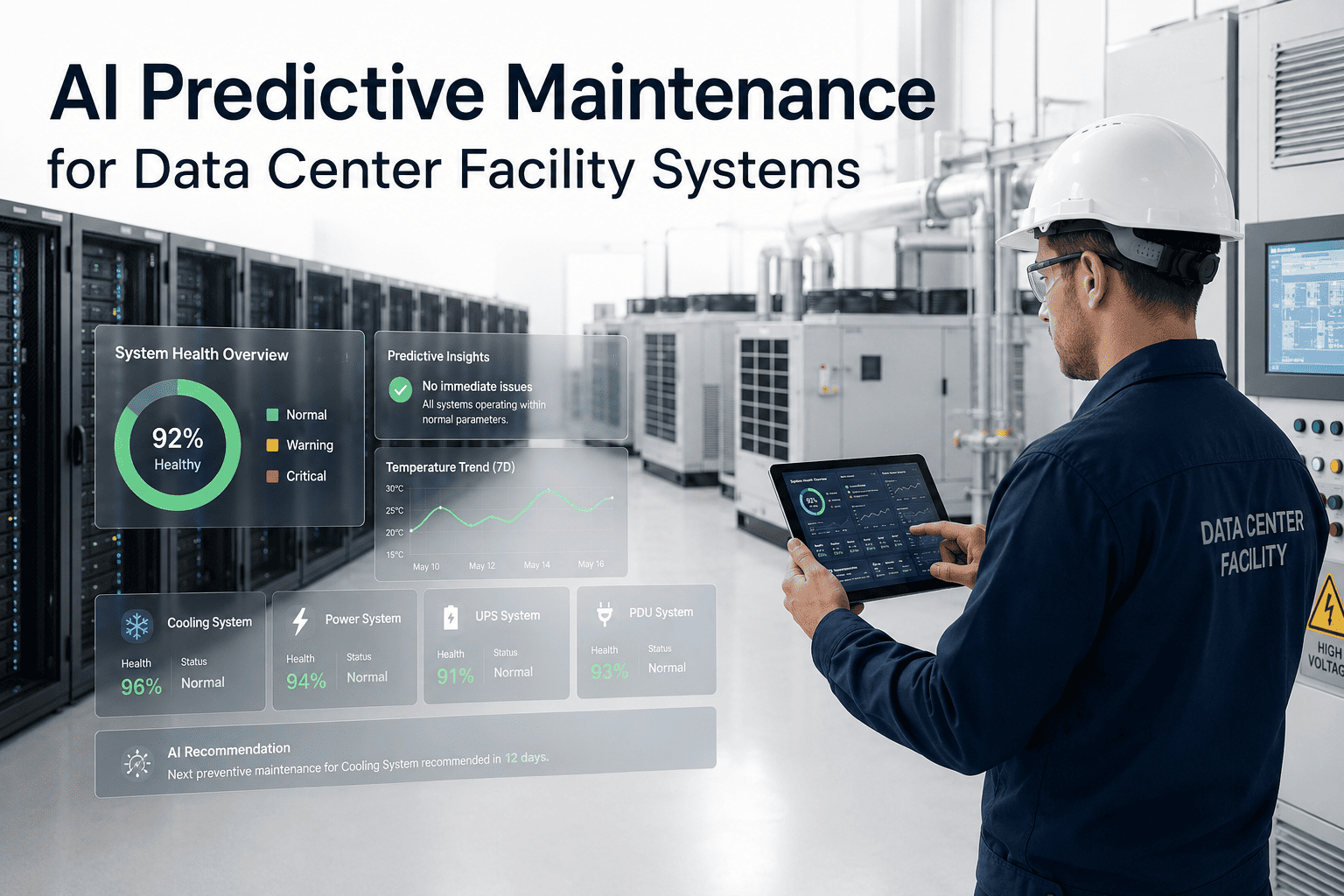
AI Predictive Maintenance for Data Center Facility Systems
Every cooling, power, and fire suppression failure in a data center is a potential SLA breach. Discover how AI-driven PM scheduling protects uptime-critical infrastructure — and what reactive maintenance costs your operation per incident.
Avg. downtime cost
$9,000/min
Gartner 2024
The Uptime Equation
What Unplanned Data Center Downtime Actually Costs
Uptime Institute's 2024 Global Outage Analysis found that 80% of data center outages are caused by human error or inadequate maintenance processes — not hardware aging. The cooling and power infrastructure protecting server assets has its own failure modes, and those modes are predictable when the right maintenance data is being tracked and analyzed.
| Facility Type |
Avg. Outage Duration |
Direct Revenue Loss |
SLA Penalty Exposure |
Root Cause |
| Hyperscale / Cloud |
87 minutes |
$5M – $40M |
Contract-specific |
Cooling failure (42%) |
| Colocation / Multi-tenant |
112 minutes |
$680K – $4.2M |
SLA credits up to 30% |
Power distribution (38%) |
| Enterprise On-Premise |
98 minutes |
$140K – $1.2M |
Internal productivity cost |
UPS / generator (35%) |
| Edge / Regional DC |
134 minutes |
$55K – $380K |
SLA breach, customer churn |
HVAC / cooling (51%) |
Source: Uptime Institute Global Outage Analysis 2024 · Gartner Data Center Operations Report 2024
AI-Powered Prevention
How OxMaint Detects Failure Before It Happens
Cooling Infrastructure
CRAC unit supply/return delta-T widening
Chiller compressor current draw trending up
Cooling tower fan vibration signature change
Refrigerant subcooling approaching alarm threshold
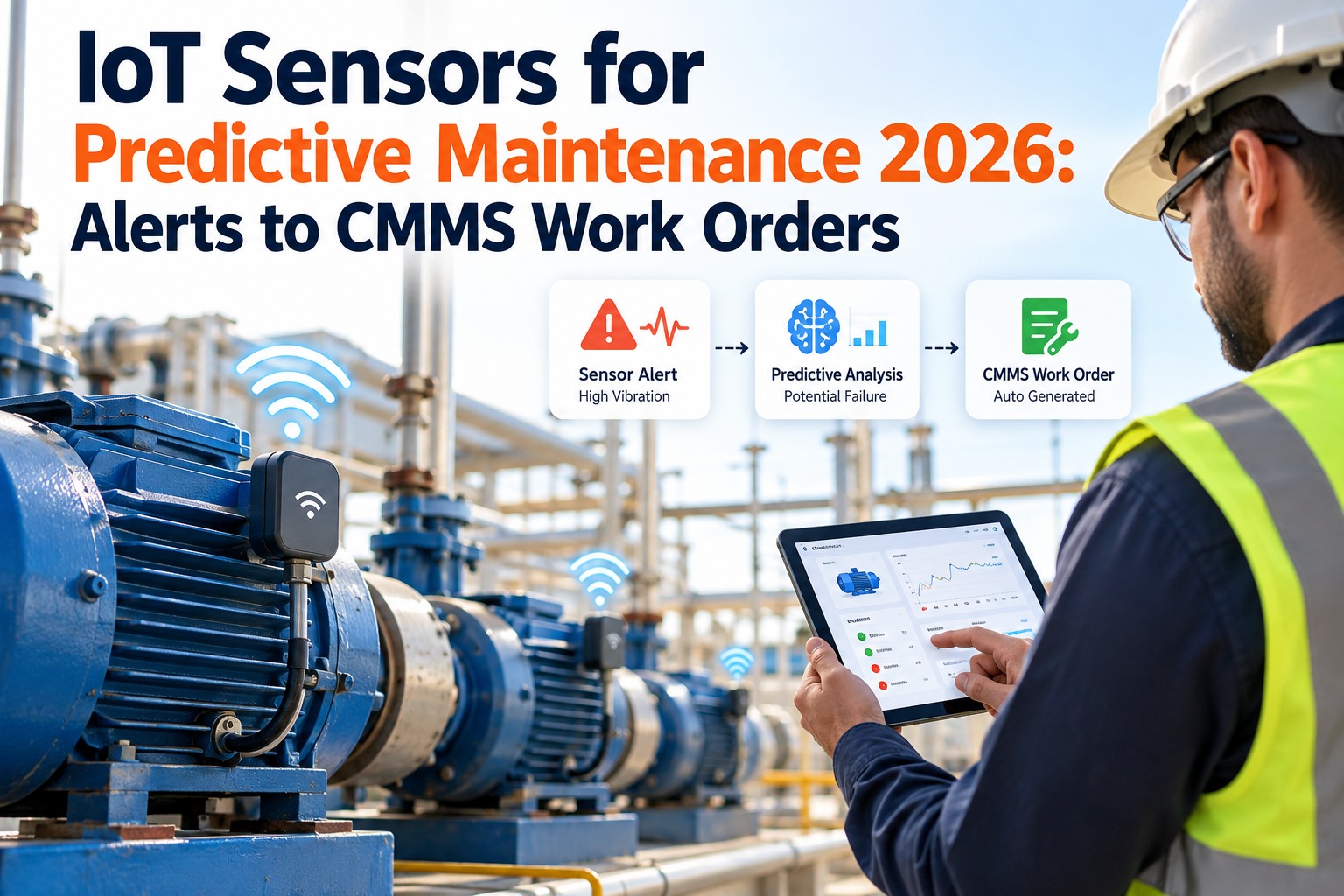
OxMaint triggers PM work order to chiller team 14 days before projected failure
Power Delivery
UPS battery internal resistance rising
Generator fuel consumption trending above baseline
PDU phase load imbalance exceeding 15%
ATS transfer test overdue beyond 30 days
OxMaint auto-creates battery replacement work order and ATS test scheduling alert
Fire Suppression
Agent cylinder pressure below threshold
Detection system test intervals overdue
Suppression system annual inspection past due
OxMaint generates inspection work order with compliance due date and escalation if unacknowledged
See OxMaint Working on Your Cooling and Power Asset List
Book a 30-minute session with your asset categories and we'll show you exactly how OxMaint builds predictive PM schedules for data center infrastructure.
System Coverage
What OxMaint Tracks Across Data Center Facilities
Cooling Systems
Chillers, CRAC/CRAH units, cooling towers, economizers, in-row cooling
Power Infrastructure
UPS arrays, PDUs, generators, ATS switches, distribution panels, transformers
Life Safety
Clean agent suppression, VESDA detection, fire panels, emergency lighting
Physical Security Systems
Access control panels, CCTV, biometric readers, perimeter monitoring
Environmental Monitoring
Temperature sensors, humidity sensors, water leak detection, airflow sensors
Structural Systems
Raised floor integrity, cable management, containment aisle, loading dock
Expert Perspective
What Data Center Operations Leaders Say
The conversation about data center downtime almost always focuses on IT redundancy — N+1 power paths, dual-corded servers, geographically distributed failover. What gets less attention is the maintenance regime for the facility systems protecting those IT assets. A chiller that has not had its condenser tubes cleaned on schedule will fail on the hottest day of the year, regardless of how redundant your UPS topology is. Predictive maintenance for mechanical and electrical infrastructure is the unsexy half of uptime that most data center operators underinvest in until after their first major outage.
James Nwosu
Critical Facilities Director · Tier III Colocation Operator · 21 years data center operations
★★★★★
When auditors or enterprise clients ask for our maintenance documentation during due diligence, the request is always the same: show us PM completion records for critical systems over the past 12 months. If that documentation is in spreadsheets, it takes days to compile and it never looks as rigorous as it actually is. A CMMS that generates those records automatically as work orders close changes that due diligence conversation entirely. It also changes how your own operations team perceives maintenance priority — when completion is tracked, compliance improves.
Book a demo to see OxMaint's compliance reporting for data center facilities.
Sarah Oduola
VP Facilities and Infrastructure · Enterprise Data Center Portfolio · 16 years critical facilities management
★★★★★
Common Questions
What Data Center Teams Ask About OxMaint
Can OxMaint integrate with DCIM platforms and BMS systems already in place at the facility?
OxMaint connects with leading DCIM and BMS platforms via API, pulling operational data — temperature, power draw, runtime hours — directly into asset records. This allows predictive PM triggers to be set based on actual operational conditions rather than fixed calendar intervals. For facilities without BMS integration, technicians log observations and readings during rounds via mobile work orders, which OxMaint uses to build the operational history needed for trend analysis. Either path produces the same outcome: PM scheduling driven by asset condition rather than calendar alone.
Sign up free to explore integration options for your specific platform.
How does OxMaint support maintenance documentation for Uptime Institute Tier certifications and SOC 2 audits?
OxMaint generates PM completion records, corrective action logs, and compliance dashboards in formats aligned with Uptime Institute Tier documentation requirements and SOC 2 availability criteria. Every work order closure produces a timestamped record with asset ID, technician identity, checklist completion, findings, and corrective actions. PM compliance rates over rolling 12-month periods — the timeframe Uptime Institute Tier auditors typically review — are available as dashboard exports. For SOC 2 Type II audits, the OxMaint audit trail demonstrates that maintenance controls operated consistently over the review period, which is the evidence requirement auditors are looking for.
How does OxMaint handle emergency maintenance events and escalation for critical infrastructure failures?
When a technician identifies a critical condition during a PM inspection or routine round, OxMaint allows immediate escalation of a work order to emergency priority with automatic notification to the assigned supervisor and on-call engineer. The work order captures the time of fault identification, escalation timestamp, and all subsequent actions taken — creating a complete incident timeline. This record is what facilities teams need for post-incident review, SLA dispute resolution, and root cause analysis. Emergency work orders are linked to the asset's PM history, so patterns of failure following specific maintenance gaps become visible over time.
Book a demo to see the escalation workflow in action.
Can OxMaint manage PM schedules across multiple data center locations from a single dashboard?
Yes. OxMaint supports multi-site facilities operations with a single platform view showing PM compliance, open work orders, and overdue maintenance across all locations. Each site maintains its own asset registry and technician assignments, while portfolio-level reporting gives operations managers visibility into the maintenance posture of every facility simultaneously. For colocation operators managing client-facing SLAs across multiple sites, this visibility is critical for identifying which locations carry the highest maintenance risk before a failure event turns that risk into a service incident.
Get Started
Protect Uptime Before the Next Failure
OxMaint gives data center facilities teams AI-powered PM scheduling, full asset history, and audit-ready documentation for cooling, power, and life safety systems. Book a demo and we'll build the coverage map for your specific infrastructure.

.png)