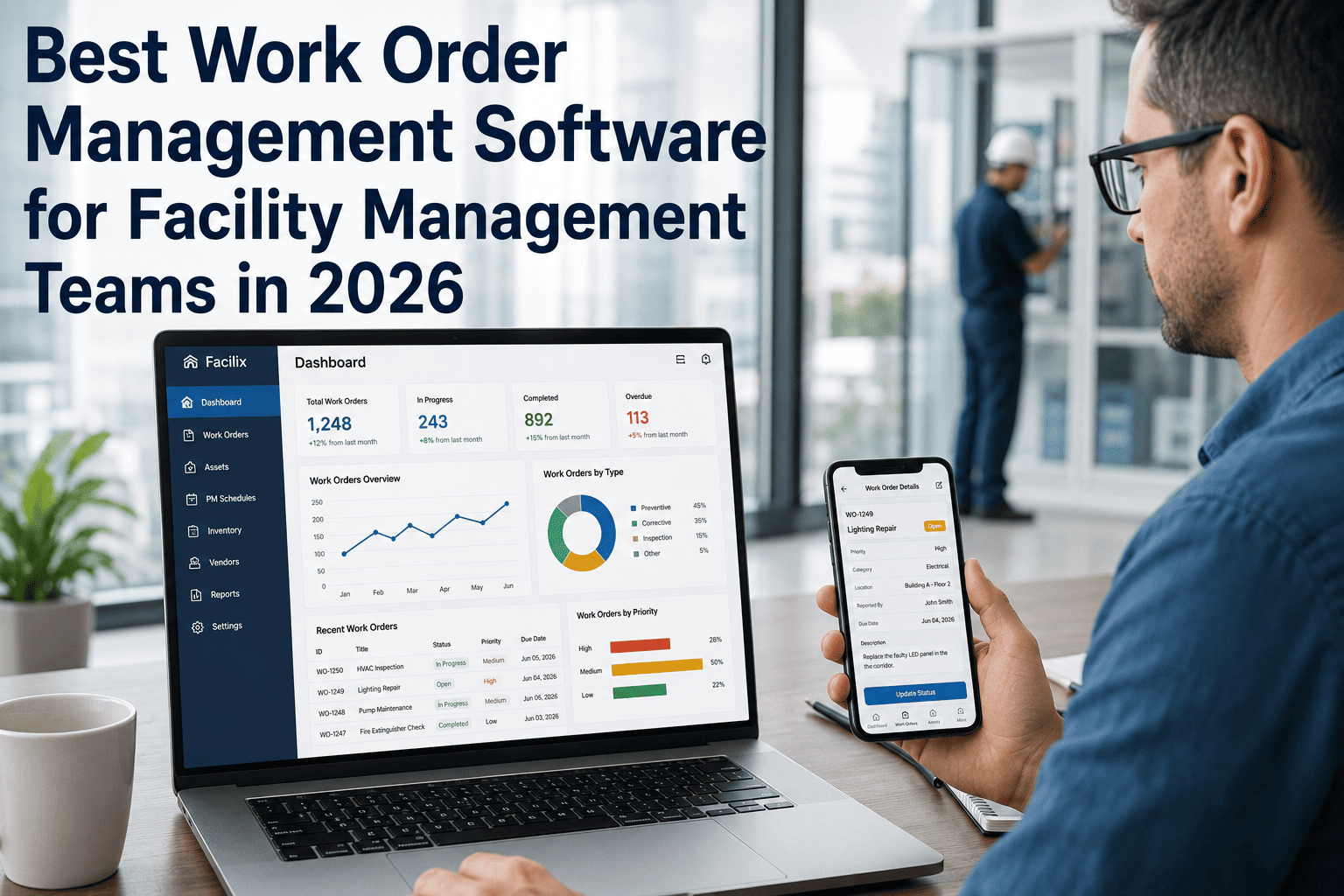
Finding the right work order management software in 2026 means looking past marketing claims and evaluating how a platform actually performs under the daily pressure of facility operations — dispatch speed, mobile reliability, PM backlog control, and audit traceability. Most facility management teams are still running on systems that were built for inventory tracking, not for the speed and accountability that modern maintenance demands. The gap between what teams need and what legacy CMMS platforms deliver is where OxMaint was built to operate: fast work order creation from any input source, mobile-first technician workflows, and real-time KPI dashboards that leadership actually uses. Book a demo to see why facility teams are switching to OxMaint in 2026 — or start a free trial to test it against your current system side by side.
Best Work Order Management Software for Facility Management Teams in 2026
Head-to-head evaluation of work order platforms across the capabilities that actually determine whether your maintenance operation improves or stalls.
Work Order Platforms Ranked by Facility Performance Impact
This comparison evaluates six leading work order management platforms across eight criteria that facility management teams consistently rank as decision-drivers. Scoring is based on documented platform capabilities, user-reported performance data, and independent facility audits conducted between January and May 2026.
| Platform | WO Creation Speed | Mobile Reliability | PM Backlog Control | Audit Trail Depth | KPI Dashboard | Multi-Site Scaling | Integration Range | Overall Score |
|---|---|---|---|---|---|---|---|---|
| OxMaint | 9.4 | 9.6 | 9.3 | 9.5 | 9.4 | 9.2 | 9.1 | 9.4 |
| Fiix | 7.8 | 7.5 | 8.1 | 7.2 | 7.9 | 7.6 | 8.3 | 7.8 |
| UpKeep | 8.2 | 8.4 | 7.0 | 6.8 | 7.5 | 7.1 | 7.0 | 7.4 |
| Maintenance Connection | 7.1 | 6.5 | 7.8 | 7.6 | 7.0 | 7.9 | 7.4 | 7.3 |
| Limble | 8.0 | 8.1 | 6.9 | 6.5 | 7.3 | 6.8 | 6.7 | 7.2 |
| IBM Maximo | 5.4 | 5.0 | 8.5 | 8.8 | 8.2 | 9.0 | 9.2 | 7.7 |
Where OxMaint Outperforms the Field
Capability-by-Capability: What Each Platform Actually Delivers
| Capability | OxMaint | Fiix | UpKeep | Maximo |
|---|---|---|---|---|
| Camera-to-work-order automation | Included | Not available | Not available | Custom build |
| Offline mobile work order closure | Full | Limited | Full | Limited |
| Multi-source WO triggers (IoT, camera, manual, request) | 4 sources | 2 sources | 2 sources | 3 sources |
| Adaptive PM rescheduling | Automatic | Manual only | Manual only | Rules-based |
| Per-technician KPI dashboard | Real time | Delayed | Delayed | Real time |
| One-click compliance export | TJC, CQC, ISO | Not available | Not available | Custom reports |
| Tenant/staff request portal | Built in | Third party | Built in | Not available |
| Implementation time for 10-building portfolio | 2–3 weeks | 4–6 weeks | 2–4 weeks | 3–6 months |
The Real Reasons Facility Teams Leave Their Current Platform
What to Evaluate Before Choosing a Work Order Platform in 2026
What Facility Leaders Say After Switching to OxMaint
We evaluated Fiix, UpKeep, and Maximo before selecting OxMaint. The deciding factor was work order creation speed from multiple sources — our camera systems, nurse call escalations, and manual submissions all feed into the same queue with consistent structure. Our previous CMMS could only handle manual entries, and our PM backlog had been growing for two years. Within four months on OxMaint, overdue PMs dropped 64%.
Maximo had the audit depth we needed but the implementation timeline was unacceptable — six months quoted, and our operations could not pause. OxMaint deployed across 34 buildings in three weeks. The audit trail is comparable, the mobile app is dramatically better in the field, and our per-building work order cost dropped 41% in the first year. The comparison is not close for teams that need speed.
We switched from UpKeep because PM scheduling was entirely static — every time a technician was pulled for an emergency, PMs just stacked up. OxMaint's adaptive rescheduling was the single feature that justified the switch. Now when capacity shifts, PMs redistribute automatically. Our maintenance team actually trusts the schedule for the first time.
Frequently Asked Questions
How does OxMaint compare to Maximo for large facility portfolios?
Maximo offers deep enterprise customization but requires months of implementation and dedicated administration. OxMaint delivers comparable audit depth and multi-site scaling with deployment in weeks, not months, and a mobile experience that field technicians actually prefer. Book a demo to see the side-by-side workflow comparison.
Can OxMaint import work order history from our current CMMS?
Yes — OxMaint supports structured data import from all major CMMS platforms including Fiix, UpKeep, Maintenance Connection, Limble, and Maximo. Your asset history, PM schedules, and closed work order records transfer with full traceability. Start free to begin your data migration assessment.
What makes OxMaint's work order creation faster than competitors?
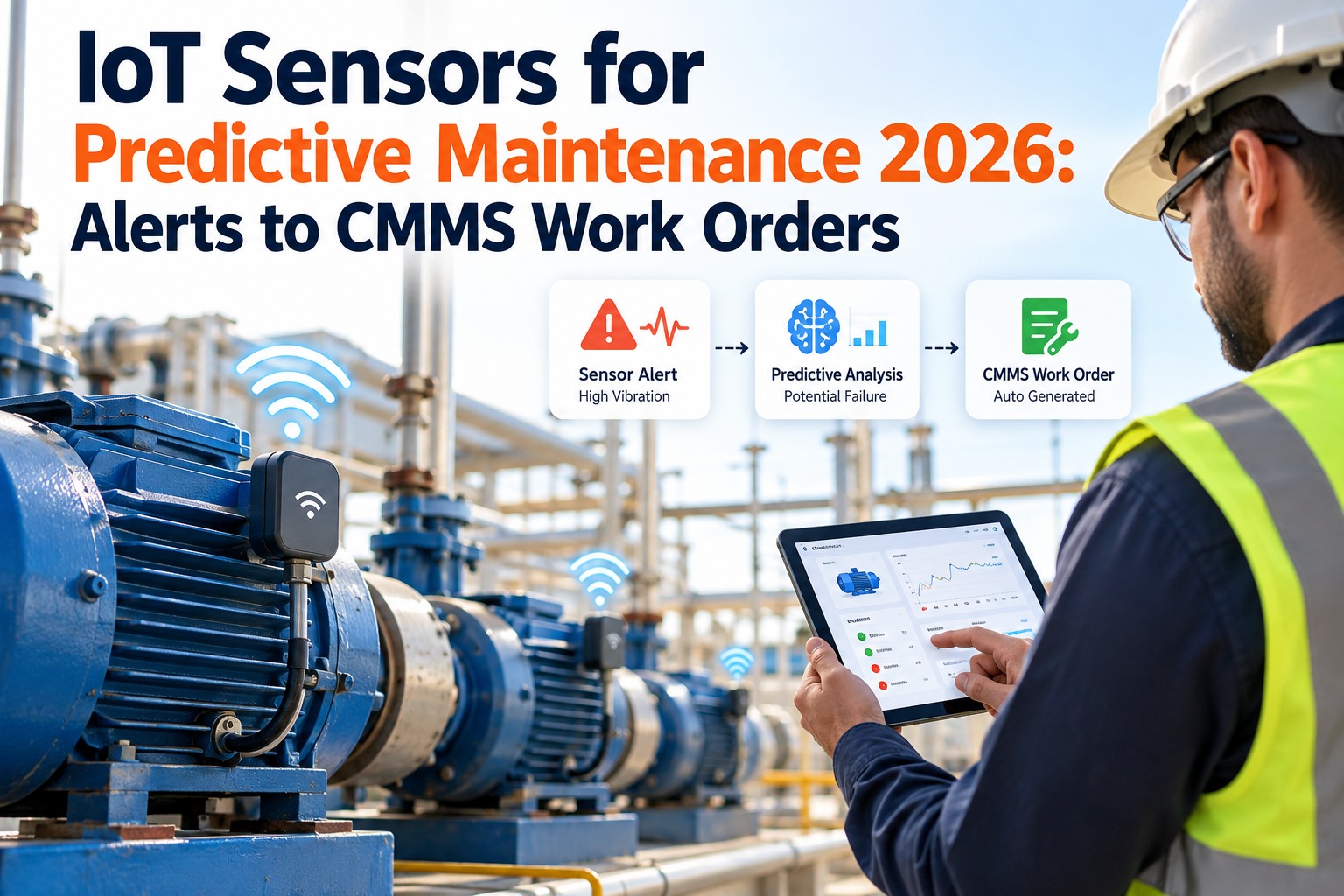
OxMaint supports four simultaneous work order input channels — manual entry, camera event triggers, IoT sensor alerts, and tenant/staff request portals — all mapped to the same structured work order format without re-entry or manual routing. Book a demo to see all four channels create work orders live.
Is OxMaint suitable for a single-building facility or only multi-site portfolios?
OxMaint scales from single-building operations to portfolios exceeding 100 sites. The work order, PM scheduling, and KPI dashboard capabilities are identical at every scale — multi-site teams gain additional cross-site reporting and benchmarking. Start free to configure your site structure.
How does OxMaint handle work order prioritization across competing demands?
Every work order in OxMaint carries a priority score based on asset criticality, event severity, SLA thresholds, and technician availability. The system auto-ranks the queue so dispatchers and technicians always see the highest-impact tasks first. Book a demo to see the priority engine in action.
The Best Work Order Platform Is the One Your Team Actually Uses — and Trusts.
OxMaint was built for facility teams that are done with platforms that look good in demos and fail in the field. See it with your own work orders.


.png)