AI Weld Inspection 2026: Defect Detection & EAM Work Orders
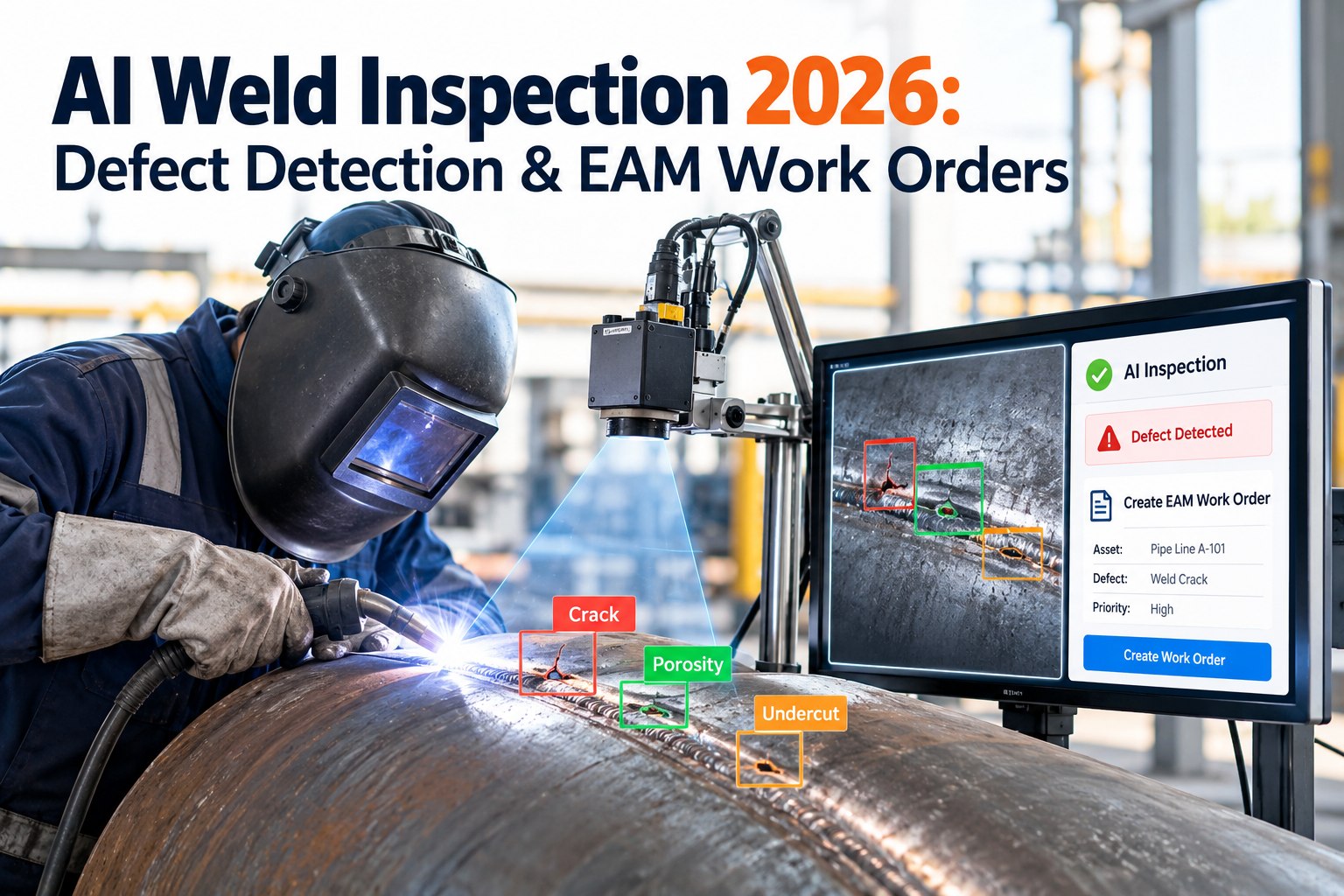
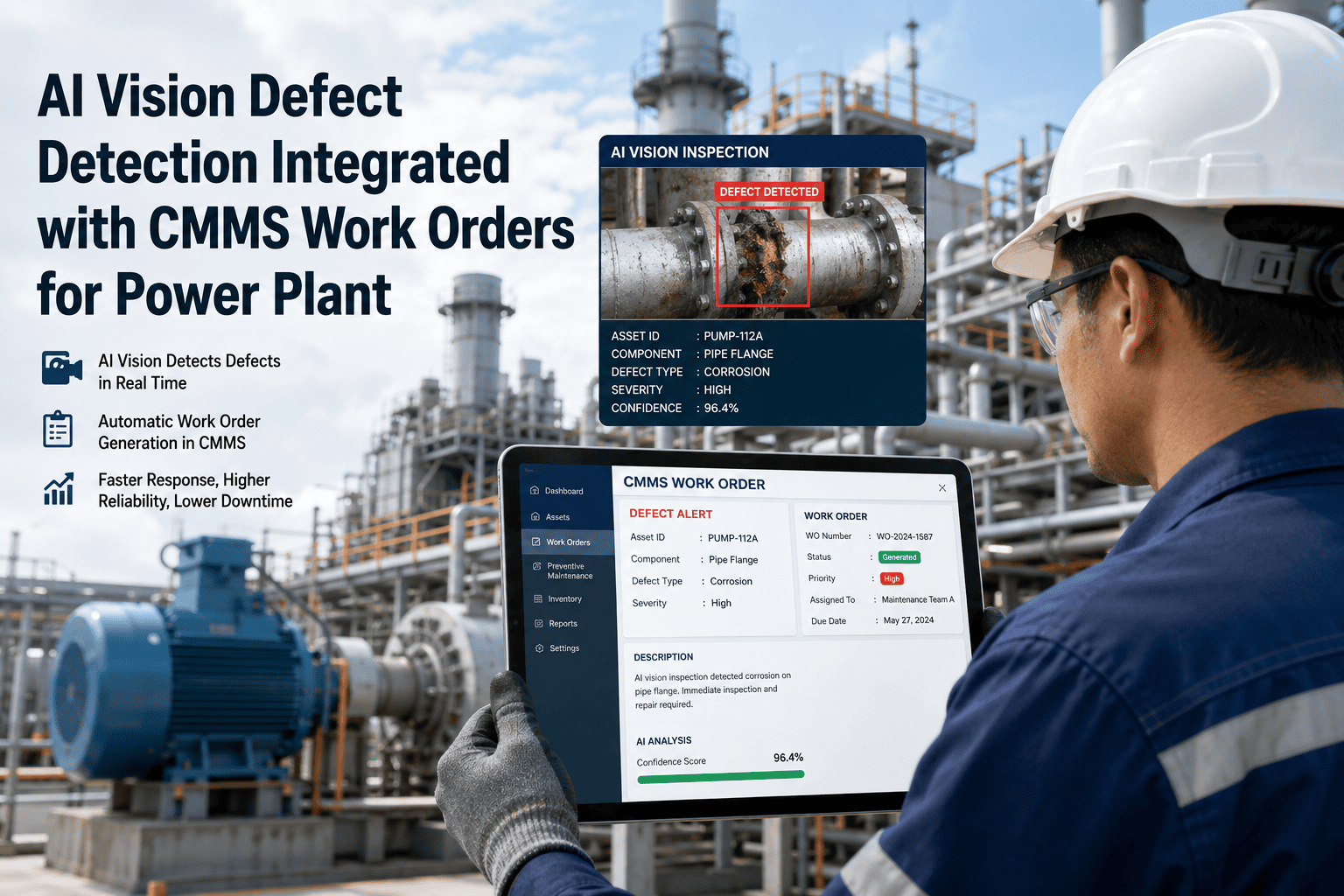
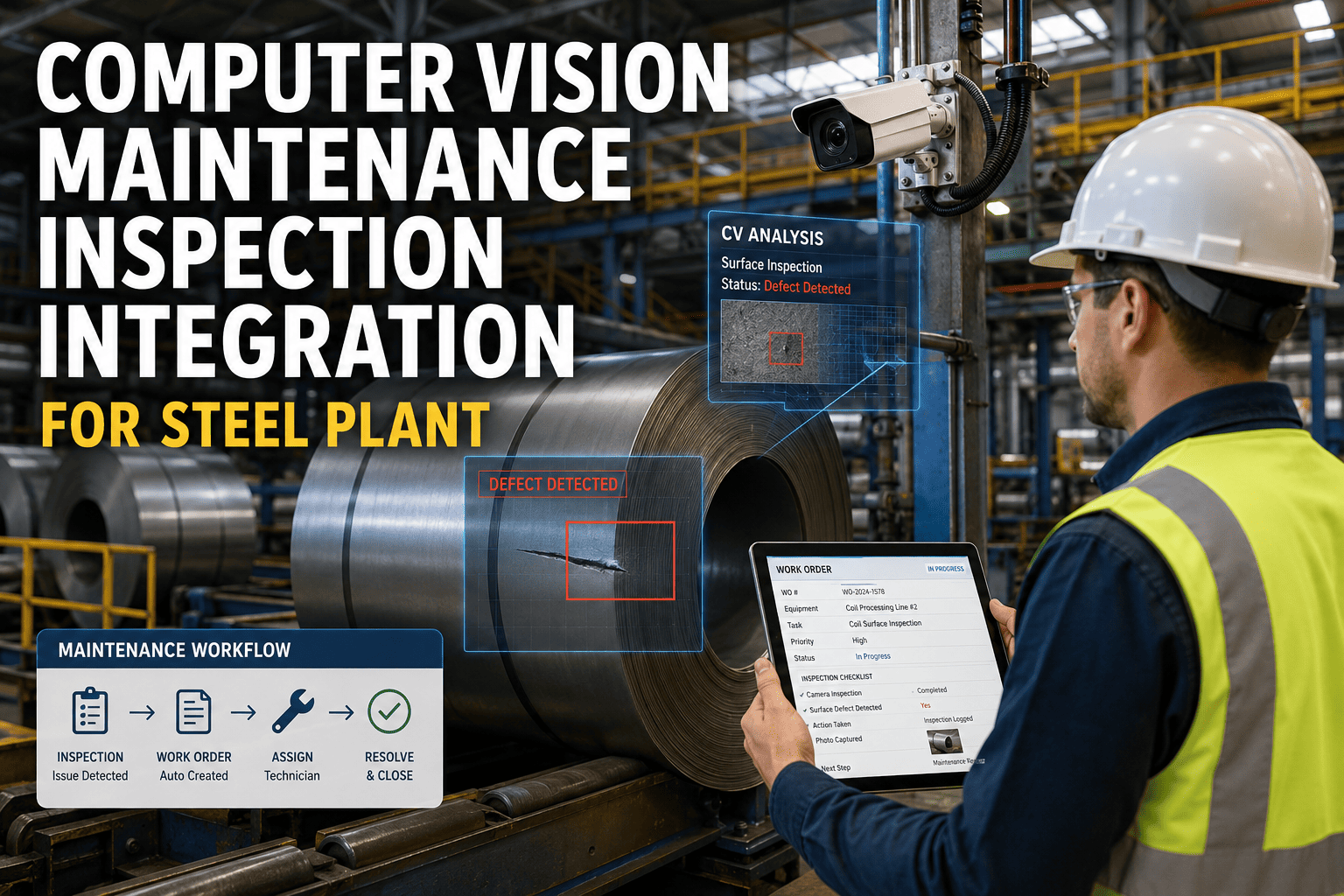
In a steel plant, a bad weld is rarely caught the moment it forms — it surfaces later, in a downstream failure, a warranty return, or a line stoppage that traces back to a joint nobody flagged. Manual weld inspection samples a fraction of joints, drifts with inspector fatigue and lighting, and leaves findings in a notebook instead of a work order. AI vision changes the economics: it watches every weld, classifies the defect, ranks the risk, and pushes a prioritized action straight into the maintenance system you already run. This guide covers how AI weld inspection works in 2026, the defects it catches, and how OXMAINT AI turns each detection into a work order — see it on your line with a live demo.
Steel & Heavy Industry · AI Vision · Weld Quality · 2026
AI Weld Inspection 2026: Defect Detection & EAM Work Orders
Manual weld inspection samples a few joints, tires by the hour, and buries findings in a notebook. OXMAINT AI inspects every weld, classifies the defect, scores the risk, and drops a prioritized work order into your existing EAM — so a bad joint becomes a scheduled fix, not a downstream failure.
Weld inspection has always been a coverage-versus-cost trade-off. You can't put a certified inspector on every joint, so you sample — and sampling is exactly where defects slip through. Here's the gap AI vision closes, side by side. Start free and inspect your first weld line in OXMAINT.
Manual / Sampled Inspection
The Coverage Gap
✕ Only a fraction of joints inspected
✕ Consistency drifts with fatigue & lighting
✕ Subtle surface & profile defects missed by eye
✕ Findings live in notebooks, not systems
✕ Defect caught late — downstream or in service
✕ No trend data to find the root cause
OXMAINT AI Weld Vision
Full-Coverage Detection
✓ Every weld inspected, every shift
✓ Consistent scoring, no fatigue drift
✓ Detects subtle surface & profile anomalies
✓ Every finding a structured, tagged record
✓ Flagged in real time, at the weld
✓ Trends surface the recurring root cause
The Weld Defects AI Vision Catches
A weld can fail in many distinct ways, and each has its own visual and thermal signature. OXMAINT AI is trained to classify them by type — not just flag "something's wrong" — so the resulting work order tells the technician what they're walking up to. These are the defect families the system separates. Book a demo to see defect classification on your welds.
Porosity
Gas pockets trapped in the weld metal — clustered or scattered voids that weaken the joint and betray shielding-gas or contamination problems.
Cracks
Longitudinal, transverse or crater cracks — the highest-severity family, often a straight path to structural failure if it ships.
Undercut
A groove melted into the base metal at the weld toe, thinning the section and concentrating stress right where the joint should be strongest.
Lack of Fusion & Penetration
Weld metal that never bonded to the base or didn't reach the joint root — a hidden weakness that visual sampling routinely misses.
Spatter & Bead Irregularity
Scattered spatter, uneven bead width, humping or overlap — cosmetic and process signals that often precede a more serious defect trend.
Burn-Through & Misalignment
Blow-through holes from excess heat, or joints welded off-position — geometry faults the model flags against the expected weld profile.
A Detection That Doesn't Reach a Technician Is Just a Log Entry.
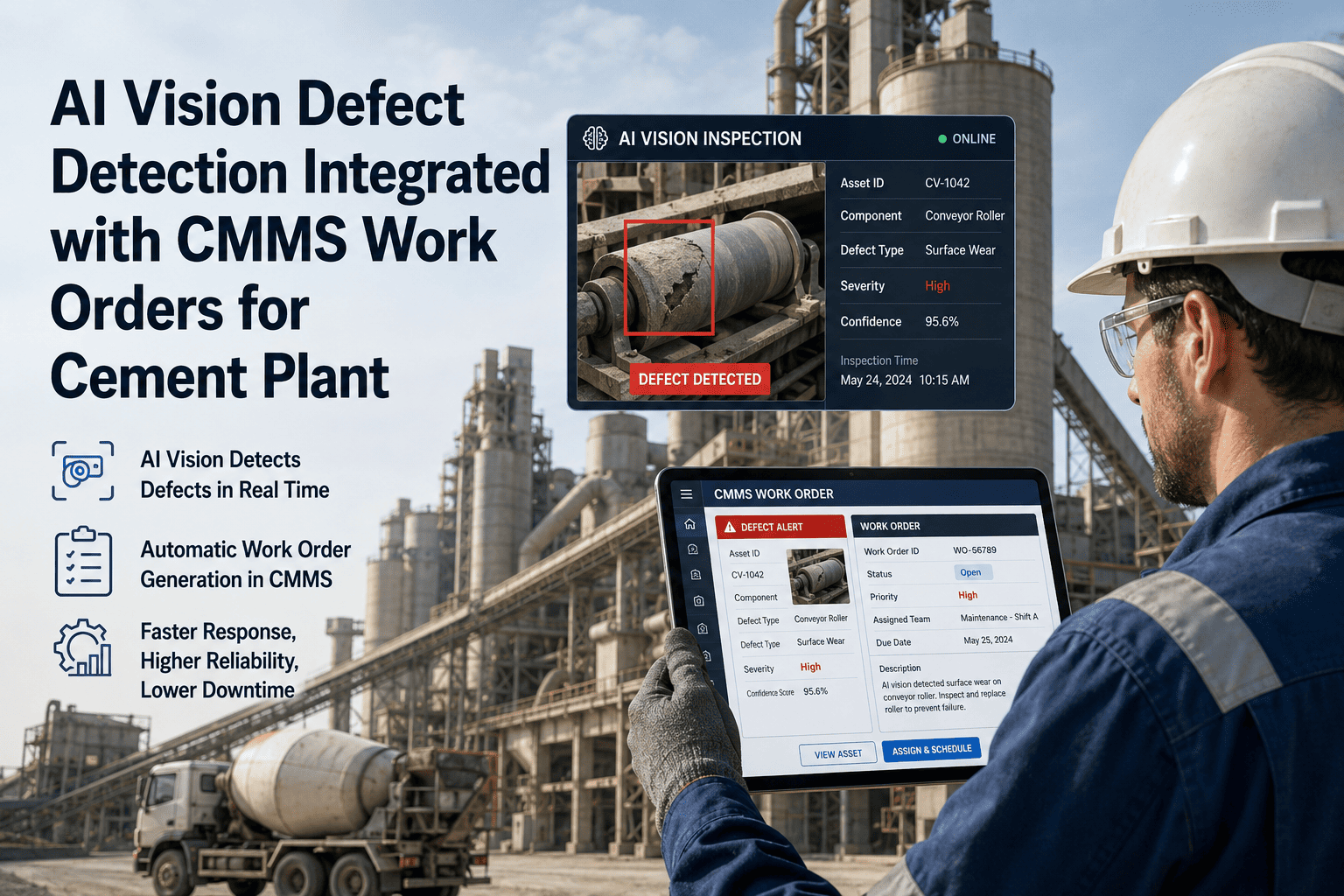
The value of AI weld inspection isn't the detection — it's the action that follows it. OXMAINT AI scores each defect by severity, decides whether it needs containment, rework or monitoring, and generates a work order with the weld ID, defect class, image and recommended action already attached. The finding becomes a scheduled fix, automatically.
How AI Weld Inspection Works: Capture to Work Order
The whole system is a closed loop that runs in real time at the weld station. Each stage feeds the next, and the last stage lands inside the maintenance system your team already lives in — no separate portal to check. Here's the full path a single weld travels. Start free and run the loop on your line.
1
Capture
High-resolution and thermal imaging captures every weld as it's formed — no sampling, no missed joints.
→
2
Detect & Classify
The AI model identifies the defect and names its type — porosity, crack, undercut, lack of fusion — against the trained taxonomy.
→
3
Score Risk
Each defect is ranked by severity and location, so a crater crack outranks minor spatter instead of firing the same flat alarm.
→
4
Generate Work Order
A prioritized work order posts to your EAM with the weld ID, defect class, image and recommended action attached.
→
5
Trend & Learn
Every detection feeds the trend history, surfacing the recurring root cause behind repeat defects on a station or shift.
Risk-Ranked Action, Not Flat Alarms
Not every defect deserves a line stop, and not every one can wait. The difference between a useful system and alarm fatigue is triage — routing each detection to the right response by severity. OXMAINT AI scores every weld into one of these action bands. Book a demo to tune severity thresholds to your specs.
Critical
Contain Now
Cracks and severe lack of fusion — quarantine the part and raise a high-priority work order before it moves downstream.
Major
Rework Scheduled
Undercut, burn-through or penetration faults — a work order to rework the joint, scheduled into the maintenance queue.
Minor
Monitor & Trend
Spatter and small cosmetic irregularities — logged and trended, so a drift toward something worse is caught early.
Process
Tune the Source
A repeating pattern on one station points at parameters or consumables — a work order to correct the process, not just the part.
Built to Overlay Your EAM — Not Replace It
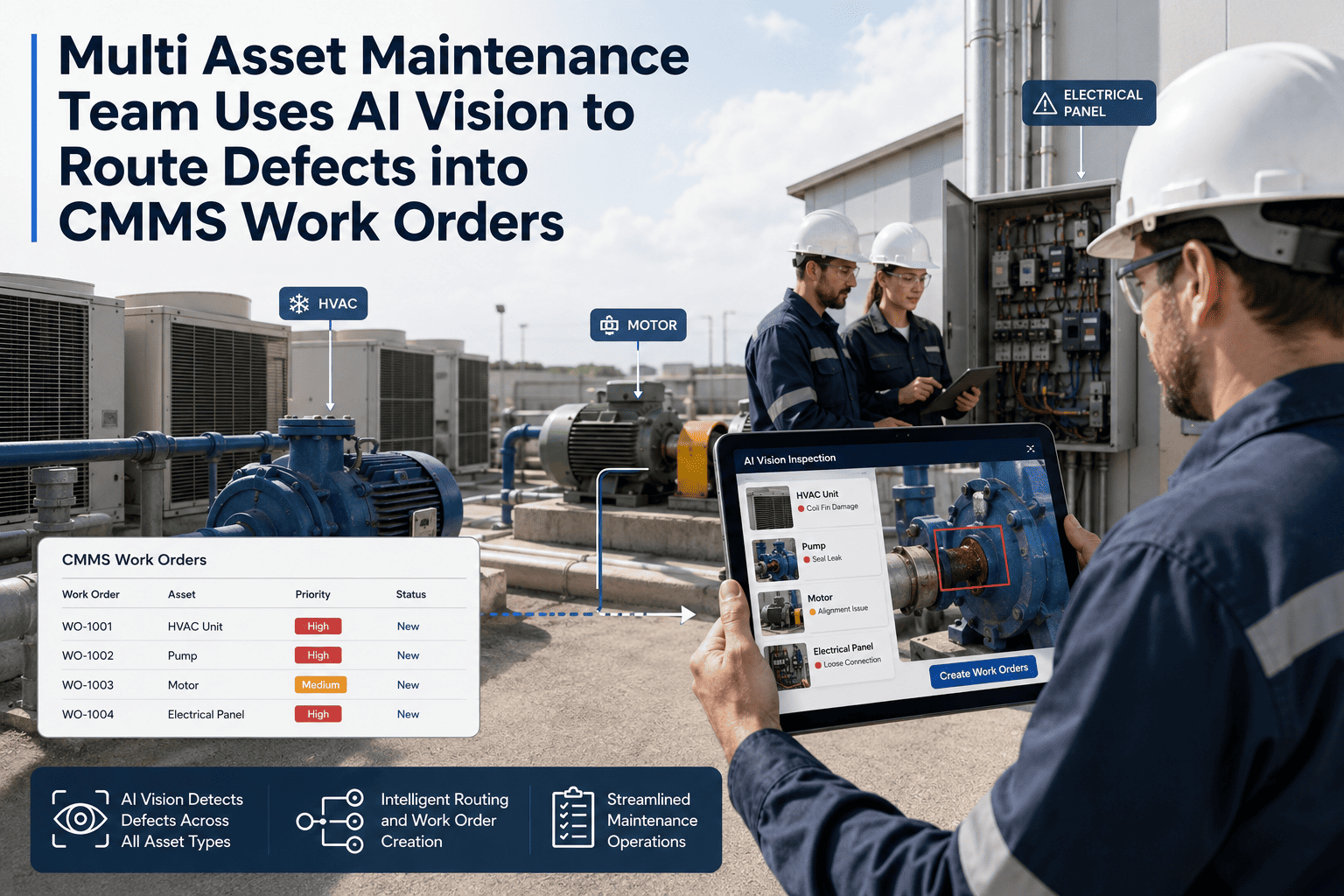
You already run an enterprise asset management system, and the last thing a plant needs is a second place to check for work. OXMAINT AI sits as an intelligence layer on top of what you have — the detection is new, the work-order home is the one your maintenance team already uses. Start free and connect your first weld station.
Native Work-Order Push
Detections become work orders in IBM Maximo, SAP PM, Oracle and other leading EAM/CMMS platforms — pre-filled with defect context.
Weld-Level Asset Records
Each weld station and joint carries its own history — defect trend, rework record and image trail — under your existing asset hierarchy.
No Rip-and-Replace
The intelligence layer adds to your stack rather than swapping it out — your team keeps the system and workflow they already know.
Full Evidence Trail
Every detection keeps its image, classification, severity score and timestamp — the record quality audits and customer claims rely on.
Where OXMAINT AI Fits: From Weld to Scheduled Fix
Detection only pays off if the signal becomes an action. OXMAINT AI is the CMMS layer that turns every weld data stream into a scheduled, parts-ready work order — condition-based decisions at line speed, not at the pace of the next quality review. Here's what it puts in your team's hands. Sign up free and get your first line on record.
Full-Coverage Inspection
Every weld inspected in real time — the sampling gap that lets defects escape is closed across the line.
Typed Defect Classification
Defects named by family, so a work order tells the technician what they're walking up to, not just that something's off.
Severity-Based Triage
Critical, major, minor and process bands route each detection to the right response instead of one flat alarm.
EAM Work-Order Automation
Prioritized, context-filled work orders posted to the maintenance system your team already runs.
Defect Trend Analytics
Repeat-defect patterns by station and shift surface the recurring root cause behind the scrap.
Audit-Ready Evidence
Image, classification and timestamp on every weld — the trail quality audits and customer claims need.
"
Our inspectors were sampling maybe a fraction of the welds on the fabrication line, and the defects we found were the ones that had already made it downstream. Once OXMAINT was watching every joint and pushing work orders straight into Maximo, the pattern that had been invisible for years showed up in a week — one station drifting on penetration every late shift. We fixed the process, not just the parts. That shift from finding defects to preventing them is what changed the economics.
How is AI weld inspection different from manual visual inspection?
Manual inspection samples a portion of joints and depends on inspector consistency, fatigue and lighting. AI vision inspects every weld in real time, classifies the defect by type, scores its severity, and produces a structured record — closing the coverage gap and turning findings into trackable actions instead of notebook entries.
What weld defects can OXMAINT detect?
The models classify the common families — porosity, cracks, undercut, lack of fusion and penetration, spatter and bead irregularity, and burn-through or misalignment — using high-resolution and thermal imaging matched against the expected weld profile. Naming the type is what lets each detection drive the right corrective action.
Does it replace our EAM or CMMS?
No — it overlays it. OXMAINT AI is an intelligence layer that pushes work orders into the EAM or CMMS you already run, such as IBM Maximo, SAP PM or Oracle. The detection is new; the work-order home stays the system your maintenance team already uses, with no rip-and-replace.
Will it flood us with alarms?
No. Every detection is scored into a severity band — critical, major, minor or process — so a crack triggers immediate containment while minor spatter is simply logged and trended. Triage by severity is what prevents alarm fatigue and keeps the work queue meaningful.
How does OXMAINT help find the root cause, not just the defect?
Because every detection is logged against its weld station and joint, repeat defects form a visible trend by station and shift. A pattern — like one station drifting on penetration every late shift — points at parameters or consumables, so you can raise a process work order and fix the source, not just rework parts.
Turn Every Weld Into a Tracked, Prioritized Action.
Stop sampling welds and chasing defects downstream. OXMAINT AI inspects every joint, classifies and ranks the defect, and drops a prioritized work order into your existing EAM — full coverage, real time, no rip-and-replace. Start free — no credit card, unlimited users.